

Cary Byrd // Founder of CinchLocal
Why Accurate Agency Local Ranking Data Is the Foundation of Local SEO Success
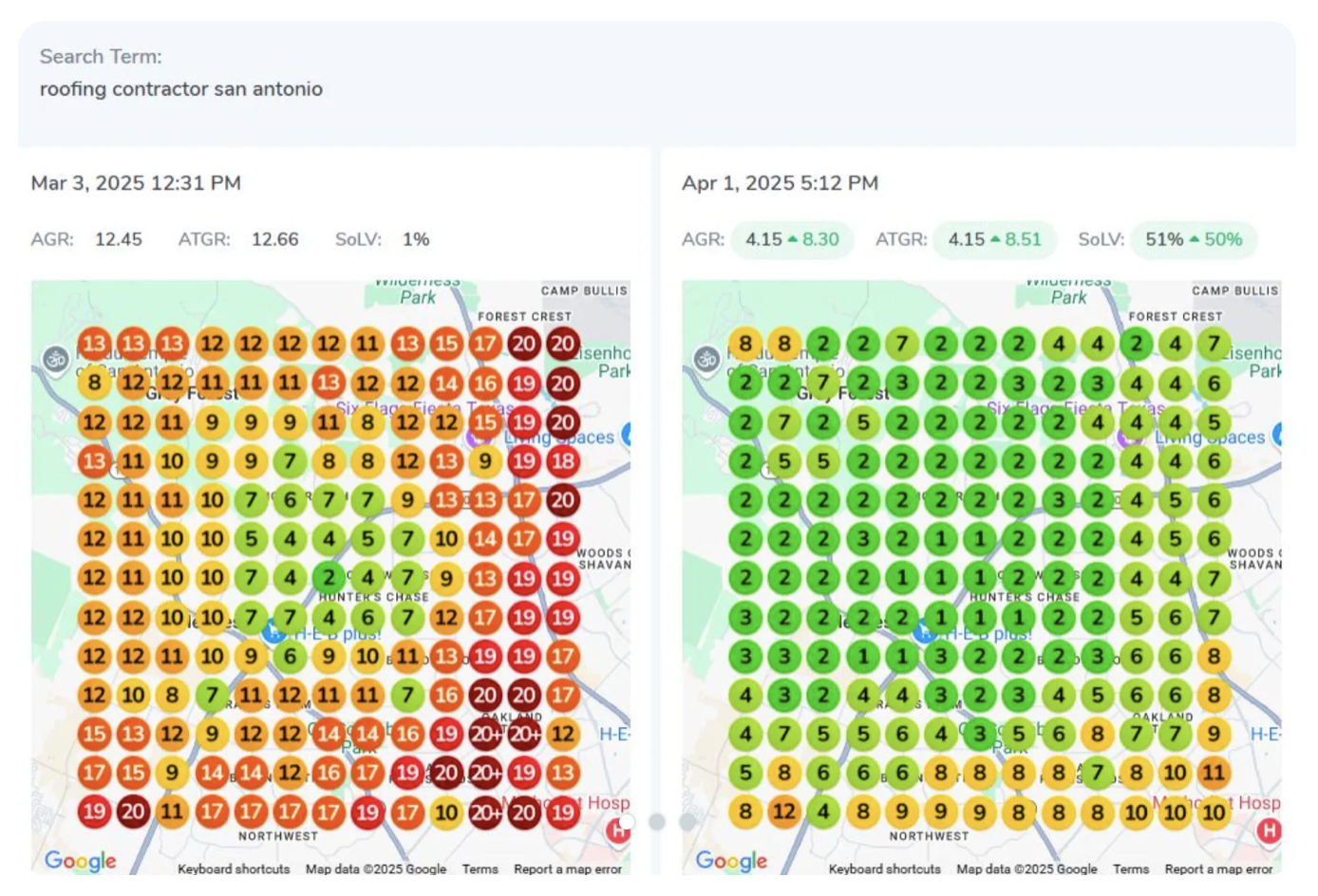
Agency local ranking is the process of tracking and monitoring how a business appears in local search results across multiple geographic points within its service area. For roofing contractors and home service businesses, this means understanding not just if you rank, but where you rank throughout your entire market.
Quick Answer: How to Track Agency Local Ranking Effectively
- Use geogrid technology to scan rankings from dozens or hundreds of points across your service area, not just one arbitrary location
- Monitor your Google Business Profile performance including views, calls, direction requests, and how it correlates with ranking changes
- Track competitors at the same geographic points to understand your true market position
- Connect visibility metrics to revenue by measuring calls, form fills, and booked jobs that result from improved local rankings
- Report regularly with visual heatmaps and data that shows progress over time and ties directly to business growth
The harsh reality is that most roofing contractors are making critical business decisions based on incomplete or misleading ranking data. A single-point rank check from a ZIP code center tells you almost nothing about how customers searching from different neighborhoods actually see your business. Google's local algorithm considers proximity as one of the most important ranking factors , which means your position can shift dramatically just a few blocks away from your physical location or service area center.
Traditional rank tracking tools were built for national SEO campaigns, not the nuanced, hyperlocal nature of home service businesses. When you serve a 20-mile radius, you need to know if you're visible in the wealthy subdivision on the north side, the growing commercial district downtown, and the older neighborhoods to the south. A roofing job in one area might be worth $8,000, while another could be $25,000. Your marketing strategy should reflect where you're strong and where you're invisible.
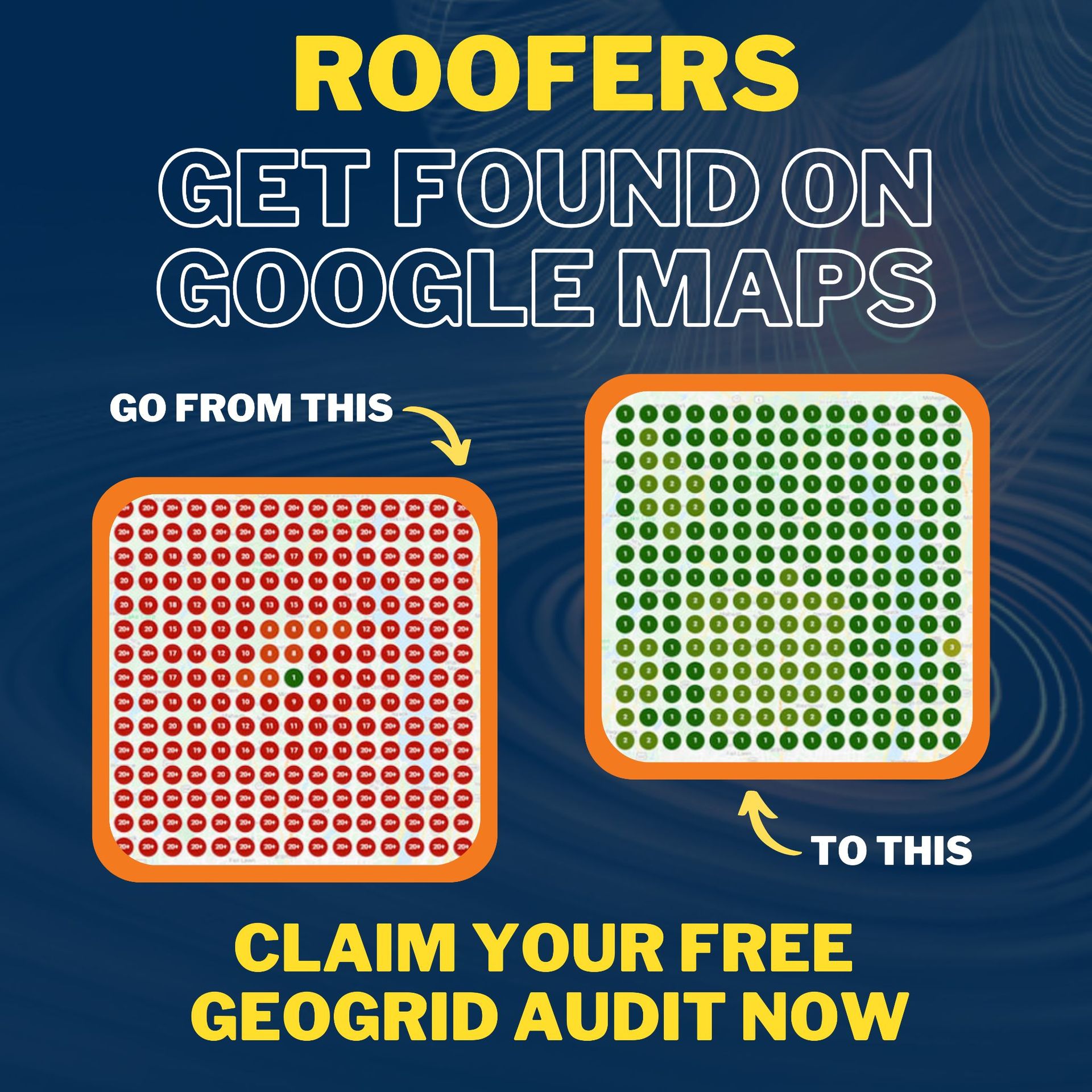
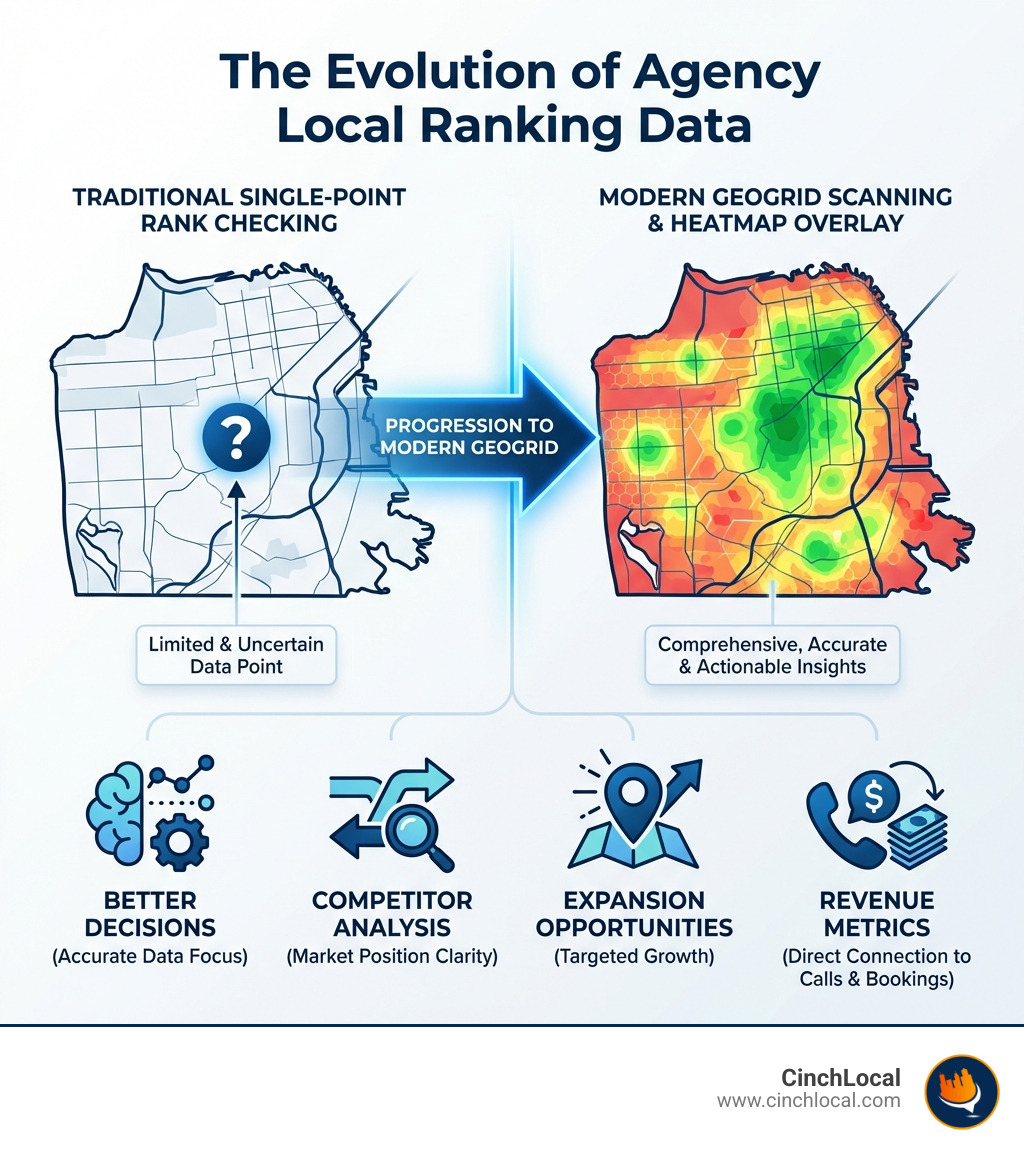
Modern local rank tracking uses geogrid technology to create a visual heatmap of your true visibility. Instead of one misleading number, you see a color-coded map showing where you dominate (green), where you're competitive (yellow), and where you don't exist (red). This is the data that drives smart decisions about where to focus your SEO efforts, where to run ads, and which neighborhoods represent your biggest growth opportunities.
For agencies managing multiple roofing clients, this level of precision is non-negotiable. Your clients don't care about rankings for the sake of rankings. They care about the phone ringing with qualified homeowners who need a new roof now. When you can show a direct line between improved local visibility in a specific area and an increase in calls from that area, you're no longer selling marketing—you're selling revenue growth.
The challenge is that achieving strong local rankings requires a coordinated strategy that touches everything from your Google Business Profile optimization to your website's technical foundation to your review generation system. Each element feeds the local algorithm's decision about whether you deserve to appear when someone in your market searches for roofing help.
I'm Cary Byrd, founder and CEO of CinchLocal, and over the past decade I've specialized in helping roofing contractors dominate their local markets through data-driven agency local ranking strategies. Before building CinchLocal into a specialized roofing marketing agency, I spent years developing sophisticated SEO systems that helped businesses cut through the noise and connect with customers who were ready to buy, and I've applied those same principles to solving the unique challenges of local search for home service businesses.
Agency local ranking helpful reading:
Why Your "True" Local Rank Is a Map, Not a Number
Proximity to the searcher is one of the most powerful factors in local search. According to Google's own explanation of how it determines local ranking, the distance between a user and your business heavily influences whether you appear in their search results. This is why traditional rank trackers that check from a single, arbitrary point often provide dangerously misleading data. Modern local rank trackers use geogrid technology to show you the full picture, helping you start climbing the local ladder on Google Maps with accurate data.
How Geogrid Technology Visualizes Your Roofing Service Area
Imagine your service area, whether it's a busy city in Ohio, a sprawling county in California, or a set of towns in Tennessee. Now, picture that area overlaid with a grid of hundreds of points. Geogrid technology works by performing a local search for your target keywords from each of these individual points. It then compiles these results into a visual heatmap, typically color-coded to indicate your ranking position. Green might mean you're in the coveted Local 3-Pack, yellow could signify top 10, and red means you're nowhere to be found.
This street-level accuracy is transformative for a roofing contractor. It allows us to:
- Identify Weak Spots : Pinpoint specific neighborhoods or even individual streets where your business is underperforming, despite strong rankings elsewhere. This could be due to a competitor's strong local presence or a gap in your own optimization.
- Track Rank Decay with Distance : Observe how your ranking changes as a potential customer moves further away from your physical location or the center of your service area. This is crucial for understanding the true reach of your marketing efforts.
- Address Service Area Business (SAB) Challenges : For roofing contractors who primarily operate as service-area businesses without a physical storefront, geogrids are invaluable. They confirm your visibility across your entire claimed service area, not just from a central office address. Without this granular data, you're essentially flying blind, hoping your optimization efforts are hitting the mark in the areas where you want to win jobs.
The Problem with Single-Point "Agency Local Ranking" Checks
Most local rank trackers give you a single, often misleading, number. This "traditional" approach typically checks your ranking from a single point—perhaps the center of a ZIP code or city. For a roofing contractor, relying on this data is like trying to steer a complex storm-damaged roof with only a single, blurry photo. It simply doesn't tell the whole story.
Here's why single-point checks are problematic for your agency local ranking efforts:
- Misleading Data : Your business might rank #1 from the center of your town, but drop off completely just a few miles away. A single data point won't reveal this critical dip in visibility.
- Inaccurate Client Reporting : If we report a #1 ranking to you based on a single point, but your phone isn't ringing from a high-value neighborhood just outside that point, it creates distrust and undermines our efforts.
- ZIP Code Center Bias : Google's algorithm is far more sophisticated than simply checking from a ZIP code center. It considers the user's actual location, which can be anywhere within that ZIP code.
- Missing Expansion Opportunities : Without a comprehensive view, you might miss entire segments of your service area where you're currently invisible but have high potential for new roofing leads.
- False Sense of Security : A seemingly good ranking from a single point can lead to complacency, preventing you from addressing real visibility issues that are costing you jobs.
- Why it Fails for Service Area Businesses : If your roofing company doesn't have a physical location, a single-point check is even less useful. It can't accurately reflect your reach across a dynamic, mobile service area.
Must-Have Features in a Local Rank Tracker for Roofing Agencies
Choosing the right tool is critical for any agency serious about local SEO. You need a platform built for the complexities of local search, not a generic tool with a tacked-on "local" feature. The goal is to get a clear, actionable view of your client's entire digital footprint to help them master the Google Map Pack. Look for a dedicated tool that offers deep insights rather than an all-in-one suite that is a master of none.
Here's what we look for in an agency-grade local rank tracker:
- Advanced Geogrid Scans : As discussed, this is non-negotiable for understanding true local visibility. We need the ability to customize grid sizes and ranges to precisely match your service areas across Ohio, Tennessee, Georgia, and California.
- Google Business Profile (GBP) Integration : Your GBP is your digital storefront, and the tracker must connect directly to it.
- Competitor Tracking : Knowing where you stand is good; knowing where you stand compared to your local rivals is gold. We need to track their heatmaps too, identifying their strengths and weaknesses.
- Automated White-Label Reports : For agencies, time is money. Automated, branded reports that are easy for you to understand and share are crucial for demonstrating value without endless manual data compilation.
- Keyword Tracking (Local & Transactional) : Beyond generic keywords, we need to track how you rank for specific, high-intent local queries like "roof repair Atlanta" or "emergency roofer near me".
- Multi-Location Management : For contractors with multiple offices or service hubs, the ability to manage and track separate GBPs and their respective rankings from a single dashboard is essential.
Integrating with Google Business Profile: Your Digital Storefront
Your Google Business Profile (GBP) is arguably the most important element of your local SEO strategy. It’s where Google makes a snap judgment about your business and where 70% of local search clicks are directed. For roofing contractors, it's not just a listing; it's a dynamic tool that directly influences your visibility and customer engagement.
A robust local rank tracker must integrate seamlessly with your GBP to give us a holistic view of your performance. This includes:
- GBP Signals : Google Business Profile signals now carry roughly 32% of the total Map Pack ranking weight, making them the single strongest influence. This means every aspect of your GBP, from categories to photos, is a ranking factor.
- Review Tracking : Online reviews are critical. They account for about 20% of the Map Pack ranking weight, and the median business ranking in the Local 3-Pack needs around 47 reviews. We need to track not just the quantity, but also the quality, recency, and sentiment of reviews.
- Q&A Monitoring : Engaging with customer questions on your GBP can boost relevance and demonstrate responsiveness.
- Post Scheduling : Regular updates and posts on your GBP signal activity to Google and provide fresh content for potential customers.
- Photo Analysis : High-quality, geo-tagged photos can influence rankings and certainly clicks. We track how photos are performing and ensure they are optimized.
- Connecting GBP Actions to Rank Changes : The best trackers allow us to see how changes we make to your GBP—like adding new services, responding to reviews, or updating hours—directly correlate with shifts in your local rankings. This helps us understand what's working and what needs adjustment.
For a comprehensive guide on optimizing your GBP, we recommend checking out our guide to optimizing your Google Business Profile.
Using Local Rank Data to Prove ROI and Win More Roofing Jobs
Rankings are a means to an end. The ultimate goal is more leads and booked jobs. The right data allows us to connect our agency's efforts directly to your bottom line. With 76% of people who search on their smartphones for something nearby visit a business within 24 hours, and 28% of those searches result in a purchase, proving your impact on visibility is proving your impact on revenue. By analyzing this data, we can uncover local SEO secrets your competitors wish they knew and demonstrate undeniable value. You can even see proof of our Google Maps results to understand what's possible.
From Rankings to Revenue: A Reporting Framework for Your Agency Local Ranking
Clients don't renew contracts based on ranking improvements alone; they renew based on business growth. This is why our agency local ranking reports go beyond vanity metrics to tell a compelling performance narrative. We focus on demonstrating how improved visibility translates into tangible business outcomes for your roofing company:
- Tracking Calls from GBP : We monitor direct calls made from your Google Business Profile listing. These are often high-intent leads ready to discuss a roofing project.
- Direction Requests : For businesses with physical locations or showrooms, we track how many users request directions, indicating a strong intent to visit.
- Website Clicks : We analyze clicks from your GBP to your website, ensuring that increased visibility drives traffic to your optimized landing pages.
- Form Fills : We measure form submissions on your website, which are direct lead generations resulting from improved local search presence.
- Tying SEO Efforts Directly to Leads : By connecting all these data points, we can show a direct correlation between our local SEO strategies, your improved rankings, and the resulting increase in qualified leads. This allows us to create a clear, actionable performance narrative that justifies your investment.
Using Geogrids to Identify Market Gaps and Expansion Opportunities
Geogrid data isn't just for showing current performance; it's a powerful strategic tool. By analyzing these heatmaps, we can help your roofing business make informed decisions about market penetration and expansion.
- Analyzing Competitor Heatmaps : We can scan your competitors' local rankings across the same geogrids. This reveals their strongholds and weak spots, helping us identify areas where you can gain an advantage.
- Finding Underserved Neighborhoods : The red and yellow zones on your heatmap represent untapped potential. These are areas where homeowners are searching for roofing services, but your business isn't appearing prominently. This insight allows us to specifically target these neighborhoods with localized content, targeted ad campaigns, or even door-to-door marketing efforts.
- Data-Driven Service Area Expansion : Considering expanding your service area in Ohio or California? Geogrid data can show us which adjacent areas have the least competition and the highest potential for your business to rank quickly.
- Justifying New Ad Spend : If we see a persistent "red zone" in a high-value neighborhood that's proving difficult to crack organically, the geogrid data can justify a targeted local ad campaign to quickly gain visibility there.
- Proving Market Penetration Over Time : By running regular geogrid scans, we can demonstrate your increasing market penetration over months and years, showing clear progress in capturing more of your service area.
The Impact of AI on Local Search and How Your Agency Can Adapt
The local search landscape is changing. With AI Overviews now appearing in billions of searches, the game is no longer just about ranking #1; it's about being the answer. This shift means agencies must adapt their strategies and their tracking. According to leading industry surveys on local search ranking factors, signals like reviews and GBP activity are becoming even more critical as they feed these AI models. Your strategy must now include using content marketing to drive local visibility in a way that both search engines and AI can understand.
AI Overviews, powered by large language models (LLMs) like those behind ChatGPT and Gemini, are designed to summarize information and provide direct answers to user queries, often bypassing traditional search results. This means a homeowner in Georgia or Tennessee searching for "best roof repair near me" might see an AI-generated summary that doesn't include your business, even if you rank well in the traditional Map Pack.
Here's how AI is impacting local search and how we adapt:
- Zero-Click Searches : AI Overviews can answer local questions directly, reducing the need for users to click through to a website. This shifts the focus from simply ranking to being chosen and cited by AI.
- Share of Local Voice (SoLV) vs. Share of AI Voice (SAIV) : While Share of Local Voice (SoLV) measures how frequently your listing appears in the Map Pack, we now also consider Share of AI Voice (SAIV)—a proprietary metric to measure a business's visibility across AI platforms.
- Trust Signals for AI : AI systems rely on the same trust signals Google has already validated locally. This means clear service pages, consistent locations, strong reviews, and verified authority are more crucial than ever. The median business needs 47 reviews to rank in the Local 3-Pack, and ratings typically cluster between 4.5-4.9 stars. These are the patterns AI models look for to determine legitimacy.
- Structured Data and Entity Optimization : AI thrives on structured, machine-readable data. We ensure your website uses advanced schema markup (LocalBusiness, Product, Service, Review, FAQ) to clearly communicate your offerings and location to AI models.
- Content for Humans First, AI Second : Our content strategy focuses on answering buying questions directly and clearly, with local context. This makes it valuable for homeowners and easily digestible for AI summaries. Thin content, duplicate pages, and keyword stuffing confuse AI and reduce visibility.
The takeaway is clear: AI answers did not replace local search; they filtered it. Google now decides, faster than ever, which roofing contractors feel real, established, and trustworthy enough to recommend. Our role is to ensure your business provides those clear, consistent signals across all platforms.
Conclusion: Take Control of Your Local Market
To win in 2025 and beyond, roofing agencies must move past outdated tracking methods. Accurate, hyperlocal rank tracking is not a luxury; it's a necessity for demonstrating value, making strategic decisions, and ultimately, driving real-world growth for your clients. By leveraging geogrid technology and connecting visibility data to business metrics, we can provide a service that is indispensable. As specialists in the roofing industry, the team at CinchLocal uses these advanced strategies to help contractors dominate their local markets. If you're ready to see your true ranking and turn visibility into jobs, it's time to partner with an expert. Get a free analysis of your roofing company's local rankings
Want Us to Uncover Hidden 'Footprint Gaps' And Critical Blind Spots That’s Quietly Draining Calls, Jobs, and Profits?
Simply Fill Out The Form Below:
What If You Could Stop Wasting $30K+ a Year on Dead-End Marketing - And Finally Become the Go-To Roofer in Your City?
Other Helpful Articles You Might Enjoy