
AI SEO for Roofers: Be the Roofer AI Recommends in Every Town You Serve
Ask ChatGPT Who to Call.
Then Ask From the Next Town Over.
A homeowner in your service area opens ChatGPT and types who should I call for a roof leak. They get two or three names and a reason to trust each one. No list of ten links. No map. Just an answer. Every agency selling AI search optimization will tell you that much.
Here is what none of them mention: that answer changes depending on where the person asking is standing. Ask from one suburb and you might get named. Ask from the town twelve miles away and you will not. It is the same problem as the Google Map Pack, on a surface almost nobody is measuring yet. We measure both.

What AI Search Optimization Actually Is
It goes by several names. Answer Engine Optimization, AEO, Generative Engine Optimization, GEO, LLM optimization. They describe the same work: making your roofing company the business an AI assistant names when somebody asks it a question.
READY FOR YOUR GOOGLE MAPS SEO RANKINGS TO GO THROUGH THE ROOF?
SEO for Growth Top Rated Roofer SEO badge awarded to CinchLocal
How it differs from the SEO you already know
Traditional roofing SEO competes for a position in a list of links. A homeowner scrolls, compares, clicks. AI search skips that entirely — the assistant reads the web, decides who to recommend, and returns two or three names.
There is no page two. There is no scrolling past the competition. You are either in the answer or you are not mentioned at all.
The practical consequence: the ranking factors overlap but they are not identical. Backlinks and keyword targeting still matter because AI models read the same web Google indexes. But structure matters more, consistency of your business information matters more, and answering real questions in plain language matters far more than it does for a blue link.
AS SEEN IN





The platforms that matter for roofing
ChatGPT is the largest by volume. Perplexity punches above its weight because it cites sources visibly. Google's AI Overviews sit directly inside the search results you already compete in, and AI Mode is Google's conversational version of the same thing.
Gemini, Copilot and Grok exist. For a roofing contractor in the United States right now, they are not where your customers are. We track them anyway so you know if that changes.
Why Location Changes the Answer
Ask an AI assistant a general question — what causes a roof to leak — and location is irrelevant. Ask it a hiring question — who should I call for a roof leak in Boerne — and it becomes the whole question.
AI assistants answer local questions using local evidence: your Google Business Profile, your citations and directory listings, review sites, and the pages on your website that name the places you work. That is the same evidence base behind the Map Pack, which is why the two problems move together.
The failure this creates
A roofing company with one office and one Areas We Serve page gets recommended near its address and nowhere else. The AI has no evidence connecting that business to the towns fifteen minutes away, because the business never published any. Google's own
documentation on local ranking names relevance, distance and prominence as the three factors behind local results. Distance you cannot change. Relevance and prominence are built — and they are built out of specific pages about specific services in specific towns, which is exactly what an AI assistant reads when it decides who to name.
Which is why we measure it geographically
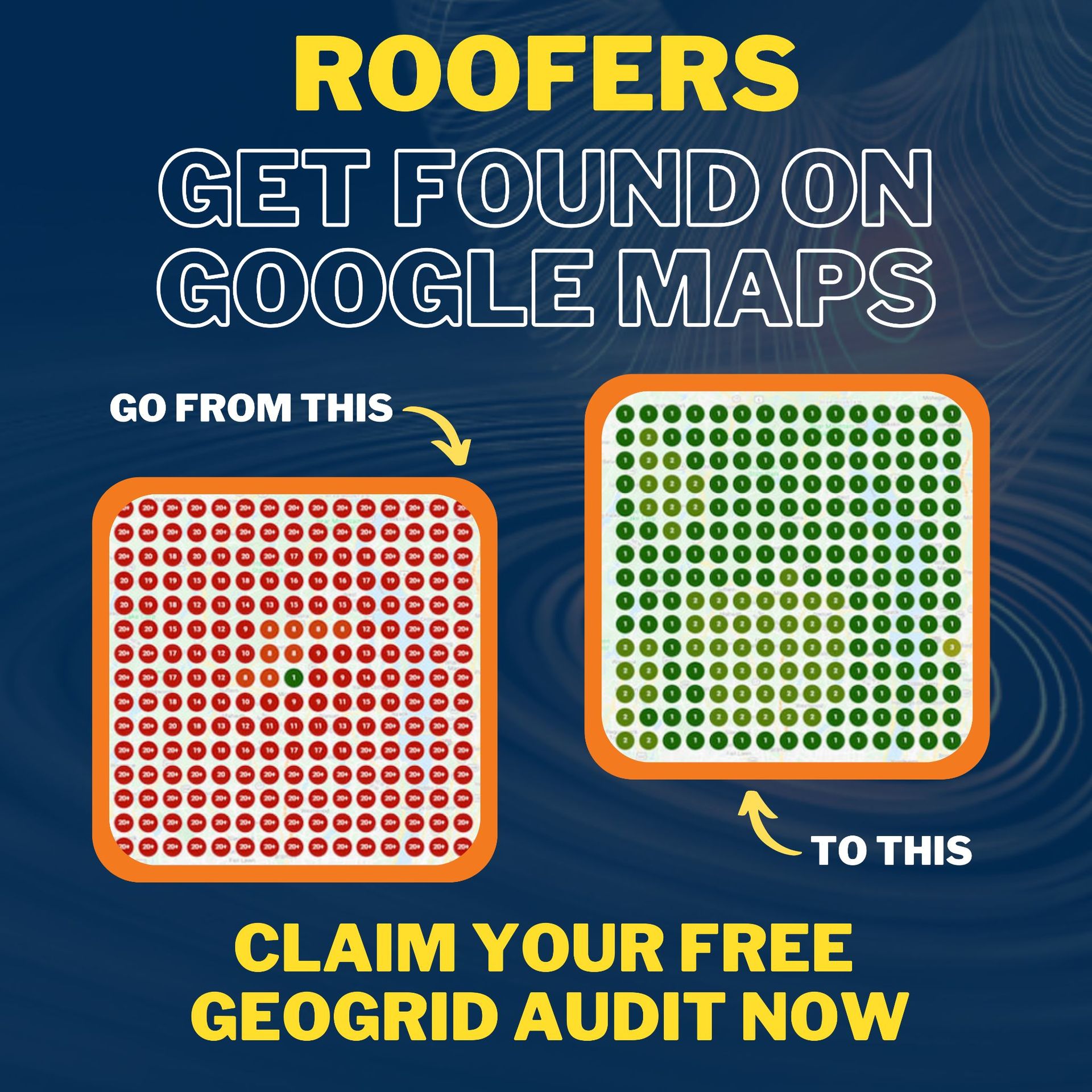
We already run GeoGrid scans for every client — real rankings at real coordinates across the service area, rather than one flattering number checked from the office. We now run the same discipline against AI search: the questions your buyers actually ask, tracked weekly across ChatGPT, Perplexity, AI Overviews and AI Mode, with competitors named alongside you. Most agencies selling AI optimization report a single number for the whole business. That number is the AI equivalent of checking your Google ranking from your own parking lot.
Every square is a homeowner asking AI for a roofer. Start at your own address, then tap one across town.
This shows the mechanic. We'll show you your actual numbers.
Get your AI visibility reportAn illustration, not a measurement. AI assistants answer local questions using local evidence — your Google Business Profile, citations, reviews and the pages on your site that name the places you work. A business with evidence in one place gets named in one place. This models that relationship so you can see it. It is not a reading of your actual visibility. That comes from the tracked prompt data we run weekly across ChatGPT, Perplexity and Google's AI surfaces, and it reports real answers with your competitors named alongside you.
What the Work Involves
None of this is a separate product bolted onto your marketing. It is the same architecture that wins the Map Pack, built with AI readability in mind from the start.
Answer-shaped content
AI assistants quote pages that answer a question directly. That means real questions written the way a homeowner asks them, answered in the first two sentences rather than after four paragraphs of preamble. Pricing ranges, timelines, insurance process, what happens after a hailstorm — the things people actually ask.
Structured data an assistant can trust
Schema markup for your organization, services, locations, reviews and FAQs. Consistent business information everywhere it appears. This is the machine-readable layer, and it is the part most roofing websites skip entirely — which is why how your website is built decides more than how it looks.
Geographic evidence
A page for each market you want work in, with substance on it: the neighborhoods, the roof types common to that housing stock, local storm history, jobs you have completed there. A list of fifteen town names gives an AI nothing to work with.
Third-party corroboration
Your website is the primary source. Your Google Business Profile, directory citations, review platforms and industry listings are what an assistant checks it against. When your site claims something no other source confirms, the claim carries little weight.
Measurement, weekly
Tracked prompts across the platforms that matter, with your competitors named alongside you, so you can see share of voice rather than a citation count in isolation. You get the report whether the news is good or not.
What Makes This Different
Answer Engine Optimization is not a new idea and we are not claiming to have invented it. Several agencies now sell it to contractors. Two things separate how we do it
We measure AI visibility by location, not as a single number
Every AI optimization offer we have reviewed reports whether a business gets cited. None of them report where. Because we already run geographic rank tracking for the Map Pack, extending the same method to AI search was the obvious next step — and so far, nobody else has.
One roofing company per market
We work with roofing contractors only, and only one in any given market. That is not a marketing line — it is the reason we can put a competitor's name in your report and tell you honestly where they are beating you. An agency working with three roofers in your metro cannot do that. See what it looks like in practice in the Big River Roofing case study.
Is It Too Early to Worry About This?
Reasonable question, and the honest answer is that it depends on your market.
AI search is not yet the main way homeowners find roofers. Google and the Map Pack still are, by a wide margin, and any agency telling you otherwise is selling urgency rather than results. If your Map Pack visibility is weak, fix that first — it is where the calls are today.
What has changed is that AI referrals now arrive qualified. The traffic we see from AI assistants engages at a far higher rate than direct traffic does, because the assistant has already done the filtering before the person clicks.
The practical position: this should be part of your SEO work, not a separate line item you buy in a panic. If your website is structured properly and your local evidence is real, most of the AI work is already done. If it is not, that is the same problem costing you Map Pack rankings right now.
Common Questions About AI Search for Roofers
Q: What is Answer Engine Optimization for roofers?
A: Answer Engine Optimization, or AEO, is the practice of structuring your roofing website and business information so AI assistants like ChatGPT, Perplexity and Google's AI Overviews cite your company when a homeowner asks who to call. It overlaps heavily with local SEO — the same structured pages, consistent business data and third-party corroboration that win the Google Map Pack are what an AI assistant reads before deciding who to recommend.
Q: What is the difference between AEO, GEO and AI SEO?
A: Very little in practice. AEO stands for Answer Engine Optimization, GEO for Generative Engine Optimization, and AI SEO is the plain-language version. Different agencies favor different labels for the same work: making your business the one an AI names. We use AI SEO because it is the term roofing contractors actually recognize.
Q: Does AI search actually send roofing leads today?
A: Some, and growing. It is not yet close to Google and the Map Pack in volume, and any agency claiming otherwise is overselling. What is notable is quality — visitors arriving from AI assistants engage at a much higher rate than average, because the assistant has already filtered before they click. Treat it as a channel worth building, not one worth panicking about.
Q: Do I need this if my Google Maps rankings are already good?
A: It helps, because the evidence base overlaps. Strong Map Pack rankings usually mean your Google Business Profile, citations and local pages are in decent shape, which is most of what an AI assistant reads. The gap is usually content — Map Pack success does not require answer-shaped pages, and AI citation does.
Q: Can you tell me where I currently appear in AI answers?
A: Yes. We track the questions your buyers ask across ChatGPT, Perplexity, Google AI Overviews and AI Mode, weekly, with your competitors named alongside you. You see share of voice rather than a citation count in isolation, and you get the report whether the news is good or not.
Q: How do I get my roofing company to show up in ChatGPT?
A: Four things, in order of impact. Publish pages that answer the questions homeowners actually ask, in plain language, with the answer in the first two sentences. Make sure your business information is identical everywhere it appears online. Build a real page for each market you serve rather than a list of town names. And get corroborated by third parties — your Google Business Profile, directory citations and review platforms are what an assistant checks your claims against. There is no shortcut and no schema trick that skips those four.
Q: Is AEO replacing SEO?
A: No. AI assistants read the same web that Google indexes, so the work that earns rankings largely earns citations too. What changes is emphasis: structure, consistency and direct answers matter more for AI than they do for a blue link. Anyone selling AEO as a replacement for SEO is selling you two things you only need once.
Find Out Where You Stand
Book a free strategy session and we will run the questions your buyers ask across ChatGPT, Perplexity and Google's AI surfaces, and show you who gets named in your market. If it is a competitor, you will see their name.
We work with roofing contractors only, one per market. You keep the findings either way, and if your city is already taken we will tell you on the call. If you would rather start on your own, the free 40-point website inspection covers the structural half of this in about ten minutes.