

Cary Byrd // Founder of CinchLocal
Why Local Service Area Ads Are a Game-Changer for Roofing Contractors
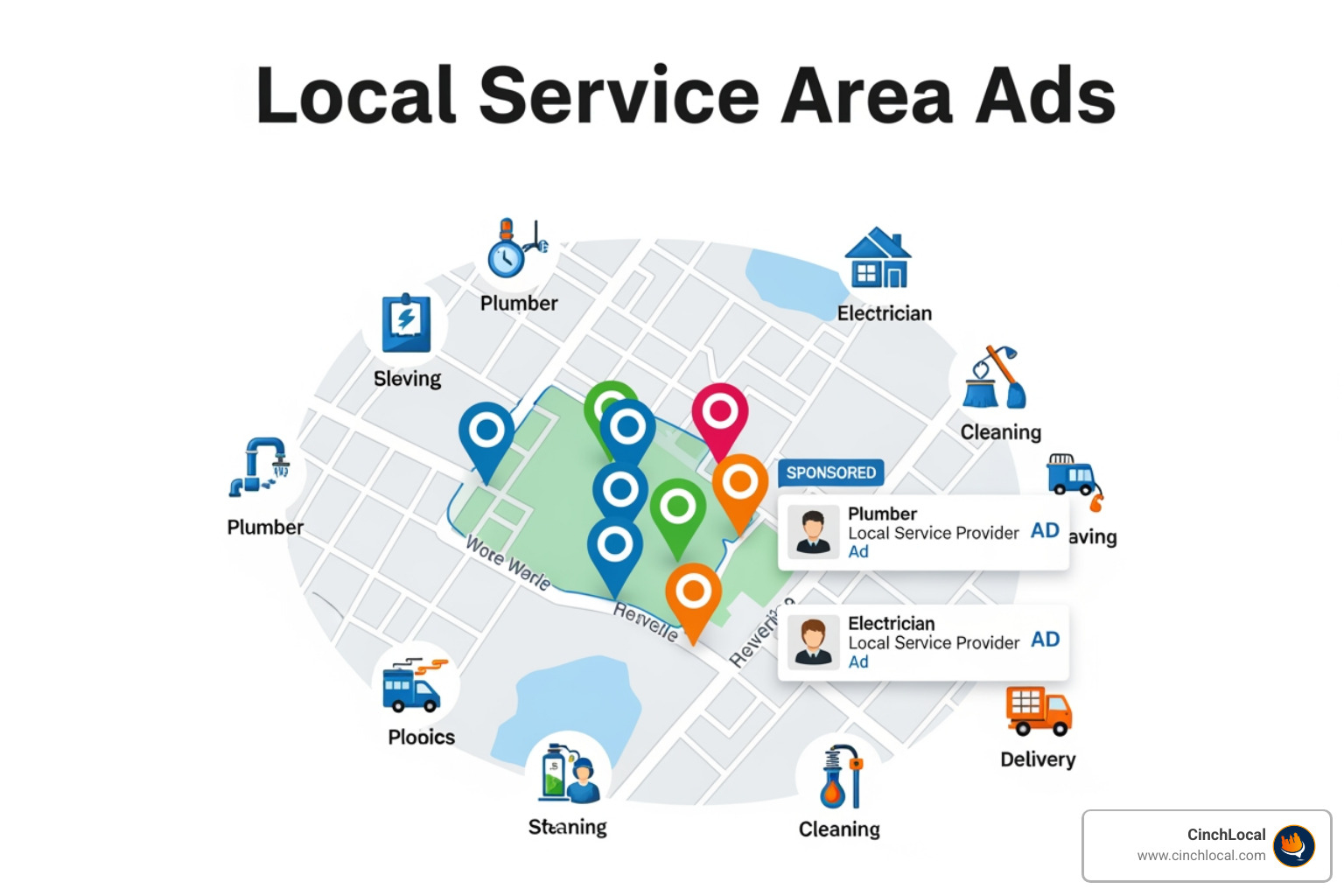
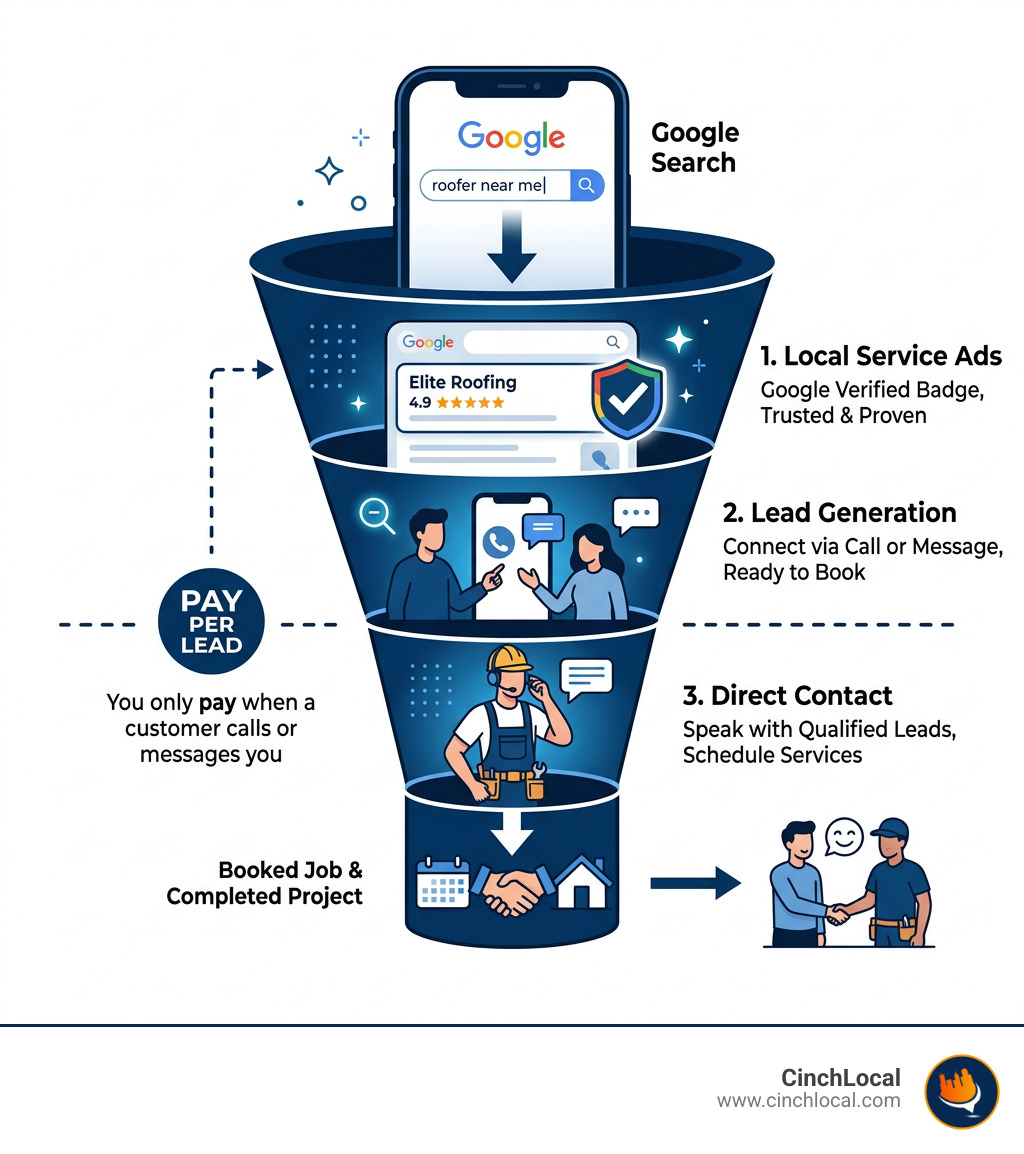
Local service area ads are Google's pay-per-lead advertising program that places verified service businesses at the very top of search results — above standard Google Ads, above the map pack, and above all organic listings.
Here's a quick summary of what you need to know:
| Topic | Key Facts |
|---|---|
| What they are | Pay-per-lead ads that appear at the top of Google Search |
| Who they're for | Verified local service businesses (roofers, plumbers, HVAC, electricians, etc.) |
| How you pay | Only when a customer calls or messages you — not per click |
| Cost per lead | $5–$139 in the US; $12–$30 in Canada |
| Trust signal | Google Verified badge shown on every ad |
| Eligibility | 24 categories in the US; 4 categories in Canada (expanding) |
If you're a roofing contractor tired of paying for clicks that go nowhere, this is worth your full attention.
Most roofing contractors are leaving serious money on the table. They're running standard Google Ads, paying for every click — whether it's a homeowner ready to hire or a competitor clicking out of curiosity. Local Services Ads (LSAs) flip that model entirely. You only pay when someone actually contacts you.
That's not a small distinction. It's the difference between burning through a budget and building a real lead pipeline.
And there's more. Every LSA comes with a Google Verified badge — a trust signal that tells homeowners Google has checked your background, licenses, and insurance. For a roofing contractor competing against fly-by-night operations, that badge can be the reason a homeowner picks up the phone and calls you instead of your competitor.
For roofing businesses specifically, leads from LSAs tend to be high-intent. Someone searching "roofer near me" at 7pm after a hailstorm isn't browsing — they're ready to book. LSAs put you in front of that person first. That's why roofing marketing agencies that specialize in local lead generation treat LSAs as one of the most powerful tools in the mix.
I'm Cary Byrd , CEO and founder of CinchLocal — a roofing marketing agency that has helped contractors across the US leverage local service area ads to generate consistent, qualified leads at a predictable cost. In this guide, I'll walk you through exactly how to find, set up, and optimize LSAs so your roofing business gets the most out of every dollar spent.
Understanding the Mechanics: LSAs vs. Traditional Google Ads
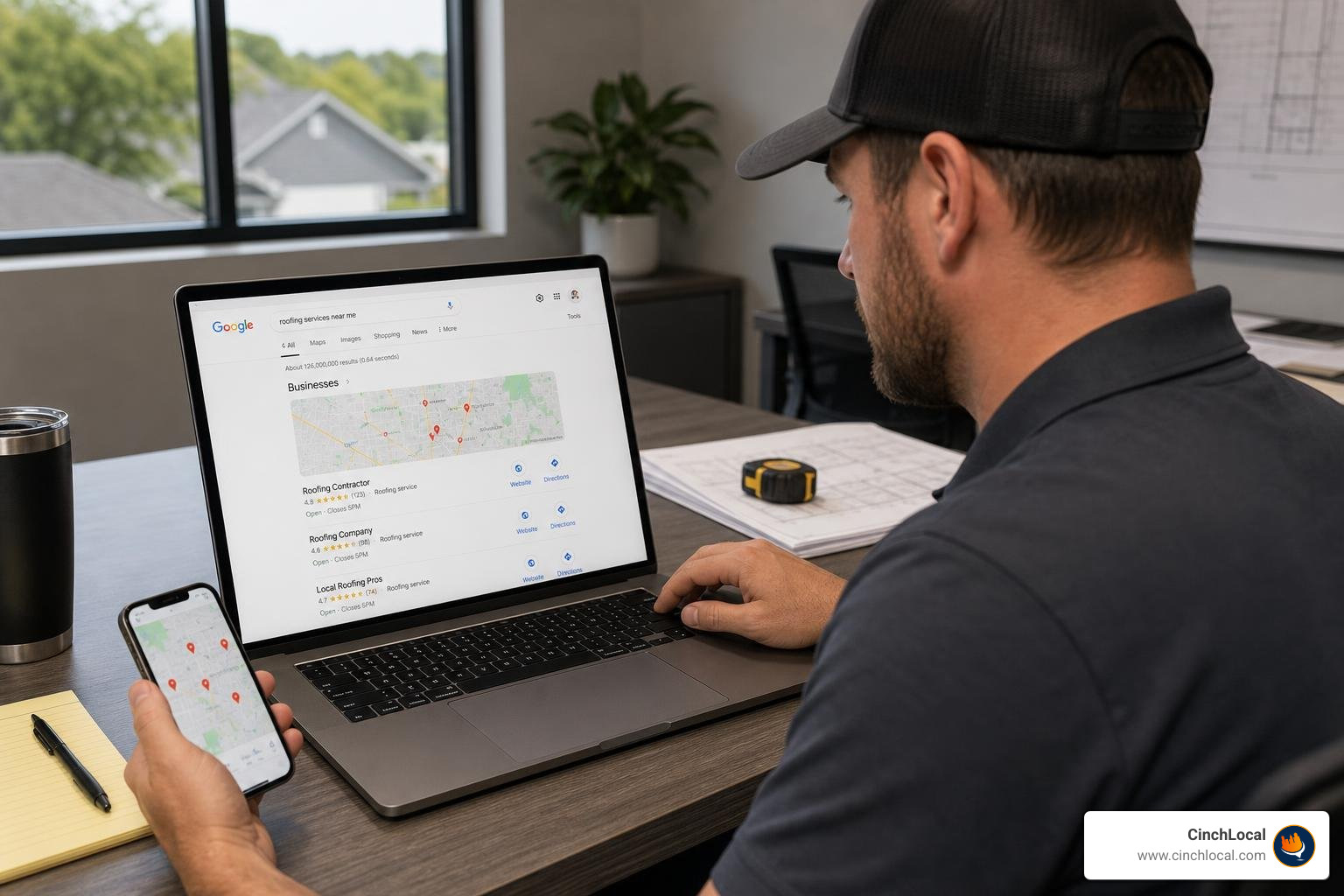
To dominate your local market, you first need to understand where your money is going. Many contractors confuse local service area ads with traditional Google Search Ads, but they function on entirely different engines. Traditional Google Ads are customizable, text-based advertisements that operate on a pay-per-click (PPC) basis. You bid on keywords like "roof repair," and every time a curious user clicks your link, you pay—regardless of whether they ever call you.
In contrast, local service area ads are lead-generation listings designed specifically for verified local service providers. They appear at the absolute top of the search engine results page (SERP), even above the traditional paid ads. When a homeowner searches for a roofer, they see your business name, star rating, and that coveted Google Verified badge.
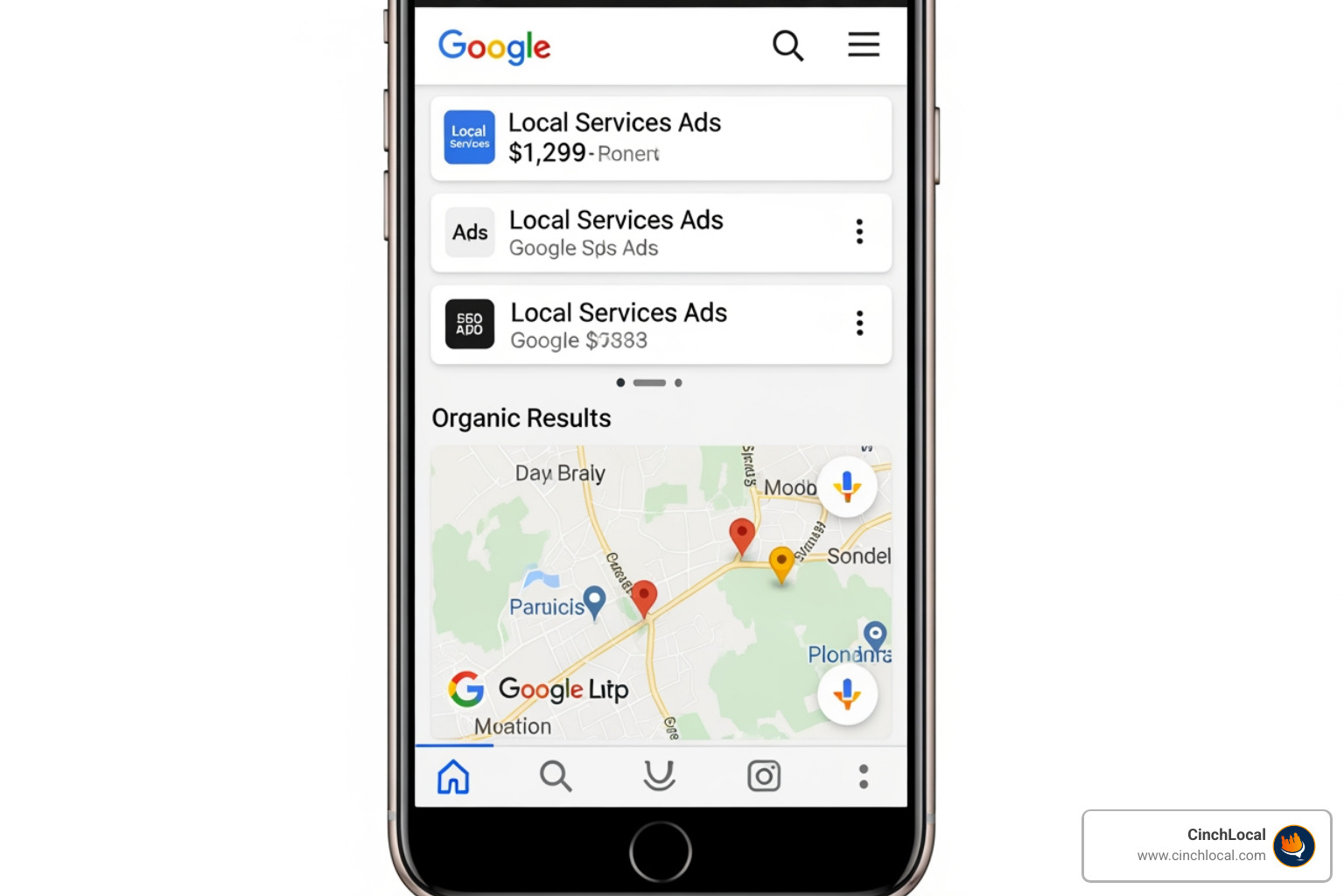
The primary difference lies in the billing and trust factors. While traditional ads require constant keyword monitoring and landing page optimization, LSAs focus on your reputation and responsiveness. Because they are positioned so prominently, they often capture the "low-hanging fruit"—customers who need a service immediately and trust Google’s vetted recommendations. Understanding what is the best platform for roofing advertising often comes down to balancing these two powerful tools.
| Feature | Local Services Ads (LSA) | Traditional Google Ads (PPC) |
|---|---|---|
| Payment Model | Pay-per-lead (Calls/Messages) | Pay-per-click |
| Ad Placement | Top of page (Above all else) | Below LSAs |
| Trust Signal | Google Verified/Guaranteed Badge | None (Standard text) |
| Targeting | Service types and zip codes | Keywords and phrases |
| Verification | Background & license checks required | None required |
The Pay-Per-Lead Advantage for Contractors
The most significant "win" for a roofing contractor using local service area ads is the pay-per-lead model. We have seen cost-per-lead (CPL) in the US range anywhere from $5.00 to over $139.00 depending on the competitiveness of the market. However, unlike PPC, you aren't paying for "window shoppers." Google defines a qualified lead as a phone call, a text message, or a booking request from a potential customer.
To ensure billing accuracy, Google records all calls generated through the platform. This provides a layer of protection for your marketing budget. If you receive a "lead" that is actually a telemarketer, a wrong number, or a job seeker, you can use the Official Google Local Services Ads help page resources to understand how to dispute these charges. This dispute resolution process is a massive advantage for contractors who are tired of wasting money on junk traffic.
Key Information Displayed in Your Ad
Your local service area ads act as a condensed version of your business profile. Because users often make split-second decisions, Google displays only the most critical data points:
- Business Name and Hours: Let customers know you are open and ready to take their call.
- Star Ratings and Reviews: These are pulled directly from your Google Business Profile. High ratings are the lifeblood of LSA success.
- Service Area: Google confirms you actually serve the location the user is searching from.
- Business Bio: A short snippet highlighting unique selling points, such as "Family Owned" or "Free Estimates."
5 Clever Ways to Find and Optimize local service area ads for Maximum ROI
Simply "turning on" your ads isn't enough to beat the competition in cities like Nashville or Columbus. You need a strategic approach to ensure your business stays at the top of that three-card carousel.
Optimization is an ongoing process. We recommend a "data-first" approach, where you monitor which job types are converting and adjust your settings accordingly. For a deeper dive into tailored strategies, check out our guide on local service area ads for roofers.
1. Securing the Google Verified Badge
The "Google Verified" or "Google Guaranteed" badge is more than just a green checkmark; it is a powerful psychological trigger for homeowners. To obtain this badge, roofing contractors must pass a rigorous screening process. This includes:
- Background Checks: Google conducts checks on the business owner and, in some cases, field employees who enter customers' homes.
- License Verification: You must provide proof of valid state and local roofing licenses.
- Liability Insurance: You must submit a current certificate of insurance (COI) that meets Google’s minimum requirements.
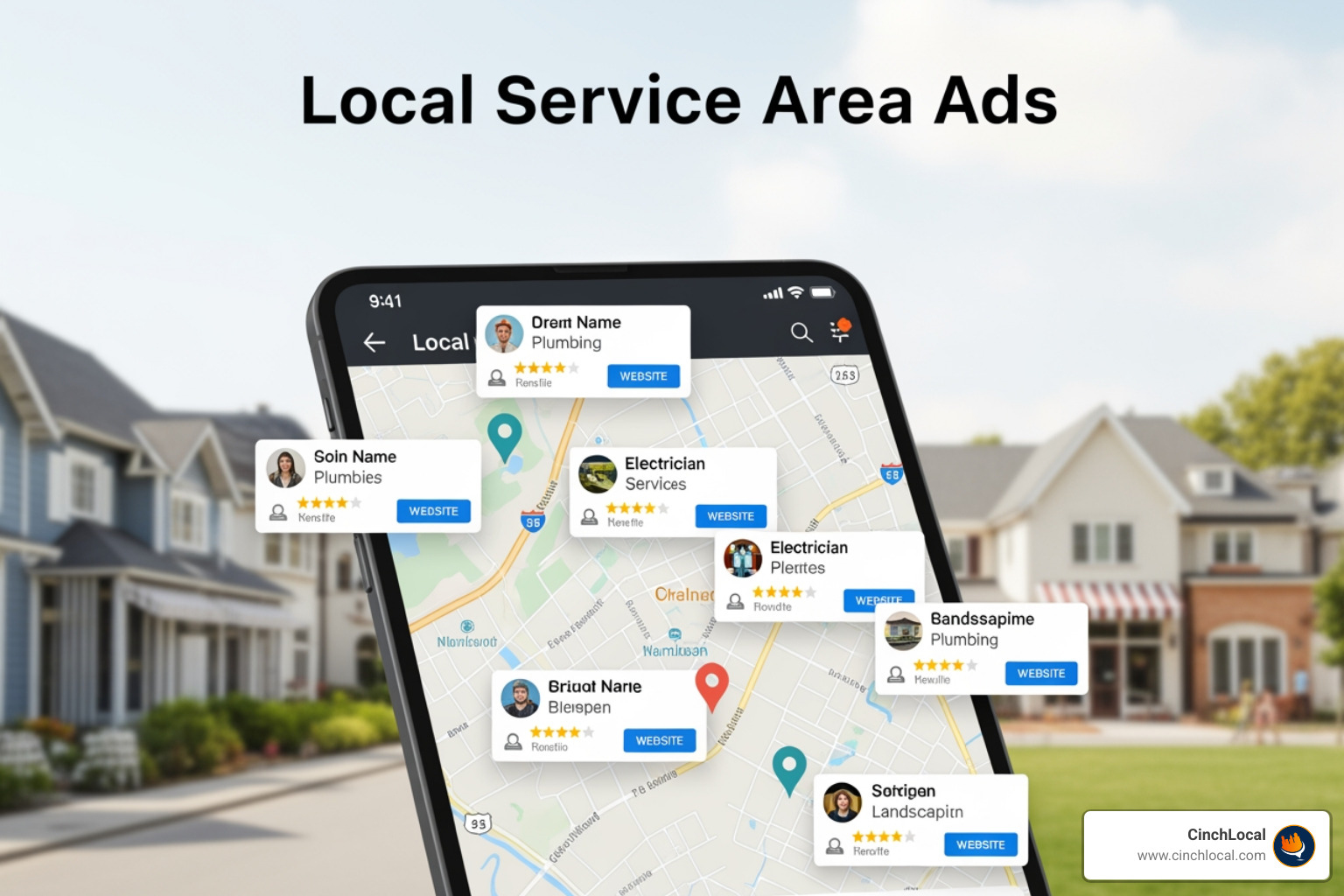
Earning this badge tells the customer that Google backs your work. In fact, if a customer is dissatisfied with the quality of work from a Google Guaranteed pro, Google may refund the amount paid for the service (up to a lifetime limit of $2,000). This risk mitigation makes homeowners much more likely to click your ad over a non-verified competitor, adhering to the high standards of consumer trust recommended by the Federal Trade Commission.
2. Defining Your local service area ads Reach
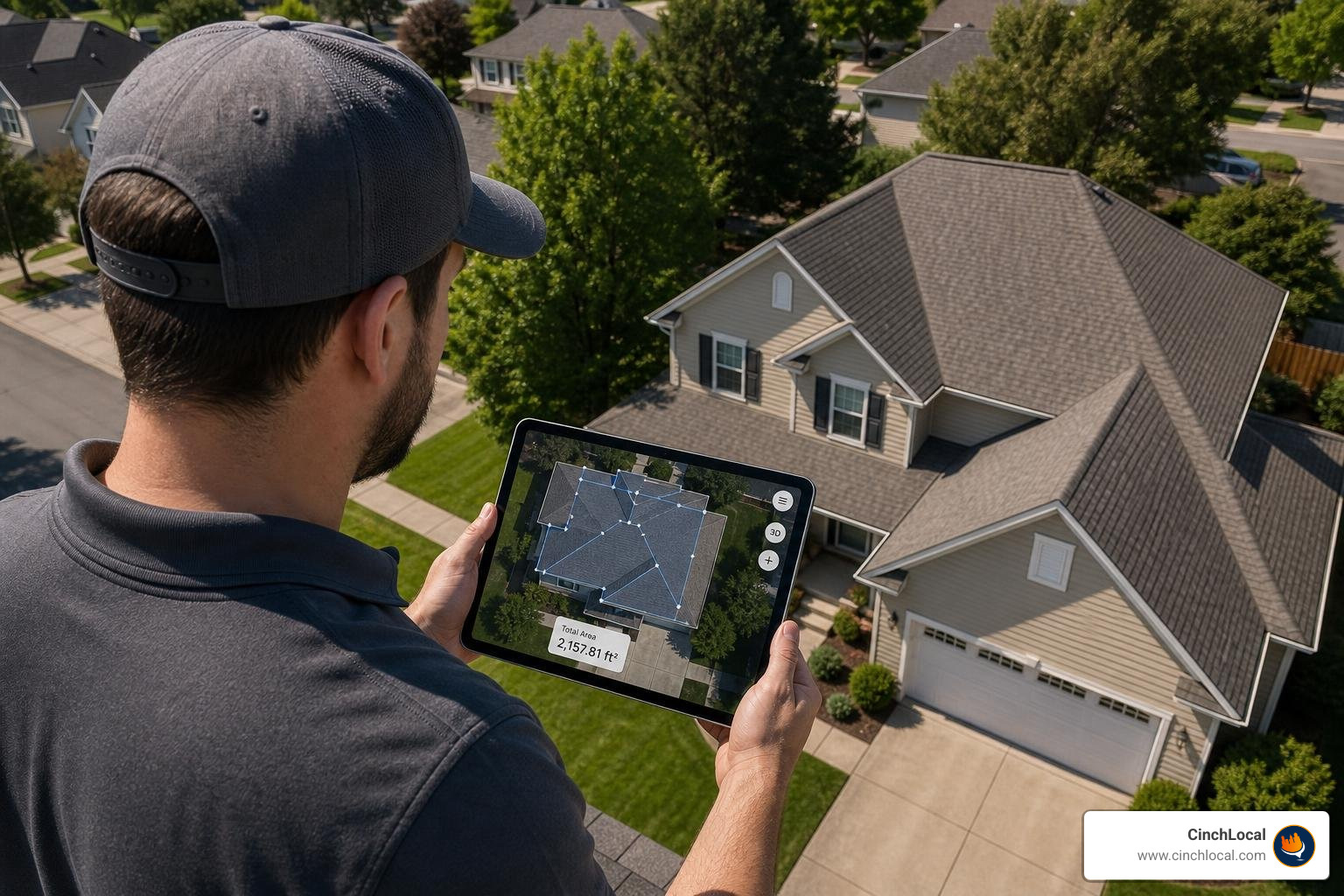
One of the most common mistakes we see is a service area that is too broad. If your roofing crew is based in Cincinnati but your ads are showing in Dayton, you might get calls, but your travel time will eat your profits. Local service area ads allow you to get extremely granular with your geographic targeting.
You can set your service areas by city, county, or specific postal codes. We often suggest excluding certain zip codes where you know the housing stock is too new for roof replacements or where the demographics don't match your target customer. By refining your reach, you ensure your budget is spent only on the most profitable neighborhoods. To see how this looks in practice, you can see our proven local SEO results which highlight how geographic precision drives ROI.
Furthermore, your LSA performance is closely tied to your proximity to the searcher. Combining these ads with mastering Google Maps for roofers creates a "surround sound" effect where your business appears in the ads, the map pack, and the organic results simultaneously.
3. Managing Leads and Reviews via local service area ads
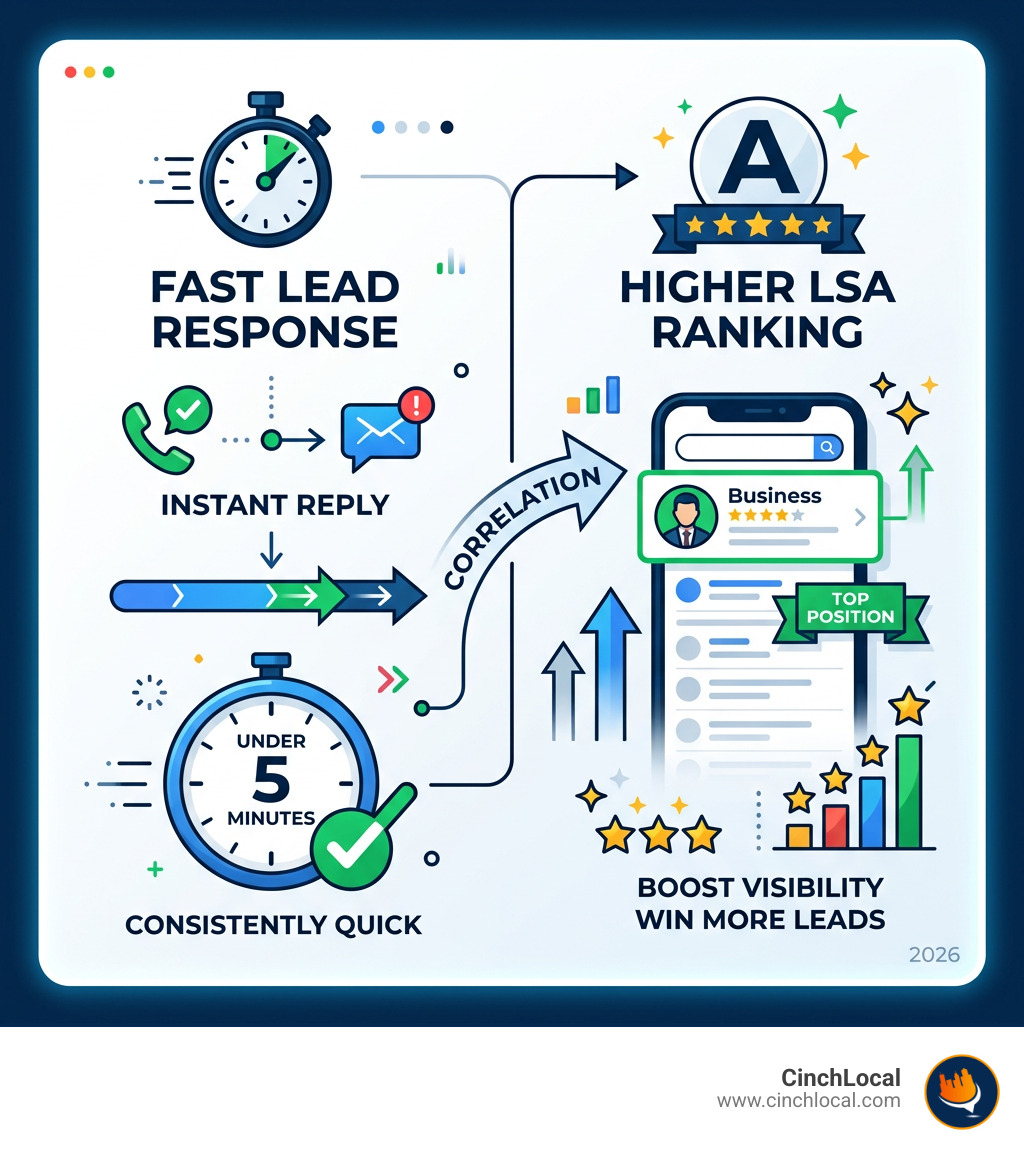
The LSA dashboard is your command center. When a lead comes in, you receive a notification via the app or email. Speed to lead is everything. Google tracks your response time; if you consistently let calls go to voicemail or ignore message requests, your ad ranking will drop.
Once a job is completed, you should immediately use the dashboard to solicit a review. Reviews gathered specifically through the LSA platform carry significant weight. They are marked as "Google Verified" reviews, providing even more social proof than standard reviews. Managing this reputation is similar to how HVAC companies dominate local search —by being the most responsive and highly-rated option on the screen.
4. Strategic Job Type Selection
Google allows you to toggle specific "job types" on and off. For a roofing contractor, this is a massive optimization lever. If your schedule is full of minor repairs but you are looking for high-ticket full replacements, you can uncheck "roof repair" and focus solely on "roof installation."
Common job types for roofers include:
- Roof inspection
- Roof repair
- Roof installation/replacement
- Skylight installation
- Gutter services
- Emergency tarping/hail damage
By selecting only the services you actually want to perform, you prevent paying for leads that don't align with your business goals. This relevance is key to maintaining a healthy profit margin on your ad spend. If you need help identifying which high-ticket services to prioritize, reach out to our team for a custom strategy.
5. Budget Control and Bidding Strategies
Your LSA budget is set on a weekly basis. You tell Google the maximum amount you are willing to spend, and they estimate how many leads that will generate. The beauty of this system is its flexibility. If a massive storm hits your area, you can instantly scale up your budget to capture the surge in demand. Conversely, during the slow winter months, you can dial it back to save capital.
It is also important to understand the terms and conditions for ad credits that Google often provides to new advertisers. These credits can help offset the initial costs of the verification process. We recommend starting with a "Maximize Leads" bidding strategy, which lets Google's AI find the best price per lead based on your budget, rather than trying to manually bid on every lead.
Eligibility and Regional Differences: US vs. Canada
While local service area ads are a staple in the US, the program is still evolving in other regions. In the United States, there are currently 24 different eligible business categories, ranging from roofers and plumbers to lawyers and financial planners.
In Canada, the program is more focused. During its beta phase, Canada launched with 4 primary categories, including roofing. This means Canadian roofing contractors have a unique opportunity to get in early before the market becomes oversaturated. If you are unsure if your specific trade is covered, you should check your business eligibility via the official Google portal.
Step-by-Step Setup Guide for Roofing Contractors
Ready to get started? The setup process is straightforward, but it requires attention to detail. Any discrepancy between your business name on your license and your Google profile can lead to a rejection.
- Check Eligibility: Confirm your category and service area are supported.
- Create Your Profile: Enter your business name, phone number, and address. Use a dedicated tracking number if possible.
- Set Your Service Areas and Job Types: Be specific to avoid wasted leads.
- Set Your Weekly Budget: Start with a comfortable amount and scale as you see results.
- Submit Documentation: Upload your business license and insurance certificate.
Many contractors ask us about roofing Facebook ads vs LSAs. While Facebook is great for "disruption" marketing (showing ads to people who aren't necessarily looking for a roofer right now), LSAs target "active intent." Both have their place, but LSAs are usually the faster path to a booked job.
Completing the Verification Process
The verification stage is where most contractors get stuck. Google uses third-party partners to conduct background checks. You will need to provide:
- Social Security numbers for owners.
- Background check consent for any employee who will visit a customer's home.
- Clear photos of your business license and proof of insurance.
Ensure that the address on your insurance policy matches the address on your Google Business Profile exactly. Even a "Street" vs. "St." discrepancy can sometimes cause delays in the approval process.
Launching and Monitoring Performance
Once you are approved, your ads will go live. This is not a "set it and forget it" system. You must actively manage your leads in the dashboard. Mark leads as "Booked" once you schedule an appointment. This tells Google’s algorithm that you are successfully converting their leads, which can actually improve your ad's ranking. Regularly review your ROI by comparing your total LSA spend against the total revenue generated from those jobs. If the technical setup feels overwhelming, book a consultation with CinchLocal to have our experts handle the heavy lifting for you.
Conclusion and Frequently Asked Questions
At CinchLocal, we understand that as a roofing contractor, your time is best spent on a roof or managing your crews—not fighting with an ad dashboard. Our "Roofer Footprint Expansion System" is designed to handle the heavy lifting of local service area ads , Google Maps visibility, and lead generation. We are so confident in our process that we guarantee increased visibility and pre-sold leads within 30 days.
If you are ready to stop paying for clicks and start paying for customers, schedule your free strategy session with CinchLocal today. We serve contractors across the USA, including major hubs in Ohio, Tennessee, Georgia, and California.
What is the average cost per lead for roofers?
In the US, roofing leads typically range from $100 to $150+ because of the high ticket value of the jobs. In Canada, during the beta phase, we've seen CPLs vary between $12 and $30. These prices fluctuate based on your specific city and how many other contractors are competing for the same leads.
Can I dispute invalid leads in LSAs?
Yes! This is one of the best features of the platform. You can dispute leads for several reasons:
- The job is for a service you don't provide.
- The customer is outside your designated service area.
- The lead is a bot, spam, or a solicitation.
- The contact information is invalid. Google will review the recording and, if they agree, credit the cost of that lead back to your account.
How do LSAs work with my existing SEO?
LSAs and SEO are the perfect "one-two punch." While SEO builds long-term authority and "free" traffic, LSAs provide immediate visibility at the top of the page. When you dominate both, you capture the majority of the search real estate. Using GMB marketing solutions alongside your ads ensures that even if a customer skips the ad, they find your highly-rated business in the map pack right below it.
Want Us to Uncover Hidden 'Footprint Gaps' And Critical Blind Spots That’s Quietly Draining Calls, Jobs, and Profits?
Simply Fill Out The Form Below:
What If You Could Stop Wasting $30K+ a Year on Dead-End Marketing - And Finally Become the Go-To Roofer in Your City?
Other Helpful Articles You Might Enjoy