

Cary Byrd // Founder of CinchLocal
Why Google Local Packs Are the Most Valuable Real Estate in Roofing Marketing
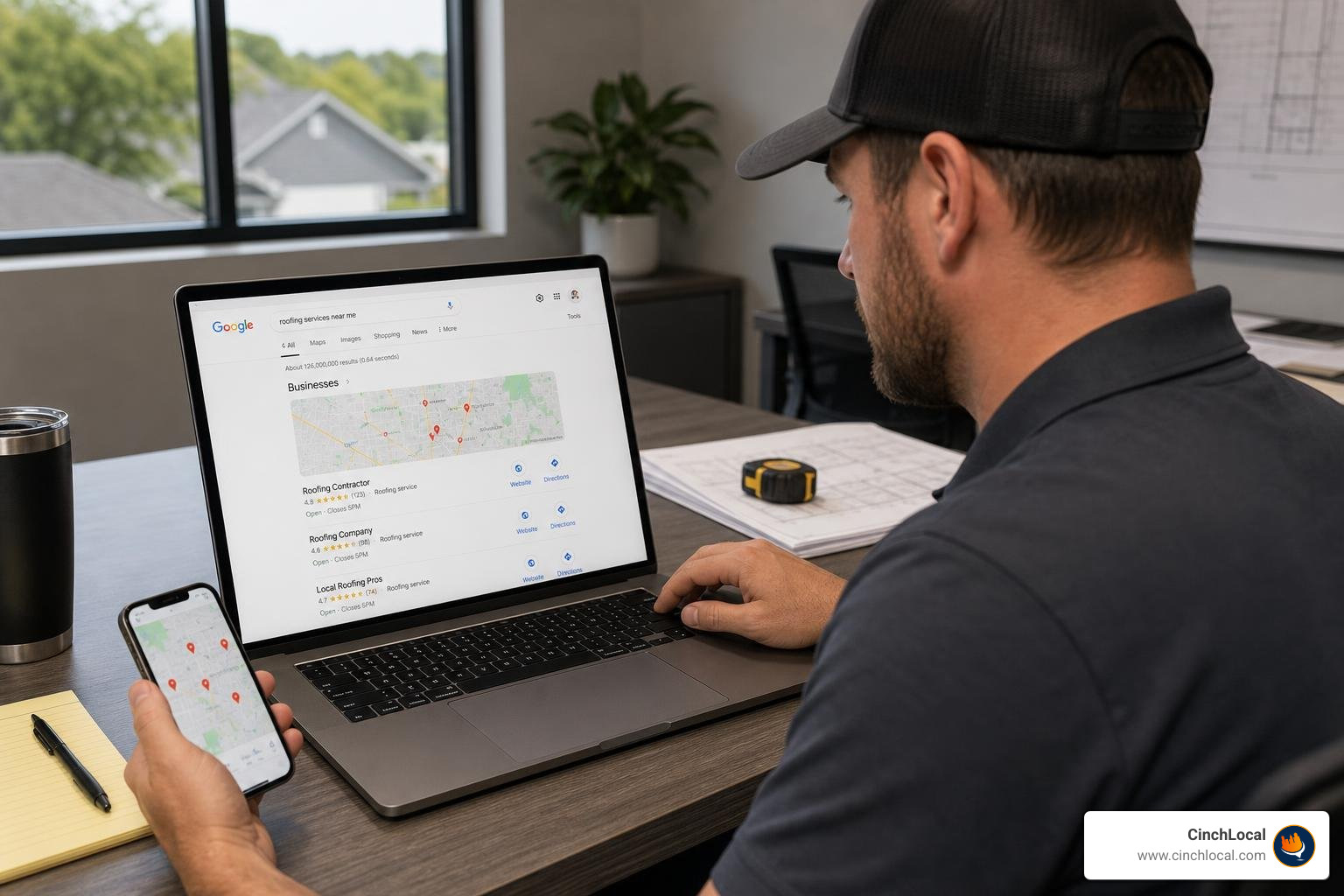
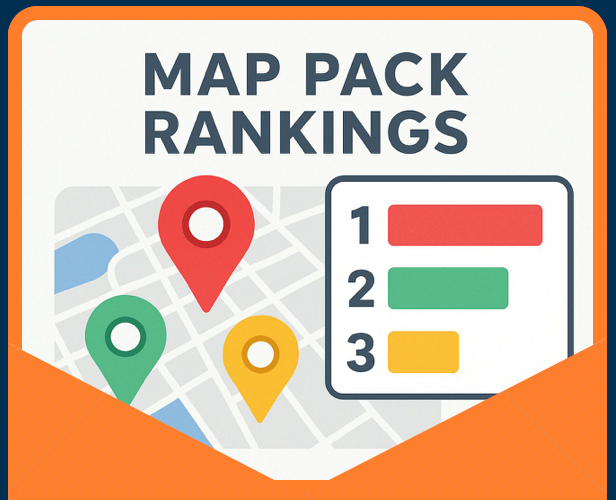
Google Local Packs are the block of three local business listings that appear at the top of Google's search results for location-based queries — sitting above all organic results, alongside a map.
Here is what you need to know at a glance:
| What | Details |
|---|---|
| What it is | A map + 3 business listings shown at the top of local search results |
| Also called | Map Pack, 3-Pack, Snack Pack |
| Triggered by | Searches like "roofer near me" or "roof repair in Austin" |
| Why it matters | Gets 40-60% more clicks than organic results below it |
| Key ranking factors | Relevance, Distance, Prominence |
| How to get in | Optimize your Google Business Profile, earn reviews, build citations |
For roofing contractors, this is not a nice-to-have. It is the single most important piece of digital real estate you can own.
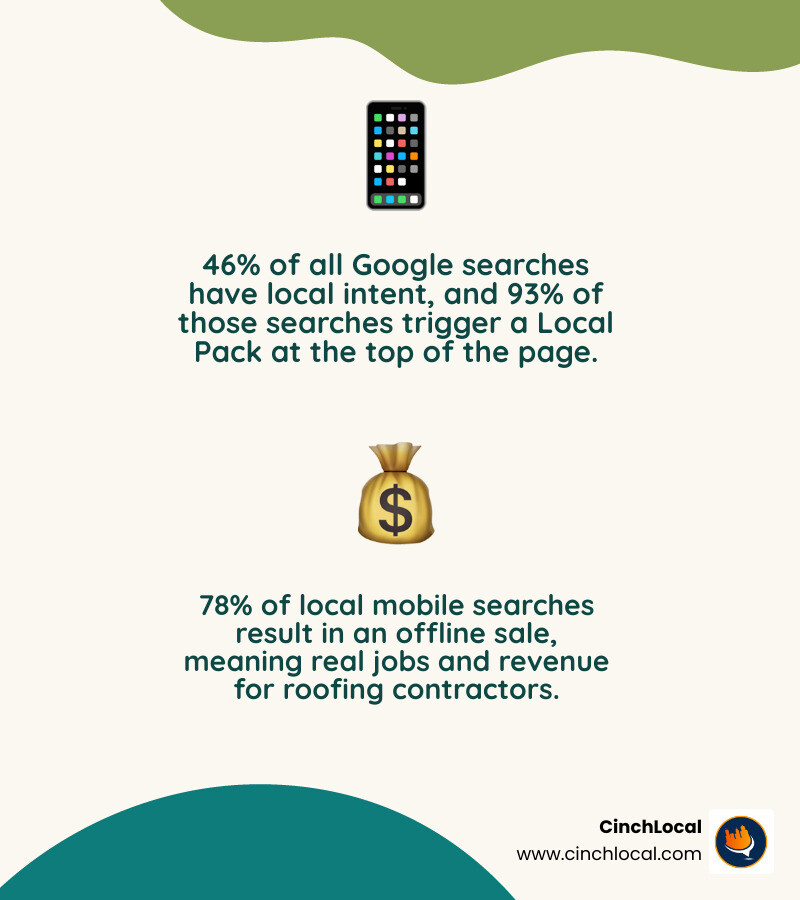
Consider this: 46% of all Google searches have local intent, and 93% of those searches trigger a Local Pack at the top of the page. When a homeowner's roof is leaking and they grab their phone, your roofing company either shows up in those top three spots — or it might as well not exist.
The stakes are high. Approximately 50% of people who make a local search on their phone visit a nearby business within 24 hours. And 78% of local mobile searches result in an offline sale. That is not website traffic — those are real jobs, real revenue, and real growth.
Yet only 44% of businesses appear in the Local Pack for their primary keyword. That gap is your opportunity.
The Local Pack has not always looked the way it does today. Google used to show seven local results (the "7-pack") before switching to three listings in 2015 — a change driven almost entirely by mobile readability. That tighter, faster format is exactly why it commands so much attention from searchers and why ranking in it can transform a roofing business.
I'm Cary Byrd, CEO and founder of CinchLocal, a roofing marketing agency that specializes in Google Local Packs and Maps rankings for contractors across the country. Over the past decade, I've helped roofing companies go from invisible in local search to dominating their local markets — and this guide covers exactly how it works.
What Are Google Local Packs and Why Do They Dominate Roofer Marketing?
The Google Local Pack (often called the 3-Pack or Map Pack) is the highly visible, map-backed search feature that displays the top three local business listings for any query with local intent. When a homeowner in Columbus, Ohio, searches for "commercial flat roof repair" or a property manager in Los Angeles, California, searches for "emergency roof inspection," Google serves this interactive feature before displaying the traditional "blue link" organic search results.
Understanding the difference between the various local search surfaces is critical for your marketing strategy:
- The Local Pack: The curated block of exactly three business listings displayed directly on the main Google Search Results Page (SERP). It captures 44% of all clicks on local search queries.
- The Local Finder: The expanded list of 20+ businesses that appears when a user clicks "More services" or "View all" at the bottom of the Local Pack.
- Google Maps: The standalone mapping application and website where users search, navigate, and discover businesses based on real-time location.
While these surfaces are connected, they use slightly different algorithmic weightings. For busy contractors, the primary target must always be the Local Pack. Why? Because the top three positions capture the vast majority of search traffic, driving direct calls, website visits, and driving directions.
To dive deeper into how these elements display on different devices, read our guide on Google Local Pack Results Explained for Local Businesses.
Ranking in the Local Pack is the ultimate shortcut to bypassing national directory sites like Yelp or Angi. Instead of paying for shared leads that are sold to five of your competitors, appearing in the Local Pack establishes your brand as a trusted authority. For a detailed breakdown of the technical components of these listings, you can review the glossary entry on What is the Local Pack?.
The Three Pillars of Local Pack Rankings: Relevance, Distance, and Prominence
Google’s local search algorithm determines which three businesses earn a spot in the Local Pack using three main pillars: Relevance , Distance , and Prominence .
While the 2021 "Vicinity" update heavily shifted the algorithm to favor proximity (making it harder for a single office to rank across an entire metropolitan area), a balanced optimization strategy targeting all three pillars is still the only way to secure long-term visibility. For a deep dive into the mechanics of this algorithm, check out Google's official guide on local rankings.
To climb the local rankings, you must master how Google evaluates each of these pillars. You can learn more about this process in our article on how to Climb the Local Ladder: Ranking Higher on Google Maps.
How Relevance Connects Your Services to Google Local Packs
Relevance is how well a local business profile matches what a user is looking for. Google determines relevance by analyzing your primary business category, subcategories, business description, website content, and the specific services you list on your profile.
If a homeowner searches for "metal roof installation" in Nashville, Tennessee, Google will prioritize a profile with "Roofing Contractor" as its primary category and "metal roofing" explicitly listed under its services over a general "Home Builder" profile.
To learn how to align your services with Google's category expectations, read our specialized guide on Map Pack Mastery: Local SEO Strategies for Roofing Companies.
Why Distance and Proximity Dictate Your Local Footprint
Distance refers to how close your business is to the searcher or the geographic modifier they use (e.g., "roofers in Atlanta, Georgia"). If a user does not specify a location, Google calculates distance using their device's GPS coordinates, IP address, or past search history.
For Service Area Businesses (SABs) like roofing contractors who do not have a physical showroom, managing your service area settings properly is vital. Defining your service zones accurately prevents Google from diluting your proximity signals.
To see how developers and advanced marketers track these hyper-local coordinates programmatically, refer to the Google Local Pack API - SerpApi.
Building Prominence to Outshine Competitors in Google Local Packs
Prominence is a measure of how well-known and trusted your roofing business is across the web. Google calculates prominence using information it gathers from links, articles, local directories, and review platforms.
To build prominence, you must focus on:
- Local Backlinks: Links from local chambers of commerce, regional business associations, and local news outlets.
- Directory Citations: Consistent Name, Address, and Phone number (NAP) listings on authoritative platforms.
- Review Signals: The volume, velocity, and diversity of your Google reviews.
Discover the systematic approach to building local authority in our comprehensive guide, The Secret to Dominating the Google Maps Local 3-Pack.
Optimizing Your Google Business Profile (GBP) for Maximum Visibility
Your Google Business Profile (GBP) is the absolute foundation of your local SEO strategy. Google Business Profile signals account for an estimated 36% of the ranking weight in the Local Pack algorithm. If your profile is incomplete, inaccurate, or inactive, you are giving away jobs to your competitors.
To optimize your profile for maximum visibility, follow this checklist:
- Primary Category Accuracy: Select "Roofing Contractor" as your primary category. Do not choose general contracting unless roofing is a minor part of your business.
- Completeness: Fill out every single field, including your hours of operation, service areas, phone number, website URL, and detailed services list. Complete profiles are 2.7 times more likely to be seen as reputable by searchers.
- Actionable Business Description: Write a 750-character business description that naturally includes your core services (e.g., "residential roof replacement," "commercial roof maintenance") and target cities in Ohio, Tennessee, Georgia, or California.
- Weekly Photo Uploads: Regularly upload high-resolution, geotagged photos of your actual work, crews, and marked trucks. Avoid generic stock photos; Google's vision models analyze these images to confirm your real-world business activity.
- Google Posts: Publish updates, special offers, and completed project highlights at least once a week to signal to Google that your business is active and engaged.
For a step-by-step optimization blueprint tailored specifically to roofing contractors, visit our dedicated service page on Google Maps Local SEO for Roofers. To see how we achieve top rankings for our clients, check out our proven Google Maps SEO results. To understand how these profile signals interact with other ranking factors, you can read the analysis in Moz's analysis of local search ranking factors.
Ready to dominate your local market? Don't let your competitors take your leads. Schedule a free discovery call with CinchLocal to start optimizing your Google Business Profile today.
The Roofer’s Guide to Reviews, Citations, and On-Page Local SEO
To secure a permanent spot in the top three, you must align your off-page citations and website optimization with your Google Business Profile. Review-related variables account for roughly 70% of the top 20 ordinal correlations with Local Pack positions.
However, many contractors fall into the 5-star rating trap . A perfect 5.0-star rating across hundreds of reviews can look unnatural to Google's spam-detection algorithms and may raise red flags for savvy consumers. The optimal sweet spot for conversions and rankings is a steady rating between 4.5 and 4.9 stars .
Additionally, focus on review velocity (getting 2-3 new reviews every single week rather than 50 all at once) and semantic review content . Encourage your customers to mention specific services and locations in their reviews (e.g., "They did an amazing job on our shingle roof replacement in Sacramento"). Google’s AI models read these reviews to verify your real-world capabilities.
To tie your website to your local presence, ensure your Name, Address, and Phone number (NAP) are perfectly consistent across the web. You must also implement LocalBusiness Schema Markup on your website's homepage and contact page.
| Optimization Type | Primary Function | Key Elements | Impact on Local Pack |
|---|---|---|---|
| Local Citations | Verifies business existence and physical location across third-party directories. | Consistent NAP, Yelp, YellowPages, local directories. | High impact on Prominence |
| On-Page Schema | Provides structured data directly to search engine crawlers in JSON-LD format. | @context, @type: RoofingContractor, GPS coordinates, areaServed. | High impact on Relevance |
To implement these strategies on your website, read our walkthrough on how to Get Your Business in the Google Maps 3-Pack With This Step-by-Step Guide. For advanced on-page optimization tactics, check out How to Nail Your Roofing Company's Map Pack Rankings.
AI Personalization and Behavioral Signals: The 2026 Local SEO Frontier
As we navigate through 2026, the local search landscape has evolved far beyond basic keyword matching. Google's integration of Gemini AI has ushered in an era of deep personalization. Today, Local Pack results are dynamically tailored based on a user's real-time search history, device type, time of day, and even their physical movement patterns.
This shift means that behavioral signals are now critical ranking factors. Google tracks how users interact with your local listing to determine whether you deserve to keep your top-3 ranking:
- Click-Through Rate (CTR): The percentage of searchers who click on your listing compared to others.
- Click-to-Call Actions: How many mobile users tap your phone number directly from the Local Pack.
- Driving Direction Requests: The volume of users requesting navigation to your office or service location.
- User Engagement & Review Diversity: How long users spend reading your reviews, viewing your project photos, or interacting with your Google Posts.
These behavioral metrics create a compounding feedback loop. Listings that provide a great user experience get more clicks, which signals to Google that the business is highly prominent and relevant, keeping them at the top of the Local Pack.
To see how these dynamic fields are structured and tracked in modern applications, explore the technical documentation on Google Local Pack API — Scrape the Map 3-Pack in JSON.
At CinchLocal, we build this behavioral momentum into every campaign we run. To see real-world examples of how we have helped contractors generate high-volume, exclusive phone calls and local leads, visit our CinchLocal Results and Proof of Work page.
Want to leverage these advanced behavioral signals to secure your spot in the 3-Pack? Get in touch with CinchLocal today for a tailored local SEO strategy that drives real revenue.
Frequently Asked Questions about Google Local Packs
Can a service-area roofing business without a physical storefront rank in the Local Pack?
Yes, absolutely. Many roofing contractors operate as Service Area Businesses (SABs) from a home office or a co-working space where they do not receive customers. Google allows you to hide your physical address on your Google Business Profile and instead define your service zones by cities, counties, or zip codes.
To rank successfully as an SAB, you must verify your business using Google's official methods (often video verification showing your branded truck, tools, and registration documents) and build strong local prominence through consistent citations and local reviews within your specified service areas.
How long does it take to rank a roofing company in the 3-Pack?
The timeline depends entirely on your local competition and the current authority of your digital presence:
- Low-Competition Markets: In smaller suburban markets, you can often see significant movement and enter the 3-Pack within 30 to 90 days of consistent profile optimization and review acquisition.
- High-Competition Urban Markets: In major metropolitan areas (like Los Angeles, Atlanta, or Columbus), expect a timeline of 6 to 12 months of continuous local SEO work, link building, and steady review acquisition to outrank established competitors.
Does keyword-stuffing my roofing business name help or hurt?
It will hurt your business in the long run. While adding keywords like "Best Roofing & Roof Repair" to your business name can provide a temporary algorithmic boost, it is a direct violation of Google Business Profile guidelines.
Google is actively cracking down on this practice. Competitors can easily suggest edits to correct your name, and Google's automated spam-detection filters are highly effective at identifying keyword-stuffed names. A suspension can completely wipe out your local search visibility overnight and require a lengthy reinstatement process. Stick to your real, legal business name.
Conclusion
Securing a spot in the Google Local Packs is the single most effective way to build a predictable, high-margin lead generation system for your roofing company. Proximity, relevance, and prominence are the levers you must pull, but consistency is what keeps you at the top. From optimizing your Google Business Profile to systematically gathering semantic customer reviews, every action you take builds long-term digital equity.
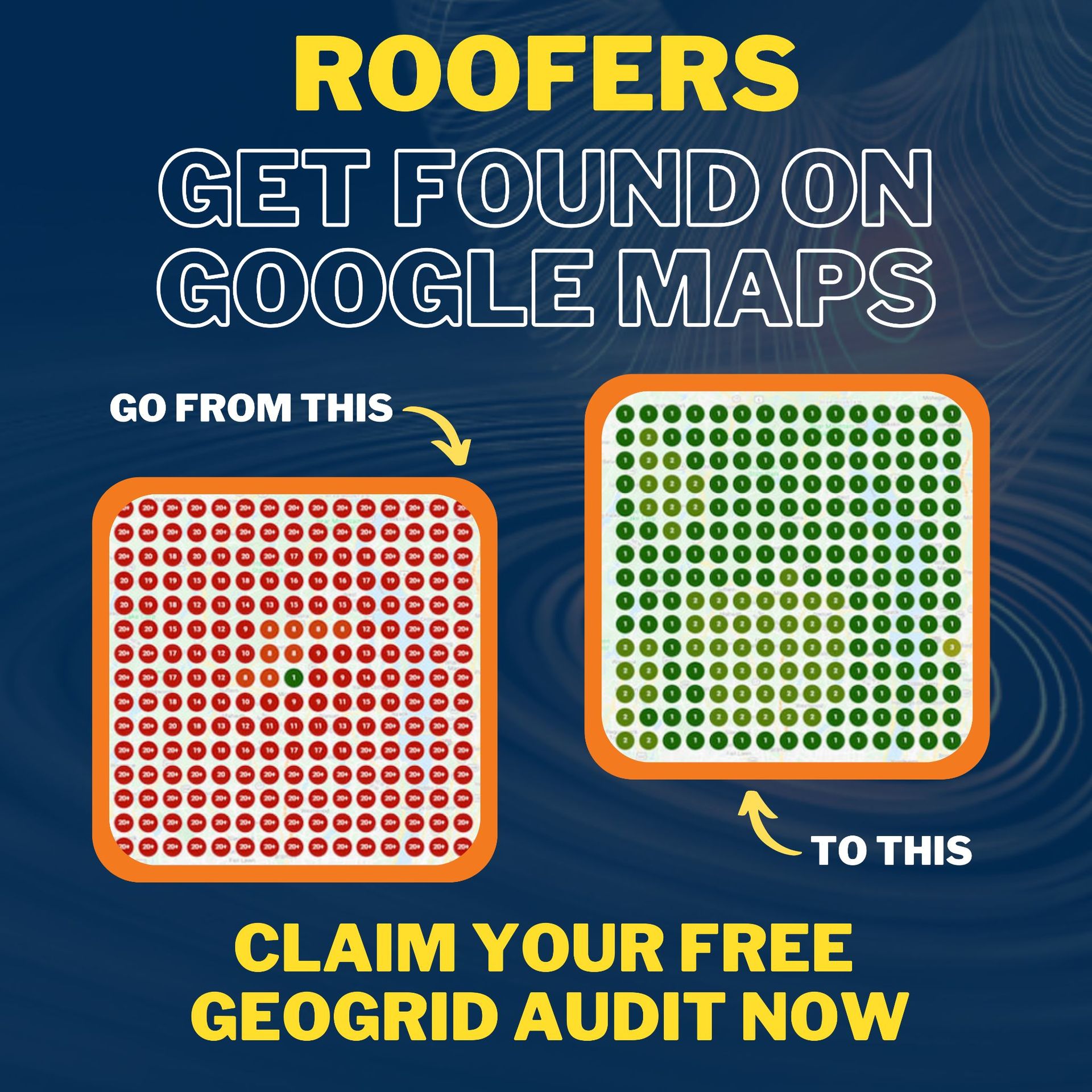
At CinchLocal, we take the guesswork out of local SEO. Our proprietary Roofer Footprint Expansion System is designed specifically to expand your local search reach, dominate the Map Pack, and deliver pre-sold, exclusive roofing leads directly to your phone.
Are you ready to stop losing valuable roofing jobs to competitors who are closer or better optimized? Contact CinchLocal today for a free local SEO audit, and let’s claim your spot at the top of the Local Pack!
Want Us to Uncover Hidden 'Footprint Gaps' And Critical Blind Spots That’s Quietly Draining Calls, Jobs, and Profits?
Simply Fill Out The Form Below:
What If You Could Stop Wasting $30K+ a Year on Dead-End Marketing - And Finally Become the Go-To Roofer in Your City?
Other Helpful Articles You Might Enjoy