

Cary Byrd // Founder of CinchLocal
Why Most Roofing Web Design Inspiration Fails to Convert
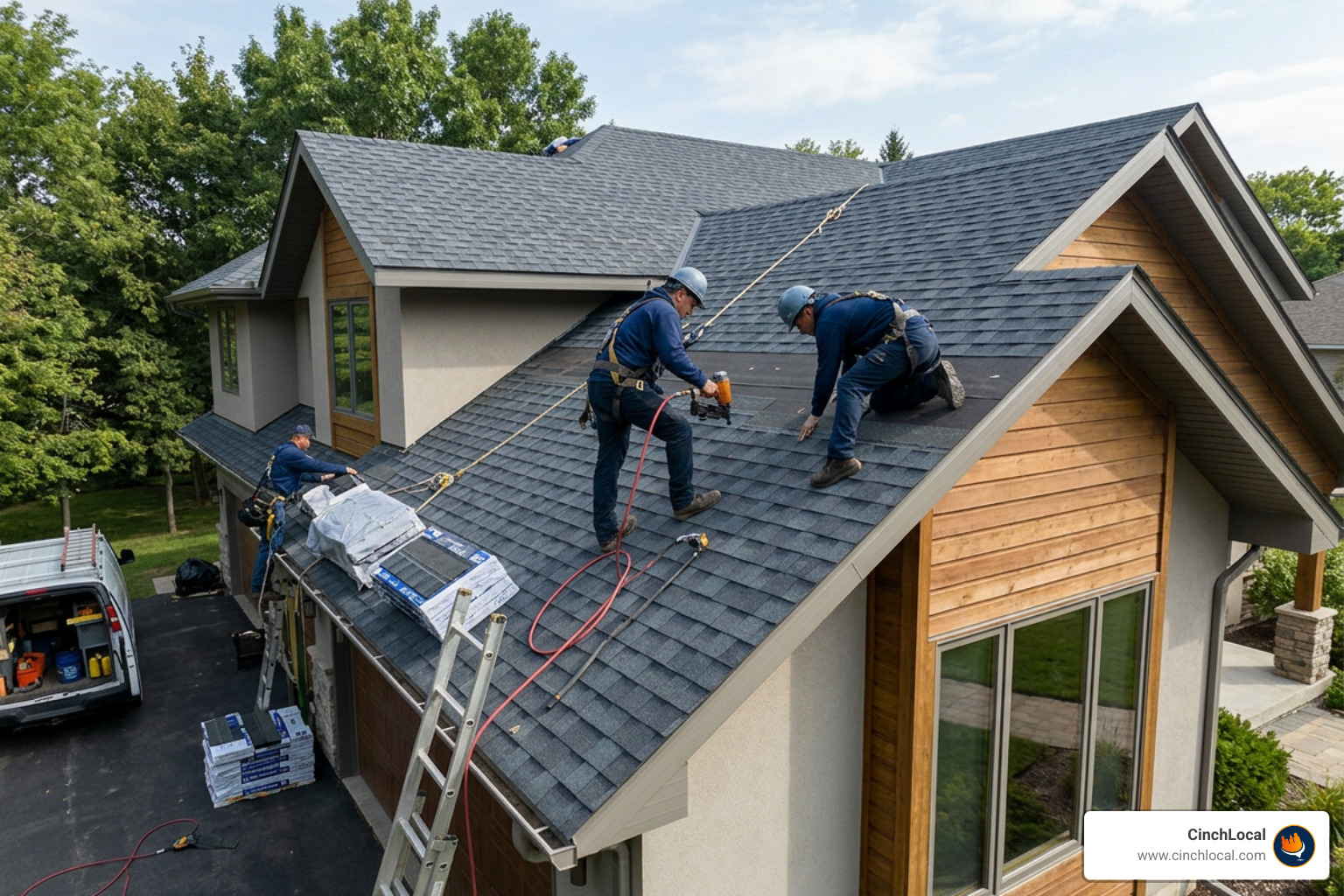
Roofing web design inspiration is everywhere online — but most of it will quietly kill your lead generation if you follow it blindly.
Here is a quick answer for contractors who want the essentials right now:
What makes a high-converting roofing website?
- Load in under 2 seconds — 53% of mobile visitors leave if a page takes longer than 3 seconds
- Mobile-first layout — over half of homeowners search for roofers on their phone
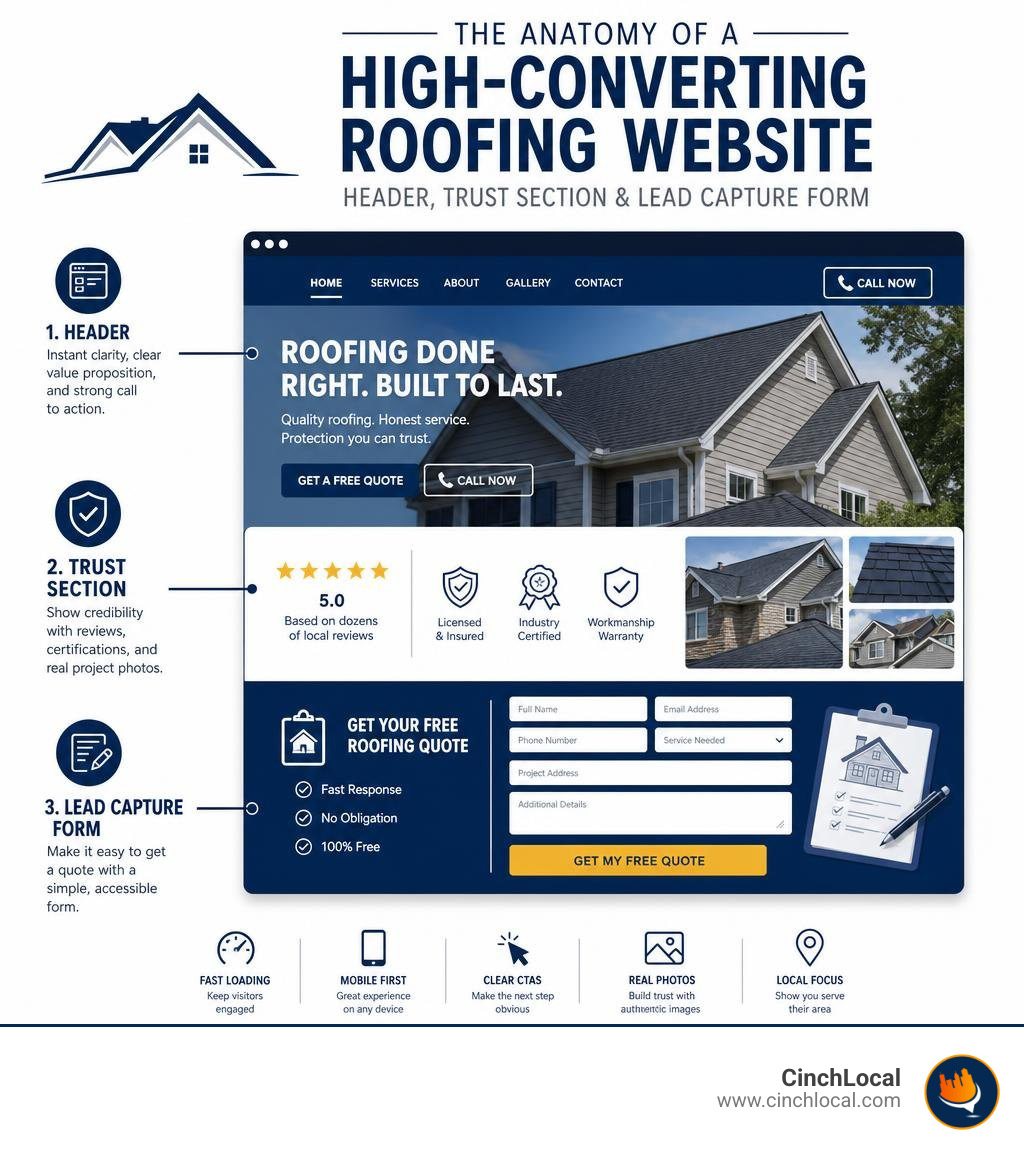
- Social proof above the fold — Google reviews, certifications, and project photos visible without scrolling
- Clear calls-to-action — a click-to-call button and quote form on every page
- Authentic local photography — real job-site photos, not stock images
- Dedicated service and location pages — one page per service, one page per city you serve
- Trust signals on every page — licenses, insurance, manufacturer badges (e.g., GAF Master Elite)
A roofing website is not an online brochure. It is your best salesperson — working 24 hours a day, 7 days a week. To consistently turn that traffic into exclusive, pre-sold leads, partnering with expert roofing marketing services is the fastest path forward.
The hard truth? Most roofing websites look fine on the surface but fail at the one job that matters: converting visitors into booked jobs. After years of working in digital marketing — and watching roofing contractors lose leads to slower, weaker competitors — I have seen which design decisions move the needle and which ones just look good in a portfolio.
I'm Cary Byrd, CEO of CinchLocal, a roofing marketing agency with over a decade of experience helping contractors dominate local search through roofing web design inspiration that is built to convert, not just impress. I'll share the hard lessons I've learned so you can skip the expensive mistakes.
Most roofing web design inspiration fails because it prioritizes creative aesthetics over user experience (UX) and conversion rate optimization (CRO), resulting in high bounce rates and zero lead generation.
When you browse platforms like Webflow, Dribbble, or generic agency portfolios, you are looking at websites designed by artists, not marketers. They showcase sleek animations, massive video files, and ultra-minimalist layouts. While these look stunning, they frequently crash and burn in the real world where a homeowner is stressed out because water is actively dripping through their bedroom ceiling.
The Pitfalls of Generic Inspiration
- Over-reliance on stock photos: Homeowners can spot a stock photo of a generic suburban home from a mile away. It immediately triggers skepticism. If your website features the same smiling, pristine model in a hardhat that five other local contractors use, you have lost your credibility before the user even reads your headline.
- Self-centric copy: Too many roofing sites lead with "We are the best roofing company in town" or "Serving our community since 1998." Homeowners do not care about your history until they know you can solve their problem. Your copy must be customer-centric, focusing on solutions like "Get your storm-damaged roof fixed in 24 hours."
- Heavy, unoptimized design elements: Giant, uncompressed background videos and complex scroll animations destroy mobile load times. If your site takes longer than three seconds to load, more than half of your potential leads will click the back button and call your competitor.
To see how functional design translates to revenue, explore our custom-built professional roofing websites designed specifically to convert commercial and residential traffic. According to Google's Core Web Vitals guidelines, visual stability and fast loading times are critical to keeping users engaged on mobile devices.
Core Pillars of High-Converting Roofing Web Design Inspiration
The three pillars of high-converting roofing web design are mobile responsiveness, rapid page speed, and prominent trust signals placed above the fold.
If your website lacks these three pillars, no amount of beautiful typography or branding will save your conversion rates. Let's break down why these are non-negotiable for contractors in high-stakes markets across Ohio, California, Georgia, and Tennessee.
Pillar Breakdown
- Mobile Responsiveness: Over 70% of emergency roofing searches occur on mobile devices. If your phone number isn't click-to-call, or if your contact form is impossible to fill out with a thumb, your mobile site is broken.
- Page Speed: A one-second delay in page load time can decrease conversions by up to 20%. Your site must be lightweight and optimized.
- Trust Signals: You must display licensing, insurance, and local reviews immediately. Homeowners are making a high-ticket, low-frequency purchase; they need to know you are legitimate within the first three seconds.
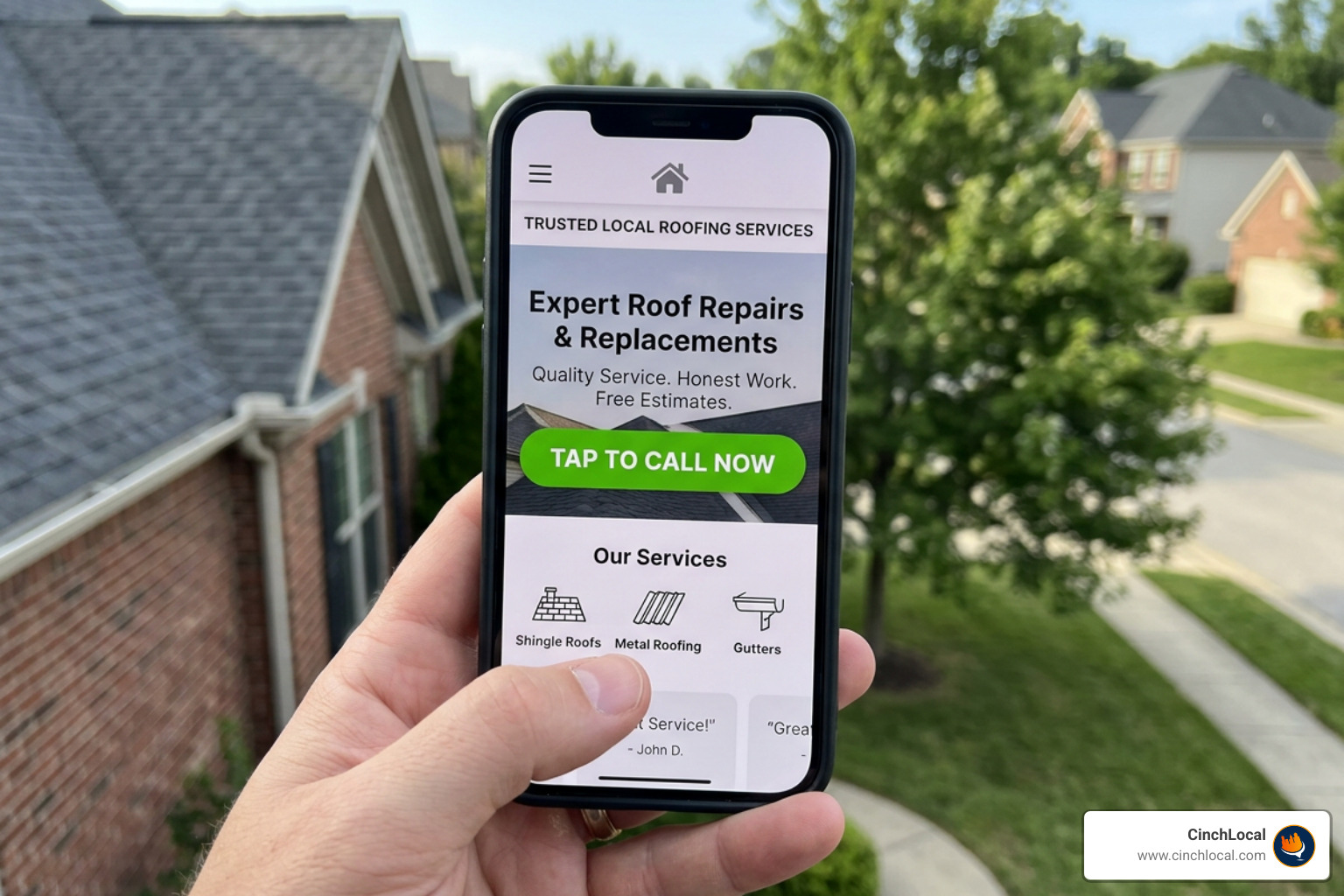
We have mapped out these foundational layout rules in our blueprint for roofing web design. If you want to skip the trial and error, you can discover pre-optimized layouts with our curated roofing website templates.
Structuring Your Portfolio for Maximum Impact
A high-converting roofing portfolio must showcase high-resolution, local before-and-after photos paired with project details like materials used, location, and the specific problem solved.
Do not just dump twenty unlabelled photos into a basic grid. Homeowners want to see projects that match their specific needs. Organize your portfolio by service type (such as shingle replacement, flat roof installation, or metal roofing) and by local neighborhood.
Using drone photography is an excellent way to capture the scale and quality of your residential and commercial roof replacements. When you pair these visuals with a short narrative—explaining the homeowner's challenge (e.g., severe hail damage) and your solution—you build immense authority. Aligning your project showcases with the standards of the National Roofing Contractors Association (NRCA) reinforces your company's commitment to industry-grade craftsmanship.
Integrating Trust Signals and Reviews
Homeowners buy peace of mind; therefore, your website must prominently display manufacturer certifications and real-time customer reviews to eliminate buying friction.
The best way to showcase social proof is to place it before the user even scrolls. If you have over 50 Google reviews, feature a live review badge right in your hero section. This provides real-time verification that static, copied text cannot match.
Additionally, display your manufacturer credentials. Certifications like GAF Master Elite—held by approximately 2% of roofing contractors in the United States—serve as powerful "borrowed authority" signals. For creative ways to display these trust elements, check out these roofing website design ideas. Displaying official GAF certification standards directly on your homepage immediately separates your business from uncertified, fly-by-night operations.
Technical SEO and Performance Standards for Roofing Sites
Technical SEO is the engine of your roofing website; without proper schema markup, optimized Core Web Vitals, and local keyword integration, even the most beautiful design will remain invisible on search engines.
You cannot afford to ignore the backend of your website. If search engines cannot crawl your site, or if your pages take too long to load on mobile networks, you will never rank in local searches. Google completed its mobile-first indexing rollout, meaning your mobile site is the primary version Google uses to determine your rankings.
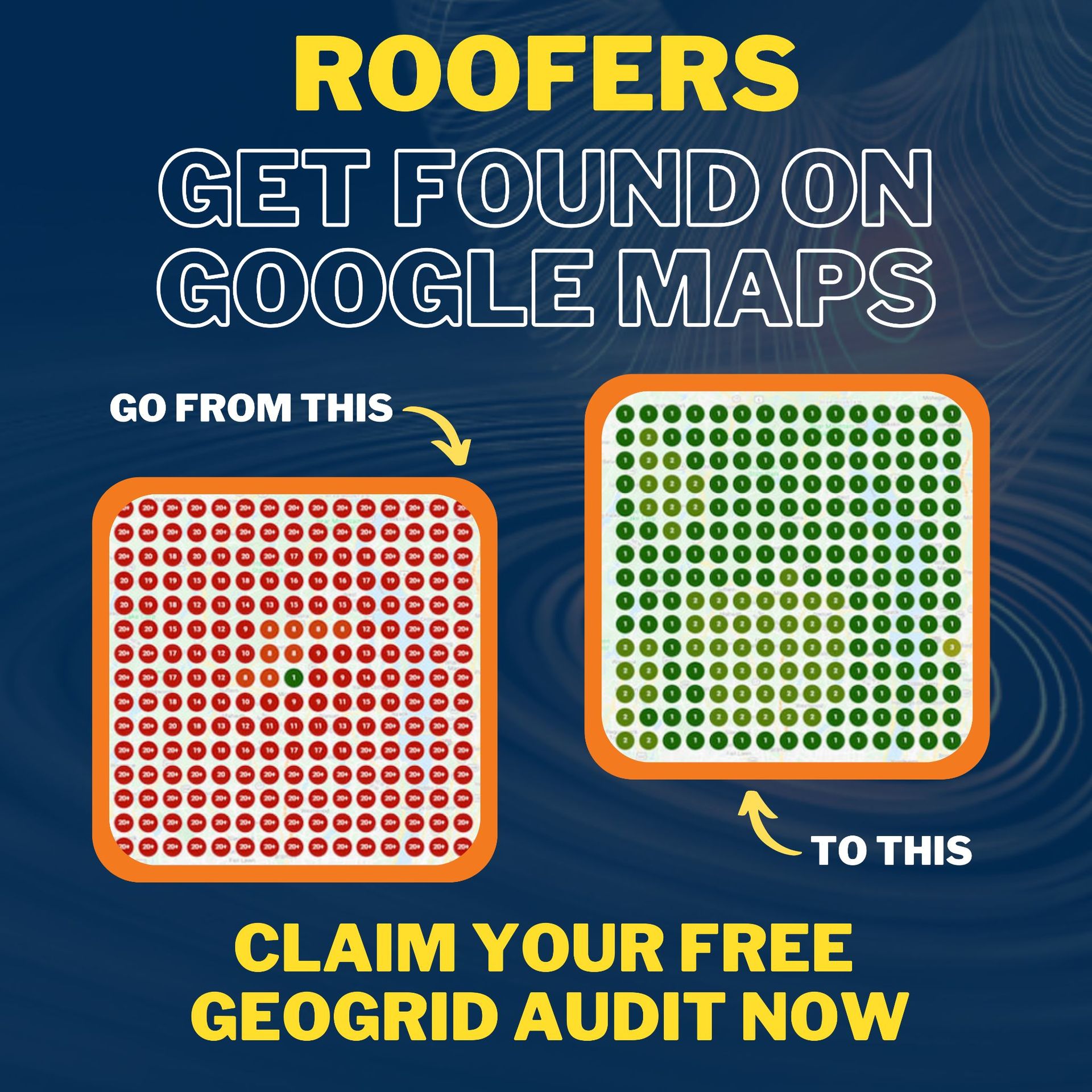
For roofers targeting high-value local catchments, local search engine optimization is where the battle is won. If you want to dominate local searches, you must optimize your site for Google Maps. To see how we achieve this for contractors, explore our guide on Google Maps local SEO for roofers, and review our real-world results page to see the proof of our work.
Performance Benchmarks
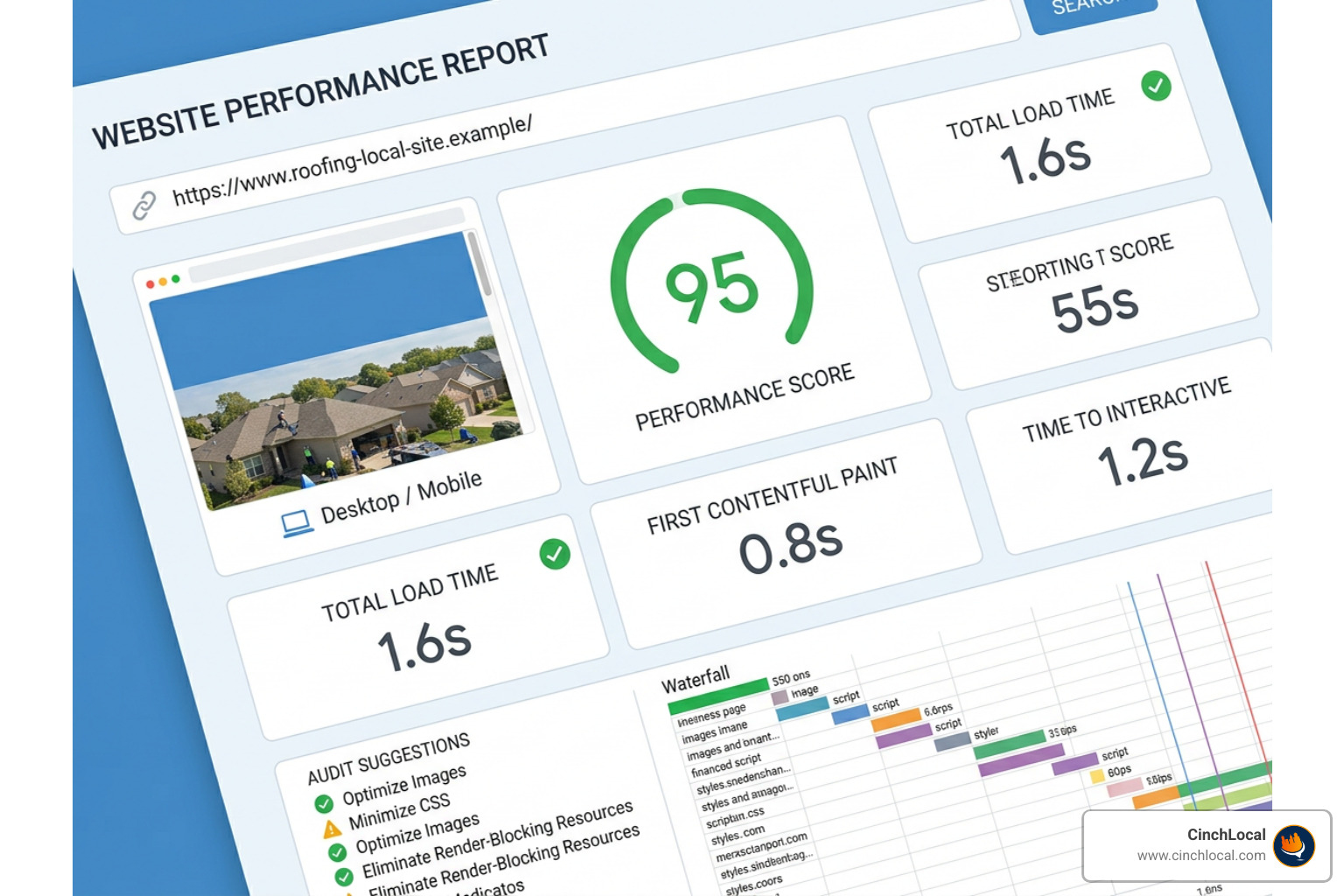
- Load Time: Under 2.0 seconds is the gold standard.
- First Contentful Paint (FCP): Keep this under 1.8 seconds to ensure users see content instantly.
- Cumulative Layout Shift (CLS): Maintain a score under 0.1 to prevent elements from jumping around as the page loads.
Website Builder Comparison for Roofing Contractors
Choosing the right platform is critical for your long-term digital marketing strategy. Here is how the top website builders stack up for roofing businesses:
| Feature | WordPress (Custom) | Webflow | Wix / Squarespace |
|---|---|---|---|
| SEO Capabilities | Excellent (Plugin-rich) | Excellent (Built-in) | Basic to Moderate |
| Page Speed Potential | High (Requires optimization) | Extremely High | Moderate |
| Customization | Unlimited | High | Limited |
| Ease of Maintenance | Moderate (Requires updates) | Moderate | Easy |
| Best For | Scaling SEO & Lead Gen | High-End Custom Design | DIY / Low Budget |
While DIY builders like Wix are fine for brand-new startups on a shoestring budget, they quickly become limiting as you scale. WordPress powers over 40% of the web and remains the industry standard for custom, high-performance SEO campaigns.
How to Structure Navigation for Roofing Web Design Inspiration
Intuitive website navigation must follow a flat hierarchy, allowing users to find any service or location page within two clicks from the homepage.
Your menu should be clean and predictable. Avoid clever or vague labels. Use direct terms like "Residential Roofing," "Commercial Roofing," "Storm Damage," and "Contact Us."
Use a sticky header menu that keeps your phone number and a "Get a Quote" button visible at all times as users scroll down your pages. This ensures that the moment a visitor decides they want to contact you, they do not have to search for your contact details. Read our guide on roofing web design inspiration to nail your online presence for step-by-step navigation wireframes.
Mobile-First Design Patterns in Roofing Web Design Inspiration
Mobile-first design for roofers requires placing a click-to-call button in a persistent header and simplifying contact forms to a maximum of four fields.
When a homeowner has an active roof leak, they do not want to fill out a 10-field form asking for their architectural shingle preferences. They want to press a button and talk to a human. Keep your mobile forms short: Name, Phone Number, Email, and a brief description of the issue. You can implement these highly effective mobile patterns today using our comprehensive guide to roofing website design.
Standout Examples of Roofing Websites Done Right
High-performing roofing websites succeed by combining clean visual hierarchy, immediate local social proof, and frictionless conversion pathways.
When we study the top-performing contractor websites across the country, we notice they all share a few core design patterns. For instance, rather than using generic stock photos, they lead with authentic, localized drone photography. They also utilize a "split-hero" layout, placing their primary brand promise on the left and a simple lead capture form or instant estimator tool directly on the right.
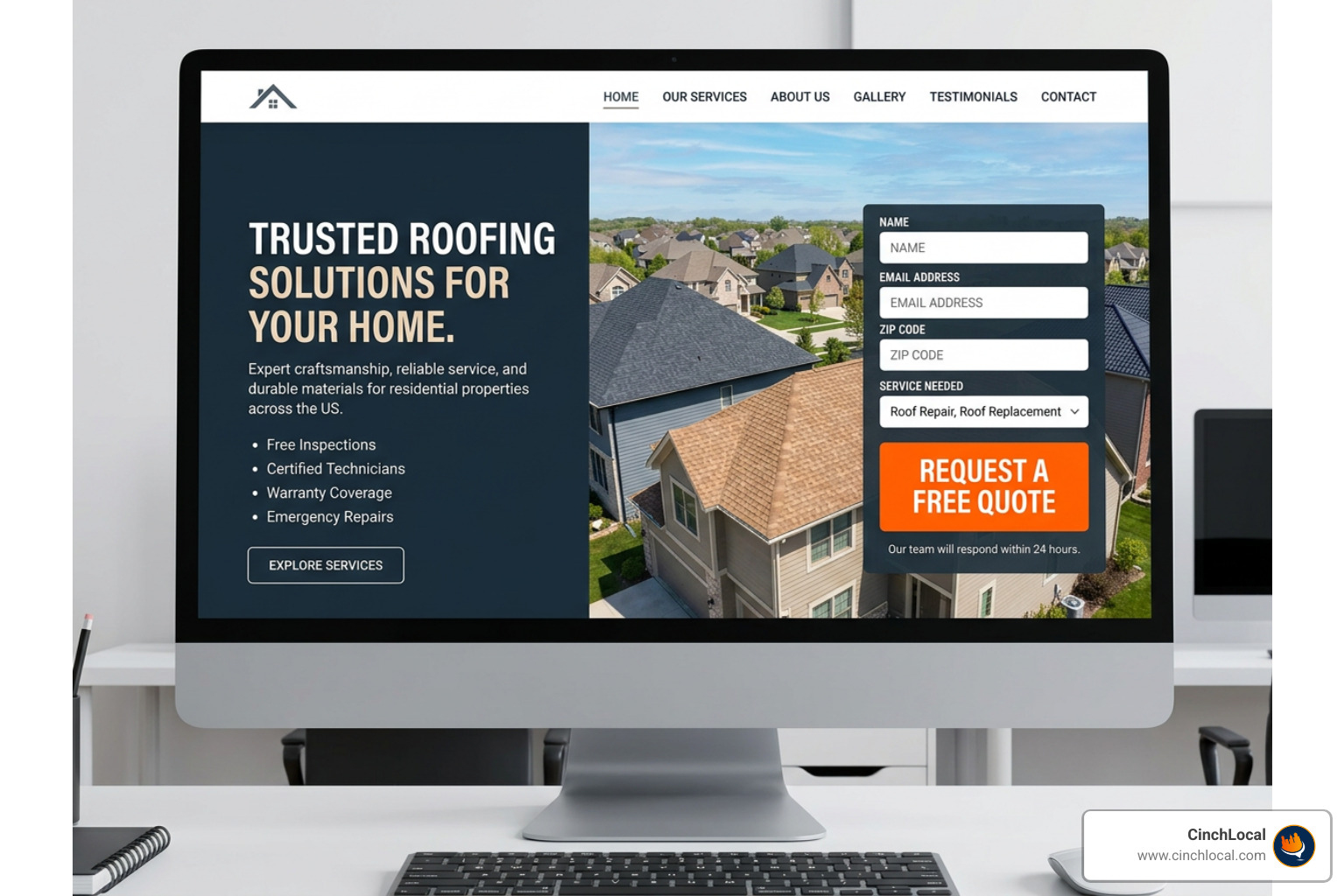
These industry leaders also avoid the trap of the single-page website. Instead, they build out deep, 30+ page architectures with dedicated service pages for each material type (e.g., metal, tile, shingle) and dedicated service area pages for every major suburb they target. This local-first architecture is highly praised in case studies like those found on Site Builder Report's curated roofing examples.
To study more real-world success stories, dive into our detailed breakdown of roofing websites done right. According to the Stanford Guidelines for Web Credibility, users assess a business's credibility based on visual design elements within the first three seconds of landing on a site. If your site looks outdated or amateurish, users will assume your physical craftsmanship is of the same poor quality.
Frequently Asked Questions About Roofing Web Design
How much does a professional roofing website cost?
A professional, custom-developed roofing website typically costs between $3,500 and $10,000+, depending on the number of service/location pages, custom integrations, and SEO setup required. DIY builders may cost less upfront but often result in lost revenue due to poor search visibility and low conversion rates. If your website fails to rank on search engines or convert visitors, a "cheap" website actually becomes the most expensive mistake your business can make.
What are the most important pages to include on a roofer website?
Every high-converting roofer website must include a Homepage, individual Service Pages (e.g., Roof Repair, Roof Replacement), dedicated Location Landing Pages for your service areas, a Project Gallery/Portfolio, an About Us page to build personal trust, and a dedicated Contact Page with a secure lead form. Splitting your services into individual pages is critical for SEO, as Google ranks specific pages rather than entire websites.
How does page speed affect roofing lead generation?
Page speed directly impacts lead generation because 53% of mobile users will abandon a site that takes longer than three seconds to load. Slow websites increase bounce rates, lower your Google search rankings, and drive high-intent prospects directly into the arms of your faster competitors. In local home services, the fastest website often wins the lead.
Conclusion
A beautiful website is useless if it doesn't generate exclusive leads; true roofing web design inspiration must balance aesthetic appeal with technical SEO and conversion-focused layouts.
If you are tired of looking at beautiful websites that do not make the phone ring, it is time to shift your strategy. Your website should be an asset that predictable generates booked jobs, not a digital business card that sits silently on the internet.
At CinchLocal, we don't just build pretty websites. We deploy our proprietary Roofer Footprint Expansion System to guarantee increased Google Maps visibility and pre-sold leads within 30 days. We handle everything from custom, high-speed web design to hyper-local SEO targeting high-value neighborhoods across Ohio, California, Georgia, and Tennessee.

Discover how a roofer website design agency can help you scale your business, eliminate marketing waste, and dominate your local market.
Ready to stop losing high-value roofing jobs to your competitors? Contact CinchLocal today for a free website audit and demo of our Roofer Footprint Expansion System.
Want Us to Uncover Hidden 'Footprint Gaps' And Critical Blind Spots That’s Quietly Draining Calls, Jobs, and Profits?
Simply Fill Out The Form Below:
What If You Could Stop Wasting $30K+ a Year on Dead-End Marketing - And Finally Become the Go-To Roofer in Your City?
Other Helpful Articles You Might Enjoy