

FOR ROOFING COMPANIES WHOSE BEST WORK IS STUCK IN COMPANYCAM, JOBNIMBUS OR A CREW PHONE
JobProof Map™: The Roofing Project Map That Turns Every Finished Roof Into the Next Call
Turn Your Jobsite Photos Into Project Pages That Bring In Calls
Every roof you finish is a story. A homeowner had a problem, your crew found the real cause, and you fixed it in a neighborhood where you want more work. JobProof Map turns each finished job into its own project page on your website and a pin on a live project map, with your company as the hero and the homeowner's own Google review when there is one.
That gives homeowners nearby a reason to call you, and gives Google and AI search a reason to show you to them. More of your market sees your work, more of them call, and more of those calls turn into signed jobs. Your crew's job site photos come to us from CompanyCam, JobNimbus, a shared photo folder or a quick text. You don't write anything, and the first pages go live within 30 days of your first jobs.
What JobProof Map™ Is: A Roofing Project Map With a Page for Every Job
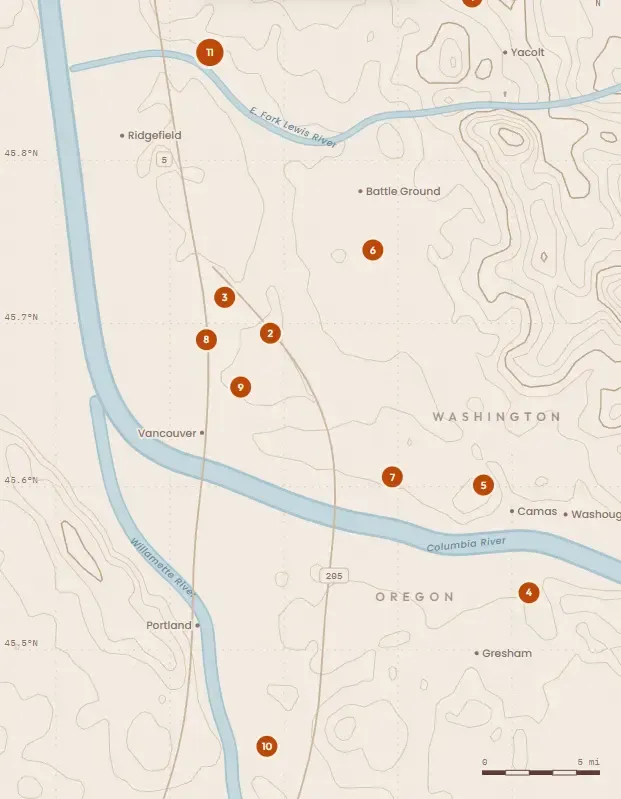
JobProof Map is a done-for-you roofing project map from CinchLocal that turns each finished roofing job into a project page on the roofer's own website. Every project page tells the story of one real job: the neighborhood, the homeowner's problem, what the crew found, how they fixed it, the materials used, the crew's photos and, when one matches, the homeowner's own Google review. Each page is pinned on a live project map, a job map of the neighborhoods the roofer serves, and shown on the matching town and service pages, so homeowners, Google and AI search tools can see exactly where the company works and what it has solved. The goal is simple: more homeowners in the roofer's area finding that proof, calling, and signing. The pages, the map and the content belong to the roofer.
How it differs from the SEO you already know
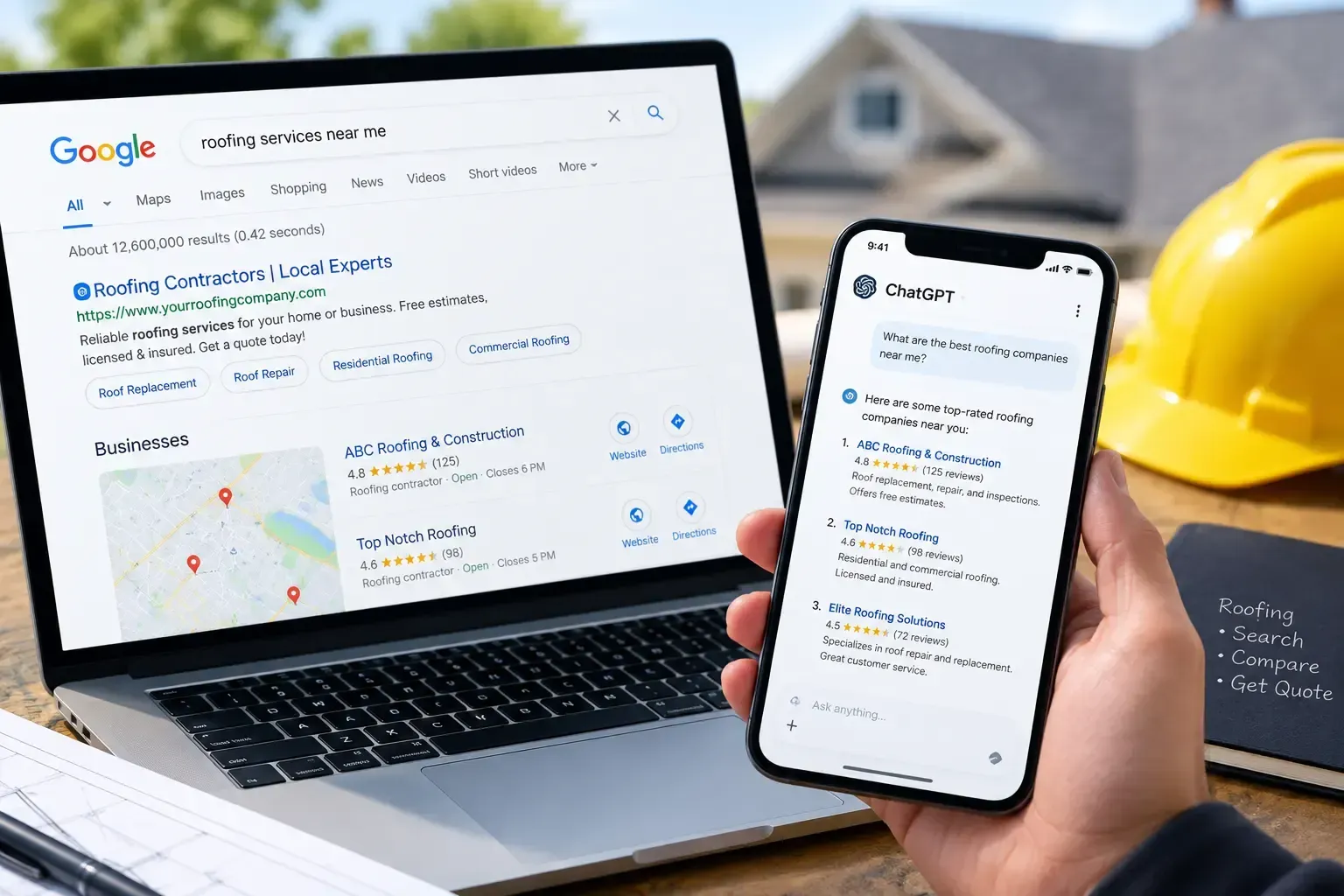
Traditional roofing SEO competes for a position in a list of links. A homeowner scrolls, compares, clicks. AI search skips that entirely — the assistant reads the web, decides who to recommend, and returns two or three names.
There is no page two. There is no scrolling past the competition. You are either in the answer or you are not mentioned at all.
The practical consequence: the ranking factors overlap but they are not identical. Backlinks and keyword targeting still matter because AI models read the same web Google indexes. But structure matters more, consistency of your business information matters more, and answering real questions in plain language matters far more than it does for a blue link.
READY FOR YOUR GOOGLE MAPS SEO RANKINGS TO GO THROUGH THE ROOF?
SEO for Growth Top Rated Roofer SEO badge awarded to CinchLocal
AS SEEN IN




"How Could Google Not Love This?"
Brother... it is SO freaking cool. This takes these mapping things to the next level. The detail, the workability of it. I am impressed.
I interviewed ten people over the last 4 years for this. Took a leap, got burned, and tried
again, and I AM STOKED I found you. … I truly think my site is the BEST one I've seen, ever.
— Joe Clark, Stanley Roof & Solar, Vancouver, WA. The first roofer on JobProof Map.
Joe asked for one thing: "location based pins for jobs" that would help him show up where he works. JobProof Map is what we built for him, and it's now ready for other roofers.
From Jobsite Photos to Project Pages That Bring In Calls
Stop chasing new content. Your best proof is already finished. Most roofing marketing asks you to make something new: another blog post, another social graphic, another "tips for homeowners" article that nobody in your town reads.
Meanwhile you finished a tear-off in a neighborhood you want more work in. You fixed the flashing another contractor missed, and you replaced a hail-damaged roof two streets from your next estimate. All of it sits in a phone or in CompanyCam where no homeowner and no search engine will ever see it.
JobProof Map uses work you've already done and puts it where it can win the next job.
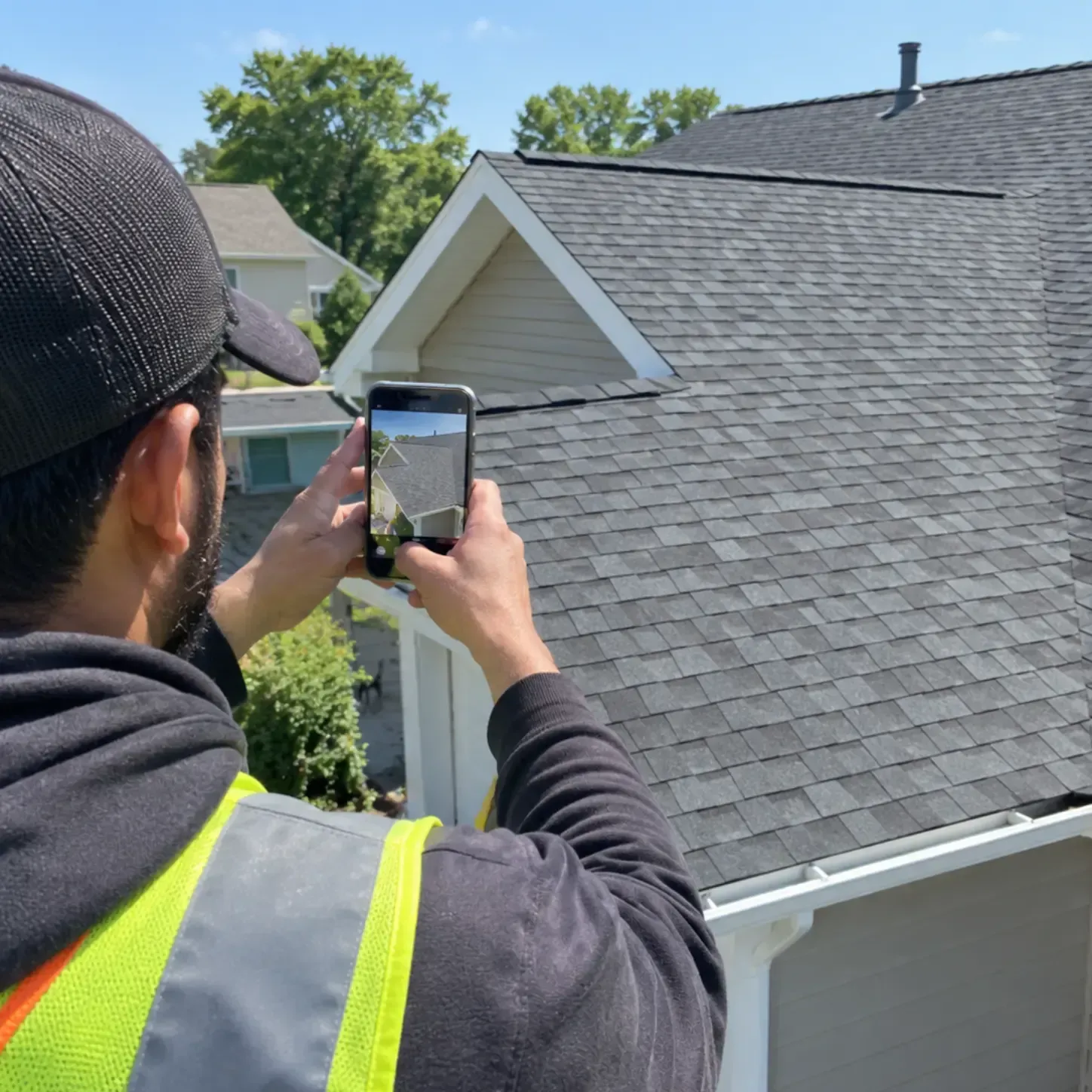
Every Project Page Tells the Whole Story, With Your Crew as the Hero
A photo shows that a roof got done. A project page shows a homeowner why they should call you. Each one reads like a short case study, told in the order the next homeowner wants to hear before they pick a roofer:
The problem.
What the homeowner was dealing with, like a ceiling stain after every storm or hail damage the insurance company kept questioning.
What your crew found.
The real cause, in plain words, with the photos to back it up.
How you fixed it.
The work, the materials, the brand and the color
The result.
A finished roof in a neighborhood the next homeowner recognizes.
In the homeowner's words
Their own Google review, quoted word for word and linked to Google, when one matches the job.
That's the story your best sales rep tells at the kitchen table. Now it's on your website, working every day for every homeowner who searches in that part of town, and it ends with a button to call you.
Most roofing marketing stops at a photo grid or a pin on a map. JobProof Map gives every finished job its own full project page on your own website, connected to the rest of your site.
Which Finished Roof Is Costing You Your Next Lead?
Look through your last 90 days of jobs. Odds are at least one of these is sitting unused:
- The full replacement in the subdivision where you want ten more
- The storm claim that took three adjuster visits to get approved
- The leak another roofer "fixed" twice before you found the real cause
- The metal or synthetic slate job that shows you do more than asphalt
- The repair on an older home in the part of town your competitors ignore
Each of those answers a question the next homeowner is asking: have you worked near
me, on a house like mine, on a problem like mine? If the answer isn't on your website, they
keep looking.
Why Google and AI Search Favor Real Job Pages, and How That Turns Into Calls
Job pages give Google and AI search tools what they look for in a local business: proof that it does real work, in real places, for real people. When they can see that proof, they're more willing to show your company to homeowners nearby, and being seen is where every call starts.
Google ranks local results on relevance, distance and prominence, according to Google's own help page. A project page about a roof replacement in a named neighborhood is relevant to homeowners searching for roof replacement there. A map full of pins shows where you actually work, not just the ZIP code on your profile.
A steady stream of new jobs reads as an active, established local company. Google also tells site owners that it rewards content showing first-hand experience, written by someone who actually did the work. That's in Google's guide to helpful content. A page about a leak your crew traced to a cracked pipe boot is first-hand experience. A generic article about "5 signs you need a new roof" isn't.
AI tools like ChatGPT, Google AI Overviews and Perplexity pull their answers from pages that state plainly who did what, where and how. A job page does exactly that, so it gives those tools a real, local reason to name your company when a homeowner asks who to call. If you don't publish that proof, Google and AI tools can't use it, and the roofer who does publish it gets the call, even if you did more and better work. We can't promise rankings, and nobody honest can. What we can do is put your real work where Google, AI search and homeowners can all find it.
AI Blog Posts Run Out. Your Finished Jobs Never Do.
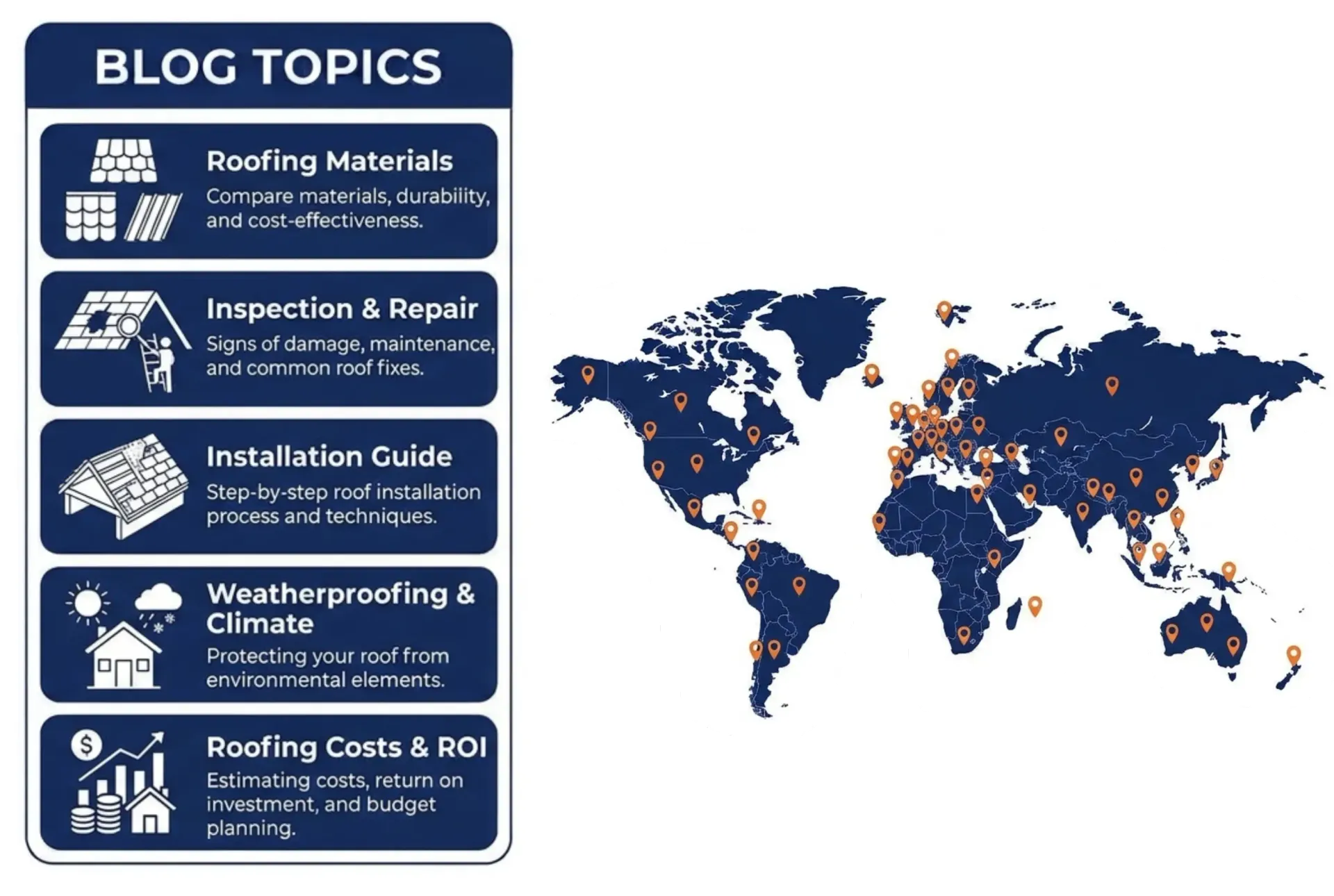
Blog posts can only take your local search presence so far. There are only so many roofing topics, like what a new roof costs, signs of hail damage or metal versus shingles, and hundreds of roofers and AI writing tools are publishing the same articles. Once you've covered them, the next post just repeats what's already out there, and a homeowner reading it still has no reason to pick you. Finished jobs don't run out. Every job is a new mix of neighborhood, house, problem, material and homeowner, so no two pages are the same and no competitor can copy them.
Nobody else can publish the roof your crew replaced last Tuesday. That makes job pages close to limitless. Every month you work, your website covers more neighborhoods, more types of homes, more problems solved and more materials installed. Each new page is one more way for a homeowner in your area to find you, and one more reason for them to call. We still write blog posts where they help. Job pages do the part blog posts can't: prove, street by street, that you're the roofer doing the work.

How to Get More Roofing Leads From the Jobs You've Already Finished
A job page isn't there to look nice. It's there to get your phone ringing. Here's how one finished roof turns into the next signed job:
More homeowners find you in the neighborhoods you want.
Each page names the area and the service, which gives Google a real reason to show your
company to homeowners searching there. More pages in more neighborhoods means more places a search can lead to you.
More of them call instead of clicking away.
A homeowner comparing roofers wants proof you've worked near them, on a house like theirs, on a problem like theirs. A project from down the street answers all three, then puts your phone number and a call button right there.
AI search starts naming you.
When a homeowner asks ChatGPT or Google's AI who to call for a roof in their town, those tools look for clear, specific facts about real local work. Your job pages give them that.
Your reviews do more selling.
When a homeowner's Google review matches the job, it sits on the page next to the photos. The review proves the work was real, and the work proves the review was earned.
Your sales team closes more estimates.
A rep can text a prospect the job page from their own neighborhood before or after the estimate. Seeing a neighbor's finished roof and review is hard to argue with.
It keeps working after the job is paid.
Ads stop when you stop paying, and social posts are gone in a day. Job pages stay on your website and keep bringing in calls. Every new job adds to the pile instead of replacing last month's post.
Found, then trusted, then called. That's the path from a finished roof to the next signed job, and every job page walks a homeowner down it.
What This Looks Like Measured
Big River Roofing came to us with a website Google could barely read — nine URLs earning impressions across Western Pennsylvania. In the first 84 days after the rebuild, Search Console recorded impressions across 94 URLs, and ten new market pages produced 25,746 impressions in towns the old site did not adequately cover.
We publish the limits alongside the wins, including where the Google Business Profile results were mixed — direction requests rose while calls and website clicks fell. Read the full case study with the measurement notes.
Roofing Company Local SEO Services: What We Actually Do
Roofing company local SEO marketing is not a checklist you complete once. It's a set of signals that has to keep growing, because your competitors' signals are growing too. Five things move the needle, and they work as a system rather than a menu.
Google Business Profile management for roofing companies
Primary and secondary categories chosen against what actually ranks in roofing, services populated in full, service areas defined honestly, photos added on a schedule, Q&A seeded, posts published. GBP management is table stakes — it's where every agency starts and where most of them stop. Our guide to Google Business Profile optimization for roofing companies covers what that work involves in detail.
Service-area pages that make the profile credible
This is the part that moves the outer ring. A city hub with real service pages beneath it tells Google what you do in that town, not just that you're willing to drive there. It's the same architecture behind our roofing website builds, which is why the website and the map strategy aren't separate projects.
Review generation that compounds
Reviews are the most direct prominence signal Google names. We build the request into the job cycle — text and email, timed to completion, with a link that removes friction — so review velocity becomes steady rather than sporadic.
Citations and entity consistency
Name, address and phone consistent across the directories that matter, so third-party sources corroborate the profile instead of contradicting it. Google treats disagreement between sources as a reason for doubt.
GeoGrid measurement, not guesswork
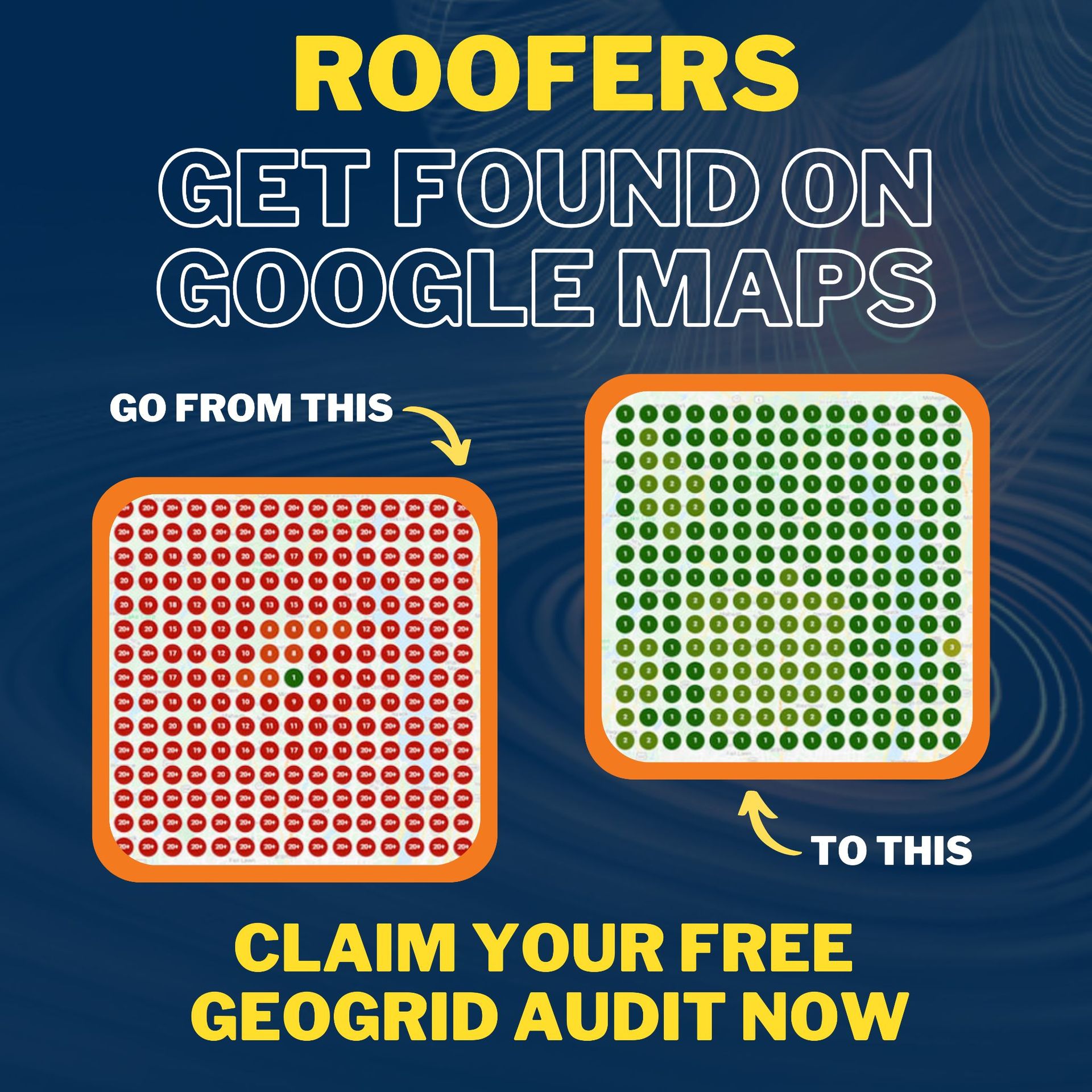
Google Maps optimization for roofing contractors only works if you can see whether it's working. We scan your position across a grid of points throughout the service area, on a schedule, so progress shows up as a map rather than a claim. If the outer ring isn't improving, we find out in weeks rather than quarters. You can see before-and-after GeoGrid scans from real roofing clients on our results page.
Where Map Pack Work Fits in the Footprint Expansion System™ .
Local SEO for roofers rarely works in isolation. The Roofer Footprint Expansion System™ runs Google Maps, organic and AI search visibility as one program, because the same signals feed all three — a service area page that earns a map pack position is also the page that earns the organic ranking and gives an AI assistant something to cite.
If your website can't support that expansion, the map work has a ceiling. That's why most engagements start with the website and add ongoing roofing SEO once the foundation is in place.
Frequently Asked Questions About Local SEO for Roofing Companies
Q: How much should I pay for local SEO?
A: For a roofing company in a competitive market, ongoing local SEO generally runs from the high hundreds to several thousand a month, depending on how many markets you're trying to win and how much of the website work is included. Be wary of anything priced like a subscription with no market analysis behind it — the cost of covering three towns is genuinely different from covering twelve, and a quote that doesn't ask which you need isn't a quote, it's a template.
Q: Is local SEO worth it for a roofing company?
A: Whether local SEO is worth it for a roofing company depends on the market and on patience. Local SEO compounds — visibility you build is an asset you keep, unlike bought leads that stop the day you stop paying, and are sold to your competitors besides. But it takes months, not weeks, and in a market with three entrenched roofers holding the map pack it takes longer. If you need jobs next week, run ads. If you want a position that's difficult to take from you, this is the work.
Q: How do you get into the Google 3-pack for roofing searches?
A: The three-pack is decided by relevance, distance and prominence together. In practice that means a complete Google Business Profile with the right categories, a website with a real page for the service and town you want, review volume competitive with whoever holds the positions now, and consistent business information across directories. There's no single lever — roofers who get in usually improved all four at once.
Q: How long does local SEO for a roofing company take to work?
A: Expect three to six months before map pack position moves meaningfully across a service area, and longer in competitive metros. Profile improvements can show up within weeks. Expanding into towns where you have no address takes longest, because that depends on service-area pages and review volume building over time. Anyone promising map pack dominance in 30 days is guessing.
Q: Can a roofing company rank in a city where it has no office?
A: A roofing company can rank in a city where it has no office, though it is harder than ranking at its own address. Google says distance is one of three primary factors, but also that a more relevant business further away can outrank a closer one. In practice that means a real service page for that town, reviews from customers there, and consistent citations. Creating a fake location in a city you don't operate from violates Google's guidelines for representing your business and risks the entire profile.
Q: What is a GeoGrid scan and why does it matter for roofers?
A: A GeoGrid scan checks your map pack position from dozens of points spread across a geographic area and returns a grid showing where you rank at each one. It matters more for roofing than most trades because your service area is wide — checking your ranking from the office tells you almost nothing about the towns where you actually want jobs.
Q: How many Google reviews does a roofing company need?
A: There is no fixed number of Google reviews a roofing company needs — it is relative to the market. What matters is being competitive with the roofers currently holding the top three in the towns you want, and keeping new reviews arriving steadily rather than in bursts. Google names reviews as a prominence factor directly, and prominence is one of the two levers you can actually pull.
Q: Is Google Business Profile management enough on its own?
A: Google Business Profile management improves how you rank where you already rank, which is worth doing and is where most agencies stop. It does much less for the outer edge of a service area, because the profile is a claim and Google looks for corroboration. Service-area pages, reviews and citations are what let the profile carry weight in towns you have no address in.
Q: Do I need a new website for local SEO to work?
A: A new website is not always required, but a five-page brochure site puts a ceiling on how far the map work can go. If there's no page about roof repair in the town you want to rank in, Google has nothing to corroborate the claim. Some roofers start with map work on an existing site and rebuild later; others do it the other way round. We'll tell you honestly which applies on the call.
Q: What's the difference between local SEO and organic SEO for roofers?
A: Local SEO targets the map pack — the three listings with the map above them, ranked by relevance, distance and prominence. Organic SEO targets the blue links below, where distance matters far less. Roofers need both, and the same service-area pages feed each one, which is why we run them as a single program rather than two.
Q: Do you work with more than one roofer in the same area?
A: Never. CinchLocal works with one roofing contractor per protected area. The visibility we engineer for a client doesn't then get built for the competitor down the road — which matters more in map pack work than anywhere else, because local rankings are zero-sum within a market.
Q: What is the best way to advertise a roofing company?
A: The best way to advertise a roofing company depends on the timeline. Local Service Ads and Google Ads buy visibility immediately and stop the moment you stop paying. Local SEO and the map pack take months but produce an asset you own. Referrals and door-knocking after storms still work and always will. Most roofing companies doing $1M or more run a mix — ads for immediate volume, organic and map visibility so the cost per job falls over time.
Find Out Where You Actually Rank — Not Where You Assume You Do
The simulator above is an illustration. A real GeoGrid scan is not — it measures your actual map pack position at dozens of points across your service area and shows you exactly where the visibility stops.
CinchLocal is a roofing local SEO company and nothing else. Not a generalist agency with a roofing page, not a local SEO consultant who takes roofing clients between dentists — roofing contractors are the entire business. It means we already know which searches produce estimate requests instead of curiosity, and which towns are worth fighting for in your market.
Book a free strategy session and we'll run the scan, walk you through what it shows, and tell you honestly whether your market is worth the investment. You keep the grid either way — and we only take one roofer per area, so it's worth checking whether your city is still open.