

Cary Byrd // Founder of CinchLocal
Why Roofing Leads Prices Can Make or Break Your Marketing Budget

Roofing leads prices in 2026 range from as little as $0.25 for aged leads to over $500 for premium exclusive real-time leads, depending on the source, quality, and your market. Here's a quick breakdown to answer your question fast:
| Lead Type | Typical Price Range |
|---|---|
| Aged leads | $0.25 – $1.50 per lead |
| Shared leads (directories/marketplaces) | $15 – $120 per lead |
| Exclusive affiliate leads | $60 – $70 per lead |
| Shared high-intent leads | $80 – $120 per lead |
| Google LSA leads | $25 – $80+ per lead |
| Exclusive high-intent leads | $150 – $300+ per lead |
| Google Ads (PPC) leads | $150 – $300+ per lead |
| Pay-per-call leads | $100 – $900 per call |
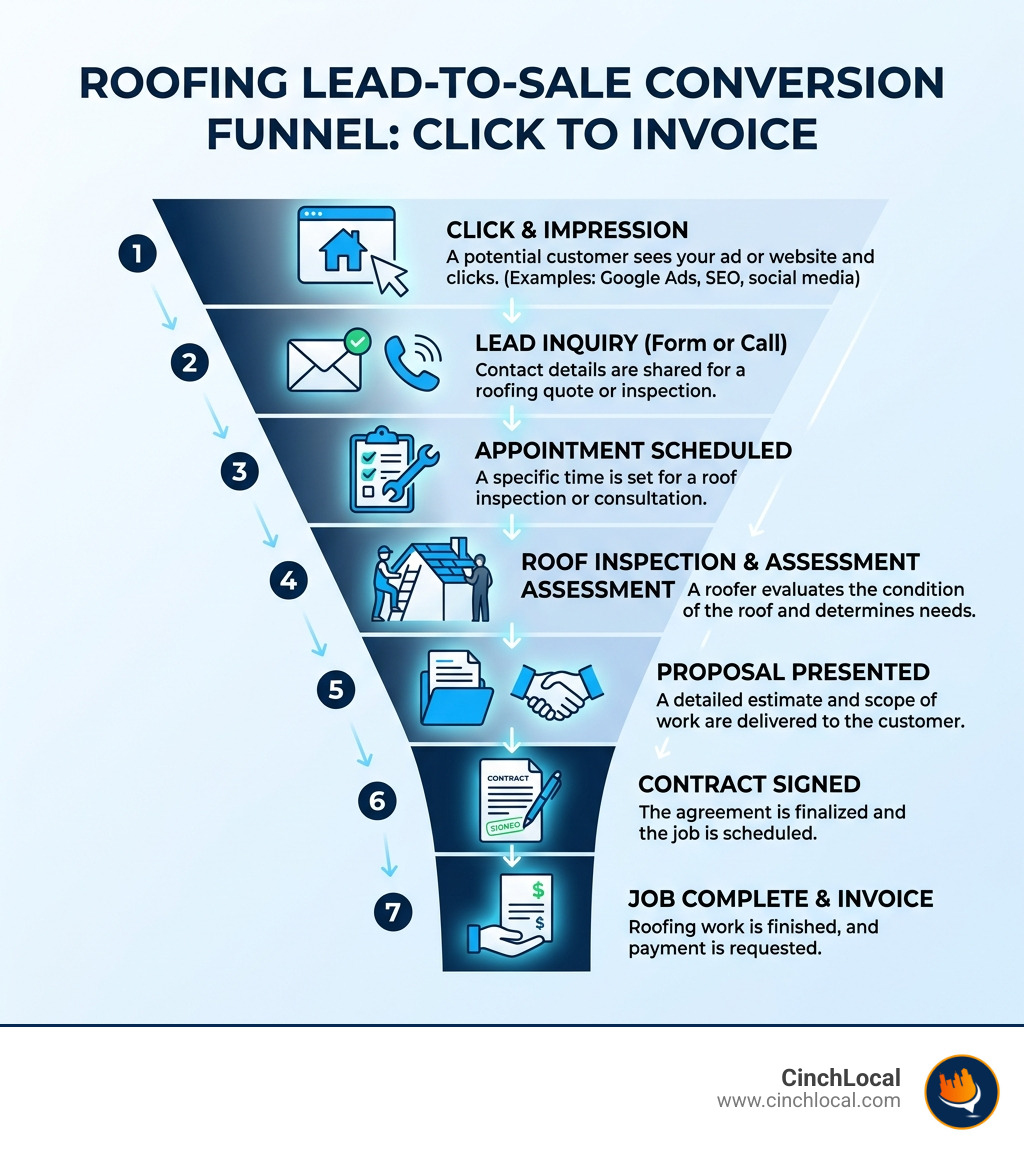
But here's the thing most roofers miss: the price per lead is not the number that actually matters.
What matters is your cost per closed deal . A $150 exclusive lead that closes 1 in 5 times is a far better investment than a $30 shared lead that closes 1 in 40 times. Real-world data from tracking six roofing companies over 90 days showed cost-per-closed-deal ranging from $500 to $4,800 — and the cheapest leads produced the most expensive closed jobs.
Whether you're tired of overpaying for junk leads from directories or trying to figure out which channel actually delivers ROI, understanding what drives these prices is the first step. The roofing marketing experts at CinchLocal work with contractors every day who are asking this exact question — and the answer is almost never simple.
I'm Cary Byrd, founder of CinchLocal, and I've spent years helping roofing contractors decode roofing leads prices and build marketing systems that actually produce profitable jobs, not just raw lead volume. Let's break down exactly what you're paying for — and whether it's worth it.
Understanding the Current Market for Roofing Leads Prices in 2026
The market for roofing leads has reached a fever pitch in 2026. As homeowners increasingly turn to AI-driven search tools and mobile-first directories, the cost to get your brand in front of them has shifted. We see a massive spread in how much roofing leads cost, with prices spanning from $45 to $500 depending on the depth of the lead's information and their readiness to buy.
High-quality leads often come with a higher price tag because they indicate better targeting and higher intent. According to ActiveProspect, a fair price for a high-quality lead typically sits between $45 and $150. If you are paying less than that for "real-time" leads, you are likely receiving shared data that is being sold to four or five of your local competitors simultaneously.
Factors Influencing Real-Time Roofing Leads Prices
Several variables dictate whether you'll pay $50 or $250 for a name and a phone number.
- Seasonality: In the roofing world, winter leads often cost more. This sounds counterintuitive, but because demand drops while contractor supply remains high, the cost to acquire the few available leads increases.
- Job Size and Material: A lead for a full slate or metal reroof will always command a higher price than a simple shingle repair.
- Intent Level: A homeowner staring at a water stain on their ceiling is a high-intent lead. They need a roofer now , and lead providers charge a premium for that urgency. For more on navigating these types, check out our Free Roofer Leads Guide.
Why Geographic Location Impacts Roofing Leads Prices
Location is perhaps the biggest driver of price volatility. In states like Ohio, Tennessee, Georgia, and California , pricing is heavily influenced by local competition and weather patterns.
- Storm Damage: In Georgia or Tennessee, a major hail storm can cause lead prices to spike as every contractor in the tri-state area floods the market with ad spend.
- Cost of Living: In high-cost areas like California, the overhead for lead generation companies is higher, which is passed down to the contractor.
- Local Competition: If you are in a saturated market like Columbus, OH, or Nashville, TN, you can expect to pay more per click and per lead than a roofer in a rural county.
Breaking Down Costs by Lead Type: Exclusive vs. Shared vs. Aged
Understanding the "flavor" of the lead you are buying is critical to protecting your budget. Most contractors fail because they treat all leads the same, regardless of exclusivity.
- Exclusive Leads ($150–$300+): These are generated for you and you alone. You aren't racing four other trucks to the driveway. While the upfront cost is higher, the "mental tax" and the cost per closed deal are usually much lower.
- Shared Leads ($20–$120): These are sold to 3–5 contractors. The price is lower, but your close rate will likely plummet. You are essentially paying for the right to enter a bidding war.
- Aged Leads ($0.25–$1.50): These are leads that were generated 30, 60, or 90+ days ago. They are incredibly cheap but require a high-volume "churn and burn" dialing strategy to find the few homeowners who haven't fixed their roof yet.
The Value Proposition of Exclusive High-Intent Leads
Exclusive leads are the gold standard for a reason. When you buy exclusive, you aren't just buying a contact; you're buying a head start. In 2026, we’ve found that exclusive high-intent leads close at a rate of 15–20% for top-tier sales teams, compared to the abysmal 3–5% close rate of shared leads. This exclusivity allows you to maintain higher margins because you aren't forced to slash your price just to beat the guy who pulled into the driveway five minutes after you. If you're tired of the race to the bottom, it's often better to buy commercial roofing leads or exclusive residential leads that belong only to you.
When to Invest in Low-Cost Aged Leads
Aged leads are a "volume play." If you have a hungry sales team or a new hire who needs to practice their script, aged leads are a fantastic, low-risk training ground. Since they cost as little as $0.25, you can buy 1,000 leads for the price of one or two premium ones. The strategy here isn't immediate closing; it's database reactivation and long-term nurturing. Many homeowners delay roofing projects for months due to insurance delays or budget concerns. Catching them 60 days later when the other contractors have stopped calling can be a winning strategy.
Comparing Roofing Leads Prices Across Digital Marketing Channels
Where your leads come from determines their DNA. Not all digital channels are created equal, and the roofing leads prices reflect that.
- Google Local Services Ads (LSA): These usually cost between $25 and $80 per lead. You only pay for valid calls, making this one of the most cost-effective "pay-per-lead" models available.
- Google Ads (PPC): This is a "pay-per-click" model where leads can cost anywhere from $150 to $300+. It is highly competitive but offers the most precise targeting for specific services like "emergency roof repair."
- Facebook Ads: Leads here are often cheaper ($30–$60) but are generally "lower intent." The homeowner wasn't necessarily searching for a roofer; they were scrolling through photos of their grandkids and saw your ad.
- SEO: While it requires an upfront investment, the long-term cost per lead of Roofing SEO eventually drops to nearly $0.
Maximizing ROI with Google Local Services Ads
Google LSAs are a "cheat code" for many contractors. Because you are "Google Guaranteed," there is an immediate trust factor that doesn't exist with standard Facebook ads. To see how these ads translate into real-world growth, look at our roofing marketing results. The key to keeping your LSA costs low is your review count. Companies with 100+ reviews often see a 15–20% higher close rate on the same leads compared to those with fewer than 30 reviews.
The Long-Term Cost Efficiency of Organic SEO
If you want to stop being a slave to lead vendors, SEO is the only way out. It is the best long-term play in roofing but the worst short-term one. It typically takes 6 to 12 months to see consistent lead flow, but once the engine is running, the leads are "free" (minus your maintenance costs). We recommend treating SEO as business infrastructure rather than a monthly expense. By mastering roofing lead generation through organic search, you build an asset that you own, rather than renting leads from a third party.
Beyond the Lead: Calculating Your Cost Per Closed Deal
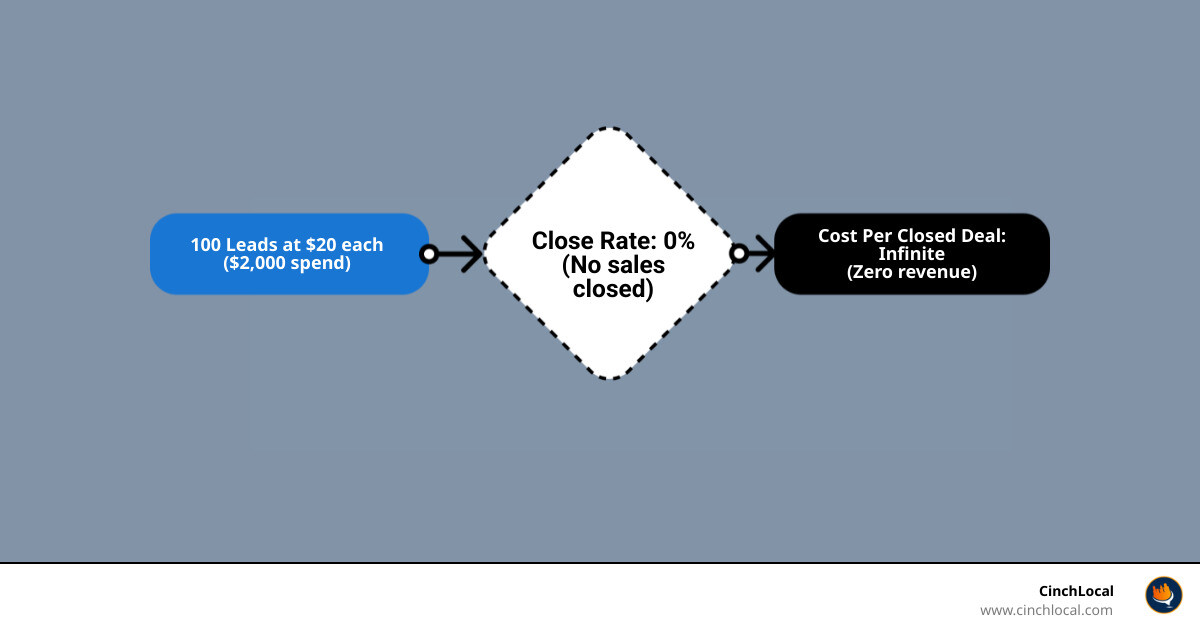
We cannot stress this enough: stop obsessing over the Cost Per Lead (CPL) and start tracking your Cost Per Acquisition (CPA). If you buy 100 leads at $20 each ($2,000 spend) and close zero, your CPL is $20, but your CPA is infinite. If you buy 10 leads at $200 each ($2,000 spend) and close two $15,000 jobs, your CPA is $1,000. Which would you rather have?
Why Close Rate Matters More Than Lead Price
A "cheap" lead is often the most expensive lead you'll ever buy. Shared lead vendors often result in a cost-per-closed-deal of nearly $4,800 because the close rates are so low (often under 5%). Conversely, exclusive leads or those from high-intent Google searches often yield a 5:1 or even 10:1 ROI. Your guide to roofing lead generation should always prioritize the quality of the appointment over the quantity of the names in your CRM.
How AI and Technology are Reshaping Roofing Lead Costs
In 2026, AI is no longer a buzzword; it’s a cost-saving tool. New systems use high-resolution aerial imagery to identify roofs with actual damage—missing shingles, wear patterns, and age—before a contractor even knocks on the door. This predictive scoring allows us to target homeowners who actually need a roof, rather than guessing based on zip codes.
Furthermore, AI is helping us determine financial propensity. By analyzing home values and spending patterns, we can identify homeowners who not only need a roof but can actually afford the investment. This level of qualification is how to generate leads for a roofing company that actually convert, rather than wasting time on "tire kickers."
Strategies to Lower Your Effective Lead Cost and Maximize ROI
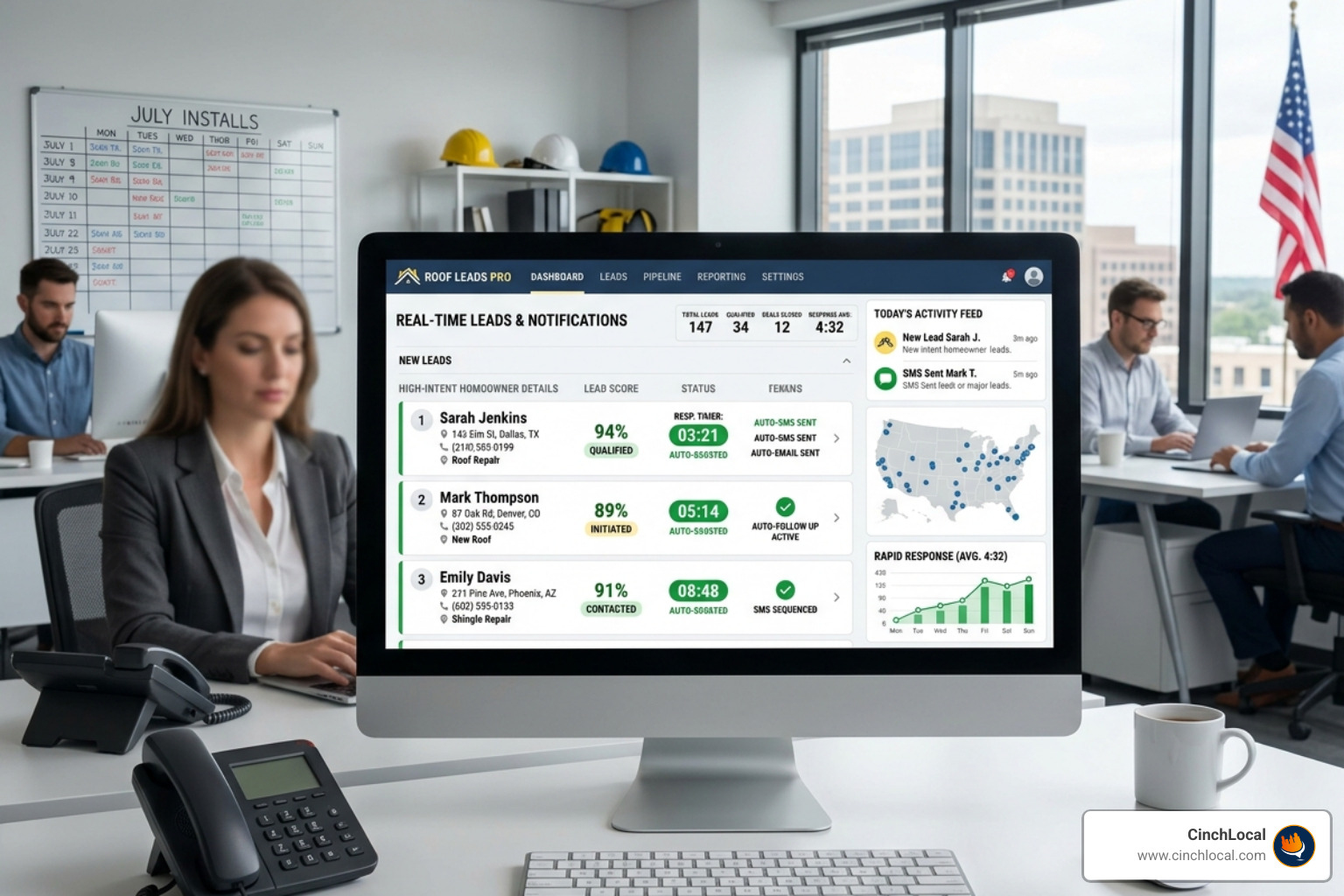
You can effectively lower your roofing leads prices by improving what happens after the lead arrives.
- Speed-to-Lead (The 10-Minute Rule): If you call a lead within 10 minutes, your chances of qualifying them are 100x higher than if you wait two hours. In 2026, homeowners fill out forms while staring at their leaking ceiling; they are motivated right now.
- Automated Follow-Up: Use a CRM to send an immediate text and email. If they don't answer, have a sequence that follows up on day 2, 4, and 7.
- Reputation Management: A homeowner who gets a call from you will immediately Google your company. If you have a 3.2-star rating, that $150 lead you just bought is as good as dead. High review volumes act as a "conversion multiplier."
If you want to ditch the doorbell dash and move toward a more automated, high-ROI system, focusing on these operational efficiencies is the fastest way to make expensive leads feel cheap.
Frequently Asked Questions about Roofing Leads Prices
What is a fair price for an exclusive roofing lead in 2026?
A fair price typically ranges from $150 to $300 . While this seems high, these leads are not shared with competitors, meaning your close rate should be significantly higher, often resulting in a lower cost per closed job.
Why are shared leads often more expensive in the long run?
Shared leads are cheaper upfront ($20–$100), but because they are sold to multiple contractors, you end up in a bidding war. This lowers your profit margins and requires you to buy significantly more leads to close a single deal, often pushing your cost-per-closed-job toward $4,000 or more.
How does speed-to-lead impact the final cost of a roofing job?
Speed-to-lead is a "conversion multiplier." By contacting a lead within 5–10 minutes, you often catch the homeowner before they have a chance to call a second or third contractor. This reduces competition and allows you to maintain your pricing, effectively lowering your acquisition cost.
Conclusion
Navigating roofing leads prices in 2026 requires a shift in perspective. Stop looking for the "cheapest" lead and start looking for the most "profitable" one. Whether you are leveraging the power of Google LSAs, investing in the long-term growth of SEO, or using AI to score your prospects, the goal is always the same: a sustainable, predictable flow of jobs that keep your crews busy and your margins healthy.
At CinchLocal, we specialize in helping roofers in Ohio, Tennessee, Georgia, and California build these exact systems. Our "Roofer Footprint Expansion System" is designed to get you pre-sold leads without the headache of bidding wars. Ready to stop blowing your budget on junk? Explore our Roofing Leads solutions today and let’s build a marketing engine that actually works for you.
Want Us to Uncover Hidden 'Footprint Gaps' And Critical Blind Spots That’s Quietly Draining Calls, Jobs, and Profits?
Simply Fill Out The Form Below:
What If You Could Stop Wasting $30K+ a Year on Dead-End Marketing - And Finally Become the Go-To Roofer in Your City?
Other Helpful Articles You Might Enjoy