

Cary Byrd // Founder of CinchLocal
Essential Roofing Website Design Ideas for High Conversion
Roofing website design ideas can make or break your ability to win jobs online — and the best ones share a short list of proven elements:
- Mobile-first layout with click-to-call buttons above the fold
- Fast load times (under 2 seconds) to reduce bounce rates
- Trust signals — reviews, certifications, and real project photos
- Clear CTAs like "Get a Free Estimate" on every page
- Dedicated service and location pages for local SEO
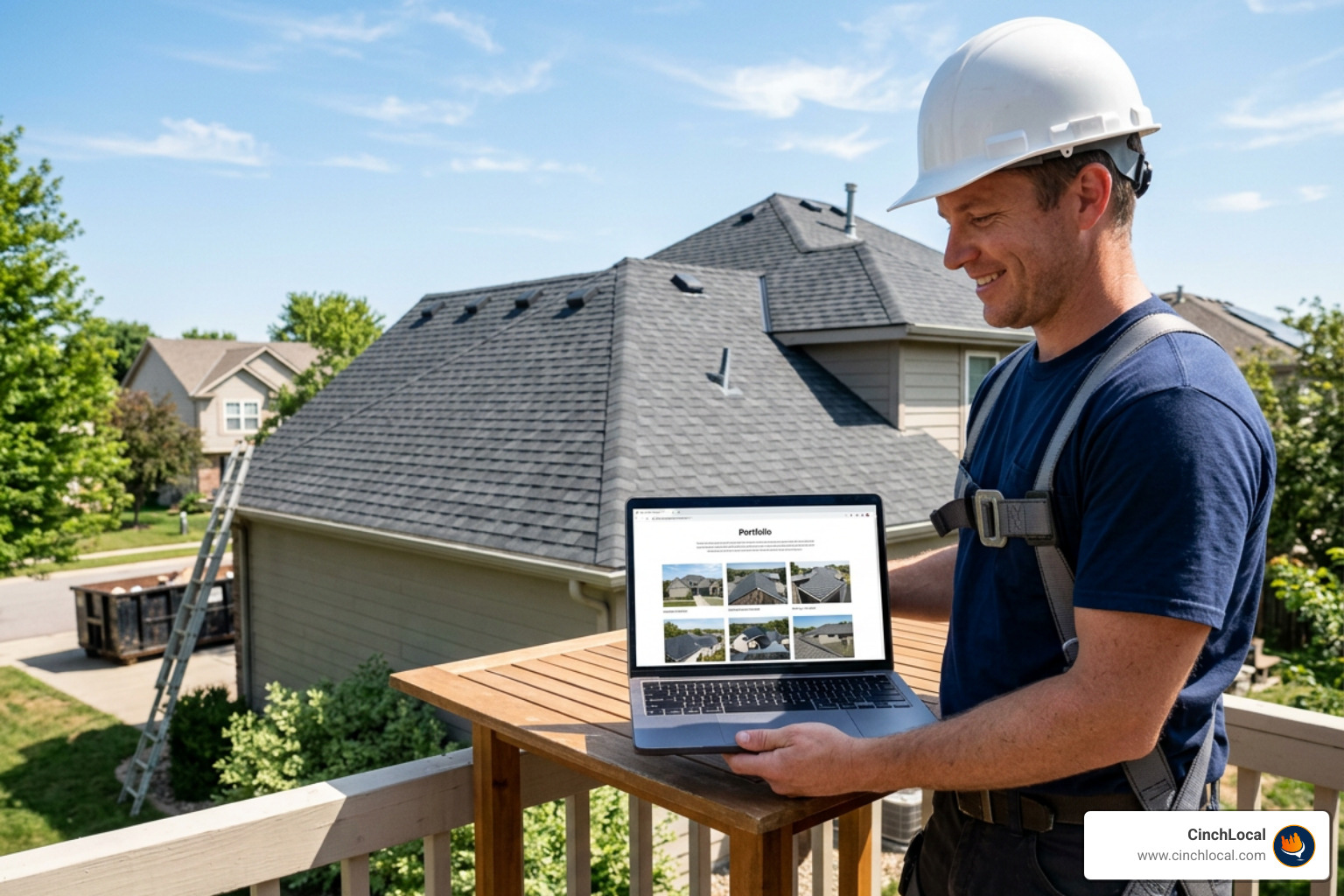
- Before-and-after photo galleries to showcase your work
- Simple contact forms with 6 fields or fewer
Your roofing website is often the first thing a homeowner sees — and research shows you have just 50 milliseconds to make an impression before they form a judgment. That's not a typo. Half a second, and they've already decided whether you look trustworthy or not.
For roofing contractors competing in crowded local markets, a weak website doesn't just look bad — it costs you real jobs. According to an Adobe study, 38% of people will leave a site they feel is poorly designed , and 66% actively prefer visiting sites with beautiful, well-structured layouts over plain or cluttered ones. In a high-ticket industry where a single roof replacement can run $10,000 or more, losing even one lead per month to a better-looking competitor's website adds up fast.
The good news: you don't need to be a designer or a tech expert to get this right. You just need to know what works — and what to avoid.
CinchLocal helps roofing contractors build websites that don't just look sharp, but actually generate calls and booked estimates.
I'm Cary Byrd, founder of CinchLocal and a digital marketing specialist who has spent years helping roofing contractors turn underperforming websites into steady lead machines using proven roofing website design ideas built around local SEO and conversion strategy. In the sections below, I'll walk you through exactly what separates a website that sits idle from one that wins jobs.
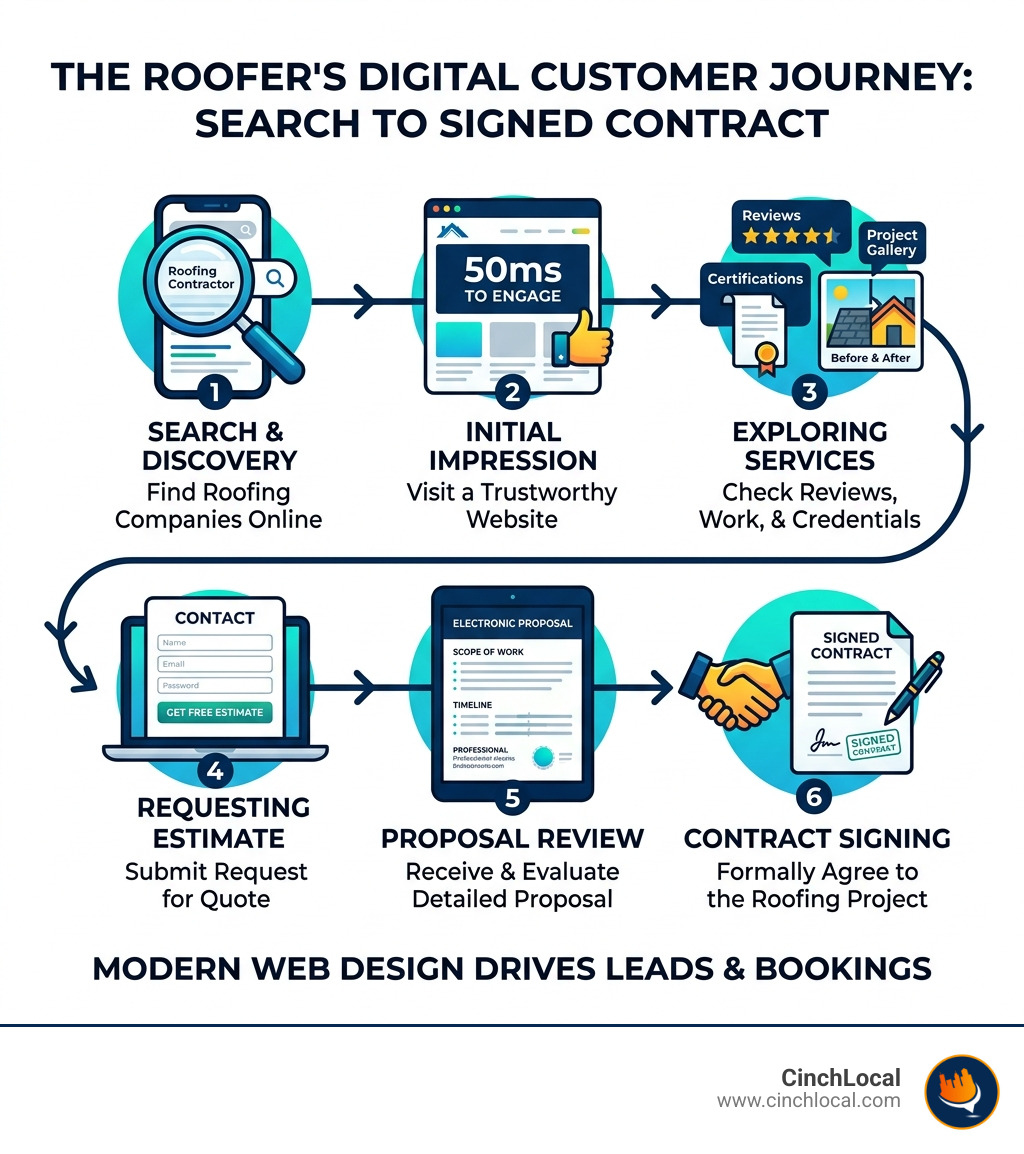
To turn a casual browser into a high-ticket lead, your website must function as a high-performance sales engine. In 2026, a "pretty" website isn't enough; it must be architected for speed, usability, and immediate action.
The Mobile-First Mandate
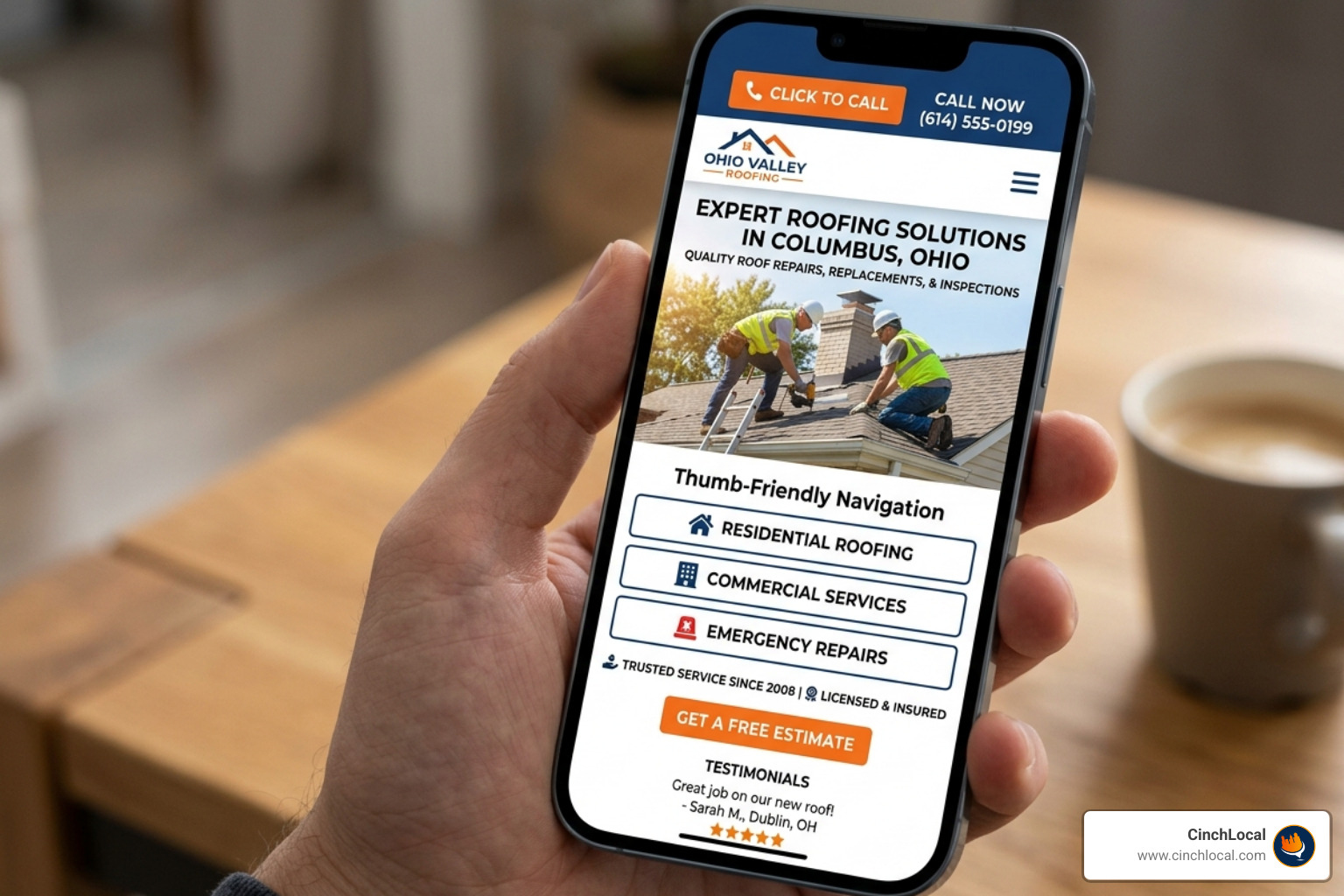
The data is undeniable: over 70% of roofing searches occur on mobile devices. When a homeowner in Ohio or Tennessee spots a leak after a midnight storm, they aren't firing up a desktop computer. They are searching from their phone while standing in their hallway.
A truly mobile-responsive design means more than just shrinking your desktop site. It requires "thumb-friendly" navigation, large tap targets, and a prominent click-to-call button that stays "sticky" at the top or bottom of the screen as the user scrolls. If a prospect has to pinch and zoom to find your phone number, they will bounce to a competitor within seconds.
Speed is a Ranking Factor
Your website needs to load in under 2 seconds to maintain peak performance. According to Google’s Core Web Vitals, page speed is a direct ranking factor. If your site takes longer than 3 seconds to load, you risk losing over half of your mobile visitors. We achieve these speeds by optimizing high-resolution images, minifying code, and using premium hosting environments.
Conversion Rate Optimization (CRO)
Effective roofing website design ideas prioritize the user's next step. Every page should have a singular goal. Whether it is "Schedule a Free Inspection" or "Get an Instant Quote," your Call-to-Action (CTA) should be visually distinct—often using a high-contrast color that stands out from your brand palette. Using roofing website templates can provide a solid foundation, but they must be customized to ensure the "sticky navigation" keeps your contact info visible at all times.
Building Trust with Visual Credibility and Social Proof
Roofing is a high-stakes, high-ticket service. Homeowners are naturally skeptical of contractors, which is why your website must work overtime to establish "Visual Credibility."
The Power of "Real" Imagery
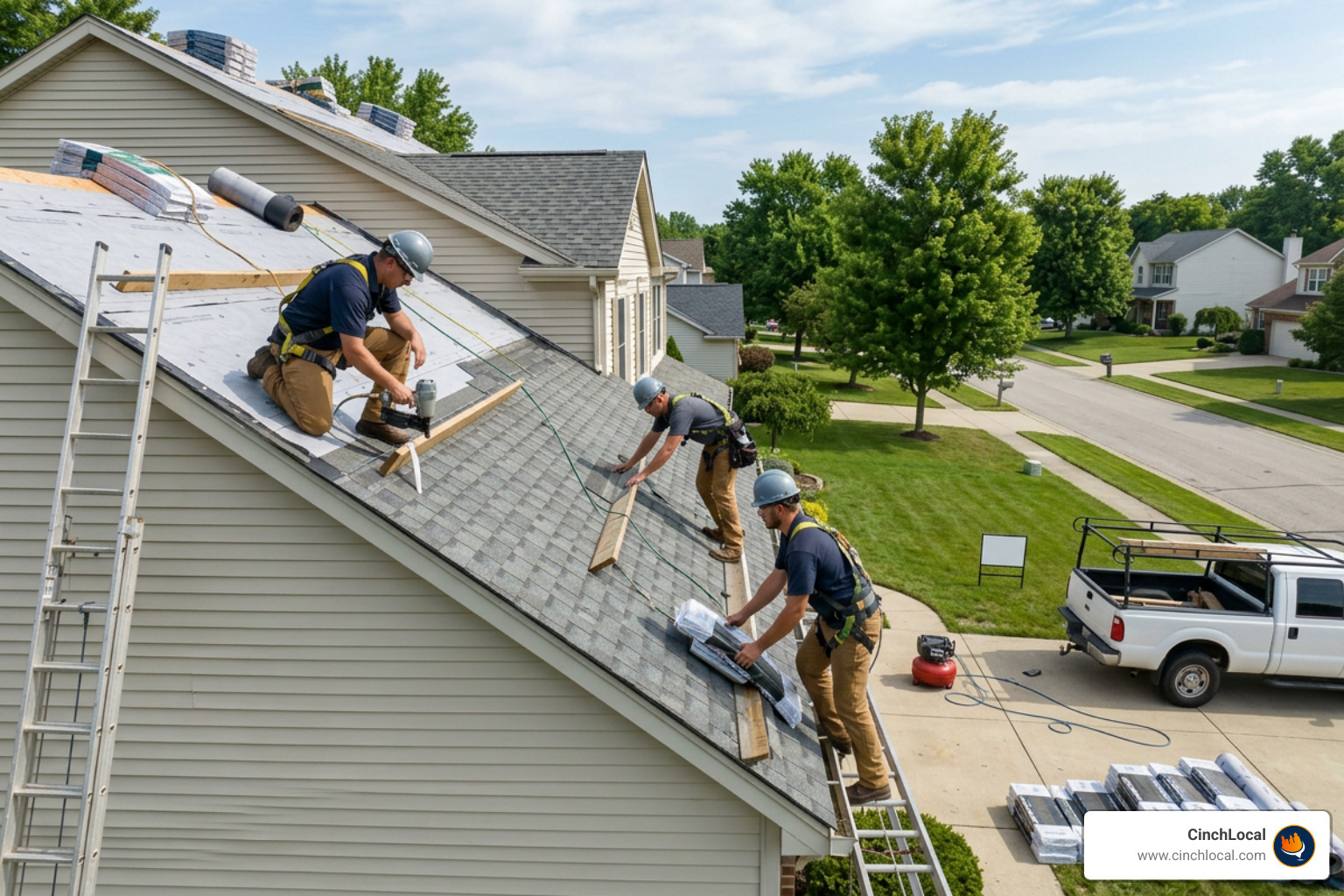
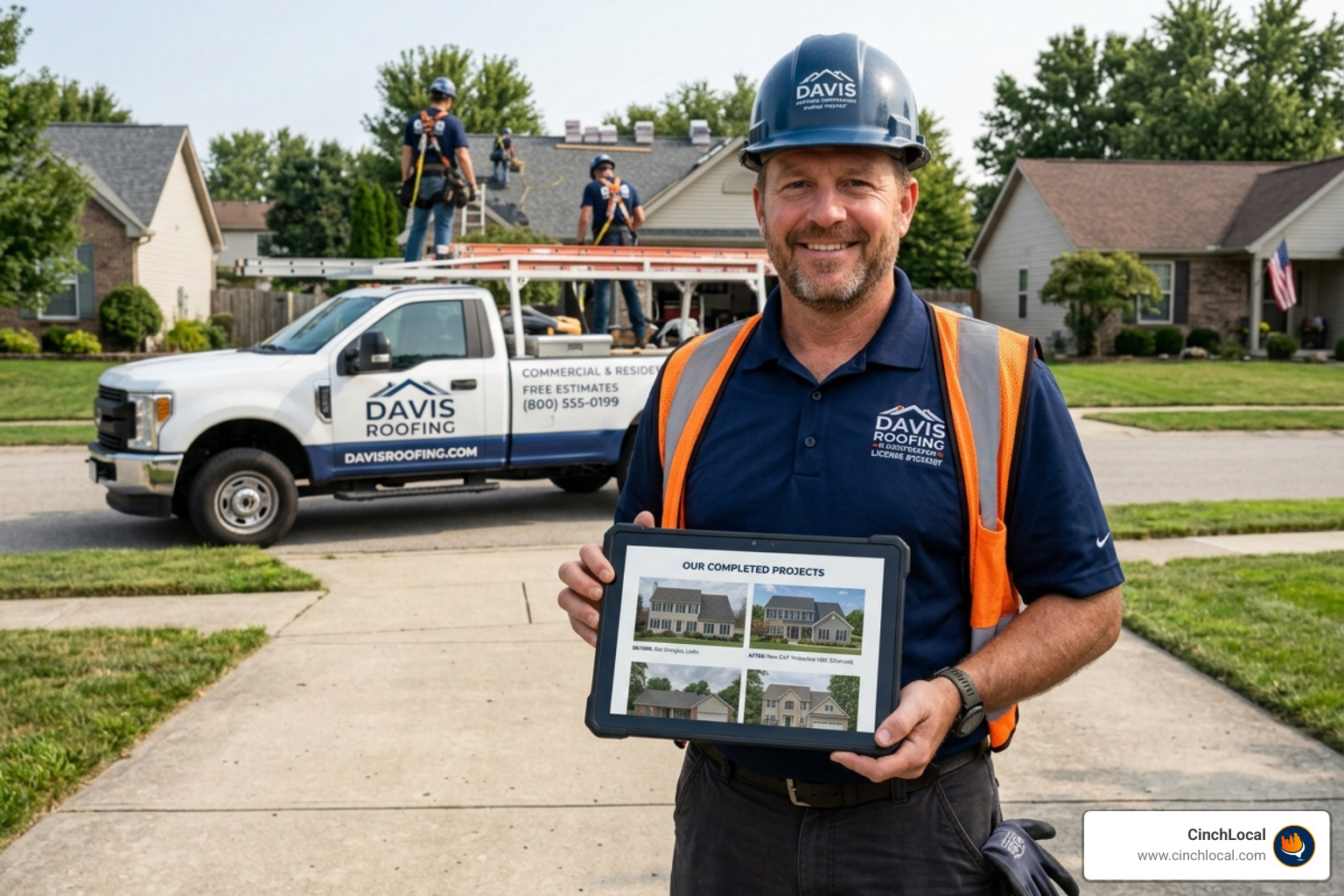
Stock photos of smiling models in pristine hardhats are a conversion killer. Modern homeowners can spot a stock photo from a mile away, and it triggers "stock-photo skepticism." Instead, use roofing web design inspiration that features your actual crew, your branded trucks, and your local office.
- Before-and-After Sliders: Nothing proves your competence like an interactive slider showing a dilapidated roof transformed into a masterpiece.
- Authentic Team Photos: Showing the human faces behind the business builds the "know, like, and trust" factor.
- Drone Footage: High-definition overhead shots of completed local projects provide "Information Gain" that search engines love and customers find impressive.
Trust Signals and Accreditations
Your website should act as a trophy case for your professional achievements. An Adobe survey on web design impact confirms that trust elements are pivotal in the decision-making process. Ensure you prominently display:
- Manufacturer Badges: Logos from GAF, CertainTeed, or Owens Corning signal that you are factory-certified.
- BBB Accreditation: A visible A+ rating from the Better Business Bureau remains a gold standard for older homeowners.
- Industry Awards: Local "Best of" awards or chamber of commerce memberships anchor your business in the community.
For a complete list of what to include, refer to our ultimate checklist for roofing contractor websites. Seeing 27 Roofing Website Designs To Inspire in 2026 can also help you visualize how to layer these trust elements without cluttering the UI.
Strategic SEO Architecture for Local Dominance
If your website is beautiful but invisible, it's a failed investment. A winning design is built on a foundation of "SEO Architecture"—organizing your site so Google understands exactly what you do and where you do it.
Dedicated Service and Location Pages
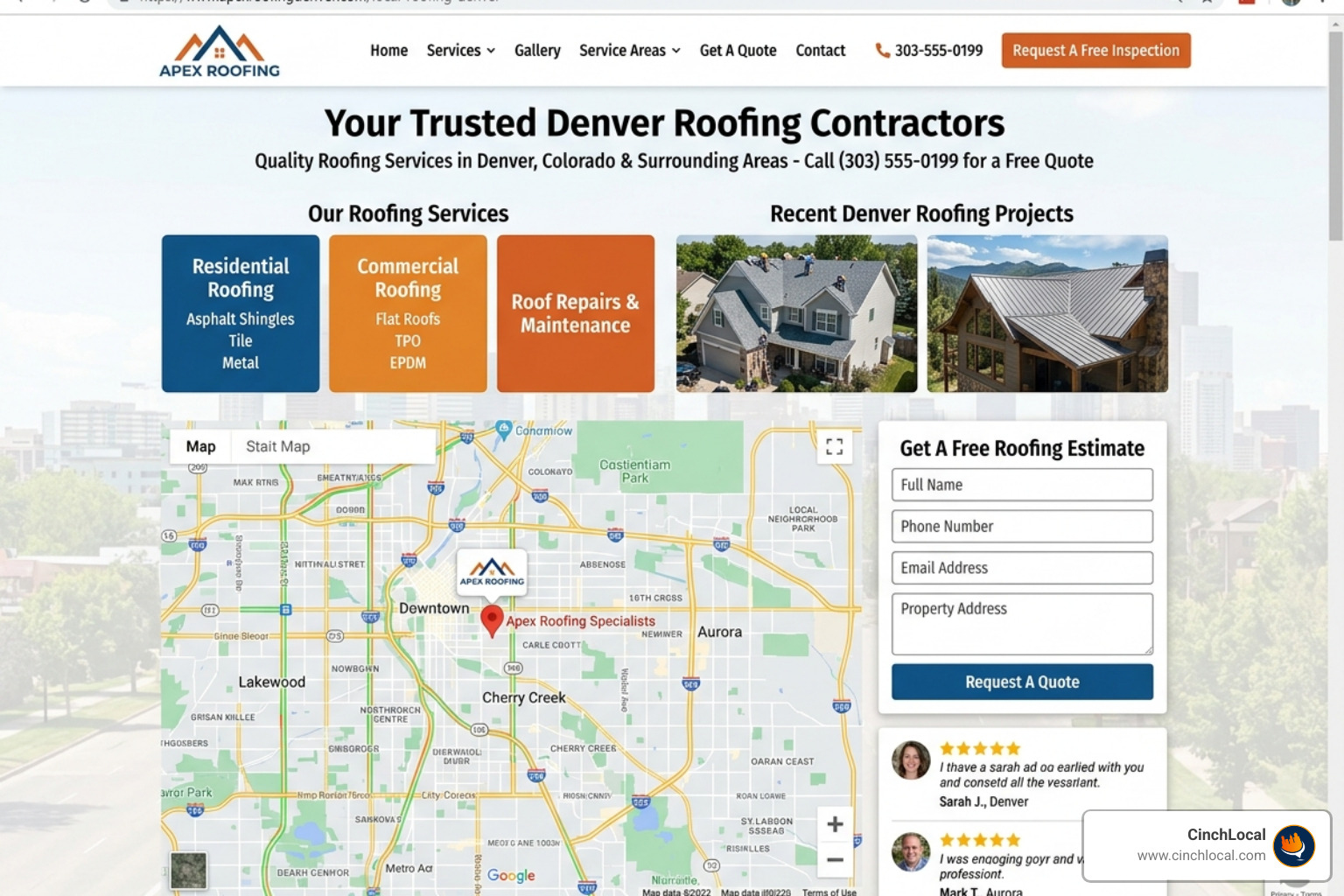
Google ranks pages , not just websites. To dominate your local market in Georgia or California, you need a dedicated page for every service (e.g., Metal Roofing, Emergency Leak Repair, Commercial TPO) and every major city you serve.
These aren't just "copy-paste" pages. Each location landing page must feature unique content, local weather considerations, and embedded Google Maps to maximize your Google Maps local SEO for roofers. You can see the impact of this strategy by reviewing our Local SEO results.
Technical SEO and Schema Markup
Behind the scenes, your site needs LocalBusiness Schema markup. This is a piece of code that tells AI search engines and Google your exact business name, address, and phone number (NAP). Maintaining NAP consistency across the web is non-negotiable. If your details are inconsistent, you'll find out why your roofing website is stuck in the gutter when your rankings start to slip.
Lead Generation Features and 2026 Design Trends
As we move through 2026, the gap between "standard" websites and "lead-gen powerhouses" is widening. The goal is to remove friction from the customer journey.
Innovative Roofing Website Design Ideas for 2026
Homeowners are busier than ever. They want answers now.
- AI-Powered Chatbots: These can answer basic questions about warranties or scheduling 24/7, capturing leads while you sleep.
- Instant Quote Calculators: While not 100% accurate, they provide a "ballpark" that keeps users engaged.
- Interactive Roof Visualizers: Allow homeowners to upload a photo of their house and "try on" different shingle colors.
Browsing Roofing Websites: 40+ Well-Designed Examples (2026) shows that the trend is moving toward high-interactivity and transparency.
Customer-Centric Roofing Website Design Ideas
Stop talking about how great you are and start talking about how you solve their problems.
- Feminine Design Aesthetics: Many initial roofing inquiries are made by women (the "Chief Household Officer"). Using softer color palettes, clear communication, and approachable team photos can make your brand feel safer and more professional.
- Financing Transparency: With roof costs rising, dedicated financing pages with monthly payment calculators are huge conversion drivers.
- Emergency Service Toggles: A bright red "Emergency" button that appears during storm season can capture urgent leads instantly.
If you are just starting, our guide on how to make a roofer website breaks down the DIY vs. Pro debate.
DIY vs. Professional Website Costs
| Feature | DIY (Wix/Squarespace) | Professional Custom Build |
|---|---|---|
| Upfront Cost | $16 - $45/mo | $3,000 - $10,000+ |
| SEO Potential | Limited / "SEO Ceiling" | High / Custom Architecture |
| Page Speed | Average | Optimized (Under 2s) |
| Lead Generation | Basic Forms | Advanced CRM Integration |
| Ownership | Rented Platform | You Own the Asset |
Frequently Asked Questions about Roofing Website Design
How much does a professional roofing website cost in 2026?
A professional, custom-built roofing website typically ranges from $3,000 to $10,000 . The price fluctuates based on the number of service pages, the complexity of interactive features (like quote calculators), and the depth of the SEO strategy. While DIY builders are cheaper monthly, they often lack the technical "under-the-hood" optimization required to rank in competitive markets like Ohio or California.
Should I use a template or a custom design for my roofing site?
Templates are great for new businesses on a tight budget. However, established companies looking to outshine the competition should invest in custom design. Custom sites allow for better roofing website design ideas to be implemented, such as unique brand identity and superior site speed, which templates often struggle with due to "bloated" code.
How do I improve my roofing website's loading speed?
Start by compressing your images into "next-gen" formats like WebP. Next, eliminate unnecessary plugins and use a Content Delivery Network (CDN). Finally, ensure you are using high-quality, roofer-specific hosting. If your site takes longer than 3 seconds to load, you are likely losing 53% of your mobile traffic.
Conclusion
In the competitive roofing landscape of 2026, your website is your most valuable salesperson. It works 24/7, never takes a sick day, and is the primary tool for building trust with homeowners before you ever set foot on their property. By implementing these roofing website design ideas —from mobile-first layouts to strategic SEO architecture—you position your business as the clear authority in your local market.
At CinchLocal , we specialize in the "Roofer Footprint Expansion System." We don't just build websites; we create lead-generation assets that are guaranteed to increase your visibility on Google Maps and deliver pre-sold leads within 30 days. Understanding how a roofer website design agency can help you to succeed is the first step toward reclaiming your local market.
Ready to stop losing jobs to competitors with better websites? Contact CinchLocal today for a free digital footprint audit and let’s build a website that nails the competition.
Want Us to Uncover Hidden 'Footprint Gaps' And Critical Blind Spots That’s Quietly Draining Calls, Jobs, and Profits?
Simply Fill Out The Form Below:
What If You Could Stop Wasting $30K+ a Year on Dead-End Marketing - And Finally Become the Go-To Roofer in Your City?
Other Helpful Articles You Might Enjoy