What You Need to Know: How Much Does a Roofing Lead Cost?
How much does a roofing lead cost? A shared roofing lead typically costs $15 to $85, and an exclusive lead typically costs $80 to $220, according to 2026 industry benchmarks. Lead quality and exclusivity drive most of the difference. High quality roofing leads are crucial for effective SEO and lead generation strategies, as they can increase online visibility and attract targeted traffic, leading to higher conversion rates.
This article will break down the different types of roofing leads, explain how the source of leads affects their cost, and offer strategies to help you optimize your lead generation expenses, including how much does a roofing lead cost in various scenarios.
Key Takeaways
- Shared roofing leads typically cost $15 to $85 and exclusive leads $80 to $220. Exclusivity and quality drive the price, so judge a lead by cost per booked job, not sticker price.
- The source of roofing leads matters more than your favorite pizza topping; organic leads are cheaper, while pay-per-click can cost you an arm and a leg, so choose wisely.
- To optimize lead costs, focus on quality over quantity, leverage SEO and social media, and remember: happy customers are the best (and cheapest) source of new leads!
Understanding Roofing Leads Cost
Many businesses find the pricing of roofing leads to be complex. Shared leads typically run $15 to $85 each and exclusive leads $80 to $220, according to 2026 industry benchmarks, depending on quality and exclusivity. To grow their customer base in a manner that is both efficient and cost-effective, numerous companies resort to lead generation services. Roofing lead generation companies play a crucial role in this process by offering varied solutions to connect roofing businesses with potential clients.
The expenses associated with acquiring a roofing lead are impacted by factors such as its quality, exclusiveness, where it originates from, and dynamics specific to the market concerned. In this intricate field of lead generation for roofing services, comprehending the various kinds of leads available along with their origins—and striking an optimal balance between the caliber and volume—is crucial.
Types of Roofing Leads
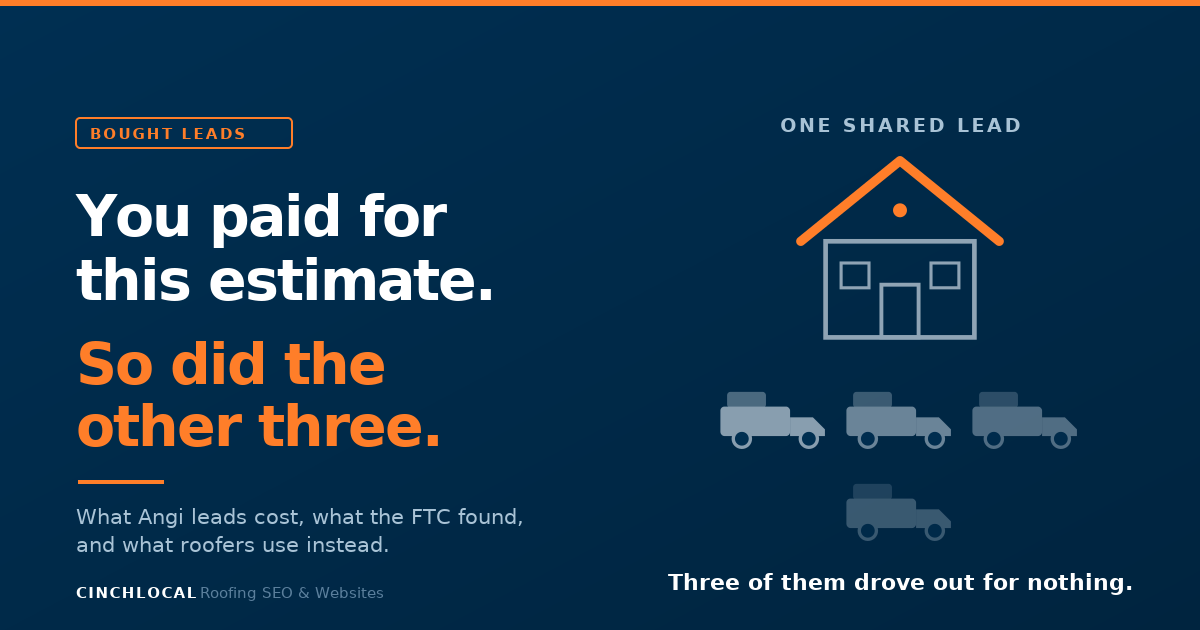
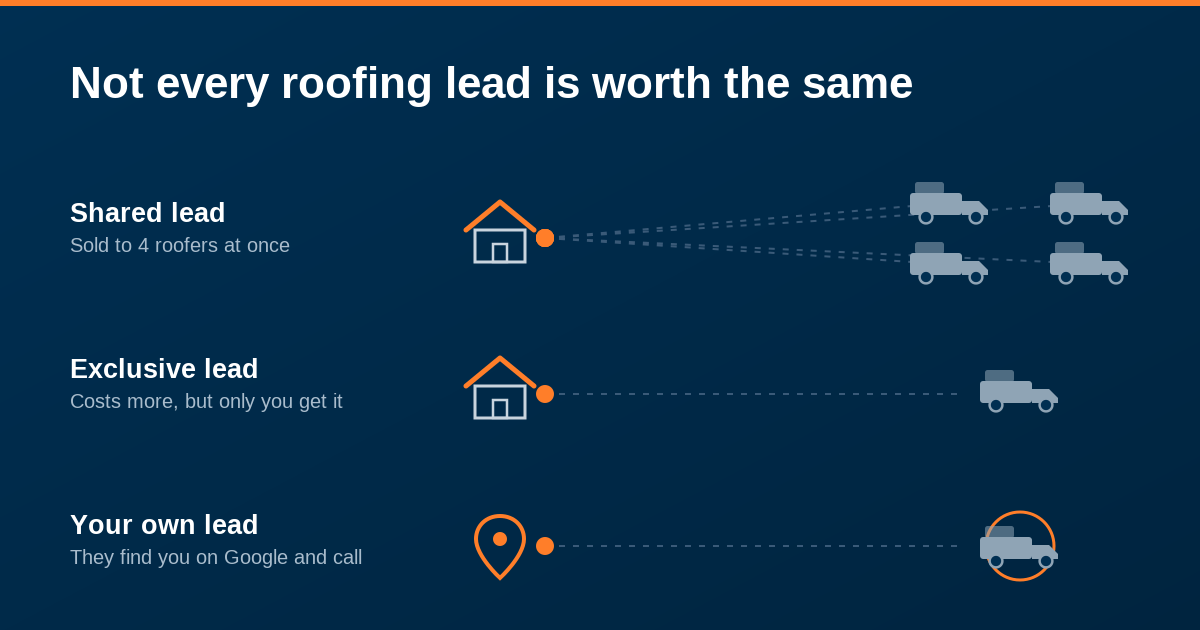
There are primarily two types of roofing leads: exclusive and shared. When considering residential or commercial roofing, it's important to understand the different types of leads available. Exclusive leads offer a significant advantage to one specific roofing business by being offered only to them, thus presenting an enhanced chance for the business to secure these prospects as devoted customers. Shared leads, conversely, may be distributed among several businesses, potentially reducing their effectiveness and escalating competitive pressure.
The likelihood of converting exclusive leads into sales is typically greater compared to shared ones due to their exclusivity. This makes them inherently more valuable. Roofing companies must carefully weigh whether the investment in higher-priced exclusive leads can be justified by their potential for improved conversion rates and sustained profit generation.
Lead Source Impact on Cost
Generating leads for roofing services can greatly affect the price you pay per lead. Key channels such as organic searches, online directories, and paid advertising serve as vital avenues for collecting leads. For example, by focusing on customers who are in search of roofing services using pay-per-click campaigns, it’s possible to rapidly accumulate leads. The cost associated with these leads may fluctuate significantly depending on market dynamics and how competitive desirable keywords are.
In terms of cost-efficiency, organic sources like the SEO and Google Maps work CinchLocal.com does carry no per-lead fee, which makes them an economical option compared to buying leads. It is beneficial to have an understanding of both the effectiveness and expense associated with various sources of lead generation in order to make strategic decisions that minimize costs while securing potential customers amidst stiff competition.
Quality vs. Quantity
In the realm of roofing lead generation, there’s a continuous discussion about whether to prioritize quality or quantity. Generating quality roofing leads through effective strategies like roofing Search Engine Optimization (SEO) not only improves online visibility but also ensures that the leads generated are more targeted and likely to convert into customers, thus enhancing overall business profitability and reducing lead costs. High-quality leads are identified by their strong inclination to make a purchase and they translate into superior conversion rates, thus elevating profits. These top-notch roofing leads have an increased chance of resulting in sales which can encourage ongoing business and enhance your company’s standing.
On the other hand, it is important to exercise caution when tempted by numerous low-cost leads. These often embody lower quality that could squander valuable resources while impeding successful conversions. Maintaining both consistency and high caliber in your leads is essential for sustained success. It’s crucial to collaborate with lead generation companies known for their transparency when seeking out this level of quality within your business endeavors.
Factors Influencing Roofing Lead Costs
The cost of roofing leads is not only shaped by their type and origin, but also heavily impacted by local market trends, the intensity of competition, and regulatory factors including building codes and homeowner association stipulations. To succeed, it’s essential to adopt an assertive cost-per-lead (CPL) stance while striving to optimize the return on investment for sustained profitability.
For roofing companies, periods of high demand spurred by events such as extreme weather can lead to a surge in lead volumes that significantly propels revenue upward. Digital marketing avenues like social media platforms and pay-per-click advertising play pivotal roles in generating these leads, which influences their overall costs.
We should take a closer look at how various elements—such as regional location nuances, competitive pressures within the marketplace, and seasonal flux—play into determining the expenses associated with obtaining roofing leads.
Geographic Location
The cost of roofing lead is heavily influenced by the geographic location due to local demand and the availability of contractors in the area. In regions with extreme weather conditions, there may be a heightened necessity for robust materials and specific knowledge, which can drive up prices.
Seasonal changes affect roofing lead costs. During severe winter periods, prices are usually reduced. Conversely, they rise during busy seasons because of intensified competition among roofing companies. Recognizing these seasonal and geographic fluctuations is crucial for roofing businesses aiming to optimize their strategies for obtaining leads.
Market Competition
The cost of roofing leads can be significantly influenced by market competition. When the market is crowded with contractors, prices for leads tend to escalate as each strives to outdo the other. To cope with these elevated costs in competitive markets, it’s imperative that roofing companies make well-considered marketing choices.
With heightened rivalry among contractors comes a surge in advertising expenditures which push up the price of obtaining leads. For these businesses to continually attract new customers and thrive amidst strong competition, securing commercial roofing leads becomes crucial. Consequently, many look towards lead generation companies specialized in roofing lead generation for assistance.
In order to stand out from the crowd and succeed within this challenging environment, deploying effective digital marketing techniques along with refining content marketing approaches are critical steps for any contractor intent on augmenting their customer base through fresh streams of quality leads.
Seasonal Variations
Fluctuations in the seasons notably influence the expense associated with obtaining a roofing lead. When demand dips during off-peak periods, costs for leads tend to decrease, whereas during peak times when competition escalates, prices rise accordingly. Grasping these patterns allows firms to craft informed strategies for lead acquisition.
Roofing companies that recognize these seasonal shifts can more effectively devise their marketing tactics and allocate financial resources for securing leads all year round. This insight is crucial for minimizing lead-related expenses while maintaining a consistent influx of high-quality leads despite the competitive landscape.
Buying vs. Generating Your Own Roofing Leads
When it comes to acquiring new customers, roofing companies have two primary options: buying leads from a lead generation company or generating their own leads through digital marketing efforts. Both approaches have their pros and cons, and the best choice for a roofing business depends on its specific needs, resources, and goals.
Buying leads from a reputable lead generation company can provide a steady stream of high-quality leads, saving time and effort. This approach is particularly beneficial for roofing companies that may not have the in-house expertise or resources to generate leads independently. However, it’s essential to ensure that the leads are exclusive, genuine, and relevant to the business’s services to avoid wasting resources on low-quality prospects.
On the other hand, generating leads through digital marketing efforts, such as SEO, social media, and content marketing, can be more cost-effective and provide long-term benefits. By investing in these strategies, roofing businesses can build a strong online presence, attract organic traffic, and establish themselves as industry leaders. However, this approach requires significant expertise, resources, and time to execute effectively.
Ultimately, a combination of both approaches can be the most effective strategy for roofing companies. By leveraging the strengths of lead generation companies and investing in digital marketing efforts, businesses can maximize their lead generation potential and drive growth.
Strategies to Optimize Roofing Lead Costs
Optimizing roofing lead costs involves strategies that maximize investment value. Focusing on SEO enhances website ranking and visibility, making it easier for customers to find your services. Leveraging social media marketing builds stronger brand identities and trust.
Customer retention and referrals are crucial in reducing lead acquisition costs. Satisfied customers and referrals can generate high-quality leads at a lower cost.
Let’s explore these strategies in more detail.
Investing in SEO
SEO serves as an influential approach for generating leads while also cutting down on expenses. It boosts the ranking and visibility of a website, thus simplifying the process for potential customers to locate your roofing services and markedly enhancing lead generation.
CinchLocal specializes in tailored local SEO techniques aimed at elevating online presence and drawing in pre-qualified leads for their clientele. By diminishing the costs associated with acquiring leads yet augmenting their quality, SEO delivers sustained investment returns to those in the roofing industry.
Leveraging local SEO is advantageous for roofing businesses because it amplifies their prominence in local search results, thereby efficiently securing a regional customer base.
Leveraging Social Media Marketing
In today’s digital era, harnessing the power of social media marketing is a potent strategy for roofing companies looking to acquire high-quality leads. By actively engaging with potential clients on various social media platforms, these businesses can forge stronger connections and cultivate trust, thereby boosting their chances of generating quality leads.
For roofing businesses aiming to expand their customer base without incurring substantial lead generation expenses, social media presents an invaluable avenue. Not only does it enable them to connect with more prospects, but also helps secure loyal customers who are likely to provide referrals and bring repeat business—all contributing to a steady influx of new leads for the company.
Customer Retention and Referrals
Maintaining a loyal customer base and fostering referral business can significantly diminish the expenses related to acquiring new leads. Roofing companies that prioritize client satisfaction and advocate for referrals tend to attract high-quality leads more economically.
Reviews play a considerable role in building trust with potential customers and in earning referrals. CinchLocal extends an invitation for complimentary consultations and strategic discussions designed specifically to cultivate customized lead generation approaches for businesses specializing in roofing.
Employing this strategy enables roofing firms to establish robust relationships with their clientele, stimulating the influx of fresh leads via positive word-of-mouth recommendations—a boon for any company operating within the roofing industry.
Reducing Roofing Lead Costs
Reducing roofing lead costs is crucial for maximizing profitability and competitiveness. Here are some strategies to help roofing companies minimize their lead generation expenses:
- Invest in SEO: Search Engine Optimization (SEO) is a cost-effective way to generate high-quality leads. By optimizing their website and online presence, roofing companies can increase their visibility, drive organic traffic, and attract potential customers. This long-term strategy not only reduces lead costs but also enhances brand credibility.
- Leverage Social Media: Social media platforms offer a vast audience and a range of marketing opportunities. By creating engaging content, interacting with potential customers, and utilizing paid social media ads, roofing companies can generate leads at a lower cost. Social media also allows businesses to build relationships and trust with their audience, which can lead to higher conversion rates.
- Focus on Customer Retention: Retaining existing customers is more cost-effective than acquiring new ones. By providing excellent customer service, offering loyalty programs, and encouraging referrals, roofing companies can reduce their lead generation costs and increase customer lifetime value. Happy customers are more likely to refer others, creating a steady stream of high-quality leads.
- Partner with a Lead Gen Company: Partnering with a reputable lead generation company can provide access to high-quality leads at a lower cost. By leveraging the expertise and resources of a lead gen company, roofing businesses can reduce their lead generation expenses and focus on converting leads into sales. This partnership can be particularly beneficial during peak seasons or when expanding into new markets.
Google Ads vs. Local Service Ads (LSA) for Roofing Businesses
When it comes to advertising for roofing businesses, understanding the difference between Google Ads and Local Service Ads (LSA) is crucial for optimizing your marketing strategy.
Targeted Audience
Local Service Ads (LSAs) for Roofers are specifically crafted to target individuals actively seeking local services like roofing. This means your ads reach users with a high purchase intent, ensuring that your marketing efforts are directed toward potential customers who are more likely to convert. In contrast, Google Ads can reach a broader audience, which might include users with varying levels of interest in roofing services.
Pay‑Per‑Lead Model
A significant advantage of LSAs over standard Google Ads is the pay-per-lead model. With LSAs, you only incur costs when a potential customer contacts you directly through the ad, optimizing your advertising spend. This contrasts with Google Ads, where you pay per click, regardless of whether the click leads to a meaningful interaction or conversion.
Google explains how the program works, including how you are charged for leads, in its guide to getting started with Local Services Ads.
Google Verified Badge
LSAs show the Google Verified badge, which replaced the Google Guaranteed badge in October 2025 and shows which checks a business has passed, such as licensing and background checks. While Google Ads do not carry this badge, they do allow for more creative freedom in ad design and copy.
Limited Customization
One of the trade-offs with LSAs is limited customization options. While they provide robust local targeting, they offer less control over ad copy and design compared to Google Ads. This limitation might be a consideration for businesses that wish to tailor their messaging more specifically.
When to Use LSAs
- Local Focus: LSAs are ideal if your primary goal is to attract customers within a specific geographic area and generate high-quality leads. Their targeted nature makes them particularly effective for local roofing businesses.
- Building Trust: If leveraging the credibility associated with the Google Verified badge is important to your strategy, LSAs are a valuable tool. This feature can significantly boost your business's trustworthiness in the eyes of potential customers.
In summary, while both Google Ads and Local Service Ads have their strengths, LSAs are generally favored by roofing businesses for their targeted approach, local visibility, and pay-per-lead model. However, it's essential to weigh these benefits against the potential higher cost per lead and limited customization options when deciding which platform best suits your marketing needs.
Measuring and Improving Lead Generation Performance
Measuring and improving lead generation performance is crucial for roofing companies. Evaluating effectiveness involves comparing metrics like conversion rates, cost per lead, and lead quality to assess overall performance.
Successful lead generation is essential for business profitability in the roofing industry, as it highlights the importance of understanding cost dynamics and the value of leads.
Analyzing data helps identify trends and improvement areas in lead generation strategies. Adjusting strategies based on this analysis enhances performance and ROI.
Let’s explore the key performance metrics and the role of data analysis in improving lead generation performance.
Key Performance Metrics
Evaluating lead generation success for roofing companies necessitates the monitoring of key performance indicators such as cost per acquisition, conversion rate, and customer lifetime value. Setting distinct goals and KPIs is essential for efficient data interpretation.
It’s crucial to examine how effectively leads are converting into sales to improve the cost per lead (CPL) metrics. By keeping track of figures like cost per lead and conversion rates, these businesses can gauge the effectiveness of their strategies in generating leads and make necessary enhancements.
Data Analysis and Strategy Adjustment
Examining data meticulously is essential for enhancing the efficiency of lead generation efforts. It’s imperative for roofing companies to set clear objectives and determine relevant metrics and key performance indicators (KPIs) to gauge their progress. For a comprehensive analysis, it’s important to consider an array of metrics and KPIs beyond just the cost incurred per lead.
Monitoring traffic on websites serves as a vital tool in assessing the effectiveness of sales and marketing endeavors by shedding light on consumer interactions. The impeccable client satisfaction score achieved by CinchLocal stands as testimony to the success of their tailored marketing approaches.
By rigorously analyzing data tied to lead generation activities and modifying tactics based on those insights, roofing businesses can optimize both performance outcomes and return on investment.
Getting the Most Out of Your Roofing Leads
To maximize the potential of roofing leads, businesses must focus on converting them into sales. Here are some strategies to help roofing companies get the most out of their leads:
- Respond Promptly: Responding promptly to leads is crucial for converting them into sales. By responding quickly, roofing companies can demonstrate their professionalism, build trust, and increase the chances of closing a sale. A swift response shows potential customers that their needs are a priority, which can set a positive tone for future interactions.
- Provide Personalized Solutions: Providing personalized solutions and quotes can help roofing companies differentiate themselves from competitors and increase the chances of closing a sale. By understanding the specific needs and requirements of each lead, businesses can tailor their services and provide value-added solutions. This personalized approach can make potential customers feel valued and understood, increasing their likelihood of choosing your services.
- Follow Up: Following up with leads is essential for converting them into sales. By maintaining regular communication, roofing companies can build relationships, address concerns, and increase the chances of closing a sale. A well-timed follow-up can remind potential customers of your services and keep your business top-of-mind.
- Measure and Analyze: Measuring and analyzing lead generation performance is crucial for optimizing marketing efforts and maximizing ROI. By tracking key metrics, such as conversion rates, cost per lead, and customer lifetime value, roofing companies can refine their marketing strategies and drive growth. Regular analysis helps identify what’s working and what needs improvement, allowing businesses to make data-driven decisions and enhance their lead generation efforts.
Own Your Leads Instead of Buying Them
CinchLocal distinguishes itself as the premier marketing firm for U.S. roofing contractors, pledging to deliver outcomes or provide their services without charge, which underscores their dedication to the triumph of their clients. Specializing in promotion and lead generation specifically for the roofing industry, CinchLocal is a prime selection for those within this field.
Providing a suite of specialized marketing solutions designed with roofing enterprises in mind, CinchLocal assures an influx of high-caliber leads crucial to successful lead acquisition. These distinctive qualities position CinchLocal at the forefront as an unparalleled provider for generating roofing leads.
Proprietary Roofer Footprint Expansion System
The Roofer Footprint Expansion System, CinchLocals premier Google Maps SEO service improves online visibility and cultivates pre-sold lead generation. Maintaining a robust online presence is critical in drawing customers who are looking for services via the internet. For roofing businesses, achieving the #1 spot on Google Maps is highlighted by CinchLocal as essential to establish themselves as leading contractors within their local area.
CinchLocal delivers a complimentary GeoGrid Report that allows roofers to assess where they stand relative to their competitors locally. They boost both websites and Google My Business profiles using comprehensive local search engine marketing tactics that encompass both on-page elements and external strategies, all aimed at enhancing overall exposure and maximizing lead acquisition potential for these businesses.
Client Success Stories
Clients frequently praise the revolutionary effect that CinchLocal’s services have had on their ability to generate leads. The company’s dedication to providing exceptional service and high-quality leads is clear, with a perfect client satisfaction score of 5 stars.
Free GeoGrid Ranking Audit and Strategy Session
CinchLocal invites roofing companies to a free GeoGrid ranking report and strategy session. We map where you rank on Google Maps across your service area and show you the gaps costing you calls.
In this meeting, Cary Byrd, the entrepreneur behind CinchLocal, will share his knowledge on amplifying digital visibility and refining strategies for generating more leads. The offer underscores CinchLocal’s proficiency and dedication to supporting roofing businesses in reaching their objectives of increased lead production.
Summary
To grasp the nuances of roofing lead costs, it’s essential to consider a myriad of influencing elements such as the caliber and exclusivity of leads, their origins, local market factors, competition within the industry, and timing tied to seasonal trends. Roofing companies can maximize their return on investment in lead generation by integrating robust tactics like search engine optimization (SEO) and social media marketing along with nurturing customer loyalty and encouraging referrals.
Atop the field for generating roofing leads is CinchLocal. They are distinguished by their unique Roofer Footprint Expansion System, which has garnered high levels of client satisfaction. Offering complimentary services such as a free GeoGrid ranking audit demonstrates CinchLocal’s dedication to producing tangible outcomes that support roofers in expanding their businesses. Aligning with them ensures tapping into effective lead acquisition strategies vital for thriving amidst fierce business competition.
Frequently Asked Questions
How much does a roofing lead cost on average?
A shared roofing lead typically costs $15 to $85, and an exclusive lead typically costs $80 to $220, based on 2026 industry benchmarks. Exclusive leads cost more up front but face less competition, so they often cost less per booked job.
What types of roofing leads are available?
When it comes to roofing leads, you’re looking at exclusive ones just for you or shared leads that play the field with multiple rivals. Choose wisely, unless you enjoy a good competition!
How does geographic location influence roofing lead costs?
Geographic location is the landlord of roofing lead costs—rents are higher where demand’s hotter, competition’s fiercer, and Mother Nature’s throwing her worst tantrums. So, if you’re roofing in a stormy market, expect to pay a premium!
What makes CinchLocal the best choice for roofing lead generation?
CinchLocal is your roofing lead generation MVP, with the Roofer Footprint Expansion System™, built to bring in exclusive leads from Google Maps, organic search and AI answers. We work only with roofers, one per market.
What is the benefit of CinchLocal's free GeoGrid ranking audit and strategy session?
CinchLocal’s free GeoGrid ranking audit and strategy session is like a treasure map for roofing companies, guiding them to boost their online visibility and reel in more leads—all without spending a dime! It’s a no-brainer for anyone looking to grow their business!