

Cary Byrd // Founder of CinchLocal
What Every Roofer Needs to Know Before Running Facebook Ads
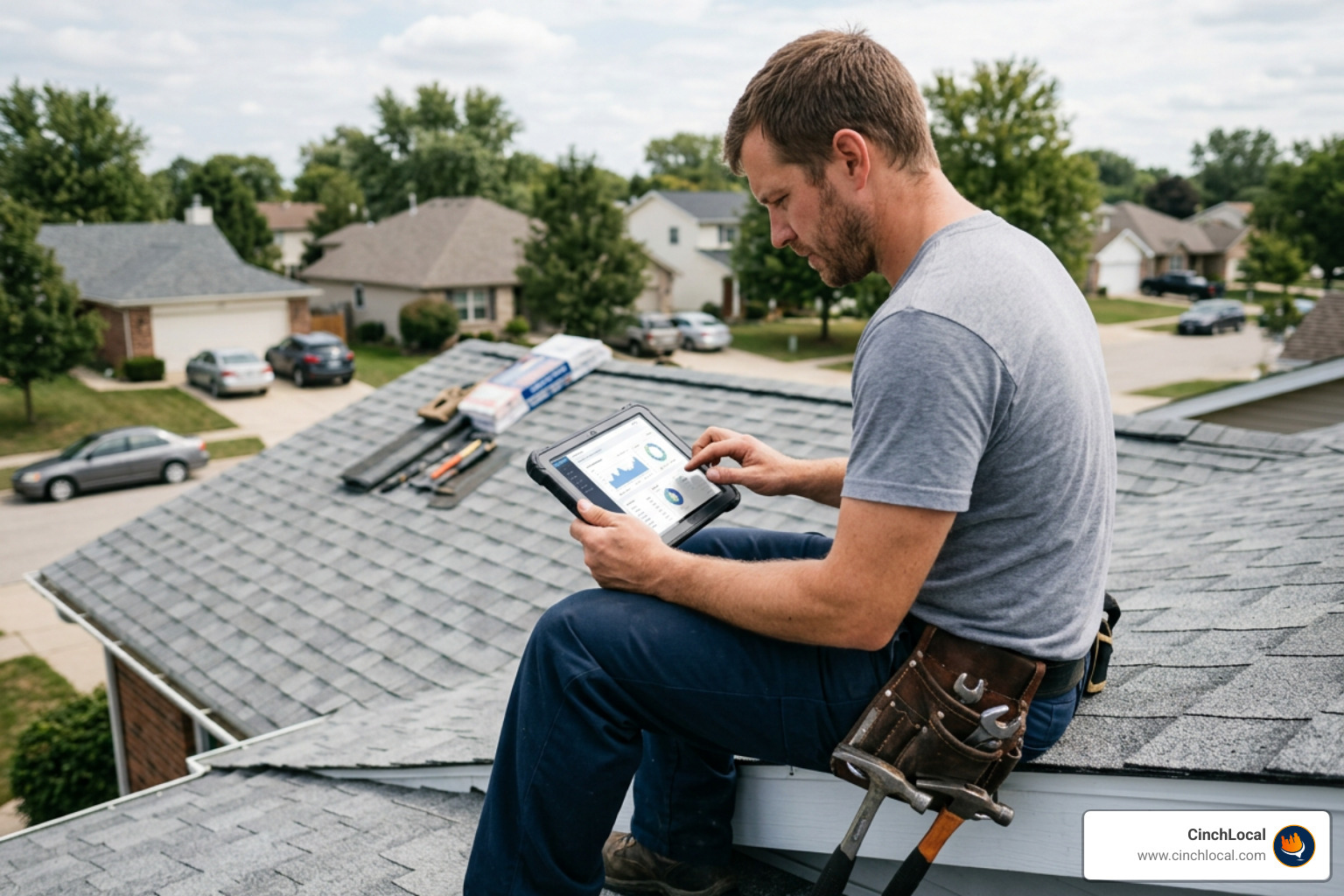
Facebook ads for roofers can either be one of the most cost-effective lead generation tools in your marketing stack — or a fast way to burn through your budget with nothing to show for it. The difference comes down to understanding how the platform works and what it was actually built for.
Here's a quick-reference summary before we dive deep:
| Question | Quick Answer |
|---|---|
| Do Facebook ads work for roofers? | Yes — when used correctly as a discovery and retargeting channel |
| What's the average cost per click? | ~$0.99 on Facebook vs. $5.26 on Google Ads |
| What's a realistic cost per lead? | $30–$80 for most roofing campaigns |
| What's the biggest mistake roofers make? | Treating Facebook like Google Search |
| What's the ideal monthly budget? | $1,000–$2,500/month for growing roofing companies |
| How long until you see leads? | 7–14 days with a properly structured campaign |
With 71% of U.S. adults on Facebook, the audience is absolutely there. Homeowners aged 35–65 — the exact people making roofing decisions — scroll through their feeds every single day. But Facebook is a discovery platform, not a search engine. People aren't typing "roof replacement near me." They're passively scrolling. That changes everything about how your ads need to be built.
Most roofing contractors who try Facebook ads quit too early or set them up the wrong way. They copy what works on Google, get disappointing results, and conclude the platform doesn't work. It does work — just differently. And when it's paired with a solid strategy from a roofing-focused digital marketing partner, it becomes a reliable engine for brand awareness, retargeting warm leads, and capturing storm-response jobs fast.
I'm Cary Byrd, founder of CinchLocal, a roofing marketing agency, and I've spent years helping contractors build smarter paid social strategies — including Facebook ads for roofers — that generate real pipeline, not just clicks. In this guide, I'll walk you through exactly what works, what doesn't, and how to structure campaigns that actually convert homeowners into booked jobs.
Why Most Facebook Ads for Roofers Fail (and How Meta Compares to Google)
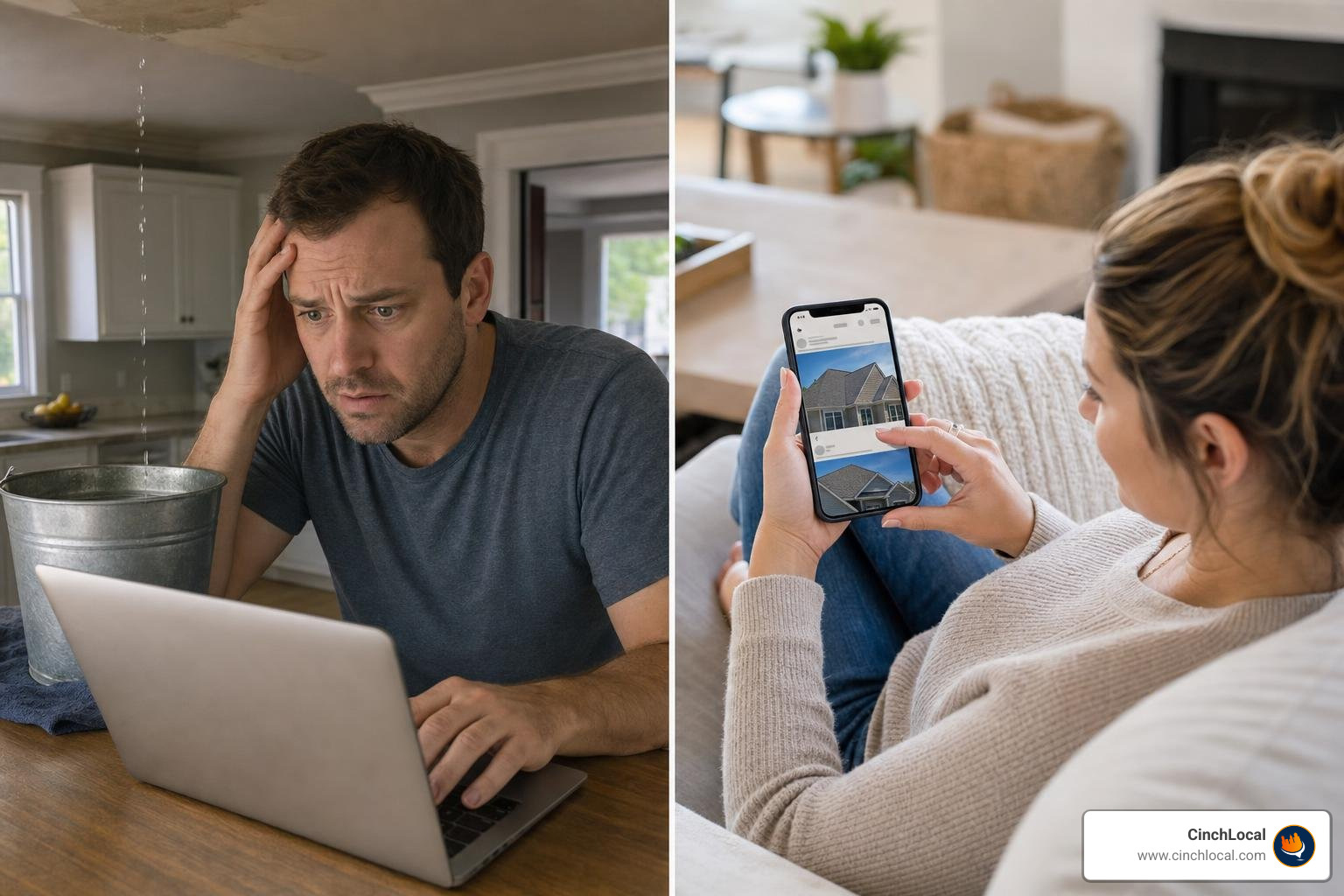
The primary reason facebook ads for roofers fail is simple: contractors expect active search intent from a platform designed for passive discovery. When a homeowner needs an emergency roof repair or actively seeks a contractor, they turn to Google Search. On Meta platforms (Facebook and Instagram), users are looking at family updates, local news, and entertaining content. They aren't actively searching for shingles or underlayment.
This fundamental difference changes how leads are generated and nurtured. Google search traffic features high purchase intent, resulting in immediate quote requests, but it comes with fierce competition and higher cost-per-click (CPC) rates. Meta, on the other hand, delivers incredible impression volume and remarkably cheap clicks, making it an elite channel for capturing early-stage discovery, educating property owners, and retargeting people who already visited your website.
When deciding what is the best platform for roofing advertising, you have to evaluate cost structures and lead intent side-by-side:
| Metric / Feature | Facebook Ads (Meta) | Google Search Ads |
|---|---|---|
| User Mindset | Passive Discovery & Browsing | Active Search Intent |
| Average Cost Per Click (CPC) | ~$0.99 | ~$5.26 |
| Direct Cost Per Lead (CPL) | $65 – $120+ (Cold traffic) | $22 – $45 |
| Retargeting Cost Per Lead | $25 – $60 | $45 – $80 |
| Primary Campaign Role | Brand Awareness, Storms, Retargeting | Immediate Replacement Leads |
| Assisted Conversion Impact | 65% – 80% of total marketing impact | Direct 1-to-1 attribution |
While Google delivers lower direct lead costs for immediate searchers, Meta dominates brand awareness and retargeting efficiency. Industry data reveals that between 65% and 80% of the total revenue impact generated by Facebook ads for contractors occurs through assisted conversions. A homeowner sees your Facebook ad, doesn't fill out the form immediately, but remembers your name three weeks later when they search for your business on Google. If you evaluate Meta strictly on immediate direct-form submissions without multi-touch attribution, you miss the vast majority of the revenue it drives.
Common Mistakes That Burn Ad Spend
Roofing contractors frequently drain their marketing budgets on Meta by repeating four preventable mistakes:
- Treating Facebook Like Search: Writing ads that say "Call Us for Quality Roof Replacements!" fails because passive scrollers aren't ready to buy at that exact second.
- Using Generic Stock Photos: Homeowners instantly ignore glossy stock images of clean roofs or random models wearing hardhats. Authentic, local visuals outperform polished stock assets every single time.
- Weak Landing Page & Form Experiences: Driving traffic to a generic homepage with confusing navigation destroys conversion rates.
- Slow Lead Follow-up: If you do not contact a Meta lead within 5 to 15 minutes, conversion rates drop dramatically. You must stop your roofing leads from leaking on Facebook by implementing immediate SMS and phone follow-up systems.
Understanding Meta Lead Form Quality vs Website Conversions
Choosing between native Meta Lead Forms and custom website landing pages requires balancing friction and lead volume. Native Lead Forms auto-populate the user's name, email, and phone number directly within the Facebook app. This ultra-low friction produces high lead volume and lower initial CPL ($27.66 platform average). However, because form submission is so effortless, contact information can sometimes be outdated, and lead intent is lower.
Directing traffic to custom website landing pages introduces friction. Users must wait for the page to load and manually type in their information. While this increases CPL, the resulting leads display significantly higher intent and conversion rates.
To track website actions accurately, every roofing company must install the Meta Pixel via Google Tag Manager. The Pixel tracks page views, form submissions, and phone calls, feeding critical conversion data back to Meta's algorithm to optimize ad delivery toward homeowners most likely to request estimates.
Core Ad Types and Seasonal Strategies That Actually Convert Homeowners
To build a profitable advertising campaign, you must match your ad creative to the specific needs and emotional triggers of local homeowners. According to performance data cited by ServiceTitan's guide on roofing Facebook ads, campaigns leveraging authentic local visuals and educational hooks deliver the highest engagement and ROI.
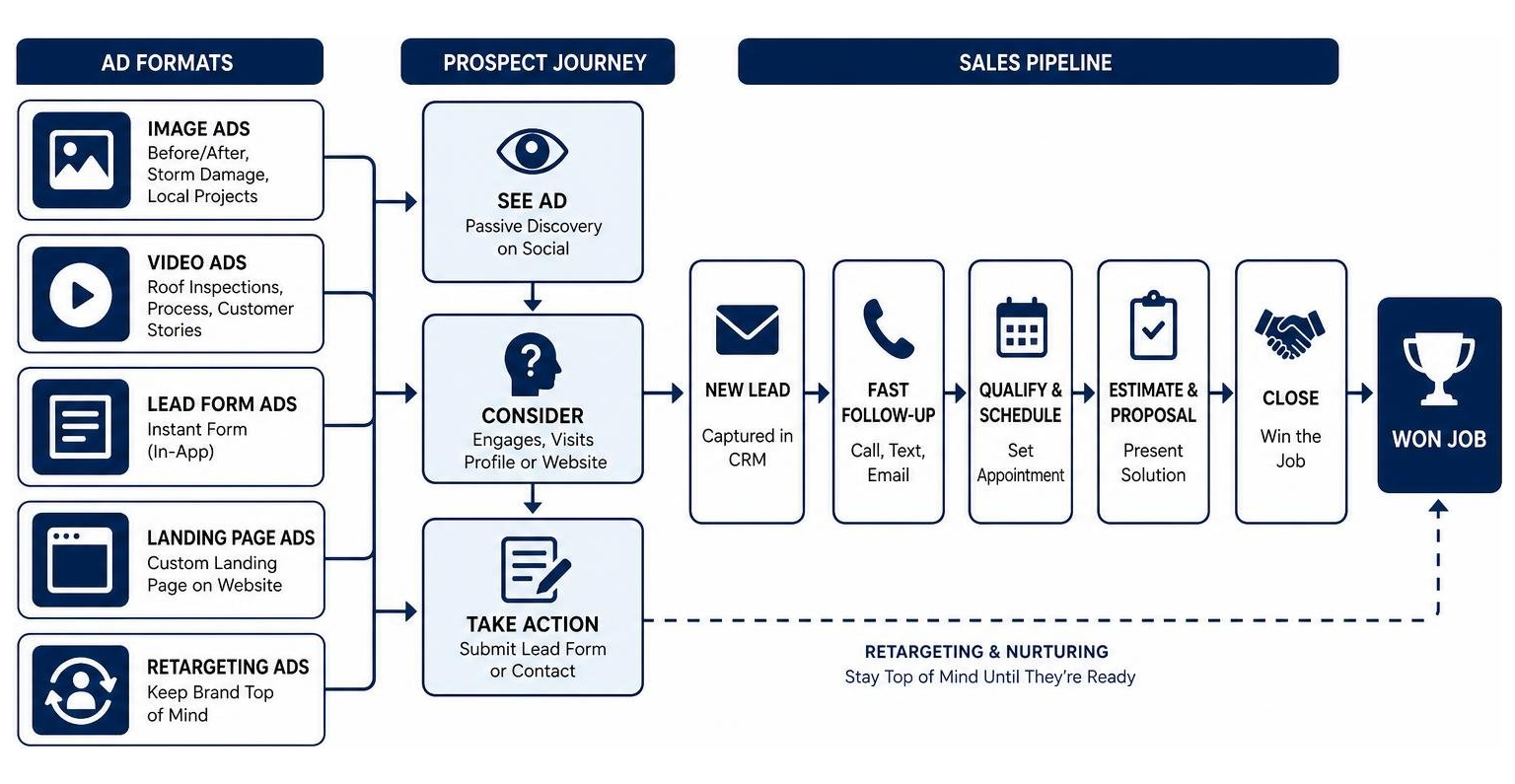
Choosing High-Performing Creatives in Facebook Ads for Roofers
Your creative elements—images, video, headlines, and primary copy—do 80% of the heavy lifting on Meta. To stop a homeowner mid-scroll, implement these visual best practices:
- Authentic Before-and-After Photos: Show a dramatic transformation of a real local property. Take both photos from the same angle and lighting for maximum visual impact.
- Crew and Branding Shots: Real photos of your crew members on-site, branded trucks, and cheerful foremen build immediate trust and local familiarity.
- 30-Second Time-Lapse Videos: Set up a smartphone on a tripod during a full tear-off and replacement. Short time-lapse videos showing a clean, efficient job site keep users watching.
- Scroll-Stopping Headlines Under 125 Characters: Keep primary text punchy. Headlines like "Live in [City Name]? 3 Warning Signs Your Roof Is Hiding Leak Damage" immediately capture regional attention.
When building your creative pipeline, follow our guide on how to get more targeted Facebook ads leads for roofers in 5 simple steps to align your visual messaging with local audience interests.
Capitalizing on Weather Events and Seasonality
Severe weather events represent massive revenue spikes for roofing contractors. In 2024, the National Oceanic and Atmospheric Administration (NOAA) documented 27 climate disasters causing over $1 billion in damages each across the U.S., including 17 severe storm and hail events.
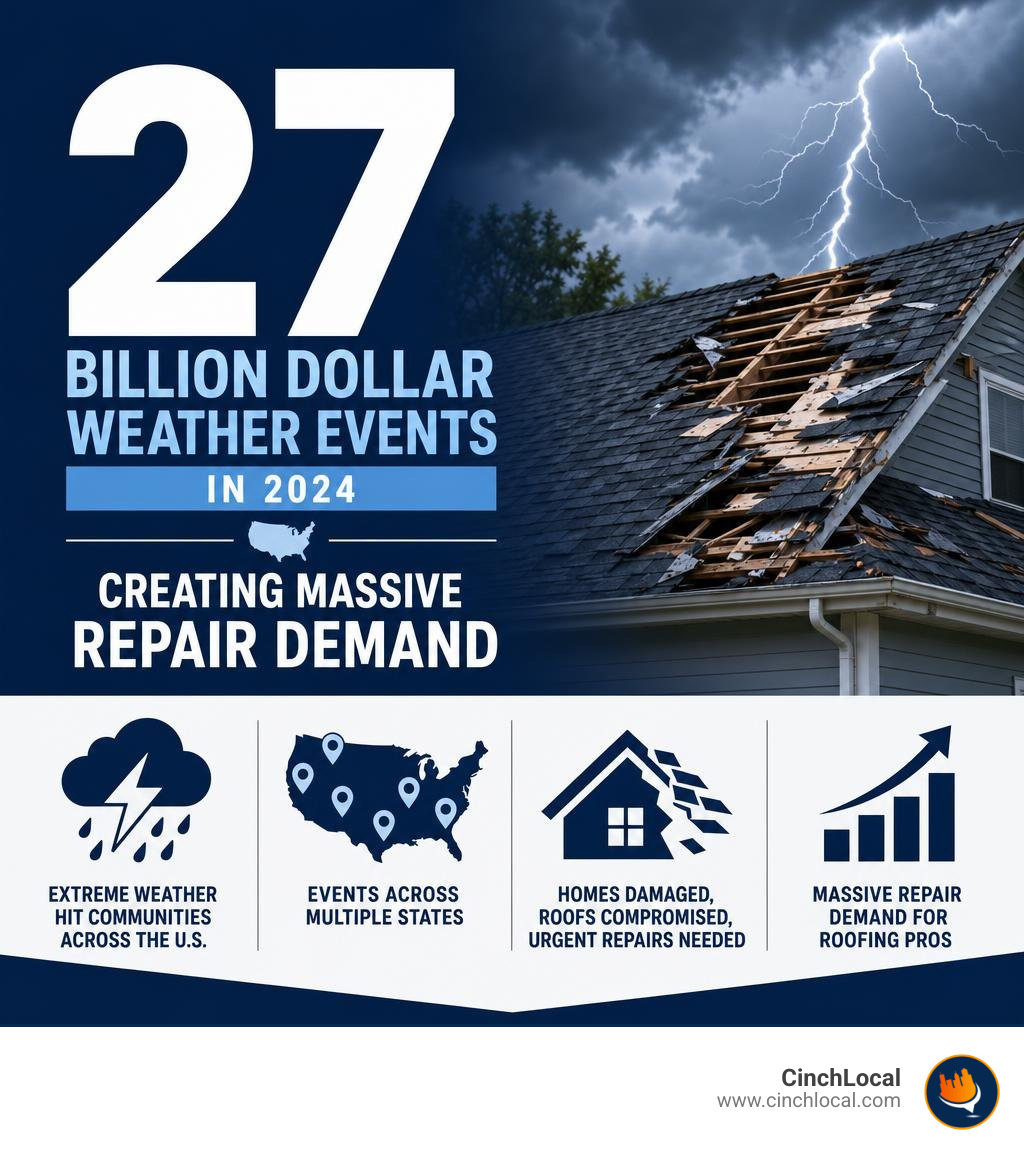
When hail or wind hits your service territory, deploying rapid storm response campaigns on Facebook within 24 to 48 hours allows you to capture affected homeowners before out-of-state storm chasers flood the neighborhood. Storm response campaigns on Facebook frequently achieve cost-per-lead figures between $35 and $75 because intent and urgency are naturally elevated.
During off-peak winter seasons, switch your messaging from full replacements to maintenance promotions, gutter clearing, or free attic insulation checks. Maintaining an active ad presence during slow months keeps your Meta Pixel warm and protects your account's algorithmic learning history. For ongoing insights on seasonal strategies, join active contractor communities such as the Facebook Roofing Industry Group to share real-time tactical feedback with peers.
Ready to Capture High-Intent Roofing Leads?
Don't let seasonal storms or slow months drain your marketing dollars. Partner with a dedicated team that knows the roofing and home services industry inside out. Schedule your free roofing ad strategy session with CinchLocal today to launch high-converting Meta campaigns.
Audience Targeting and Strategic Budgeting by Business Stage
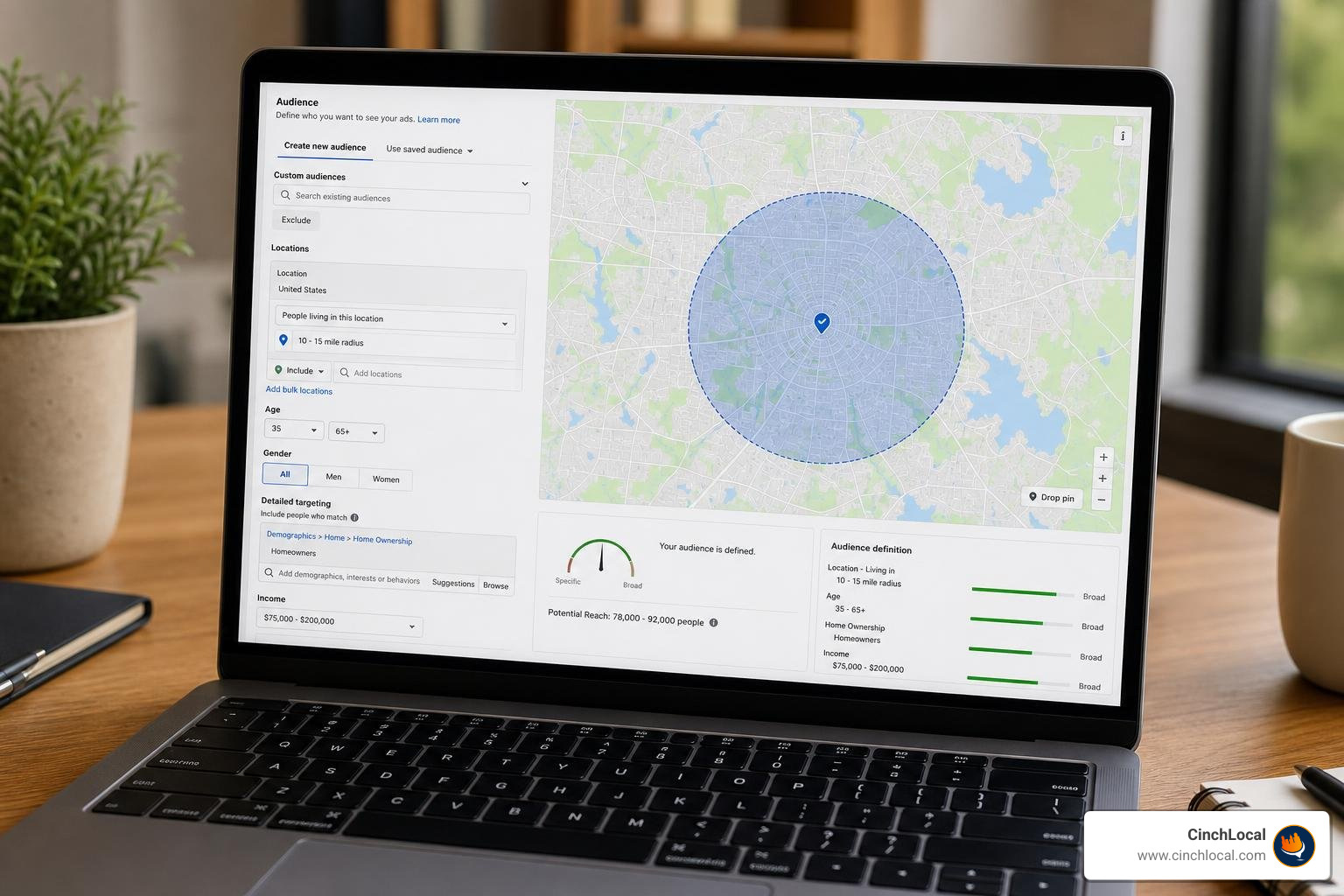
Targeting on Meta requires a strategic balance between narrow location settings and broad demographic parameters, allowing Meta's machine-learning algorithm room to optimize.
For geographical setup, set tight 10-to-15 mile radiuses around your key service zip codes or specific subdivisions where homes are reaching replacement age. For demographic filters, target adults aged 35 to 65+. Layer filters for homeownership status and household income thresholds (top 25% to 50%, or household incomes over $75,000).
Focus heavily on neighborhood age data: homes built 15 to 25 years ago represent prime targets for full roof replacements.
Setting the Ideal Budget for Facebook Ads for Roofers
Your monthly Meta budget should align directly with your overall marketing strategy and business maturity level. As a general benchmark, successful contractors allocate 15% to 30% of their digital marketing spend toward Facebook ads.
| Business Stage | Monthly Spend | Core Objective | Key Campaign Focus |
|---|---|---|---|
| Startup / Entry | $500 – $1,000 | Brand Awareness & Local Reach | Local Video & Basic Retargeting |
| Growth Stage | $1,000 – $2,500 | Consistent Lead Generation | Lead Forms, Storm Response, Retargeting |
| Established Enterprise | $2,500 – $5,000+ | Market Dominance & Scaling | Multi-Stage Funnel, Lookalikes, Video Testimonials |
When scaling performance, avoid doubling daily budgets overnight. Increasing spend by more than 20% to 30% at one time can reset Meta's learning phase, disrupting campaign performance. To master budget distribution without wasting spend, read our complete guide on how to nail your next Facebook ads campaign.
Leveraging Custom Audiences and Lookalikes
The most profitable audiences on Meta are built from your existing business data:
- Customer CRM Uploads: Export your past client list (names, emails, phone numbers) into Meta Ads Manager to create a Custom Audience for repeat service ads, maintenance checkups, and referral requests.
- Lookalike Audiences (1% - 3%): Direct Meta to analyze your closed customer list and identify matching local profiles across your geographic region who share identical demographic and online behavioral traits.
- Website Retargeting Lists: Build dynamic audiences of people who visited specific service pages on your website within the last 30 to 60 days but didn't submit an inquiry form.
Building a High-Converting 4-Stage Campaign Framework
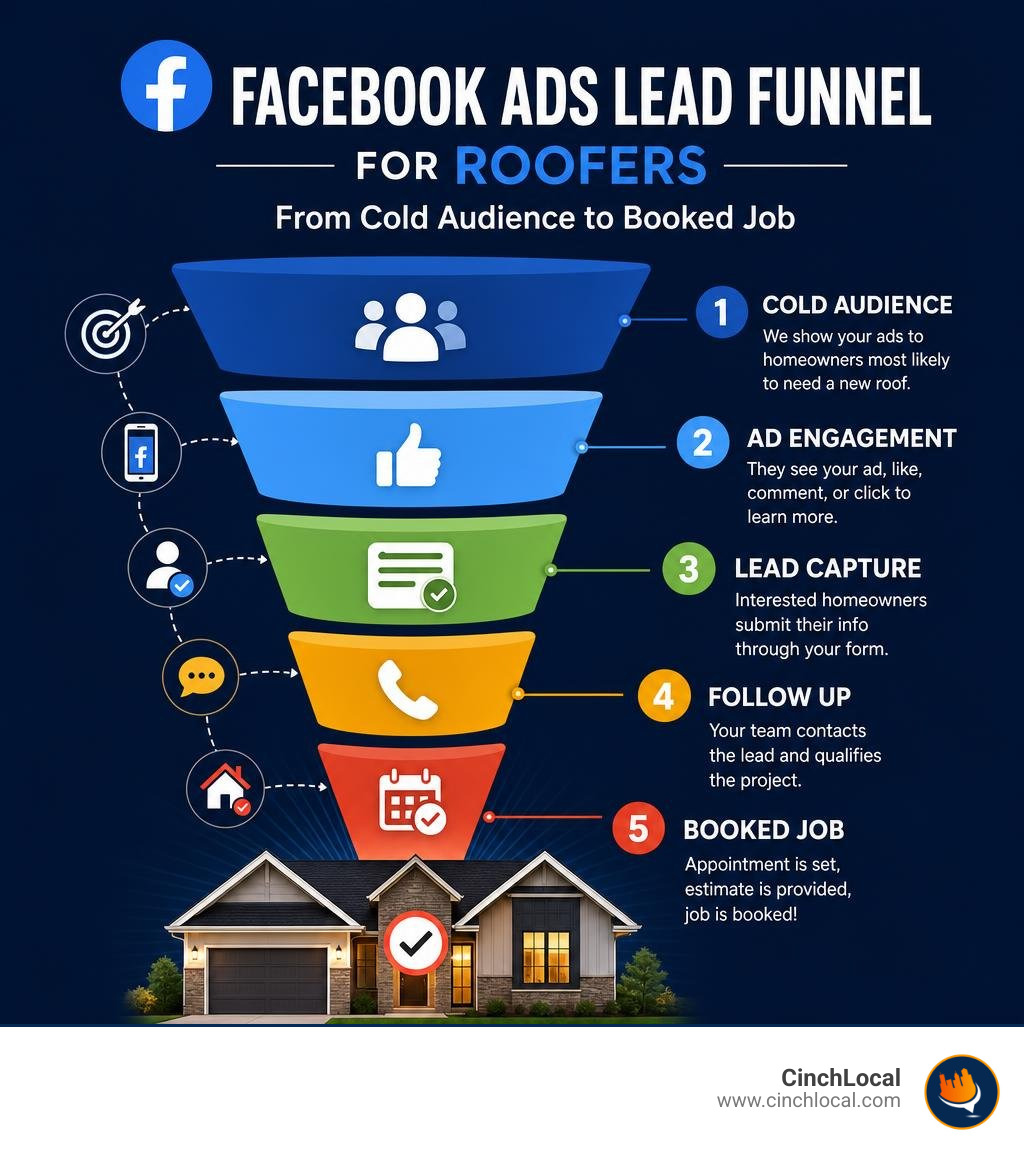
To turn cold social media traffic into predictable revenue, you must structure your account around a four-stage campaign framework. Instead of asking for a high-friction sale on the very first touchpoint, guide prospective clients through a logical conversion path.
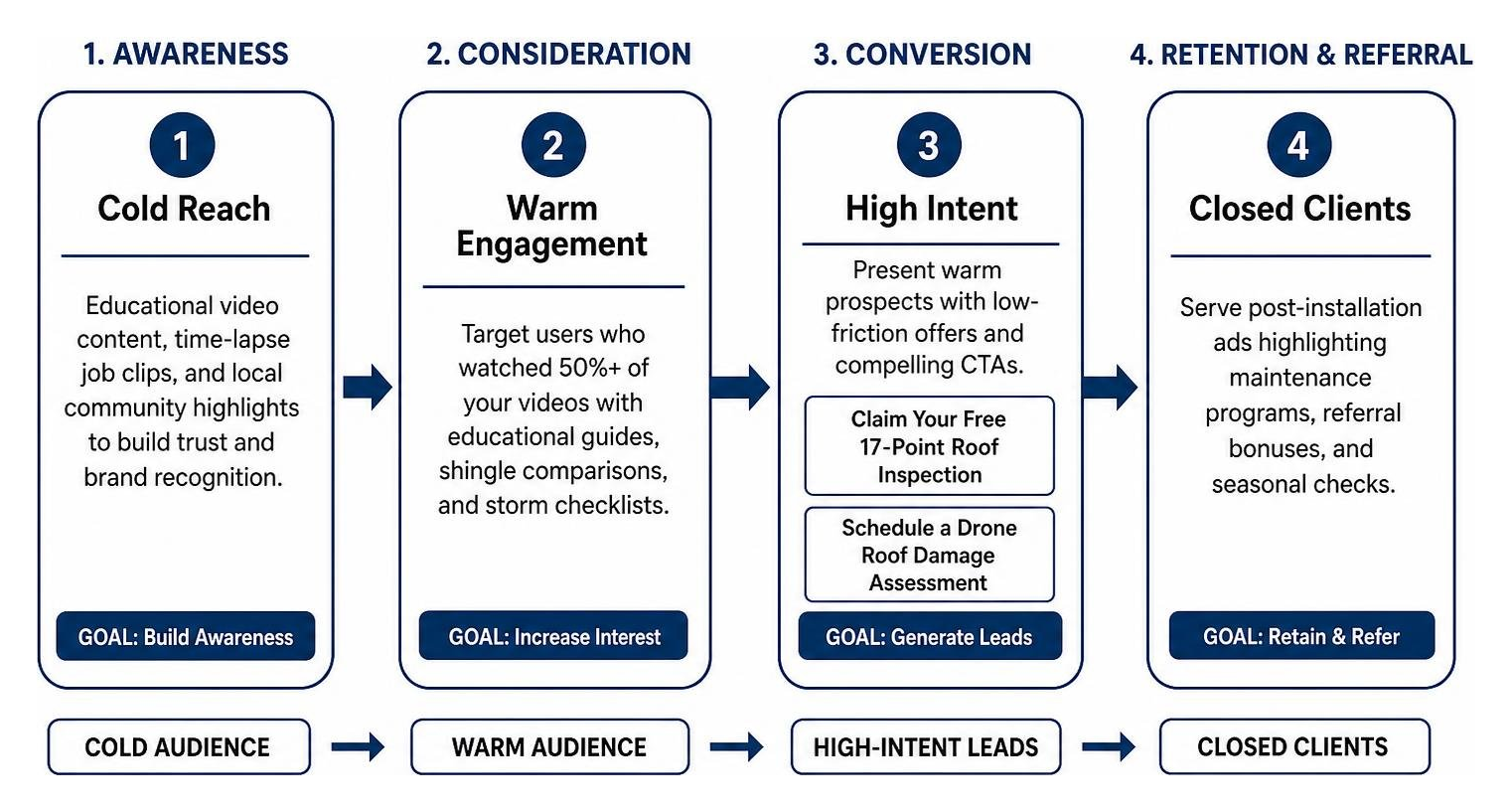
- Awareness Stage (Cold Reach): Deploy educational video content, time-lapse job clips, or local community involvement highlights to build trust and regional brand recognition.
- Consideration Stage (Warm Engagement): Target users who watched 50% or more of your video content with educational guides, shingle comparison guides, or local storm warning checklists.
- Conversion Stage (High Intent): Present warm prospects with low-friction, compelling calls-to-action such as "Claim Your Free 17-Point Roof Inspection" or "Schedule a Drone Roof Damage Assessment."
- Retention & Referral Stage (Closed Clients): Serve post-installation ads to past customers highlighting annual maintenance programs, referral bonus rewards, and seasonal gutter checks.
Implementing dedicated website retargeting campaigns within this framework yields dramatic results. Retargeting warm prospects who already know your brand can boost overall conversion rates by 70% to 150%, driving costs per lead down to an impressive $25 to $60. For an in-depth breakdown of scaling this structure, check out the ultimate 2026 guide to Meta advertising for roofers.
Target a click-through rate (CTR) between 1% and 2% on cold campaigns (anything above 2% is exceptional), and maintain a minimum Return on Ad Spend (ROAS) target of 3:1, with 5:1 as the ultimate goal for long-term scalability.
Frequently Asked Questions About Roofing Meta Campaigns
How long does it take for Facebook ads to start generating roofing leads?
Most structured campaigns begin generating initial lead activity within 7 to 14 days of launching. During this initial window, Meta's machine-learning algorithm goes through a learning phase, requiring approximately 50 conversion events per ad set to fully stabilize delivery and optimize cost per acquisition.
What is a good return on ad spend (ROAS) for roofing Facebook ads?
A healthy baseline ROAS for roofing contractors is 3:1, meaning you generate $3 in gross revenue for every $1 spent on ad spend. High-performing campaigns utilizing automated retargeting, video testimonials, and rapid storm response routinely achieve 5:1 ROAS or higher when factoring in full contract values.
Should roofing contractors use native Facebook Lead Forms or send traffic to a website?
Native Facebook Lead Forms excel at delivering rapid lead volume for simple offers like free roof inspections or storm checks. However, directing traffic to dedicated website landing pages creates better-qualified leads for high-ticket full roof replacements. A combined strategy using both formats based on campaign intent delivers optimal long-term results.
Take Action: Build Your Roofing Lead Engine Today
Running facebook ads for roofers doesn't have to feel like throwing money into a black hole. When you stop treating Meta like a direct-search engine and start using it for what it is—a dominant discovery engine, educational channel, and retargeting powerhouse—it transforms into one of your most predictable growth tools.
By capturing homeowner attention with authentic visuals, structuring targeted 10-to-15 mile radiuses, deploying storm-response ads when weather strikes, and retargeting warm website traffic, you create a marketing flywheel that consistently drives booked inspections and high-margin replacements.
Partner with CinchLocal for Proven Roofing Facebook Ads
Ready to stop guessing and start scaling your roofing revenue? Partner with our team of specialists at CinchLocal and explore our tailored roofing Facebook ads management services. Book a free discovery call now and let us build an automated lead generation machine that turns social feeds into signed roofing contracts.
Want Us to Uncover Hidden 'Footprint Gaps' And Critical Blind Spots That’s Quietly Draining Calls, Jobs, and Profits?
Simply Fill Out The Form Below:
What If You Could Stop Wasting $30K+ a Year on Dead-End Marketing - And Finally Become the Go-To Roofer in Your City?
Other Helpful Articles You Might Enjoy