


Cary Byrd // Founder of CinchLocal
Understanding Architectural Shingles vs. 3-Tab Systems
Architectural shingle roof repair is the specialized process of restoring the structural integrity and aesthetic value of multi-layered laminate roofing systems. As a leading roofing marketing agency, we recognize that mastering this service is the most effective way for contractors to build a high-margin repair division. Architectural shingles, also known as dimensional or laminate shingles, are the industry standard due to their superior wind resistance and aesthetic appeal.
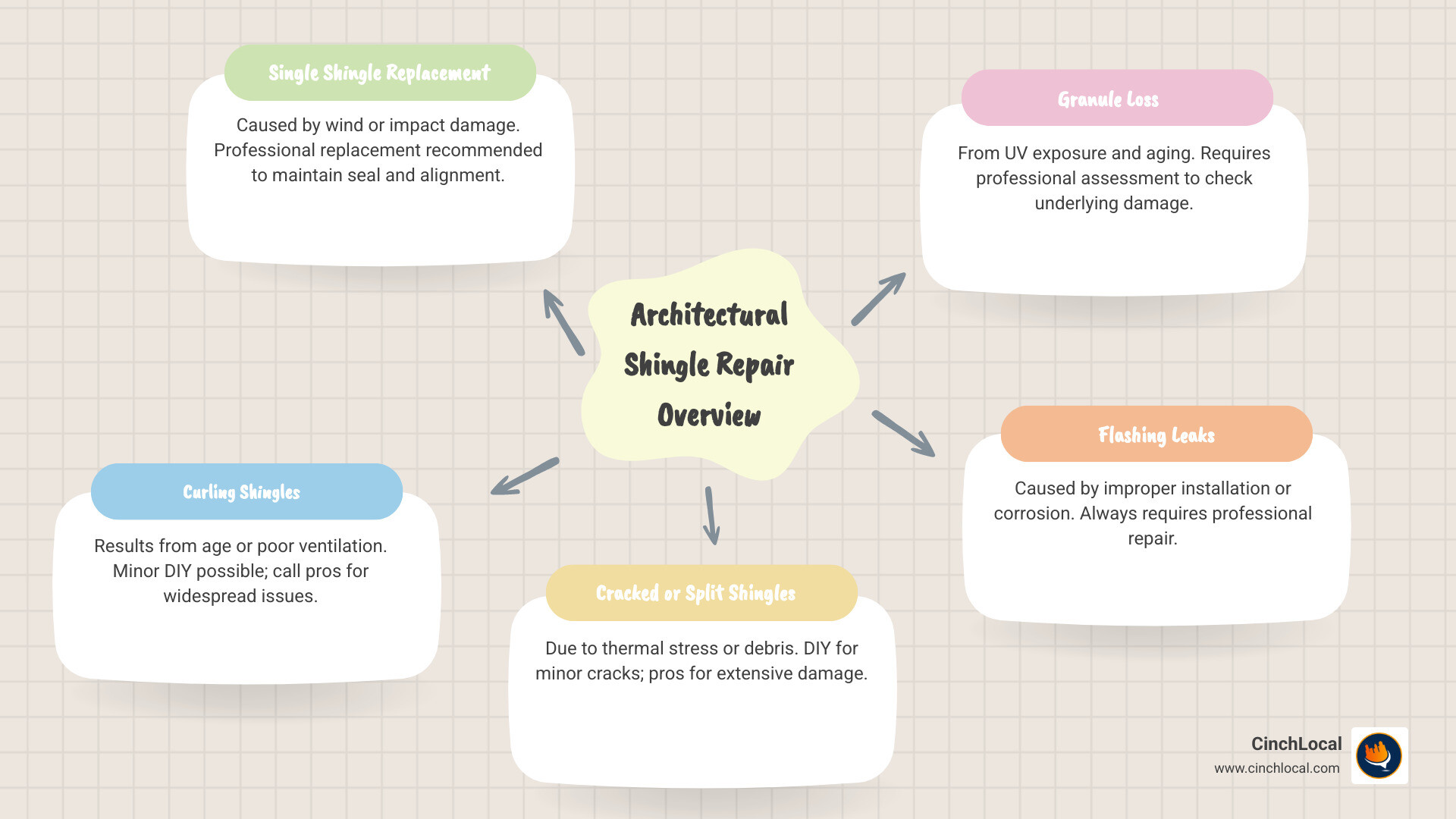
Here's a quick overview of what the repair process involves:
| Repair Type | Common Cause | DIY or Pro? |
|---|---|---|
| Single shingle replacement | Wind, impact damage | Pro recommended |
| Curling shingles | Age, poor ventilation | DIY (minor), Pro (widespread) |
| Cracked or split shingles | Thermal stress, debris | DIY (minor), Pro (extensive) |
| Granule loss | UV exposure, aging | Pro assessment needed |
| Flashing leaks | Improper install, corrosion | Pro required |
| Missing shingles | High winds, storm damage | Pro recommended |
The general rule: If more than 25-30% of your roof shows damage, a full replacement is likely more cost-effective than patching. For localized damage on a roof under 20 years old, targeted repairs can extend the life of your roof by years — and save you thousands.
Architectural shingles are thicker, heavier, and more wind-resistant than standard 3-tab shingles — which means repairs require a more careful, methodical approach. Their multi-layered construction and staggered nail patterns make it easy to cause additional damage if you rush the job. For roofing contractors looking to build a reputation for quality work, mastering these repairs is a direct path to more referrals, higher-value jobs, and stronger client loyalty. To truly grow that pipeline, pairing your field expertise with expert roofing marketing strategies is what turns great work into a thriving local business.
I'm Cary Byrd, founder of CinchLocal and a roofing marketing specialist who has worked closely with contractors across the country on everything from lead generation to service positioning — including helping roofers communicate the value of architectural shingle roof repair to homeowners online. Let's walk through exactly how to diagnose, repair, and price these jobs — so you can deliver results that keep clients coming back.
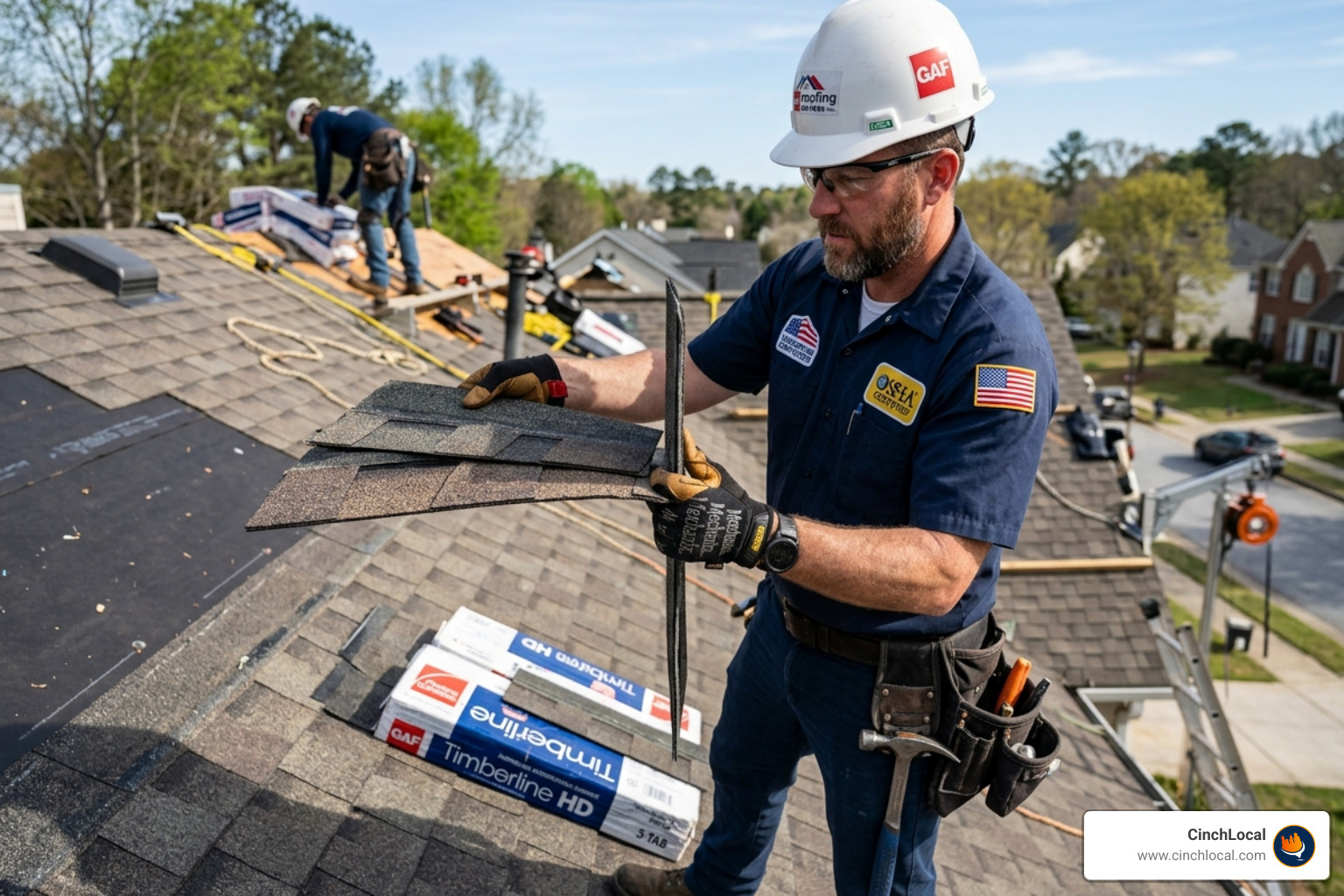
Architectural shingles feature a multi-layered construction where two or more fiberglass mats are laminated together. This creates a textured, three-dimensional appearance that often mimics the look of natural wood shakes or slate. Unlike the flat, single-layer profile of traditional 3-tab shingles, these systems provide enhanced durability and depth.
For roofing contractors in regions like Ohio or Tennessee, understanding these specs is vital for client education. Architectural shingles typically weigh about 50% more than 3-tab shingles, contributing to their superior wind resistance. While 3-tab shingles are generally rated for 60-70 MPH winds, premium architectural shingles can withstand gusts up to 130 MPH. For detailed technical specifications on asphalt shingle performance and testing standards, we recommend consulting resources like the Asphalt Roofing Manufacturers Association (ARMA).
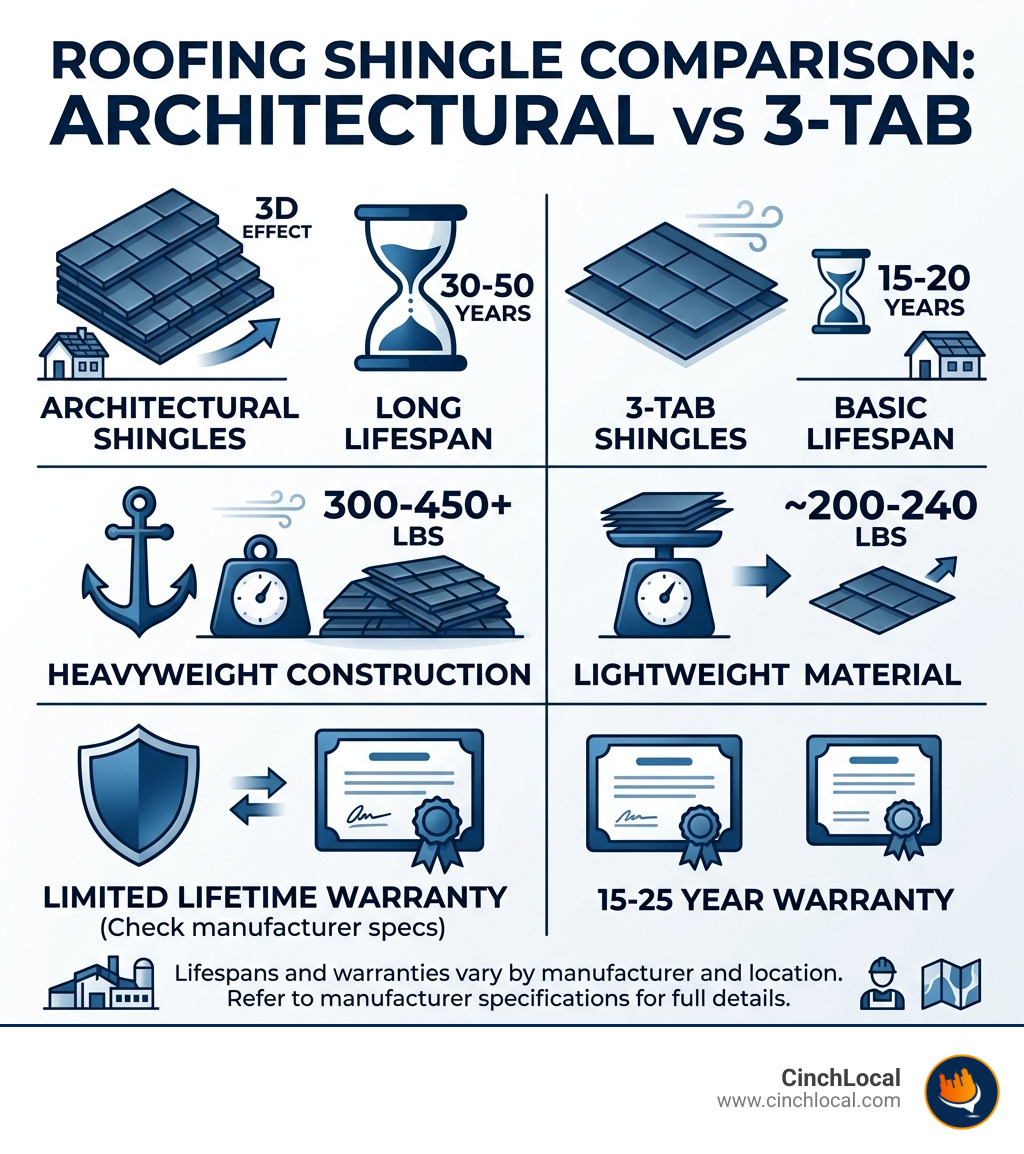
| Feature | 3-Tab Shingles | Architectural Shingles |
|---|---|---|
| Lifespan | 15–20 Years | 30–50 Years |
| Weight per Square | ~200–240 lbs | ~300–450+ lbs |
| Wind Resistance | 60–70 MPH | 110–130 MPH |
| Warranty | 20–25 Years | Lifetime Limited (30-50 years) |
| Aesthetics | Flat, uniform | Dimensional, textured |
Key Differences in Repair Complexity
Repairing these systems requires managing the staggered patterns and overlapping laminate layers. A single architectural shingle is often secured by two rows of nails—its own row and the row from the shingle above it. Furthermore, the thermal seals (the adhesive strips) on architectural shingles tend to be more aggressive.
Breaking these seals without tearing the fiberglass mat requires patience and the right weather conditions. If you're working in the heat of a Georgia afternoon, the sealant will be gummy and prone to tearing; in a California winter, the shingles become brittle. Mastering the "sweet spot" for architectural shingle roof repair ensures you don't turn a one-shingle fix into a five-shingle headache. For contractors managing larger restoration projects, check out our guide on roof repair after hail.
Identifying Common Damage in Architectural Shingle Roofs
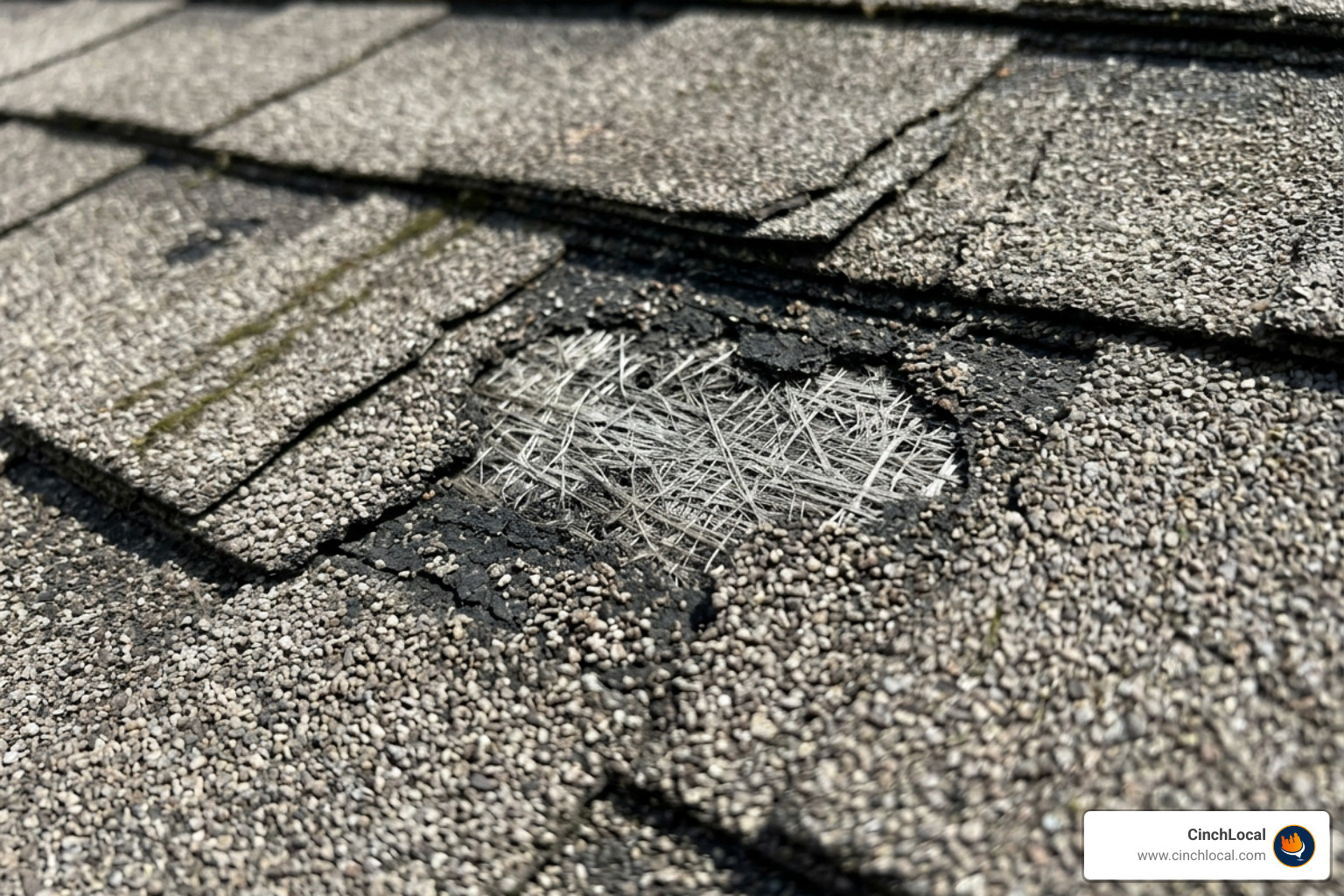
Damage on architectural roofs is most frequently caused by delamination, thermal cracking, and improper fastening. Identifying these issues requires a keen eye because the uneven surface design can hide "bald spots" or cracks in the shadow lines.
- Granule Loss: Consistent granule loss in gutters indicates the asphalt is becoming exposed to UV rays. Once the "intermat" (the fiberglass core) is visible, the shingle is no longer waterproof.
- Thermal Cracking: Often caused by extreme temperature swings, these cracks can penetrate through the laminate layers.
- Blistering: Usually a sign of poor ventilation, where trapped moisture or gases expand under the heat.
- Delamination: This is specific to architectural shingles. The layers can actually pull apart if the factory adhesive fails or if the shingles were stored improperly.
When to Choose architectural shingle roof repair vs. Replacement
The "25% Rule" is the industry standard for determining repair viability. If more than a quarter of the roof is showing signs of widespread failure—such as curling across multiple slopes or significant granule loss—patching is often a disservice to the homeowner. However, for a 10-year-old roof with localized damage from a fallen limb, a targeted repair is the way to go.
If the homeowner's budget is tight but the damage is localized to one facet, we often suggest partial roof replacement options. This allows the contractor to provide a long-term fix for the problem area without the cost of a full tear-off.
Safety Protocols for architectural shingle roof repair
Safety is a critical business protector for roofing contractors. Architectural shingles are often installed on steeper pitches (6/12 and up) because their weight and thickness handle the slope well. This makes fall protection critical.
- Harness Systems: Always use OSHA-compliant personal fall arrest systems (PFAS).
- Weather Monitoring: Never step on a wet or icy architectural roof; the granules become incredibly slippery.
- Proper Footwear: Soft-soled boots provide the best grip on asphalt surfaces.
To minimize time on the roof during the estimation phase, many modern contractors are now using drone roof inspection services to get high-resolution imagery without ever leaving the ground.
Step-by-Step Guide to architectural shingle roof repair
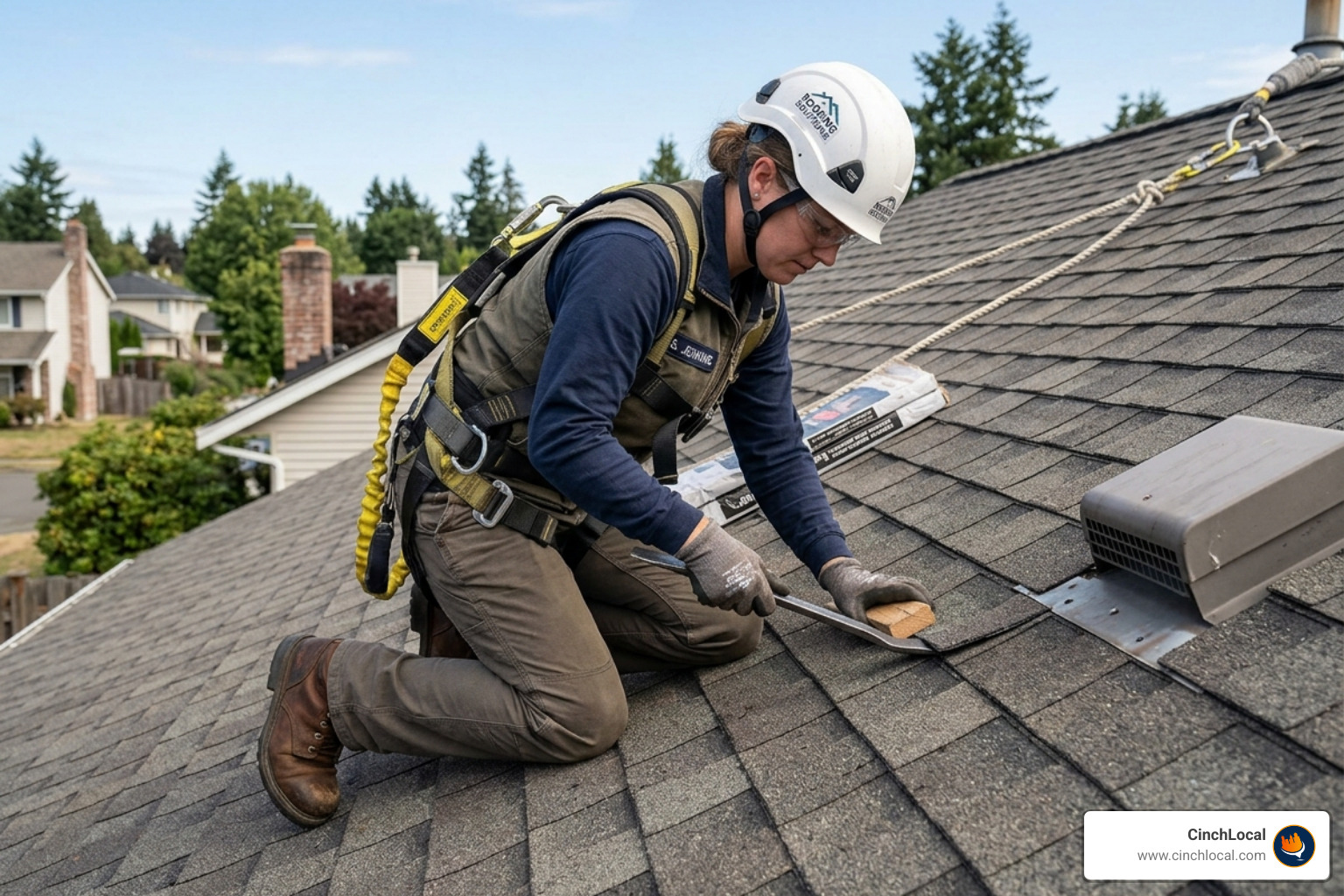
Successful architectural shingle roof repair requires a "surgical" approach to preserve the surrounding shingle integrity. According to the National Roofing Contractors Association (NRCA), proper repair techniques must account for the specific nail lines and sealant bonds unique to laminate products.
Replacing a Single Damaged Shingle
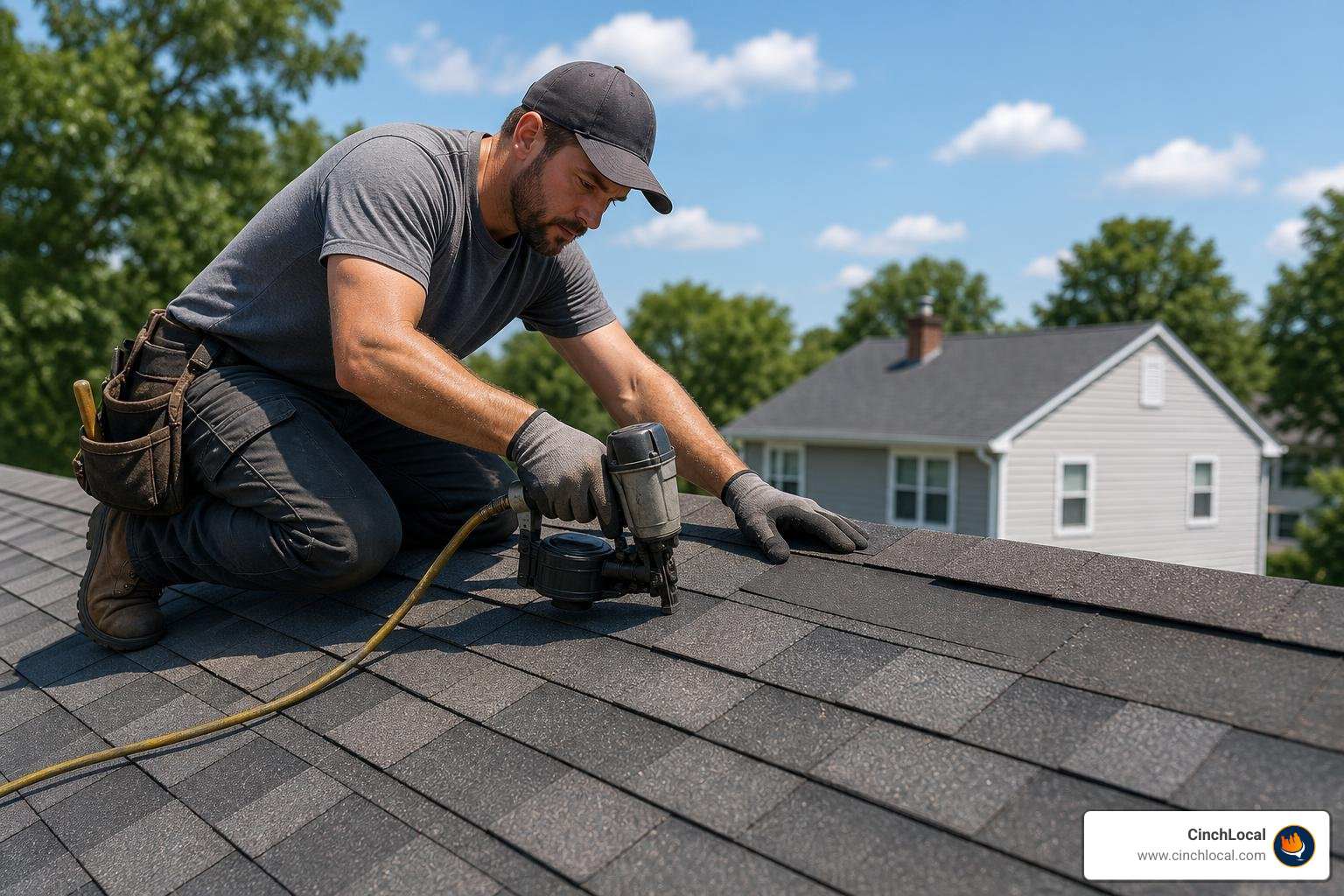
- Break the Seal: Use a flat pry bar to carefully slide under the shingle above the damaged one. You need to break the bond of the sealant strip. Do this for the two rows directly above the target shingle.
- Locate and Extract Nails: Architectural shingles are usually fastened with 4 to 6 nails. You must remove the nails from the damaged shingle and the nails from the shingle directly above it, as those nails also penetrate the top edge of your target shingle.
- Slide Out and Inspect: Remove the old shingle. Check the underlayment and decking for rot. If the decking is soft, you're looking at a more intensive repair.
- Install the New Shingle: Slide the new shingle into the gap. Align it with the existing courses to maintain the staggered pattern.
- Nail Correctly: Drive nails into the manufacturer's designated nail strip (the "common bond" area). For high-wind areas, use a 6-nail pattern.
- Reseal: Manually apply three small spots of roofing cement under the tabs of the new shingle and the shingles you disturbed to ensure they bond back down.
For specific brand requirements, we always recommend following GAF installation training or the guidelines of your specific manufacturer to ensure the warranty remains intact.
Fixing Flashing and Valley Leaks
Flashing is the roof's primary defense at its most vulnerable points. Approximately 80% of roof leaks occur at flashing or valleys, not the shingles themselves.
- Step Flashing: Each shingle meeting a sidewall should have its own piece of L-shaped metal flashing. If these are rusted or missing, water will migrate behind the siding.
- Closed-Cut Valleys: In architectural roofing, we often see "closed-cut" valleys where shingles from one side cross the valley, and the other side is cut back. If the cut is too close to the center, water can get under the shingles.
- Materials Needed:
- Galvanized or aluminum step flashing.
- High-grade roofing sealant (polyurethane based).
- New underlayment (ice and water shield for valleys).
Business Considerations: Pricing and Maintenance for Contractors
Profitability in roof repair is driven by trip charge efficiency and lead conversion rates. Pricing architectural shingle roof repair requires balancing overhead costs with the long-term value of the customer relationship.
Current statistics show that labor accounts for roughly 60% of a roof repair's cost. With professional roofers averaging $130 per hour and laborers around $35, a simple two-hour repair can easily cost $400-$600 once you factor in materials and "trip charges." To stay organized and ensure you're covering your margins, we recommend using a roof estimate template guide to standardize your bidding process.
Maximizing Profitability on Small Repairs
Don't view a $500 repair as a "small job." View it as an audition for a $15,000 replacement five years down the road.
- Upsell Maintenance: While on the roof, offer to clean gutters or install zinc strips to prevent algae.
- The Referral Engine: A homeowner who is thrilled that you fixed a "mystery leak" for $400 is five times more likely to refer you to their neighbors than a homeowner who just paid for a full replacement.
- Lead Generation: To keep these "small but profitable" jobs coming in, you need a steady stream of inquiries. If your phone isn't ringing, it might be time to look into how to get more high-quality roofing leads.
Ready to scale your repair division? Contact CinchLocal for a consultation on how to turn your repair leads into a predictable revenue stream.
Frequently Asked Questions about Architectural Roof Repair
How much does it typically cost to repair architectural shingles?
The cost of architectural shingle repair typically falls between $350 and $1,200 for most residential projects. For a professional contractor, a minor repair (1-3 shingles) usually starts at a minimum service fee of $250 to $450 . If the repair involves complex flashing around a chimney or a valley, costs can quickly rise to $800 - $1,500 . Factors like roof pitch and the height of the home significantly impact the final price.
Can you mix different brands of architectural shingles during a repair?
Mixing different brands of architectural shingles is not recommended. Even if the color "Weathered Wood" sounds the same across brands, the actual granule blends and shingle dimensions differ. Mixing brands creates a visible "patchwork" look that hurts curb appeal and can complicate future warranty claims. If you can't find a match, sometimes we "steal" shingles from a less visible area of the house (like the back of a garage) to use for the repair.
How do environmental factors like poor ventilation affect architectural shingles?
Poor attic ventilation is the leading cause of premature shingle failure. Trapped heat literally cooks the shingles from the underside, causing the oils in the asphalt to dissipate. This leads to premature brittleness, curling, and "blistering." Homeowners and contractors should refer to Department of Energy guidelines on attic moisture to ensure the roof system breathes correctly.
Conclusion
Mastering architectural shingle roof repair is a cornerstone for any successful roofing business. It allows you to solve immediate problems for homeowners, building the trust necessary to win their larger projects in the future. By focusing on quality workmanship, using the right tools, and pricing your services transparently, you position your company as a local authority.
However, being the best roofer in town doesn't matter if nobody knows you exist. To ensure your expertise reaches homeowners who are actively searching for help, you need a dominant online presence. At CinchLocal, we recommend starting with Google Maps local SEO for roofers to capture high-intent local traffic.
You can view our proven roofing marketing results to see how we've helped other contractors scale their businesses. Ready to stop chasing leads and start closing them? Contact CinchLocal today for a consultation and see how we can help you expand your footprint.
Want Us to Uncover Hidden 'Footprint Gaps' And Critical Blind Spots That’s Quietly Draining Calls, Jobs, and Profits?
Simply Fill Out The Form Below:
What If You Could Stop Wasting $30K+ a Year on Dead-End Marketing - And Finally Become the Go-To Roofer in Your City?
Other Helpful Articles You Might Enjoy