
Roofing SEO Services: We Only Work With One Roofer Per Market.
Don't leave your roofing company's online future to chance. CinchLocal is a top-rated roofing SEO agency that increases organic traffic, owns the Google Map 3-Pack, and generates pre-sold leads — for one roofer per city. Is your market still available?
Real Roofing Companies • Real Google Maps Rankings • Real (Recent) Results
Thunder Bay Roofing Solutions — Wesley Chapel, FL
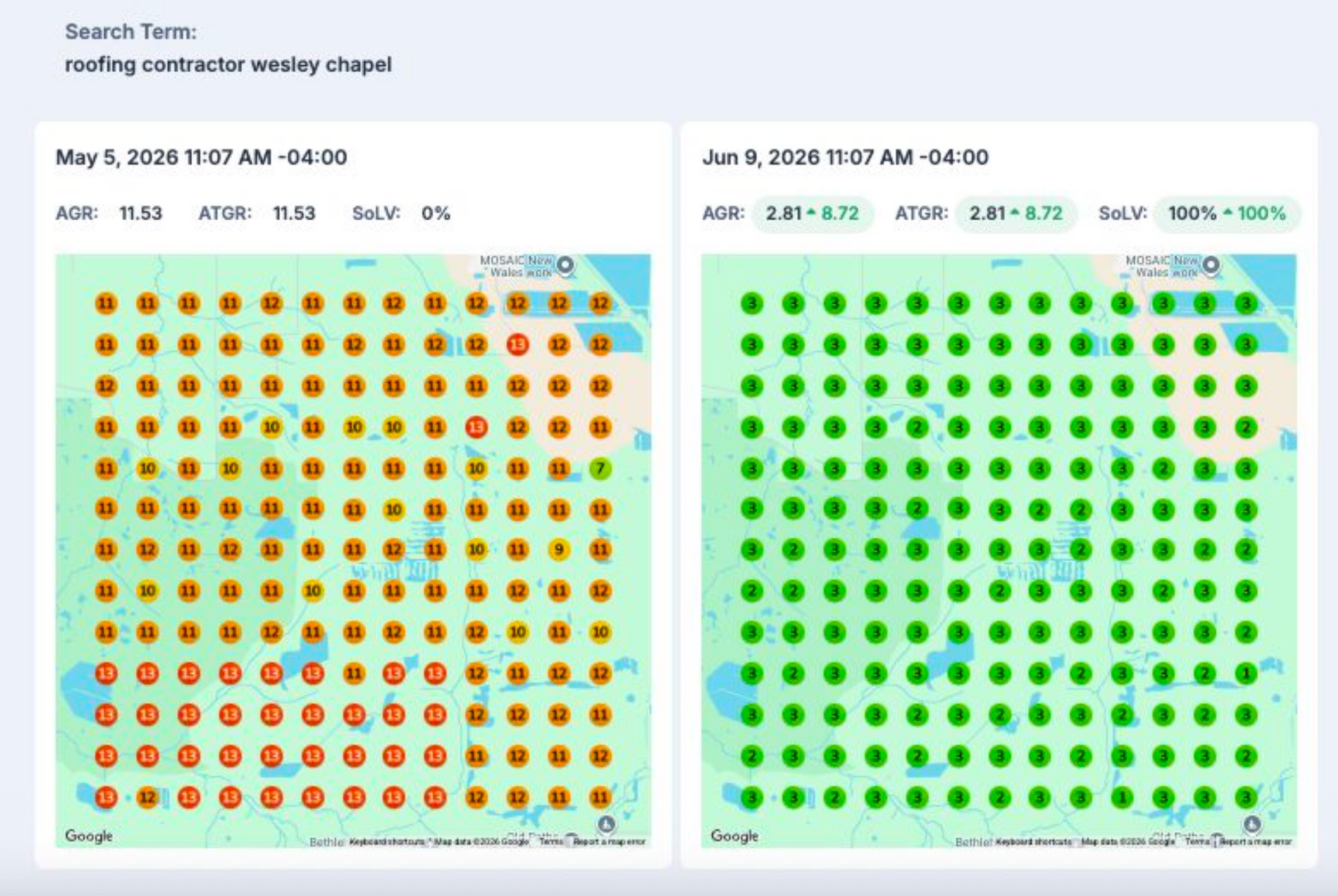
- Before CinchLocal: 0% Share of Local Voice for “Roofing Contractor Wesley Chapel”
- After 35 days: 100% Share of Local Voice across the tracked GeoGrid
- Result: Went from virtually invisible to Top 3 visibility across the entire tracked area for a primary roofing keyword 📍🔥
Safe Roof — Ardmore, OK
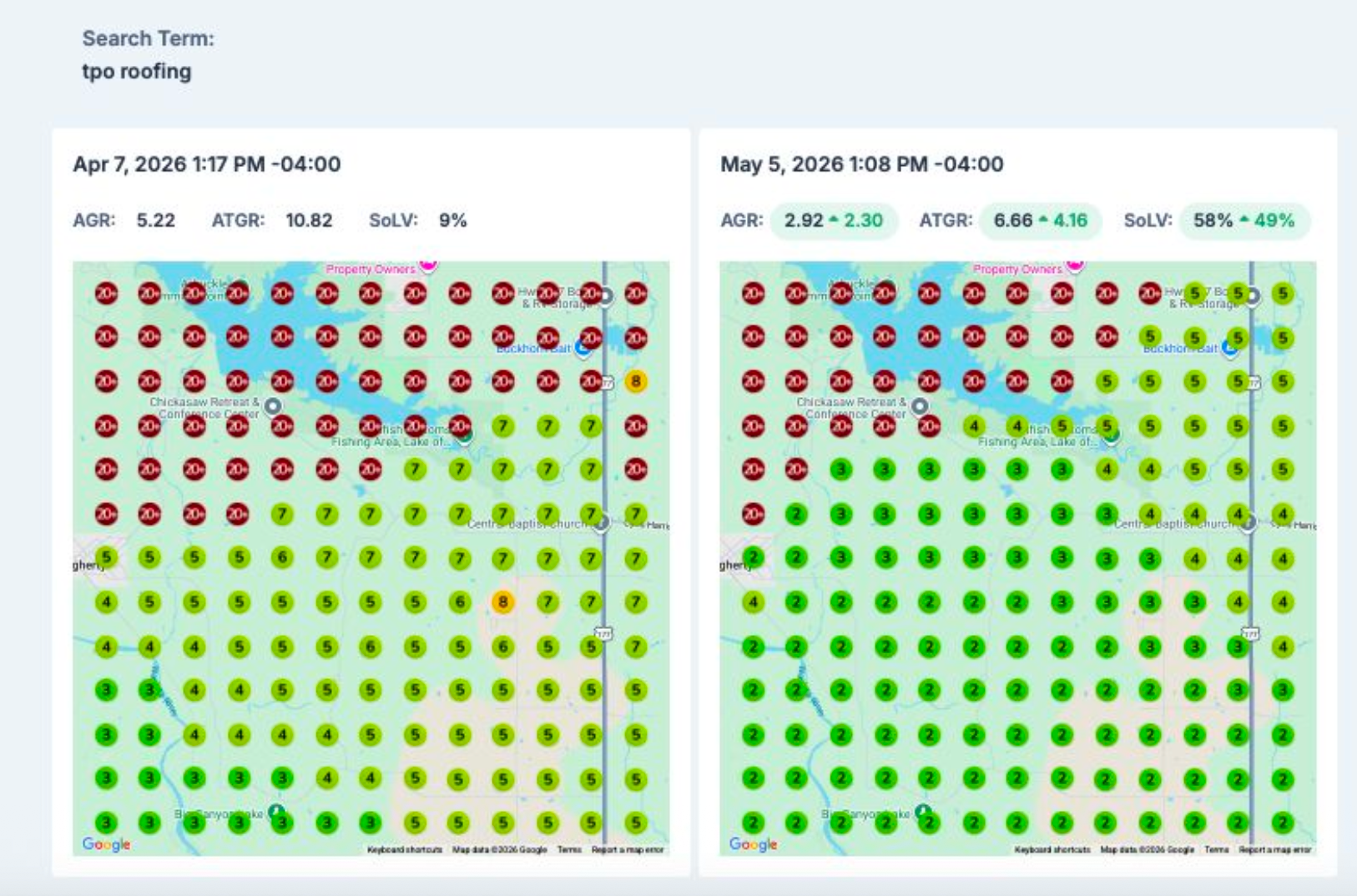
- Before CinchLocal: Just 9% Share of Local Voice for “TPO Roofing”
- After 28 days: 58% Share of Local Voice
- Result: Gained 49% points in only 4 weeks for a high-value commercial roofing search that can lead to large projects 🏢💰
GNAK Roofing Services — Kearney, MO
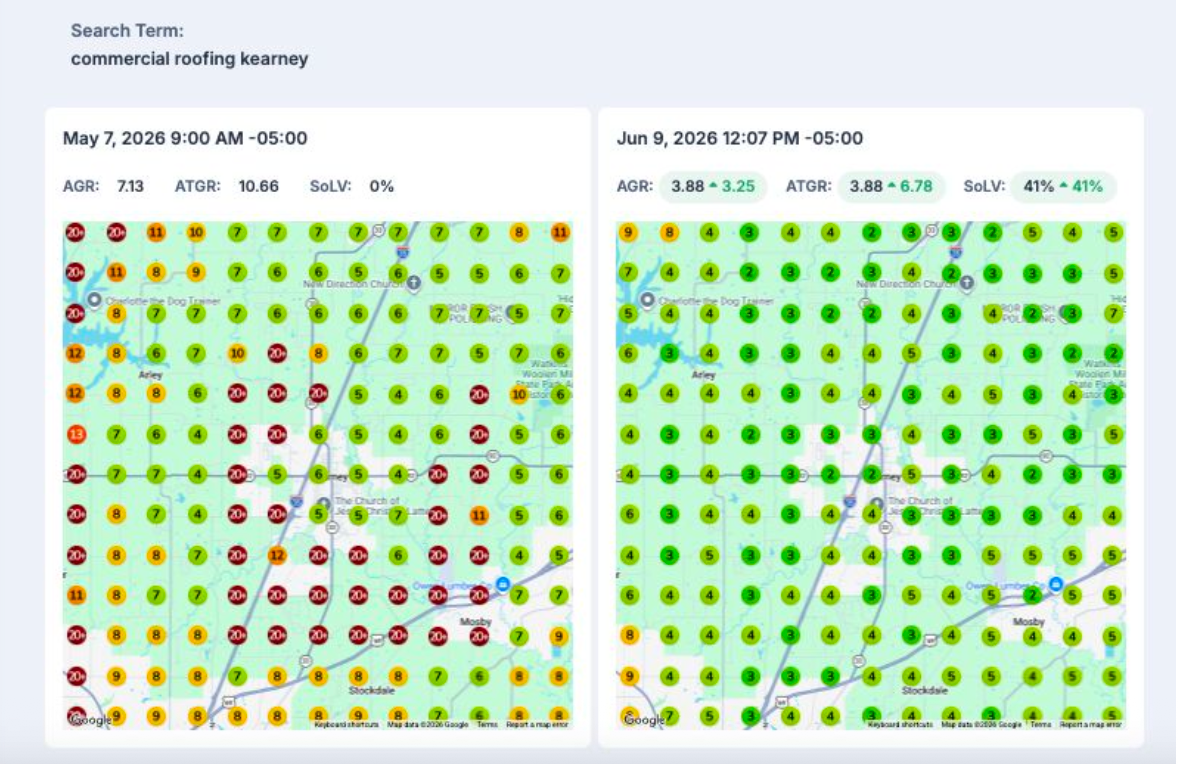
- Before CinchLocal: 0% Share of Local Voice for “Commercial Roofing Kearney”
- After 33 days: 41% Share of Local Voice
- Result: Built substantial Google Maps visibility for a high-dollar commercial roofing keyword, creating more opportunities to be found for major roofing projects 🏢📈
→ Want to see the full before/after breakdowns?
AS SEEN IN





Your Google Maps Ranking Changes With Every Block
You already know where you rank.
You checked this morning, from your phone, sitting in the truck outside your location.
You were second.
That number is real. It is also close to useless, because it describes exactly one spot on the map — the one place you are guaranteed to rank well, because you are standing on it.
Google does not build local results around your business. It builds them around whoever is searching. A homeowner eleven minutes north of you sees a different three roofers. So does the one across the river. You have never seen those results, and neither has anyone who works for you.
Here is what that looks like. Start at your location, then tap somewhere across town.
Google builds local results around the searcher, not around you. Tap anywhere on the grid.
This is a simulation. We'll run the real scan on your business — free, and you keep the report.
Get your real GeoGridGoogle weighs proximity, relevance and prominence. Proximity you can't change — prominence is what decides how far from your door you keep ranking. This illustrates that mechanic; it isn't a prediction of your results.
What Share of Local Voice Actually Measures
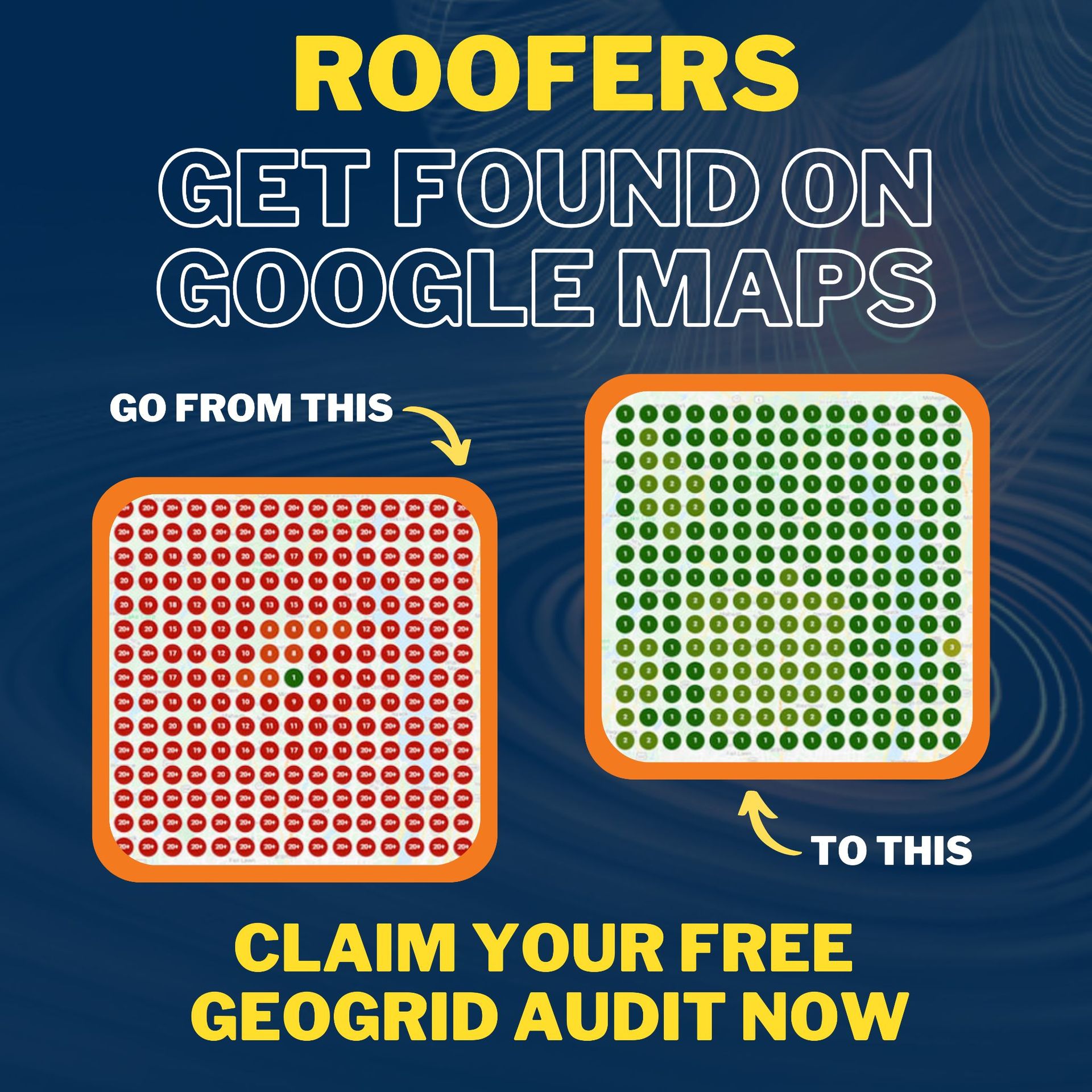
Share of Local Voice is the percentage of the grid where you land in the top three. It answers the only question that matters: across the area you actually serve, how often are you one of the three roofers a homeowner can even see? Most roofers we scan for the first time come in somewhere between 10 and 20 percent.
Now the part most roofers have never been told. The drop from third place to fourth is not a step, it is a cliff. Google shows three results. Fourth place lives behind a "more places" tap that almost nobody makes. Being fourth is not slightly worse than being third — it is functionally the same as not being listed at all. Which is why we measure coverage across a whole service area instead of reporting a single ranking. One number from one spot tells you almost nothing.
We Only Work With One Roofing Company Per Market
Most SEO agencies will happily take you as a client — and then sign up your biggest competitor next month.
Not us.
CinchLocal has a strict one-roofer-per-market policy. When you become a CinchLocal client, we lock out every other roofing company in your service area.
Your rankings, your GeoGrid dominance, your leads — none of it gets shared with a competitor.
This isn't just a policy. It's a promise.
And it means two things for you:
- Every strategy we build is 100% yours — no conflict, no split focus, no shared playbooks
- Once your market is claimed, it's gone — your competitors cannot buy their way in
READY FOR YOUR GOOGLE MAPS SEO RANKINGS TO GO THROUGH THE ROOF?
SEO for Growth Top Rated Roofer SEO badge awarded to CinchLocal
Is Your Market Still Available?
Check availability before your competitor does. We'll tell you instantly whether CinchLocal's Footprint Expansion System™ is still open in your area.
What Is Roofing SEO?
Roofing SEO is search engine optimization built specifically for the roofing industry. It's the process of making your roofing company website — and your Google Business Profile — more visible to homeowners actively searching for roofing services in your area.
The goal is simple: when someone in your city searches "roofing contractor near me," "roof replacement [city]," or "emergency roof repair," your company shows up first — not buried under competitors.
Roofing SEO tactics include:
- Targeting high-intent local keywords tied to your services and service areas
- Optimizing your Google Business Profile for the Google Maps 3-Pack — the most valuable real estate in local search
- Building high-authority backlinks that signal trust to Google
- Creating location pages and service pages that rank for city-specific searches
- Expanding your geographic footprint using CinchLocal's Footprint Expansion System™
Research shows 87% of customers use Google to evaluate local businesses before hiring. SEO consistently generates 8.5x as many leads as traditional outbound marketing — for a roofing company, the math is straightforward: rank higher, get more calls, close more jobs.
Rated Top 5 Roofing SEO Company in America — SEO for Growth
350+ Roofing SEO Projects Completed
10,000+ Rankings Improved
One Roofer Per Market — Geographic Exclusivity Guaranteed
Local SEO for Roofing Companies: What It Is and Why It's Different
Local SEO for roofing companies is the half of your search strategy that lives on your own website — the city pages, service-area architecture, and on-site signals that tell Google where you work, not just what you do.
It gets confused with Google Maps SEO constantly. They're related, but they're different jobs:
- Local SEO builds the geographic evidence on your website — location pages, service-area content, citations, NAP consistency, and internal linking that tie your roofing company to every city you serve.
- Google Maps SEO works on your Google Business Profile to win the Map 3-Pack.
Most roofing contractors invest in one and wonder why the other never moves. You need both, and they reinforce each other. A roofer with a flawless Google Business Profile and fifteen thin, copy-pasted city pages will stall at the edge of their service radius. A roofer with genuinely useful location pages gives Google the corroboration it needs to rank that profile further out.
What local SEO actually involves for a roofing company
Service area pages that earn their place. One page per city you serve, with real content about that market: the neighborhoods, the roof types common to the housing stock, local storm history, permit requirements, and photos of jobs you've actually completed there. Pages with nothing but the city name swapped out haven't ranked in years. Here's how we build and optimize local landing pages for roofers.
NAP consistency everywhere. Your Name, Address, and Phone number have to match exactly across your website, your Google Business Profile, and every directory listing. Roofing companies that have moved offices, changed numbers, or rebranded almost always have conflicting listings quietly suppressing their rankings — and almost never know it.
Local citations that count. Listings in the directories that actually matter for roofing: industry associations, contractor directories, chambers of commerce, and the core data aggregators. Not a mass blast to 500 low-quality sites.
Whitespark's 2026 Local Search Ranking Factors survey — 47 local SEO experts scoring 187 factors — found citation weight continuing its multi-year decline while review and behavioral signals rose. Quality over volume isn't an opinion anymore. Here's our approach to local citation building.
Location-specific schema. LocalBusiness and Service markup naming your service areas explicitly, so search engines — and the AI answer engines now sitting in front of them — can parse where you operate without guessing. Google's own structured data documentation covers the required properties; we go deeper on schema markup for local SEO.
Reviews that name the work and the place. A review mentioning the city and the specific service ("metal roof replacement in [your city]") is a stronger local relevance signal than a generic five-star rating with no text.
Internal linking that pushes authority outward. Your strongest pages should link to your city pages, not the other way around. Most roofing sites bury location pages in the footer and wonder why they never rank — it's one of the first things we fix in a roofing website rebuild.
Why most roofing companies stall three towns over
The pattern is almost always the same: a roofer ranks fine in the city where the office sits, then disappears in the suburbs where half their jobs come from. Google is explicit that local results are ranked on relevance, distance, and prominence — and distance is the one you can't negotiate. What you can do is build enough relevance and prominence that Google surfaces you beyond your immediate radius anyway. That's a footprint problem, not a keyword problem, and it's the specific thing the Footprint Expansion System™ was built to solve. You can see what that looks like in our residential roofing SEO case study.
AI search is becoming a real referral channel. ChatGPT, Perplexity and Google's AI Overviews now recommend contractors directly, and which roofer they name changes from town to town. We cover how that works, and how we measure it, on our
AI SEO for roofers page.
Why Roofing SEO Is the Most Important Investment Your Company Can Make
Every week you're not ranking in the Google Map 3-Pack is a week your competitor picks up leads that should have been yours. Here's what's at stake:
1. The Google Map 3-Pack Gets the Most Calls
When a homeowner searches for a roofer, Google shows three local businesses in the
Google Map 3-Pack before any organic results. Those three listings capture the majority of clicks and calls. If you're not in the 3-Pack, you're invisible to the majority of ready-to-buy customers in your market.
2. High Rankings Equal Instant Trust
Seeing your roofing company at the top of Google's results instills trust in homeowners before they even dial your number. Top rankings are perceived as a Google endorsement — competitors without those rankings start from zero credibility, no matter how good their work.
3. SEO Compounds Over Time — Unlike Ads
Paid ads stop the moment you stop paying. SEO rankings, once established, keep generating roofing leads 24/7 without an ongoing cost per click. Our clients typically see 10–20x ROI within the first six months, and the leads keep coming after that.
4. Your Competitors Are Already Doing It
The roofing company ranking #1 in your market right now almost certainly has an active SEO strategy. The question isn't whether SEO works for roofing — it does — the question is whether you'll claim your market before they lock you out.
How the Search Engine Results Work
When getting started, it's important to understand where your roofing company website currently stands in the Google Maps listings and search rankings. Roofing contractors, does your site show up when you search your targeted roofing keywords? Based on the services you offer, try thinking of some words and phrases that you'd associate with your business.
There are three types of results you'll see on Google's SERP:
- Google Local Service Ads
- Google Maps 3-Pack Listing (Shows Top 3 Roofers)
- Organic Search Results
roofing seo
Roofing SEO That Puts You on the Map.
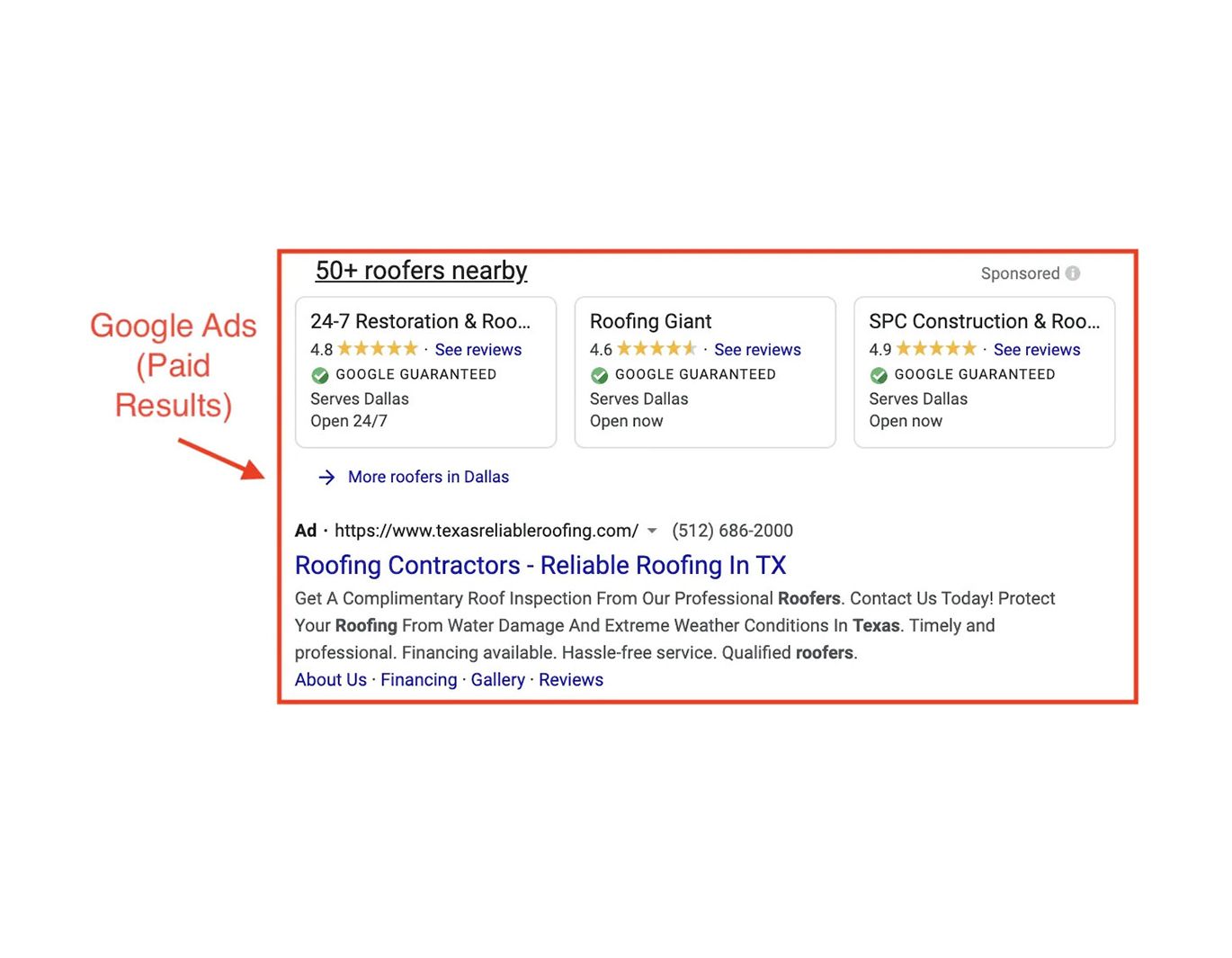
Google (Paid) Local Service Ads
These 'LSA' or Google 'Guaranteed' Ads show up at the very top of the Google SERP, and there can be up to four listings per search entry. To appear in this section, you'll have to pay Google to display your site as it relates to certain keywords.
Don't worry, though; you'll only pay if someone actually clicks on your ad. That's why this tactic is called pay-per-click, or PPC. These can generate some traffic, but a majority of users have been shown to simply skip over this section. That's why the next type of result, Google Maps listings, is so vital.
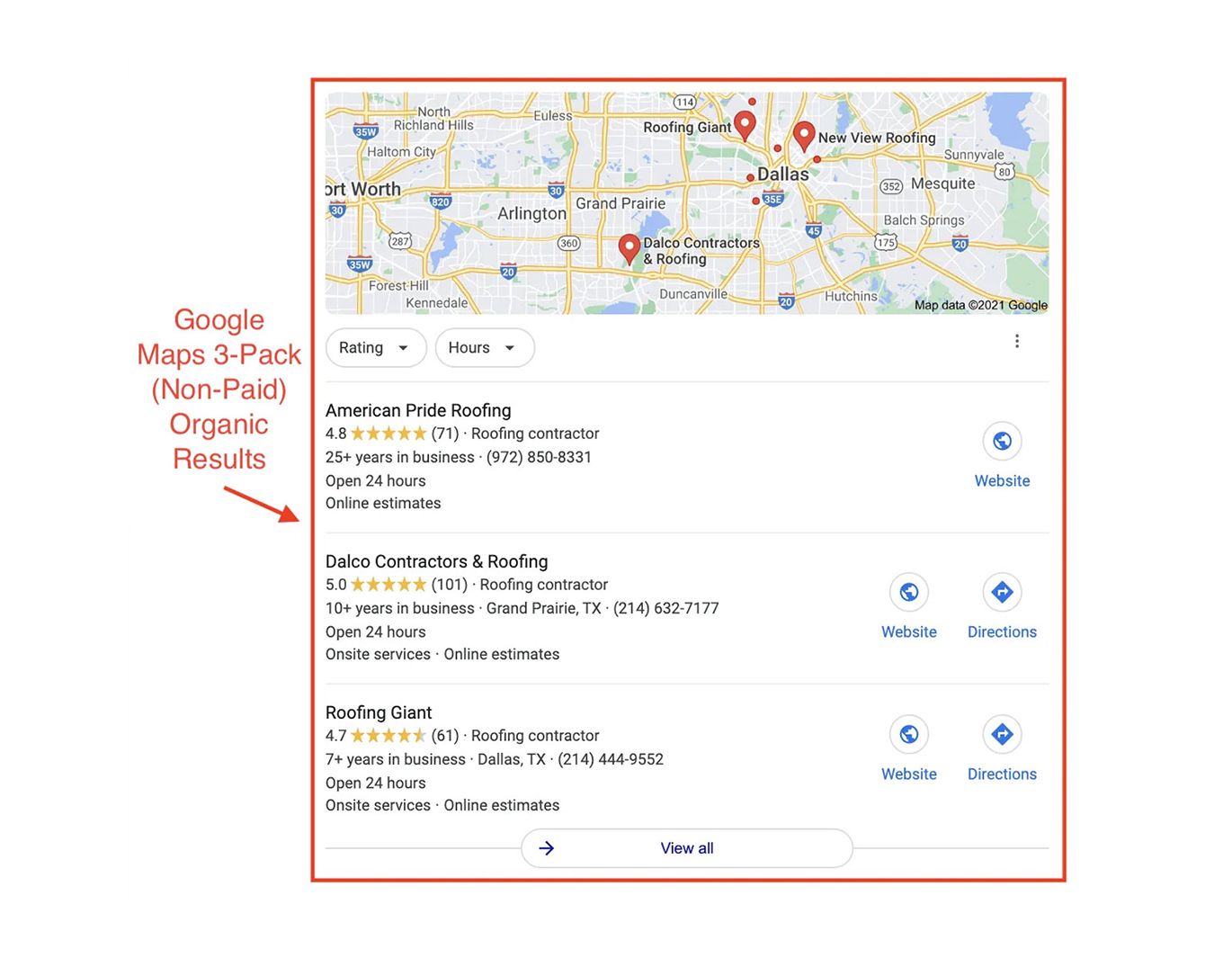
Google Map 3-Pack
When relevant, Google will show only three listings for local businesses in the coveted Google Map 3-pack section. For roofing companies, this is vastly important and often generates the greatest number of leads.
If you can rank in the top three local businesses on Maps, it's the biggest marker of success for your roofing SEO campaign and can easily triple your business.
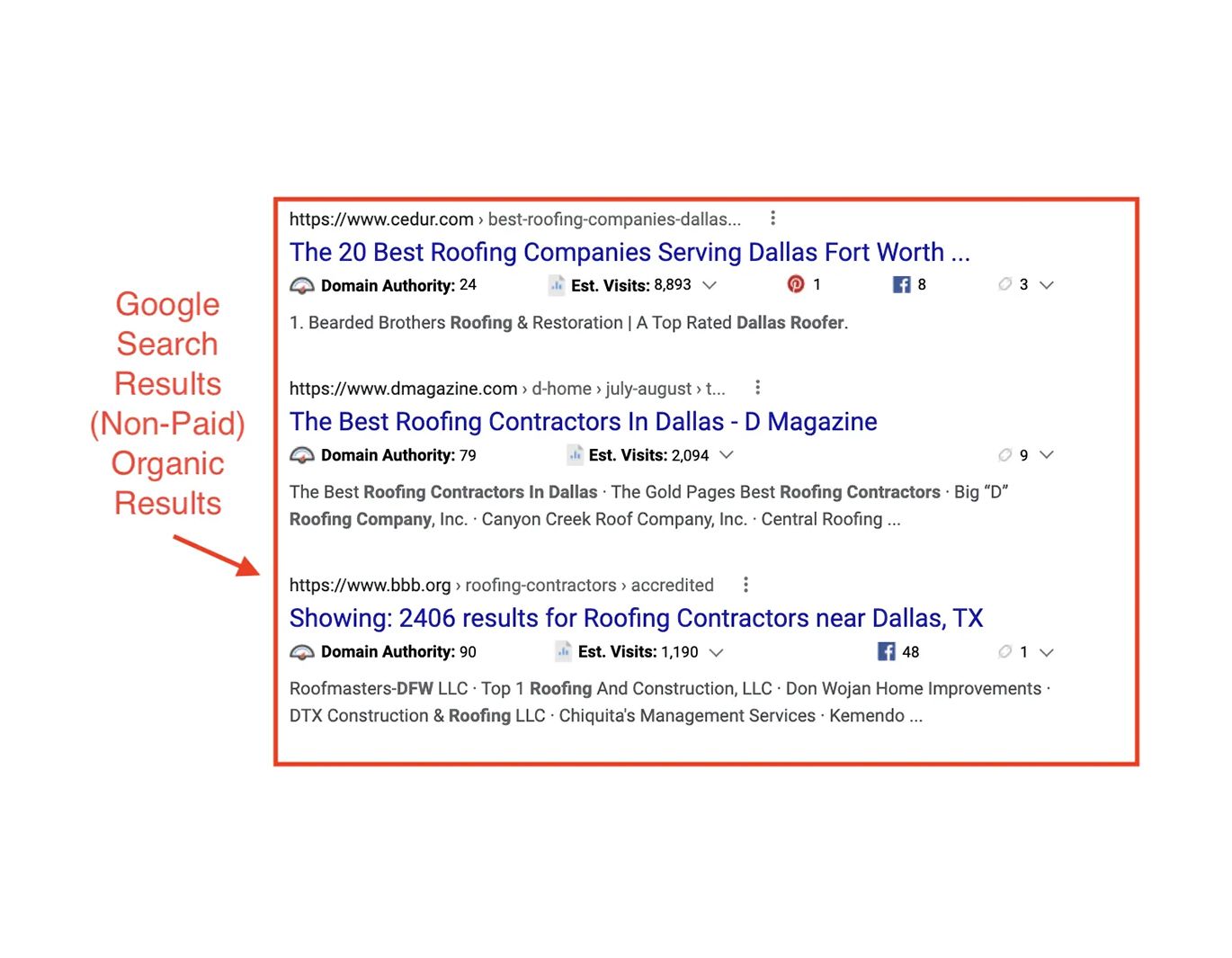
Organic Search Results
The third and final type of result is organic search. These will display under the Google Maps listings and look like what you typically imagine a Google search result would. Optimizing your pages for roofer keywords and writing helpful content on your blog is key to achieving top results.
Getting on the first page, in the top few spots here will certainly result in some traffic generation, and in combination with a Google Maps SEO campaign, this is where your SEO campaign for your roofing company will really start to take off!

Your Done-For-You SEO Growth System for Roofing Contractors
✨Roofing SEO Services: Everything We Do For You
Per month, no hidden fees. Cancel anytime. Risk-free guarantee.
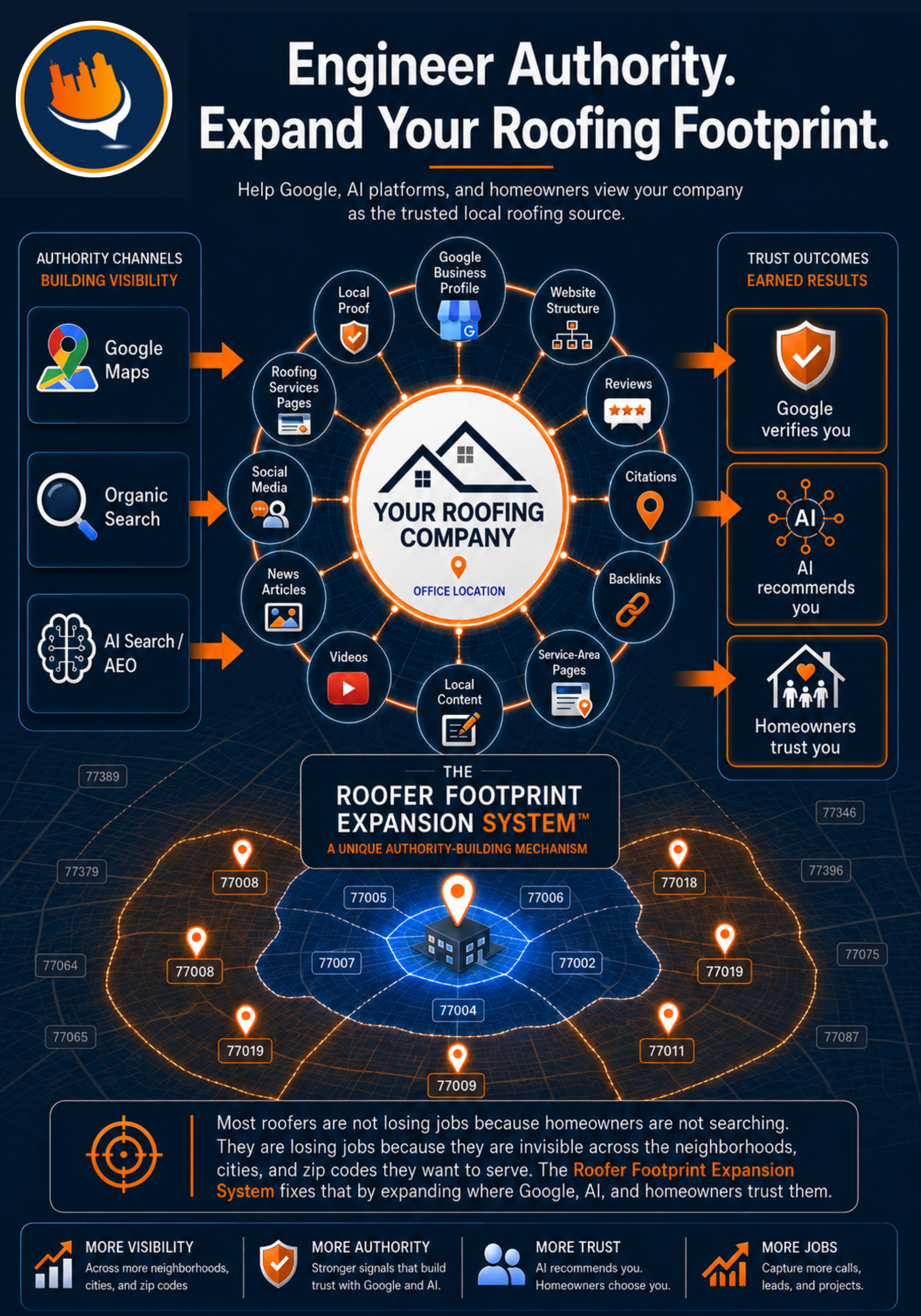
When you work with CinchLocal, you're not getting a generic SEO package or a checklist of tactics your competitors can easily copy. You're getting our proprietary Roofer Footprint Expansion System™ — a process we've spent 7 years developing, testing, and refining specifically for roofing companies.
Every campaign is customized around your market, competition, current visibility, and growth opportunities. We don't publicly reveal every tactic behind the system — that's intentional. The strategy is the advantage. What matters is the outcome: expanding your footprint, increasing your visibility, and putting your roofing company in front of more homeowners when they're ready to hire.
Here's what we handle from day one:
📍 Google Maps & GBP Optimization
- Google Business Profile audit and optimization — categories, services, description, photos
- Proprietary GeoGrid analysis — we map exactly where you rank (and don't rank) across your service area
- GBP post strategy — minimum 3x/week to build engagement signals
- Review generation strategy and reputation management
🔍 Local SEO, Organic SEO & AEO
- Comprehensive keyword research using the most searched roofing keywords to target high-intent local searches
- On-page optimization for all service and location pages
- Title tags, meta descriptions, H1/H2 structure, schema markup
- Service area page expansion — city and neighborhood pages that rank
- Answer Engine Optimization (AEO) — structuring your website, entities, services, locations, and content so AI-powered search engines can better understand, reference, and recommend your roofing company
- Optimization for visibility across Google AI results, ChatGPT, Perplexity, Gemini, Copilot, and other AI answer engines
- Footprint Expansion System™ — our proprietary method for dominating a service area
✍️ Content, AEO & Authority Building
- SEO blog content via our blog posting service for roofers — E-E-A-T optimized, keyword-mapped, published on your site
- Answer-focused content designed to establish your company as a trusted roofing entity across traditional and AI-powered search
- High-authority backlink acquisition from relevant roofing and home improvement sources
- Citation building and NAP consistency across 50+ local directories
- Press release distribution for brand authority
🌐 Website, Technical SEO & AEO
- Roofing websites architecture review — built for conversion and rankings
- Page speed optimization for conversion-critical pages
- Mobile usability audit
- Internal linking structure built to push authority to money pages
- Schema markup including LocalBusiness, Service, FAQPage, Review, and other relevant structured data to help search engines and AI systems understand your business
📊 Tracking & Reporting
- Monthly GeoGrid reports showing exact Map Pack coverage across your service area
- Google Search Console and GA4 integration — traffic, rankings, and leads in one dashboard
- Keyword rank tracking — weekly position updates on your target terms
- AI visibility monitoring — tracking how your roofing company is represented across leading AI search and answer platforms
- Lead attribution — we track which calls and forms came from organic
- Monthly strategy call to review performance and next moves
How Much Does Roofing SEO Cost?
What you're actually buying with roofing SEO:
Predictable, recurring lead flow
not one-time ad spends
Geographic exclusivity
your market is locked out to competitors
Compound ROI
the same investment that produces 5 calls in month 3 can produce 20+ by month 12
Measurable results
GeoGrid before-and-afters show exactly what moved
The honest math:
A $2,000/month investment that closes 15 new roofing jobs — each worth $8,000–$15,000 — is not a cost. It's the most profitable line item in your business. That's why our clients stick around.
What roofing SEO does NOT include:
- Overnight results — Google takes 60–90 days to fully process ranking changes
- Guaranteed exact positions — anyone promising '#1 on Google in 30 days' is lying; we guarantee the work, the strategy, and measurable movement
Want to know what investment level makes sense for your market? That's exactly what the free strategy call is for.
ROOFING SEO
Two Types of SEO:
On-Page & Off-Page
There are two aspects of SEO your roofing company should be focusing on when trying to rank in Google Maps and organic search listings.
Another critical aspect is technical SEO, which involves backend improvements to enhance site performance and user experience. These are on-page SEO and off-page SEO. Take a look at your roofing contractor’s website to determine if it needs work in these areas.
Ranking in Google Maps 3-Pack is extremely dependent on on-page SEO. While on-page isn’t as important for organic search listings, a great on-page strategy will greatly increase your chances for ranking in Google Maps (which, as we’ve discussed, is the greatest driver of success for local roofing contractors).
For roofing businesses targeting a local area, the optimal formula is 70% on-page and 30% off-page.
On-Page SEO
So what is on-page SEO? Essentially, it's on-site content creation that incorporates your roofing contractors' keywords and local city and state.
You'll create pages of content that describe your services, where you're located, and more information about your business. The more detailed your content, the better your search result rankings will be.
Off-Page SEO
Google also takes into account references back to your site and mentions of your business on other websites. Why? Well, Google wants to know that your site is trustworthy and a reputable source of information.
How can you instill confidence in your business? You'll obtain what Google refers to as "votes," which are links back to your site on other already-established, trustworthy sites. Google also looks for "citations," which are mentions of your business in local directories.
Roofing contractors will want to get as many of these mentions as they can.
If you have more votes and citations than your competitors, you'll rank higher than them too.
See the Footprint Expansion System™ in Action
Numbers are easy to claim. These are documented case studies with before-and-after GeoGrid data showing exactly what changed — and when.
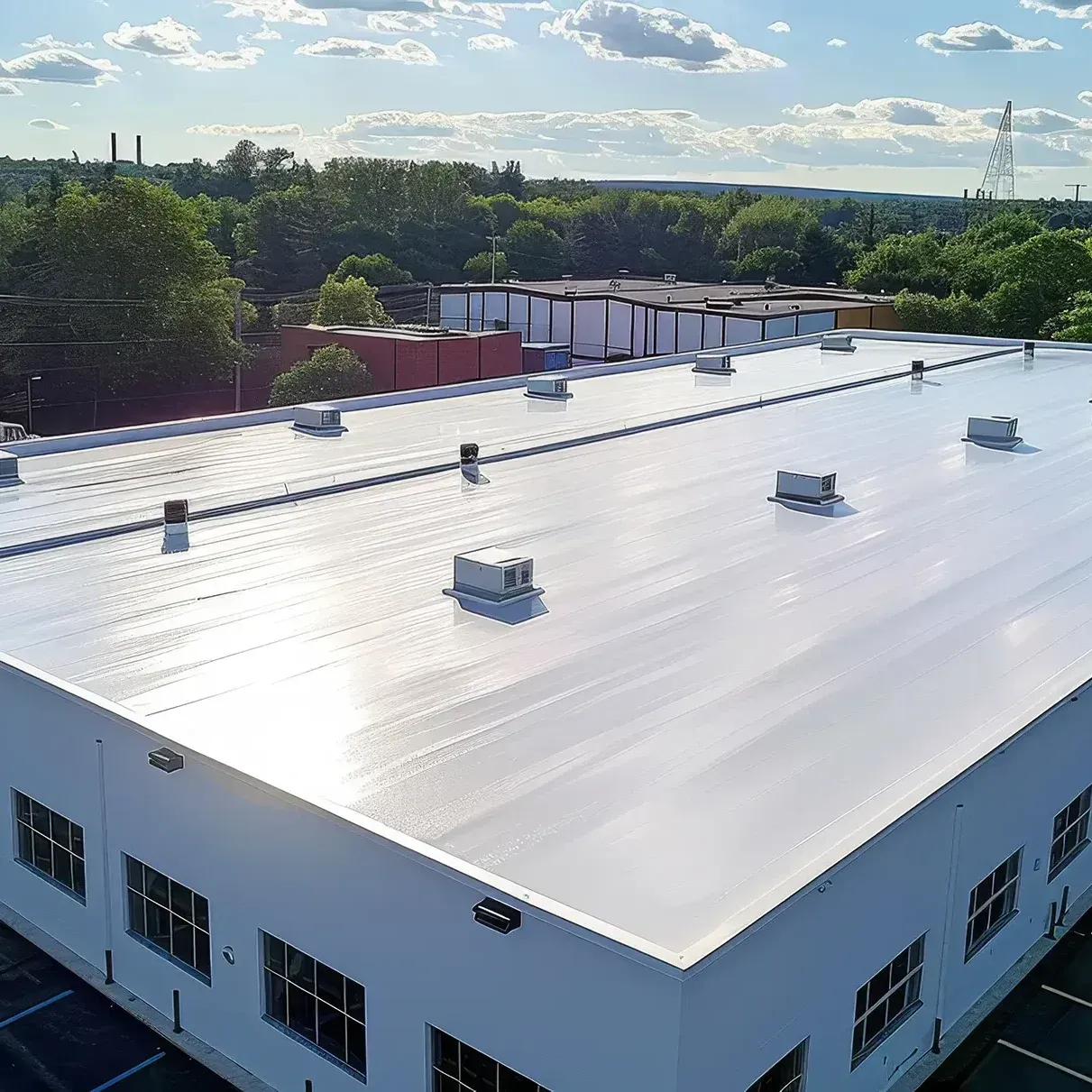
Commercial Roofing SEO Case Study
How we helped a commercial roofing company go from near-zero local visibility to dominating the Map Pack across their entire metro service area.
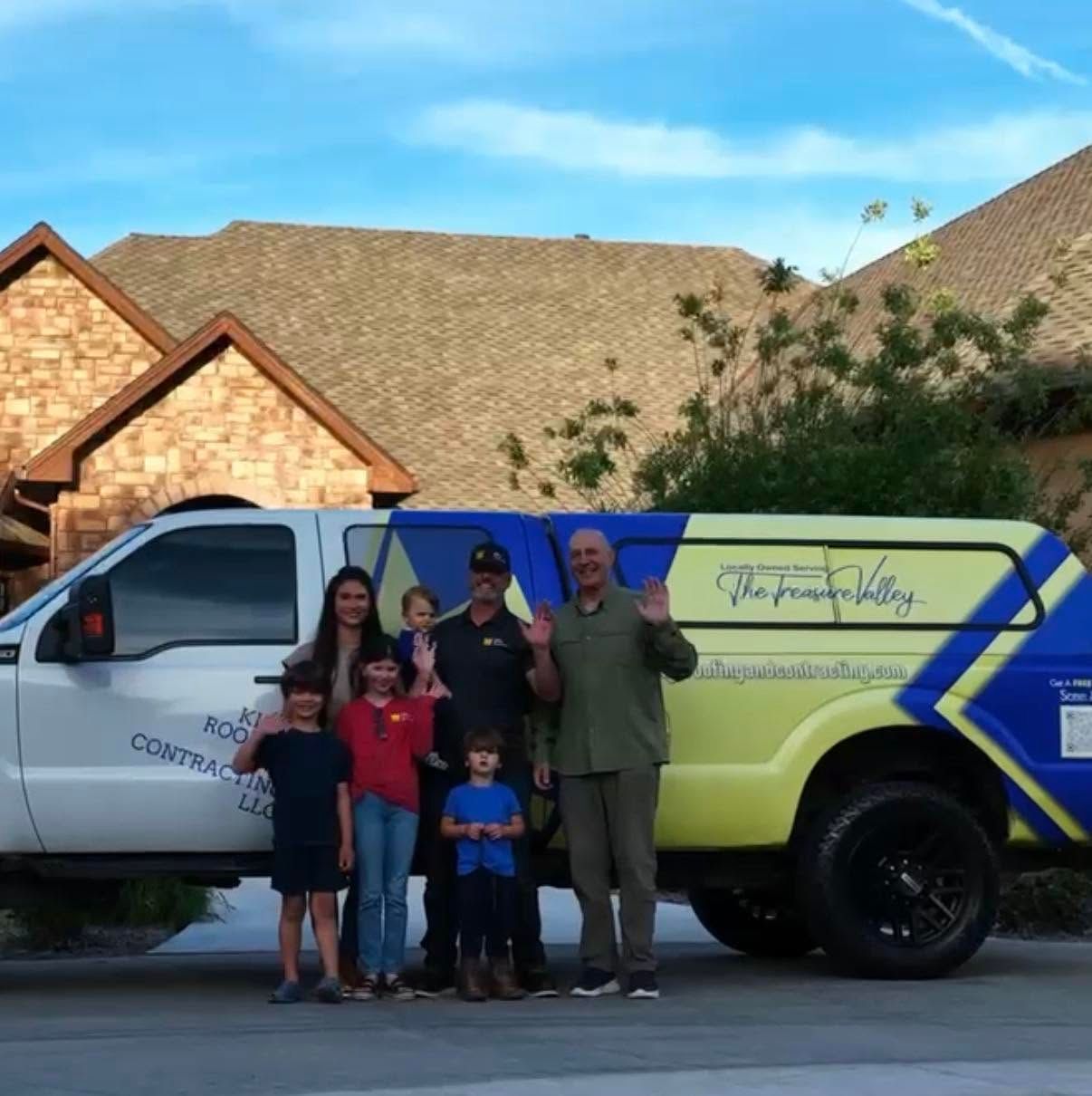
Residential Roofing SEO Case Study
A residential roofer ranked #14 for their primary keyword. Six months with the Footprint Expansion System™ later: Map Pack, top-3 organic, and a waiting list of estimates.
SEO for Roofers: Choosing the Right Keywords
Keyword research for roofing companies isn't about chasing the highest-volume terms — it's about finding the searches your ideal customers make right before they pull out their phone. Want the full list? We've compiled the
most searched roofing keywords
— free to access, ready to use for your campaign.
Some obvious roofing keywords include:
- [city, state] roofer
- [city, state] roofing
- [city, state] roofing companies
- [city, state] roofing contractors
- include 'near me' keywords as well
Less than obvious keywords:
- [city, state] roof replacement
- [city, state] residential roofing
- [city, state] metal roof installation
- [city, state] emergency roof repair
- [city, state] commercial roofing contractor
- [city, state] asphalt shingle roofing companies
Brainstorm exactly what your roofing company focuses on by using free roofing keyword tool.
Finally, think about what other services you offer. Do you also do siding installation? Window replacement? Gutter installation? Other home repair services? If so, include these in your keywords as well.
Do you need help with your roofing SEO?
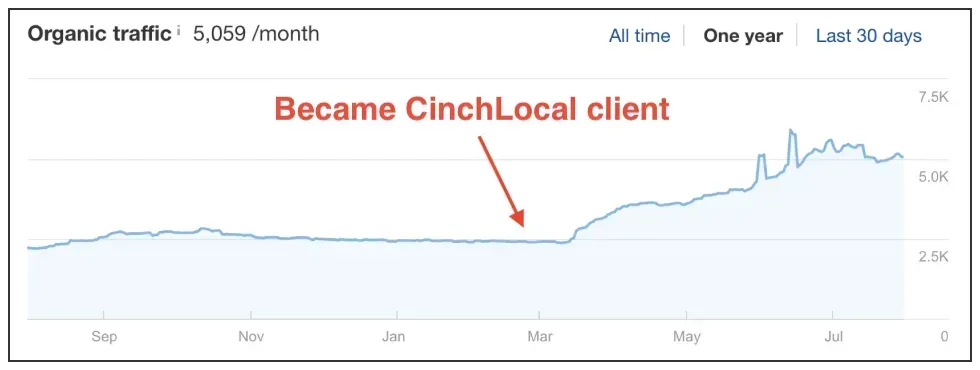
At CinchLocal we know how to create SEO magic, and you can get some killer results.
Why Work With a Specialist in Roofing SEO — Not a Generalist?
A generalist agency will take your roofing company as a client and your competitor as the next one. They'll apply the same playbook to both of you and wonder why neither is winning. CinchLocal was built to solve exactly that problem.
1. We Only Work With Roofers
Marketing for roofing contractors is our sole focus. We know the roofing buyer's mindset, the roofing seasonality cycle, and the exact keywords and GBP signals that move roofing companies to the top of Google Maps.
Read our story to see how CinchLocal became a roofing-only agency.
2. One Roofer Per Market — Always
This policy is non-negotiable. Your market exclusivity is the foundation of our entire value proposition. We cannot give you 100% of our focus while simultaneously optimizing your competitor.
3. The Footprint Expansion System™
Our proprietary methodology goes beyond basic local SEO. We systematically expand your geographic footprint — building GeoGrid dominance across your service area, not just your primary city. The result is visibility across every neighborhood and suburb where your ideal customers are searching.
4. We Show You the Data
Paid ads stop the moment you stop paying. SEO rankings, once established, keep generating roofing leads 24/7 without an ongoing cost per click. Our clients typically see 10–20x ROI within the first six months, and the leads keep coming after that.
5. 350+ Roofing Contractor Projects. 10,000+ Rankings Improved.
CinchLocal is rated Top 5 Roofing SEO Company in America by SEO for Growth. We've helped roofing companies across the United States go from invisible to undeniable in their local markets.
Frequently Asked Questions
What is roofing SEO and what does it mean for my business?
Roofing SEO (Search Engine Optimization) is the process of improving your roofing company's visibility on Google — both in organic search results and in the Google Maps 3-Pack. For your business it means more homeowners find you when they're ready to hire, more calls come in from people who already trust you because they saw you at the top of Google, and fewer dollars spent on paid leads that don't convert.
Does SEO actually work for roofing companies?
Yes — and it's one of the highest-ROI marketing channels available to roofing contractors. About 85–87% of homeowners use Google to find and evaluate local contractors before hiring. Roofing companies in the Google Maps 3-Pack and first organic page consistently report 10–20x ROI from SEO. See the evidence: does SEO work for roofing businesses?
How long does it take to see results from roofing SEO?
Most roofing companies start seeing measurable movement in Google Maps rankings within 60–90 days. Significant organic ranking improvements typically show up in months 3–6. By months 6–12, a well-executed roofing SEO campaign is generating consistent, compounding lead flow. We show you GeoGrid progress monthly so you see the movement in real time — not just hear about it.
How much does roofing SEO cost?
Roofing SEO typically ranges from $1,000 to $3,500+ per month. Our full pricing breakdown is here. CinchLocal's pricing is specific to your market — the free strategy call is where we tell you exactly what your area requires and what it costs. No guesswork.
What's the difference between Google Maps SEO and regular SEO?
Google Maps SEO focuses specifically on ranking your roofing business in the Google Maps 3-Pack — the three businesses shown on a map at the top of local search results. Regular organic SEO focuses on ranking your website pages in standard search results below the map. A complete roofing SEO strategy covers both — Map Pack dominance for immediate lead generation and organic rankings for long-term authority.
How do you measure whether my roofing SEO campaign is working?
We measure roofing SEO success using real business metrics: GeoGrid coverage (top-3 Map Pack rankings across your service area map), keyword positions for your primary roofing terms, organic website traffic from Google Search Console, phone calls and form submissions from organic sources, and lead value from SEO. Every month you receive a full report and a strategy call.
Why does CinchLocal only work with one roofer per market?
Because divided interests produce divided results. If we worked with competing roofers in the same city, every strategy we built for you would also benefit your competitor. We lock your market exclusively to you from day one — once you claim it, no other roofing company in your area can hire CinchLocal. Full stop.