


Cary Byrd // Founder of CinchLocal
What is Built Up Roofing and How Does It Work?
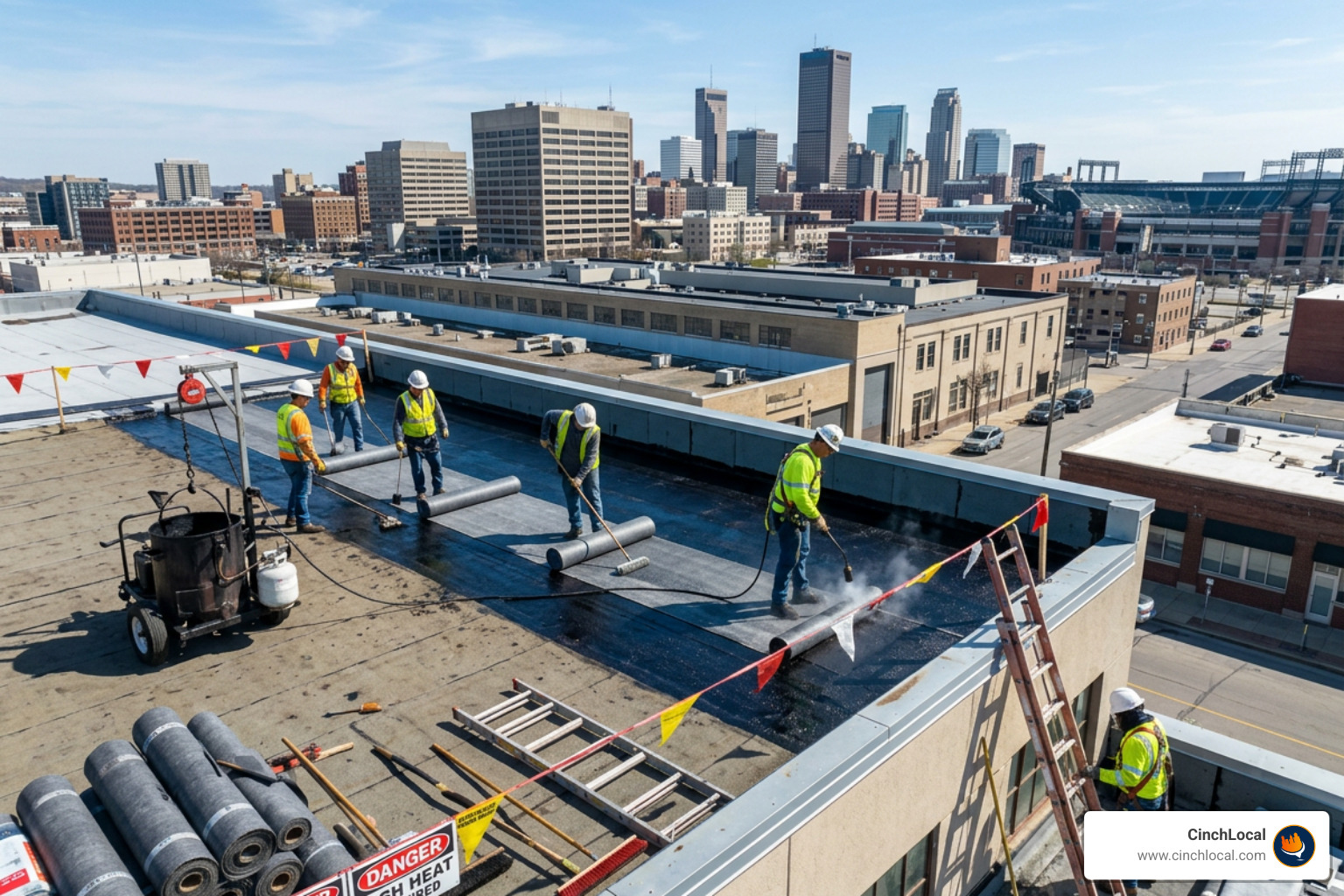
Built up roofing is a multi-layer asphalt roofing system designed for low-slope and flat commercial roofs, built by alternating layers of bitumen and reinforcing felt sheets to create a single, waterproof membrane.
Here's a quick breakdown of what you need to know:
| Feature | Details |
|---|---|
| System type | Multi-ply (3-5 layers of bitumen + reinforcing felts) |
| Best for | Low-slope and flat commercial roofs |
| Lifespan | 20-30 years (some systems 50+ years) |
| Top surface | Gravel, mineral cap sheet, or reflective coating |
| Key advantage | Redundant layers mean one damaged ply doesn't mean a leak |
| Warranty | Up to 20 years depending on materials and installation |
If you own or manage commercial properties — or if you're a roofing contractor who installs or repairs flat roofs — you've probably run into BUR systems. They're one of the oldest and most proven roofing solutions in North America, with a track record stretching back over 160 years.
And yet, many contractors find them misunderstood. Clients ask strange questions. Competitors pitch newer single-ply systems as automatically superior. The reality is more nuanced.
This guide cuts through the noise. You'll learn exactly how BUR systems work, what makes them hold up for decades, where they fall short, and how they compare to modern alternatives like TPO, EPDM, and modified bitumen.
Whether you're installing a new system, troubleshooting an aging roof, or just trying to give clients straight answers — this guide has you covered. The team at CinchLocal put it together specifically for roofing contractors and commercial property professionals who need reliable, actionable information.
I'm Cary Byrd, founder of CinchLocal and a digital marketing specialist who has worked extensively with roofing contractors across North America — including those who specialize in built up roofing systems for commercial properties. My work helping roofers grow their businesses has given me a front-row seat to the questions contractors face most, and this guide is built around answering them clearly.
Built up roofing (BUR) is a field-fabricated waterproof membrane composed of alternating layers of bitumen (asphalt or coal tar) and reinforcing fabrics, often called "plies." Unlike single-ply systems that rely on one thick sheet of rubber or plastic, BUR derives its strength from redundancy. By laminating multiple layers together, we create a thick, durable, and semi-flexible shield that is incredibly difficult to penetrate.
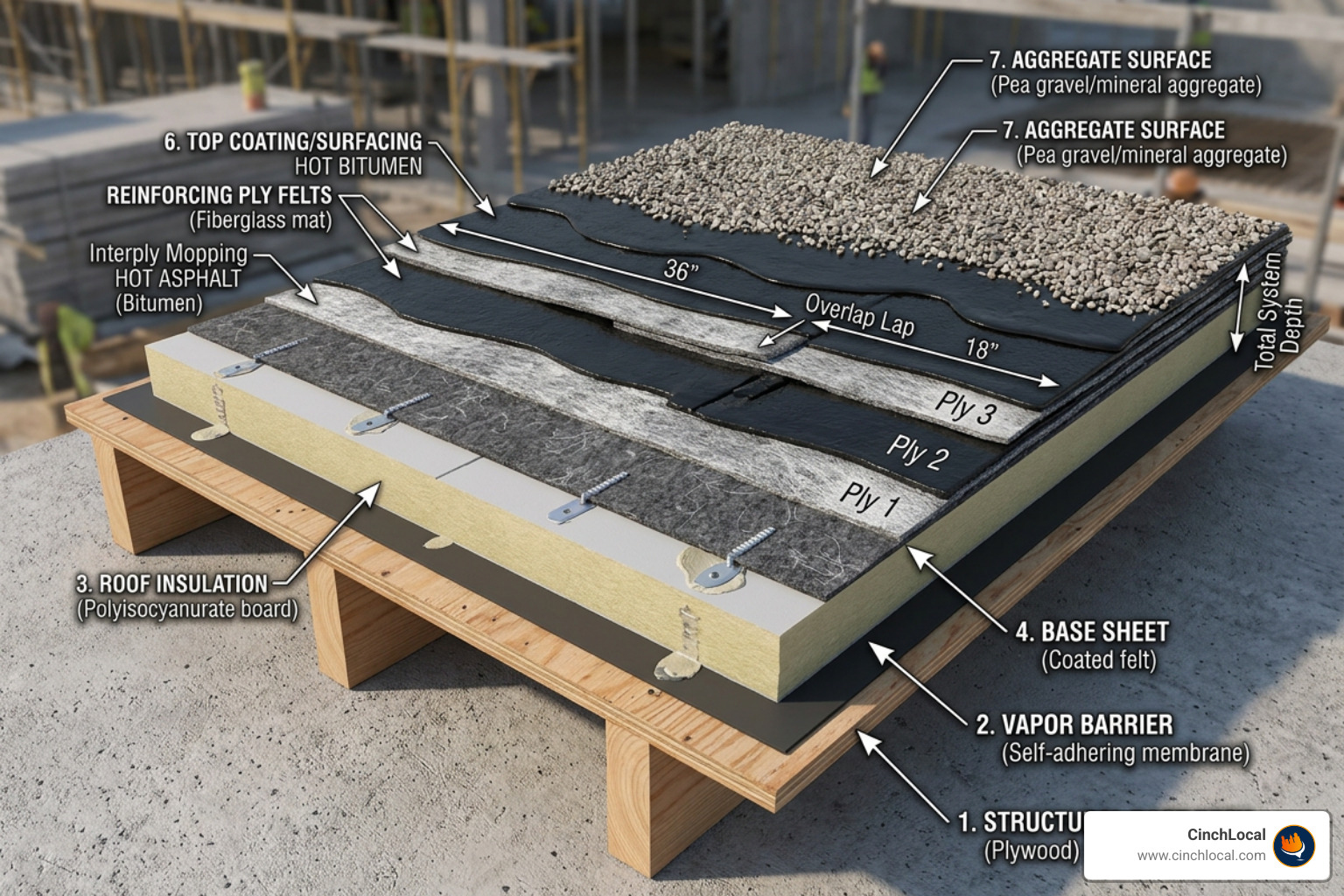
The system works through bitumen fusion. When hot asphalt is mopped over a reinforcing felt, it saturates the fabric and bonds to the layer beneath it. According to ASTM International standards, this creates a continuous, monolithic membrane that provides exceptional thermal resistance and waterproofing. For contractors, mastering this system is a hallmark of expertise. If you are looking to showcase that expertise to a wider audience, understanding Google Maps SEO for roofers is the fastest way to get your crews onto more commercial job sites. You can even view our proven results to see how local visibility transforms commercial lead flow.
The Evolution of Built Up Roofing Materials
The history of BUR spans over 160 years in the United States. Johns Manville pioneered these systems in the mid-1800s, originally using local pine tar or coal tar pitch combined with felt paper. While coal tar was the "gold standard" for decades due to its self-healing properties—meaning it stays slightly fluid and can "mend" small cracks—it has largely been replaced by asphalt since the 1980s.
This shift was driven partly by OSHA health advisories on coal tar, which highlighted the risks of chemical burns and respiratory issues for installers. Modern BUR systems now utilize high-quality glass-fiber felts, which offer superior strength and moisture resistance compared to the organic rag-based mats used in the past.
How Redundancy Drives Performance
The "secret sauce" of built up roofing is redundancy. In a typical 4-ply system, you have four distinct layers of waterproofing. If a heavy tool is dropped and punctures the top layer, the three layers beneath it remain intact to prevent a leak.
- Puncture Resistance: The combined thickness (often around half an inch) resists mechanical damage better than almost any other flat roof.
- Monolithic Structure: Because the layers are fused, there are no "seams" in the traditional sense, reducing the risk of edge failure.
- Thermal Stability: The mass of the roof helps absorb and dissipate heat, protecting the building's interior.
Core Components of a Built Up Roofing System
To build a high-performance BUR, we must select the right "ingredients." A failure in any one component can compromise the entire assembly.
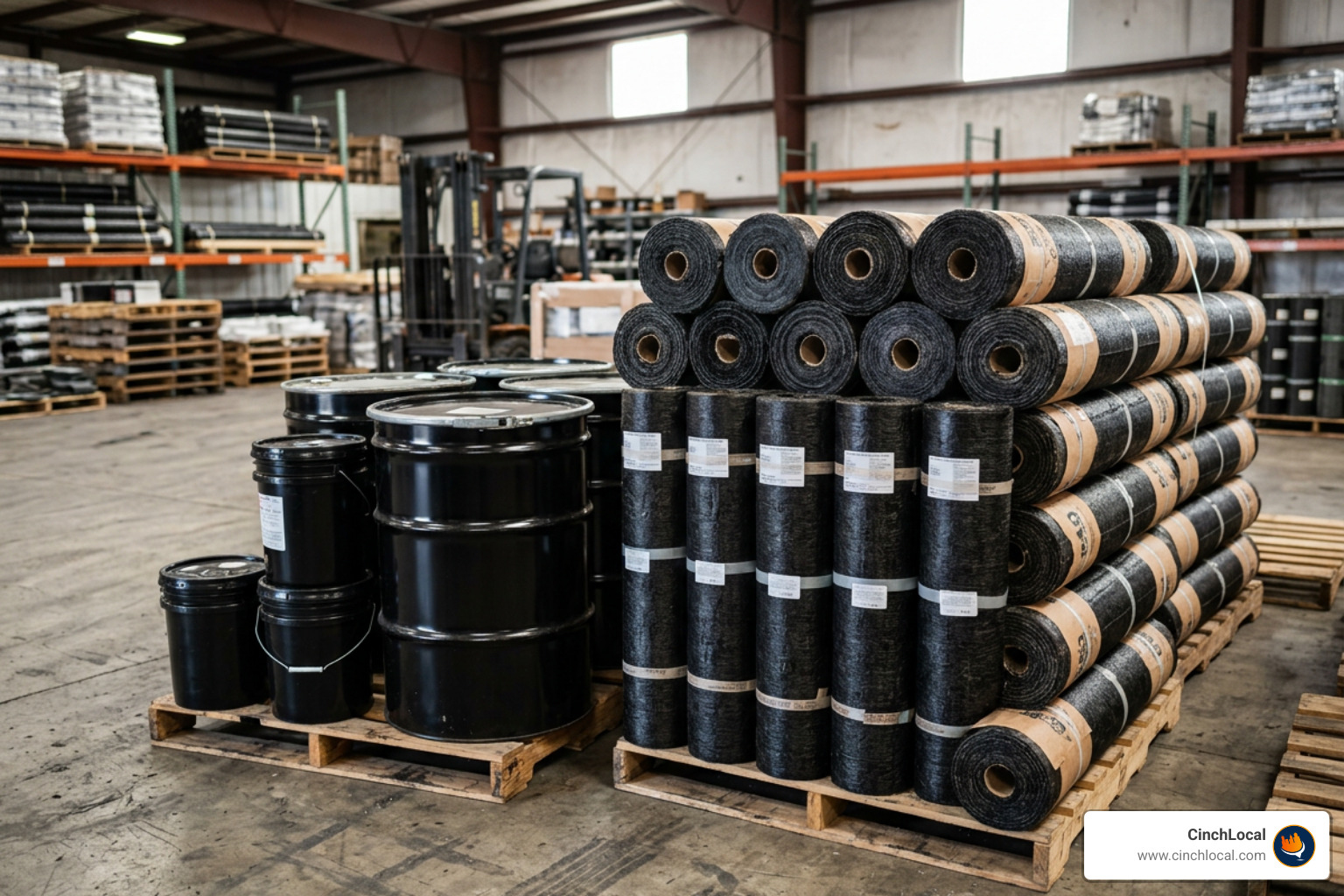
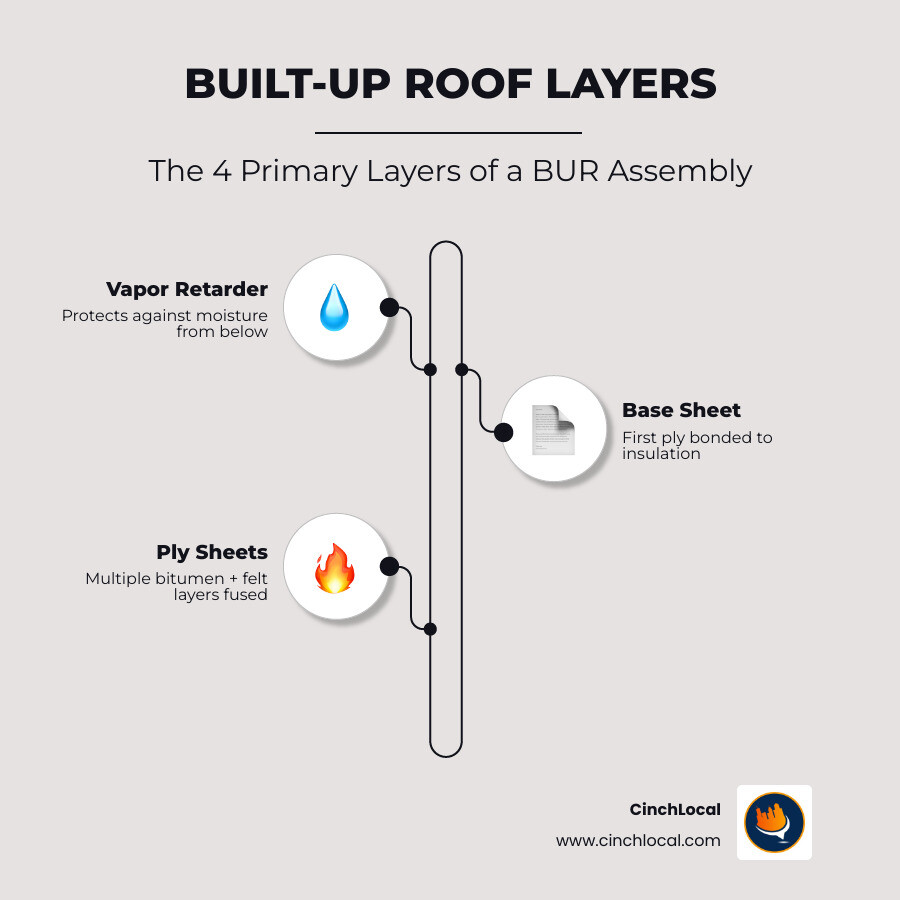
The assembly typically starts with a base sheet fastened to the roof deck or insulation. This is followed by reinforcing felts (ply sheets) and inter-ply bitumen . Finally, a surfacing material is applied to protect the membrane from the elements. The Whole Building Design Guide emphasizes that the interaction between these layers is what determines the system's long-term success.
Selecting the Right Bitumen Type
Asphalt isn't "just asphalt." It is categorized by its softening point and flow characteristics. Choosing the wrong type for your slope can lead to "slippage," where the roof literally slides off the building on a hot day.
- Type I: Dead-level asphalt, used for slopes up to 1/4" per foot.
- Type II: Flat asphalt, suitable for slopes up to 1/2" per foot.
- Type III: Steep asphalt, the most common type, used for slopes up to 2" per foot.
- Type IV: Special steep asphalt, used for very high slopes or in extremely hot climates like California or Tennessee.
Surfacing Options for Maximum Longevity
The surfacing layer is the roof's first line of defense. Without it, UV rays would bake the asphalt, causing it to become brittle and crack (a process known as alligatoring).
- Aggregate Surfacing: Gravel or slag embedded in a flood coat of asphalt. This provides excellent fire resistance and hail protection.
- Mineral Cap Sheets: A heavy felt with a factory-applied ceramic granule surface, similar to a shingle.
- Reflective Coatings: Liquid-applied aluminum or elastomeric coatings that turn a BUR into a "cool roof," reflecting UV rays and lowering energy bills.
Installation Methods and Best Practices for Contractors
Installing built up roofing is labor-intensive and requires a highly skilled crew. There are three primary ways to apply the bitumen:
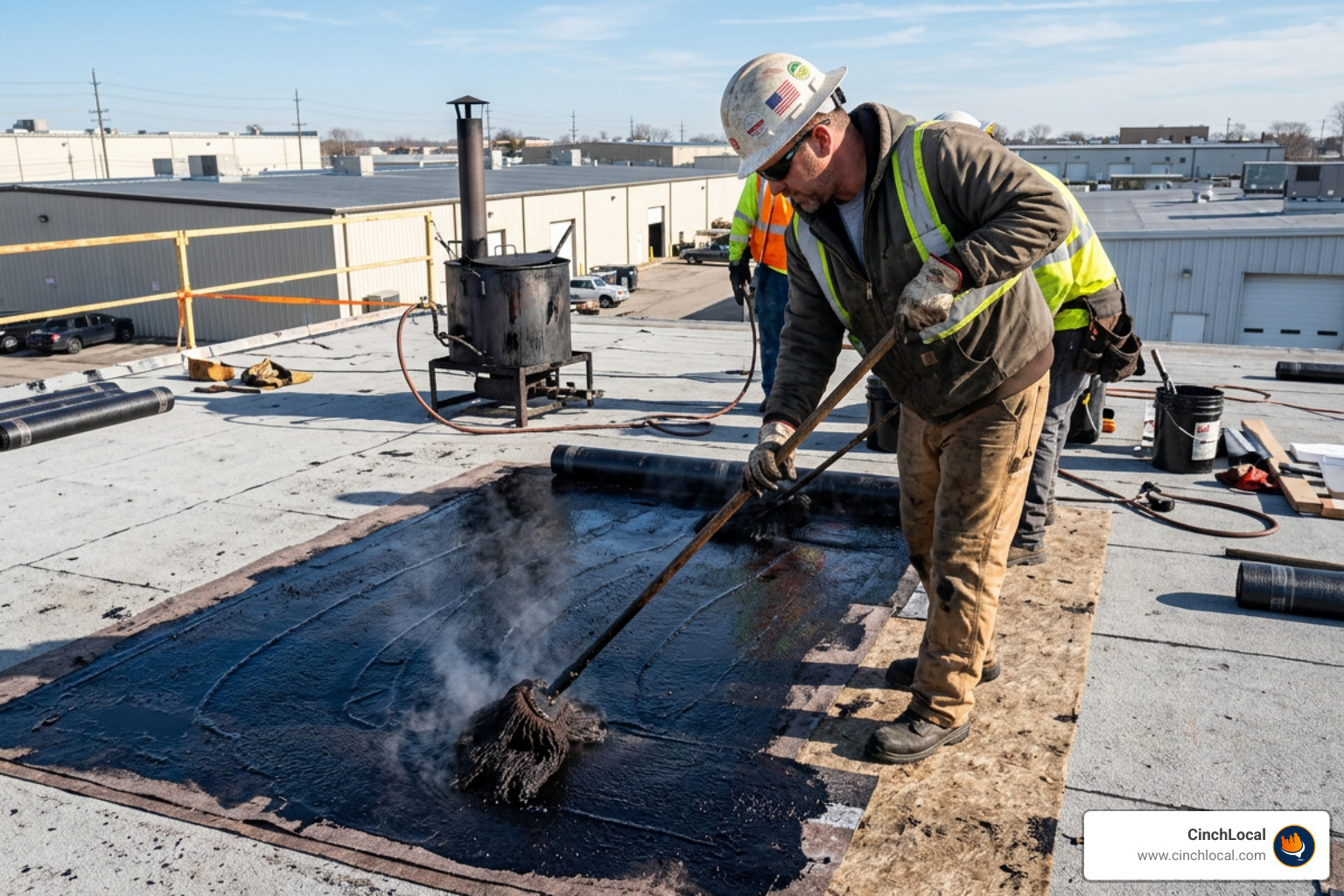
- Hot-Mopped: The traditional method where asphalt is heated to roughly 400°F-500°F in a kettle and mopped onto the roof.
- Cold-Applied: Uses solvent-based or emulsion adhesives. This eliminates the "hot kettle" smell and fire hazards, making it ideal for schools or hospitals.
- Torch-Down: Often used with modified bitumen, but some BUR components can be heat-welded.
| Feature | Hot-Applied BUR | Cold-Applied BUR |
|---|---|---|
| Equipment | Kettles, tankers, mops | Sprayers, squeegees, rollers |
| Odor | Strong asphalt smell | Lower odor (depending on solvent) |
| Safety | High burn/fire risk | Lower fire risk |
| Cure Time | Immediate | 24 - 48 hours |
For contractors looking to dominate this niche, marketing your specialized skills is key. Check out the ultimate guide to dominating flat roofing SEO to learn how to position your business as the local authority on complex commercial systems.
Ensuring Proper Substrate Preparation
A roof is only as good as the deck beneath it. Whether you're working on structural concrete in Ohio or steel decking in Georgia, the surface must be clean, dry, and secure. We recommend using a cover board (like a 1/2" gypsum or high-density polyiso board) over the insulation. This protects the insulation from being crushed by foot traffic and provides a flat, stable surface for the base sheet.
Managing Thermal Expansion and Contraction
Commercial buildings move. As temperatures fluctuate, the roof deck expands and contracts. If the BUR membrane is too rigid or isn't detailed correctly at the joints, it can split. Split joints are a common failure point that we prevent by using proper expansion joints and ensuring that the felt rolls are allowed to "relax" before installation. You can see how we've helped contractors communicate these technical details to clients in our commercial roofing SEO case study.
Maintenance and Preventing Common Built Up Roofing Issues
The average lifespan of a BUR roof is 20 to 30 years, but with diligent maintenance, some can last over 50. The biggest enemy of any flat roof is ponding water .
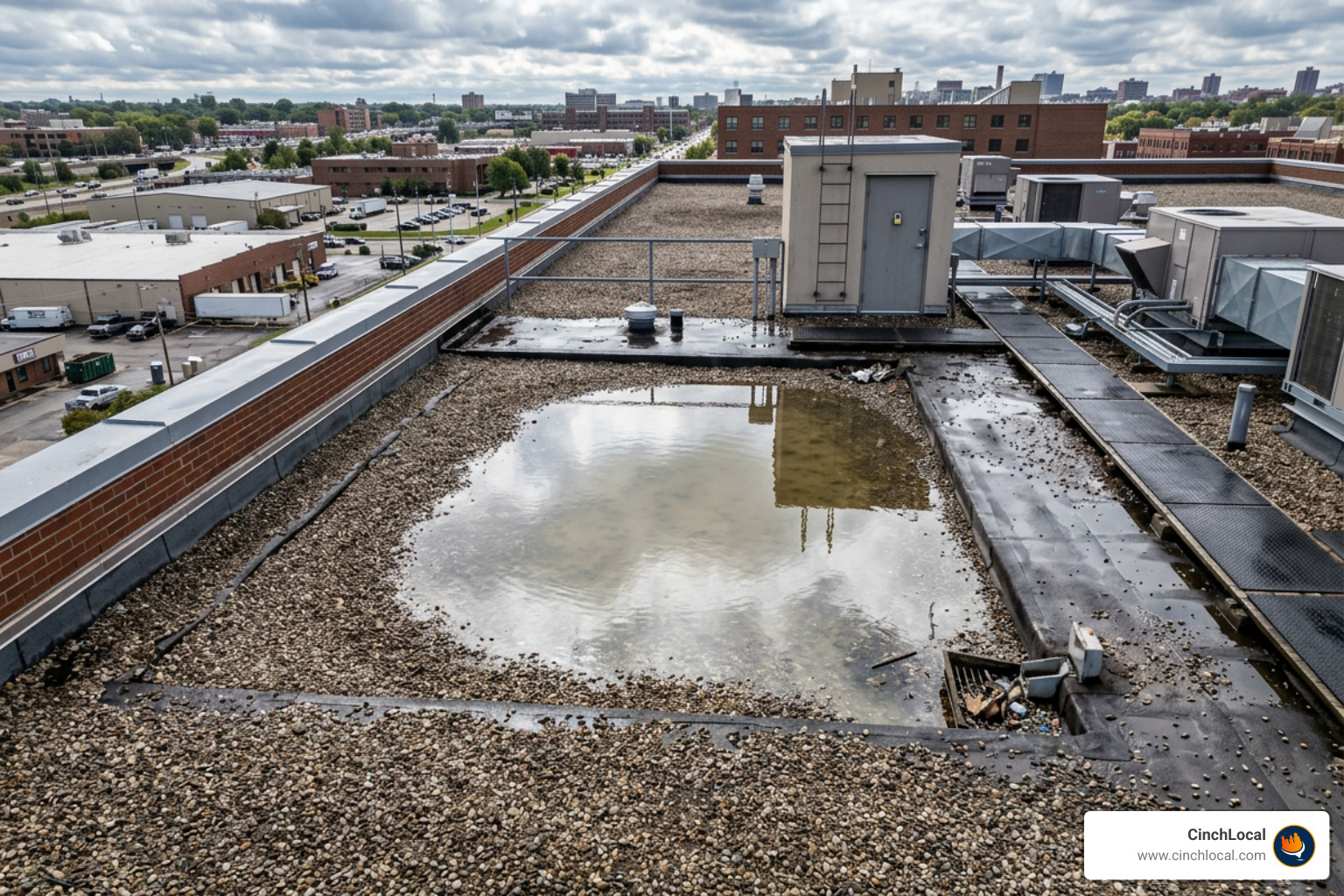
When water sits on a roof for more than 48 hours, it creates a "vicious cycle." The weight of the water (520 lbs for just a 10'x10' area at 1" deep) causes the deck to sag, which creates a deeper depression, which holds more water. Stagnant water evaporates at only about 1/4" per day, meaning a deep pool can stay for weeks, accelerating the breakdown of the asphalt. For detailed inspection protocols, we recommend the ROOFER: Engineered Management System for BUR. If you're a contractor trying to explain the value of maintenance plans to your customers, our commercial roofing marketing strategies can help you build a recurring revenue model.
Preventing Common Built Up Roofing Failures
- Blistering: Caused by moisture or air trapped between plies. When the sun heats the roof, the vapor expands (up to 1,600 times its volume!), pushing the layers apart. Never step on a blister , as you will likely puncture the membrane.
- Alligatoring: The cracking of the exposed bitumen surface. This is a sign that the UV protection (gravel or coating) has worn away and needs to be restored.
- Ridging: Long, narrow "humps" in the membrane, often caused by moisture in the underlying insulation.
Repairing Punctures and Split Joints
When a leak occurs, the repair must be compatible with the existing system. For an asphalt BUR, we use rubberized asphalt and reinforcement mesh to create a "three-course" patch.
- Clean the area thoroughly (remove all gravel).
- Apply a layer of roofing cement.
- Embed a piece of glass-fiber mesh.
- Apply a final top coat of cement.
For more tips on maintaining your digital presence while you're busy fixing roofs, visit our page on roofing SEO.
Comparing BUR to TPO, EPDM, and Modified Bitumen
When a property owner asks, "Why should I choose built up roofing over TPO?" you need a factual, answer-first response. BUR is the "heavyweight" of the roofing world—literally and figuratively.
- vs. TPO/PVC: Single-ply membranes like TPO are faster to install and highly reflective, but they lack the puncture resistance of a 4-ply BUR. If the building has heavy HVAC traffic, BUR is often the better choice.
- vs. EPDM: EPDM is a durable rubber sheet, but its seams are its weak point. A fused BUR membrane is essentially seamless.
- vs. Modified Bitumen: Mod-Bit is essentially a "factory-made" BUR. It’s a great middle-ground, but it often lacks the extreme redundancy of a field-fabricated multi-ply system.
Comparison Table:
| System | Lifespan | Puncture Resistance | Fire Rating |
|---|---|---|---|
| Built Up Roofing | 20-30+ Years | Excellent | Class A |
| TPO | 15-20 Years | Fair | Class A |
| EPDM | 20-25 Years | Good | Class B/A |
| Modified Bitumen | 15-20 Years | Excellent | Class A |
Frequently Asked Questions about Built Up Roofing
What is the typical lifespan of a BUR system?
A professionally installed and maintained built up roofing system typically lasts 20 to 30 years. In stable climates with regular inspections, it is not uncommon for these roofs to exceed 50 years of service.
Are there energy-efficient "cool roof" options for BUR?
Yes. While traditional gravel BUR is dark and absorbs heat, you can apply a white reflective elastomeric coating or use a "cool" mineral cap sheet to meet LEED and Energy Star requirements. This can significantly reduce cooling costs in hot states like Tennessee or Georgia.
How does the weight of BUR affect building structure?
BUR is heavy. A multi-ply system with gravel surfacing can weigh between 1,200 and 2,500 lbs per square (100 sq. ft.). Before installing a BUR on a building that previously had a lightweight single-ply roof, a structural engineer should verify that the deck and frame can handle the load.
Conclusion
Built up roofing remains a cornerstone of the commercial roofing industry for one simple reason: it works. Its redundant layers, fire resistance, and extreme durability make it a "worry-free" system for property owners who prioritize long-term performance over the lowest possible installation price.
At CinchLocal, we understand that being a master of your craft is only half the battle. To grow your business in Ohio, Tennessee, Georgia, or California, you need a marketing partner who understands the technical nuances of the roofing world. Our "Roofer Footprint Expansion System" is designed to take the technical excellence you put into every built up roofing project and turn it into a dominant online presence.
Next Steps for Contractors:
- Audit Your Commercial Portfolio: Ensure you have high-quality photos of your BUR installations to build trust with new clients.
- Focus on Maintenance: educate your clients on the 520 lb weight of ponding water to sell more recurring maintenance contracts.
- Expand Your Reach: If you're ready to see your business at the top of Google Maps in your service area, contact CinchLocal for a consultation.
Whether you're mopping hot asphalt or managing a growing roofing enterprise, the strongest structures—and the strongest businesses—are built layer by layer. Let us help you lay the foundation for your next decade of growth.
Want Us to Uncover Hidden 'Footprint Gaps' And Critical Blind Spots That’s Quietly Draining Calls, Jobs, and Profits?
Simply Fill Out The Form Below:
What If You Could Stop Wasting $30K+ a Year on Dead-End Marketing - And Finally Become the Go-To Roofer in Your City?
Other Helpful Articles You Might Enjoy