
Commercial Roofing Leads: How Property Managers Find You

Cary Byrd // Founder of CinchLocal
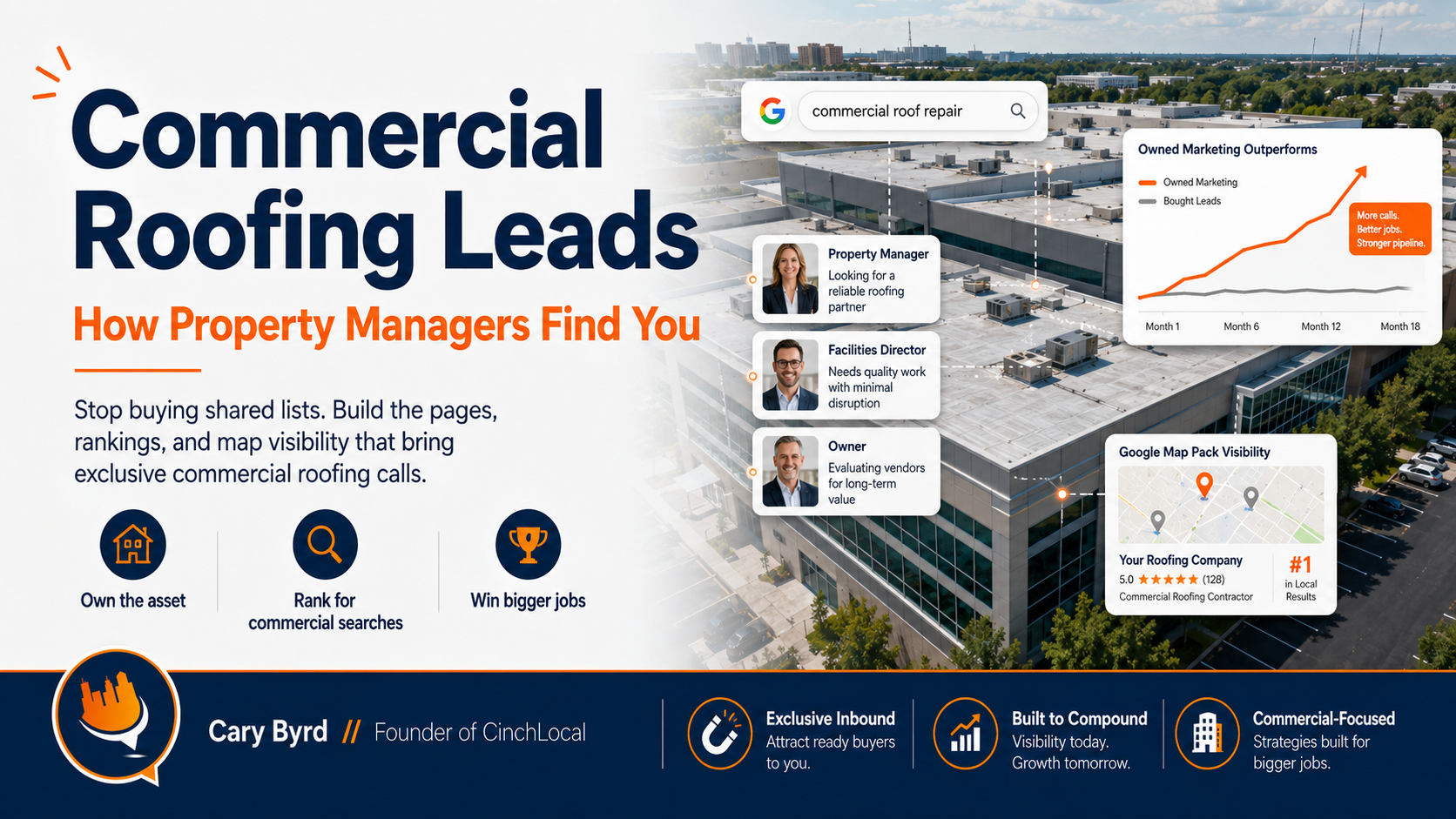
A commercial roof is worth twenty residential jobs, and every roofer knows it. What almost nobody has is a reliable way to be in front of a property manager at the moment their roof starts leaking.
So the industry sells lists. Property databases, contact enrichment, prospecting platforms, cold-call scripts. All of it built on the same assumption: that you go and find them.
There is another way, and it is the one nobody in this market is selling.
Why Bought Commercial Roofing Leads Disappoint
Every lead vendor is selling the same thing in different packaging — a list of buildings and a list of names. The problems are consistent enough that the vendors themselves now admit to them.
The contact is rarely the decision
A commercial re-roof needs sign-off from a property manager, a facilities director, sometimes a CFO and an ownership group. A list gives you one name. That name usually cannot approve anything, and often does not know who can.
The timing is almost always wrong
Commercial sales cycles run months and sometimes years. A list tells you a building exists. It does not tell you the roof is failing, the budget cycle has opened, or the current contractor just lost the account — which are the only three moments that matter.
Everyone else bought the same list
Shared data means the same property manager takes six calls from six roofers in a month. You are not differentiated, you are noise, and the price you can hold drops accordingly.
And you never own any of it
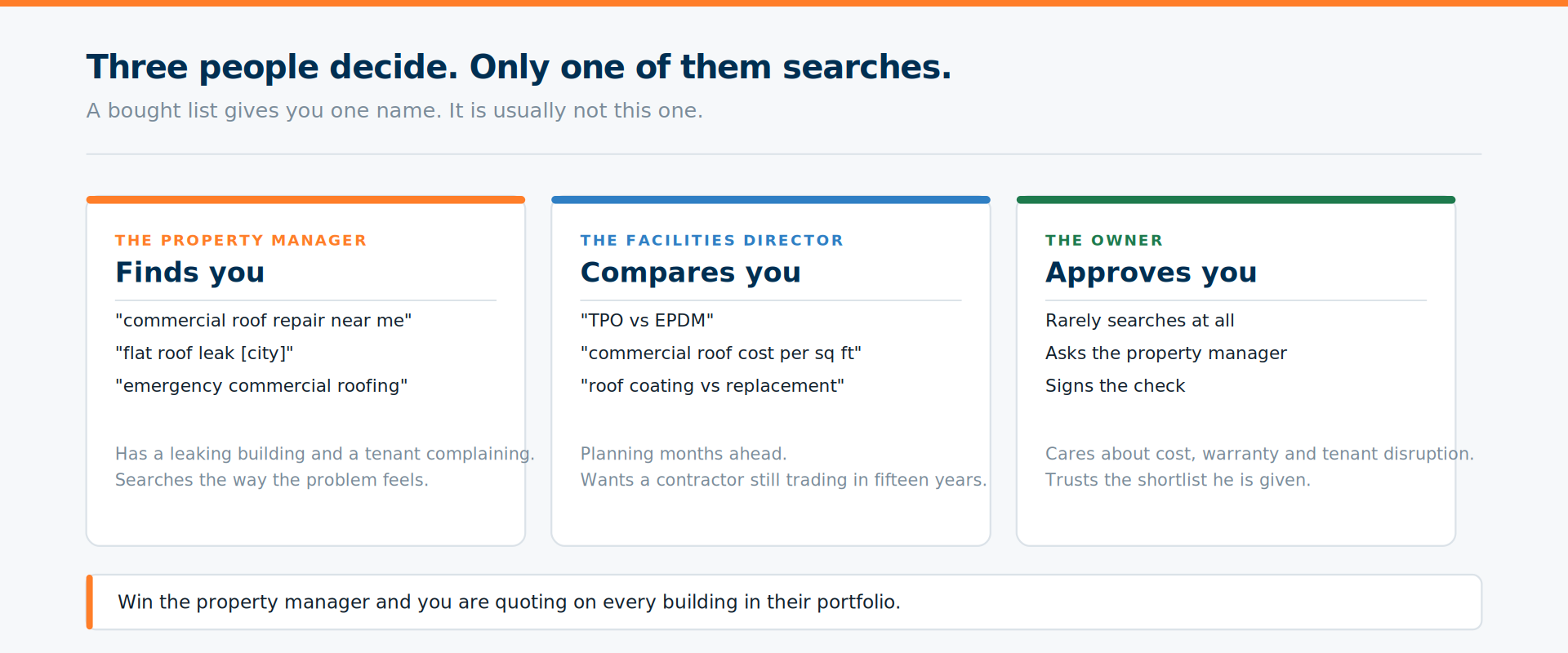
This is the part that matters most and gets discussed least. A bought lead is rented access to somebody else’s asset. Stop paying and it disappears, and you have nothing left to show for the spend — no pages, no rankings, no profile, no audience.
Everything we build belongs to you. The pages sit on your domain, the rankings attach to your business, the Google Business Profile is yours. If you fired us tomorrow you would keep all of it and it would keep producing.
Who Actually Buys a Commercial Roof
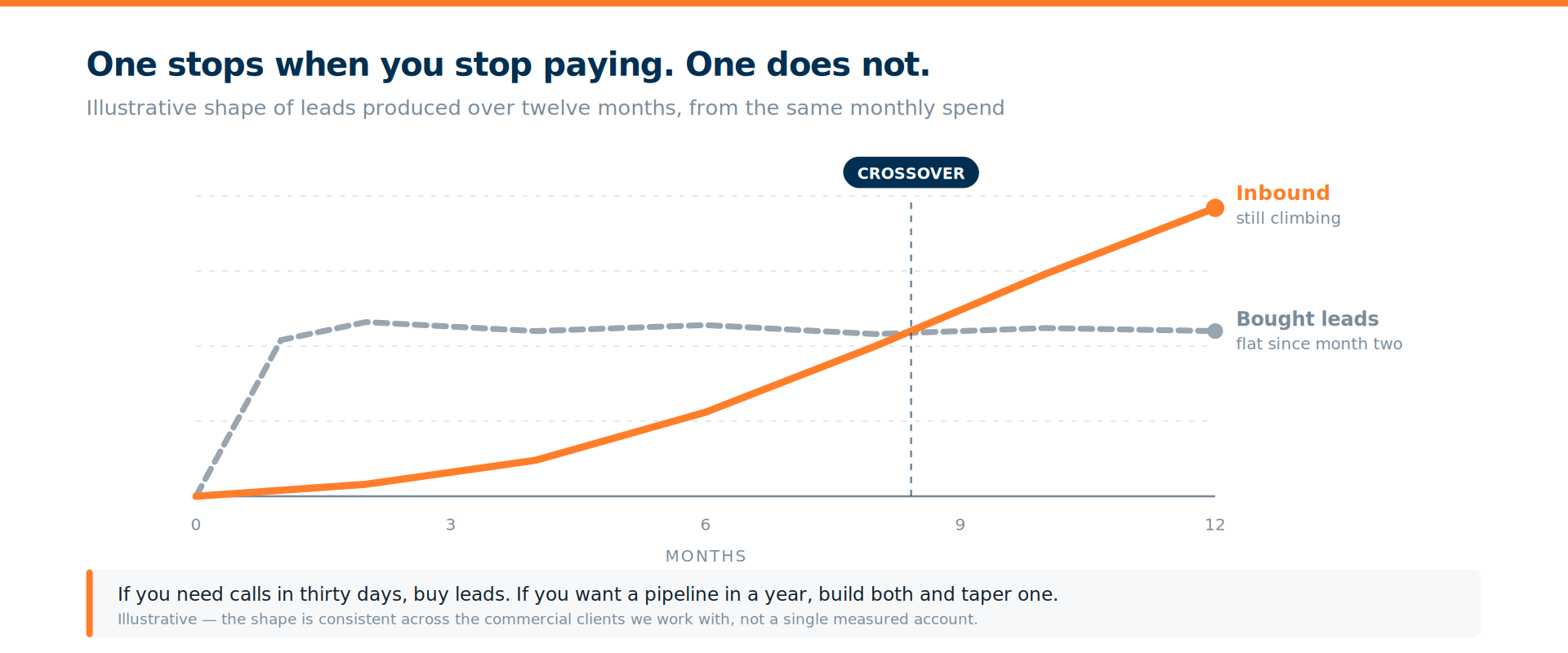
This is the part residential roofers underestimate when they move into commercial. It is not one buyer, it is a committee, and each member searches for something different.
The property manager
Usually the one who finds you. They have a leaking building, a tenant complaining, and a short list of contractors they trust. They search — commercial roof repair, flat roof leak, TPO repair, plus their city. If you are not in those results, you are not in the conversation.
Their professional body is BOMA International, whose US membership alone represents around 10.4 billion square feet of commercial property. That is the audience you are trying to reach, and it is bigger than most roofers assume.
The facilities director
Thinks in maintenance schedules and capital planning, not emergencies. They are searching months before anything is urgent, comparing roofing systems and looking for a contractor who will still be around in fifteen years.
Many are certified through IFMA and benchmark maintenance cost per square foot against industry data. They are not comparing you on price alone — they are comparing you on whether the numbers hold up.
The owner or asset manager
Cares about cost per square foot, warranty terms, and disruption to tenants. They rarely search — they ask the property manager who to call. Which means the property manager is the one you have to win.
Three different people, three different searches, one decision. A bought list reaches one of them, cold, at a moment they did not choose.
The Thing Nobody Else in This Market Is Selling
Look at who ranks for commercial roofing leads today. Data vendors selling property databases. Agencies selling cold outreach. A prospecting platform. A Reddit thread of roofers asking each other what works.
Every one of them is selling outbound — going and finding the buyer.
None of them is selling inbound. Nobody is helping commercial roofers be the result a property manager finds at eleven at night when water is coming through a ceiling in a building they are responsible for.
Why that matters more in commercial than residential
A homeowner with a leak calls three roofers. A property manager with a leak calls the one they already trust, or the one that comes up first — because they are managing twelve other buildings and the roof is not their main job.
That first call is worth far more in commercial, because it usually comes with the rest of the portfolio behind it. Win the property manager once and you are quoting on every building they touch.
And it arrives exclusively. Nobody else bought that enquiry, nobody else is calling that property manager about the same building this week, and you are not bidding against five roofers working from an identical spreadsheet.
And the search volume is genuinely there
Flat and low-slope roofs cover more than 60% of US commercial and industrial buildings, and TPO alone holds around 40% of that market according to the NRCA market survey. Every one of those buildings has a roof that will fail, and somebody responsible for it who searches when it does.
Commercial roof repair, flat roof leak repair, TPO repair, commercial roof inspection — those searches happen in every market, every week, and almost no commercial roofer has built the pages to catch them. Most commercial roofing websites have one page that says “Commercial” and nothing underneath it. Our roofing keyword data shows what the commercial terms are actually worth.
That is a website structure problem, and it is fixable.
What We Actually Do
Build the pages the searches land on
A page for each commercial system you install — TPO, EPDM, PVC, modified bitumen, coatings, metal. A page for each market you serve. Real content on each, not a name in a list. This is the part almost no commercial roofer has done, and it is why the searches go to somebody else. Local landing pages are how the market side of that gets built.
Win the Map Pack for commercial terms
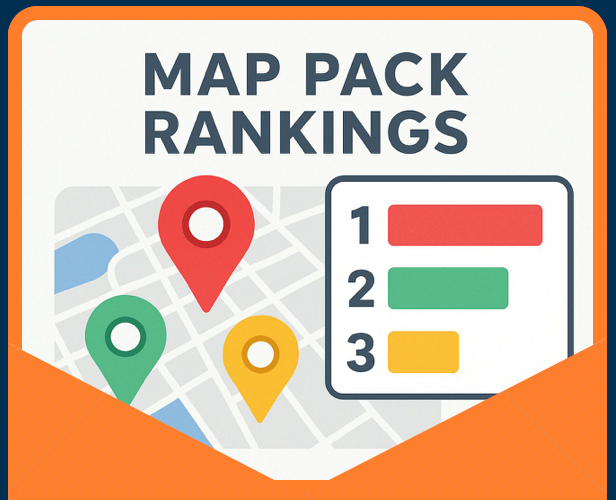
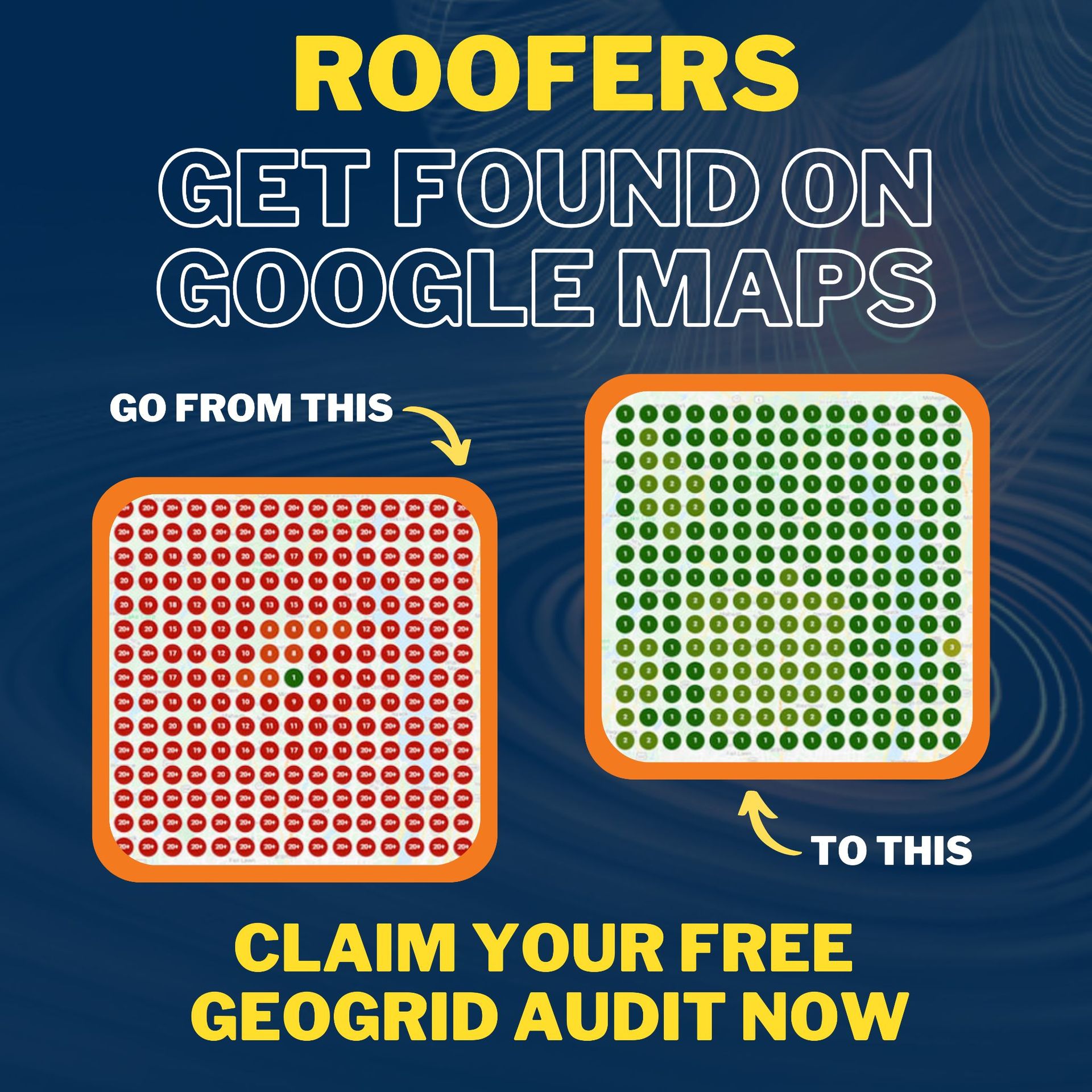
A property manager searching commercial roof repair near me gets three results and a map. Only three businesses appear, and Google ranks them on relevance, distance and prominence. Map Pack visibility is something we measure across your whole service area with GeoGrid scans rather than checking from your office.
Profile verification is the foundation of that and it is free — it is also the step most commercial roofers have half-finished.
Make the site credible to a committee
Commercial buyers do more homework than homeowners. Completed project galleries with building types and square footage. Manufacturer certifications. Warranty terms in writing. Insurance and bonding. References from other property managers. Every one of those answers a question a facilities director will ask.
Answer the questions they search before they call
What does a TPO roof cost per square foot. How long does a commercial re-roof take. Can it be done without closing the building. Roof coating versus replacement. Those are the searches that happen months before the job, and answering them is how you become the contractor they already trust when it is time.
None of it is separate from what we do for roofing SEO generally. It is the same architecture, aimed at a buyer who signs bigger checks.
What the whole thing is called
We run this as the Roofer Footprint Expansion System. The name describes the actual objective: expanding the geographic area where your business is the one that gets found, rather than the single point where you already rank because that is where your office sits.
For commercial it means the same thing applied to a different buyer — being the result a property manager finds in every town where you would happily send a crew, not just the one on your business license.
Exclusive to one roofing company per market. Not because it sounds good on a sales call, but because the whole method is built on being the answer rather than one of six. We cannot make two roofers in the same city the answer to the same search, so we do not try.
Proof
Our commercial roofing case study follows a contractor who went after property managers rather than buying lists, and what happened to their pipeline as a result.
If you want the residential version of the same method, the Big River case study documents 4 keywords to 104 in 84 days, with the timeline attached.
Read both before you take our word for any of the above. Each has the numbers in it, and a section on what the data does not prove.
Is This Faster or Slower Than Buying Leads?
Slower to start, and then it does not stop.
A bought list produces calls this week. That is a real advantage and we are not going to pretend otherwise — if you need pipeline in the next thirty days, buy leads or knock doors.
What a list never does is compound. You stop paying, the leads stop. Six months of building commercial pages and Map Pack visibility produces inbound enquiries that keep arriving, from people who chose you rather than being interrupted by you, at a price you set rather than one bid down by five other roofers on the same list.
Most of our commercial clients do both for the first six months. Then the buying gets smaller.
Three numbers you already know. Nothing to sign up for.
What this assumes, and how to change it
Same money. Fewer leads. More jobs. And it does not stop in month 25.
See where you actually rankAn illustration, not a forecast. Both columns spend your figure every month for 24 months — the only difference is what the money buys. Close rates come from published 2026 benchmarks and are editable above. One thing this deliberately understates: those same benchmarks put SEO leads at $25–$100 once rankings are established, against $80–$220 for bought exclusive leads, but this model charges your bought-lead price to both sides. Your market, your close rate and your competition will move all of these numbers.
Frequently Asked Questions
Find Out What Your Market Looks Like
Book a free strategy session and we will run a GeoGrid scan on the commercial terms in your service area — commercial roof repair, flat roof leak, TPO repair — and show you who property managers are finding instead of you.
If residential is the bigger part of your business today, start with roofing leads instead and come back to commercial once that is running.
We work with roofing contractors only, one per market, and everything we build is yours — your domain, your rankings, your profile, your leads. Nothing is shared with another roofer and nothing disappears if you leave.
You keep the scan either way, and if your city is taken we will tell you on the call.
Want Us to Uncover Hidden 'Footprint Gaps' And Critical Blind Spots That’s Quietly Draining Calls, Jobs, and Profits?
Simply Fill Out The Form Below:
What If You Could Stop Wasting $30K+ a Year on Dead-End Marketing - And Finally Become the Go-To Roofer in Your City?
Other Helpful Articles You Might Enjoy