

Cary Byrd // Founder of CinchLocal
Why Professional Roofing Web Design Is Your Most Critical Marketing Investment
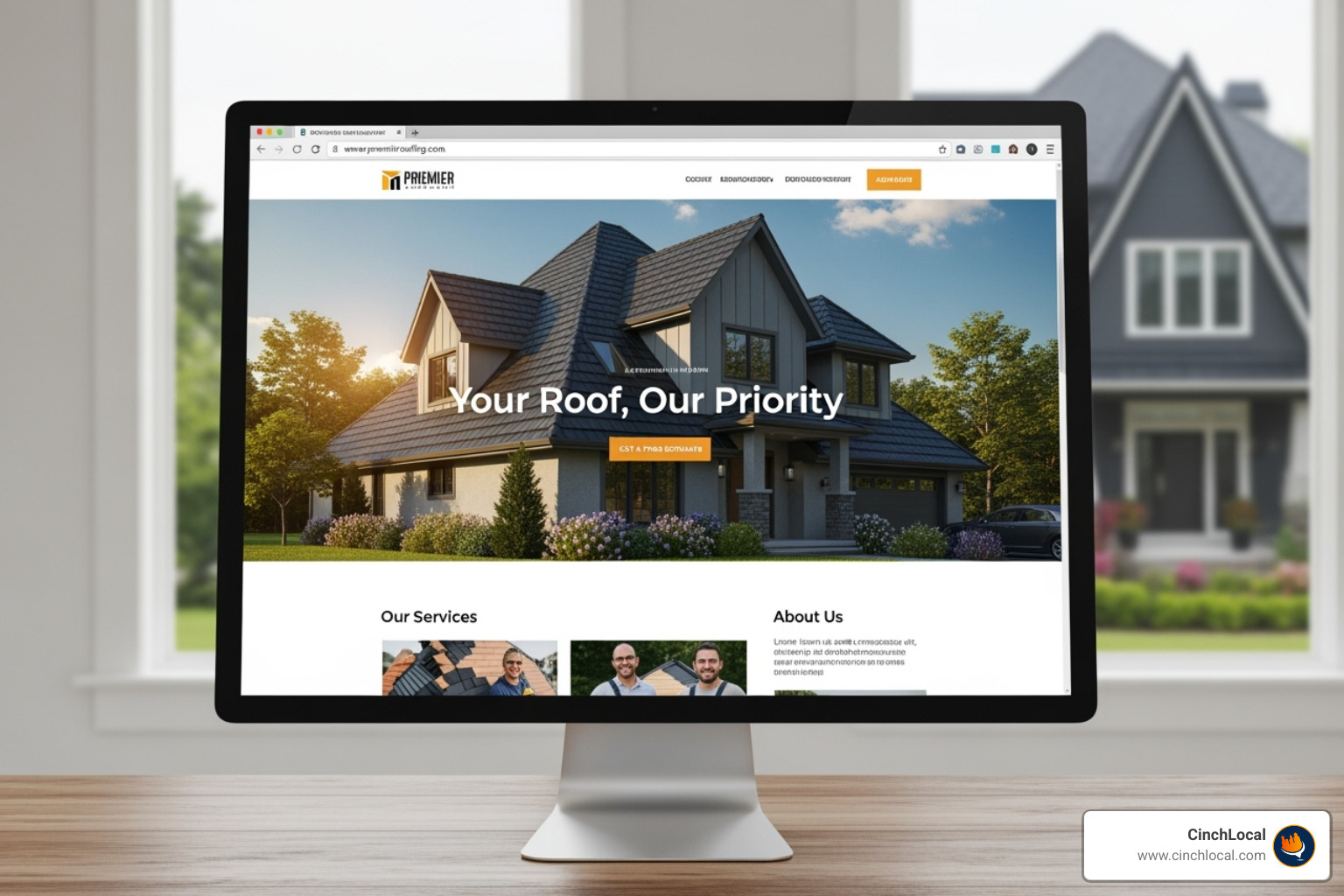
Roofing web design is the foundation of your digital marketing, acting as a 24/7 salesperson that converts visitors into customers. A professional site combines stunning visuals, trust-building elements, and strategic lead capture to drive business growth.
For contractors seeking comprehensive professional roofing marketing solutions, a well-designed website is the cornerstone that supports all other marketing, from local SEO to Google Ads.
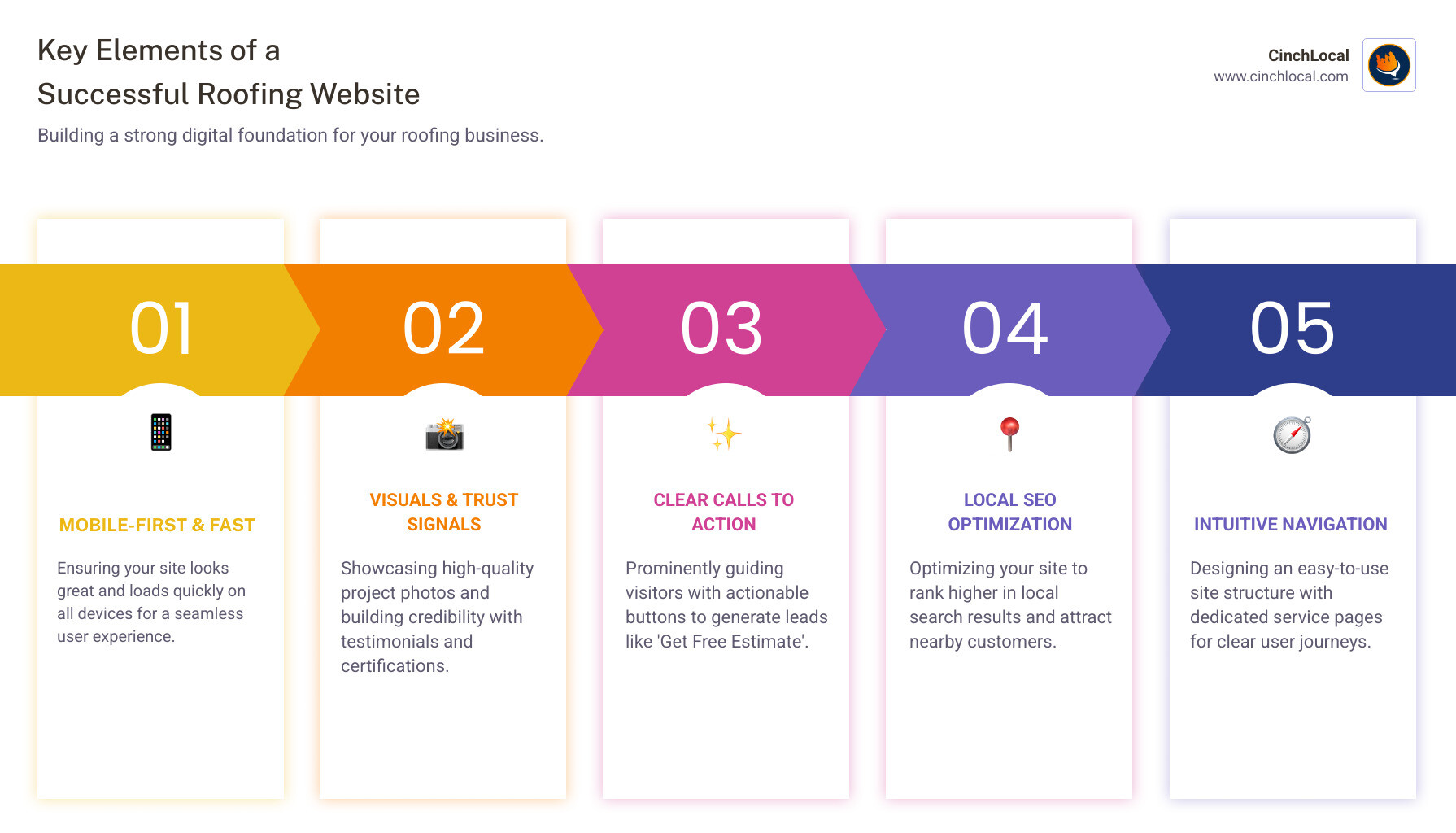
Essential elements of effective roofing web design include:
- Mobile-responsive design for all devices
- High-quality project photos and before/after galleries
- Trust signals like customer testimonials and industry certifications
- Clear calls-to-action with prominent "Get Free Estimate" buttons
- Local SEO optimization to rank in your service area
- Fast loading speeds (under 2 seconds) to keep visitors engaged
- Easy navigation with dedicated service pages
Your website is the first impression for most customers. Since 38% of people will leave a poorly designed site, your online presence must project the same durability and quality as your work. The best roofing websites focus on customer pain points, using messaging that addresses what matters most to property owners.
I'm Cary Byrd, CEO of CinchLocal. For over a decade, I've helped roofing contractors dominate their local markets through strategic digital marketing and roofing web design . My experience has shown me what separates high-converting roofing websites from those that fail to generate results.
Roofing web design further reading:
The Foundation: Must-Have Elements for a High-Converting Roofing Website
Your website is your digital showroom—the first place homeowners look when researching contractors. Your online presence must project the same professionalism and quality you bring to every job. Effective roofing web design starts with understanding what homeowners want: proof that you're legitimate, skilled, and trustworthy.
Professional Branding and Visuals
High-quality visuals sell your expertise better than words. When customers visit your site, they're interviewing you for a major home improvement project.
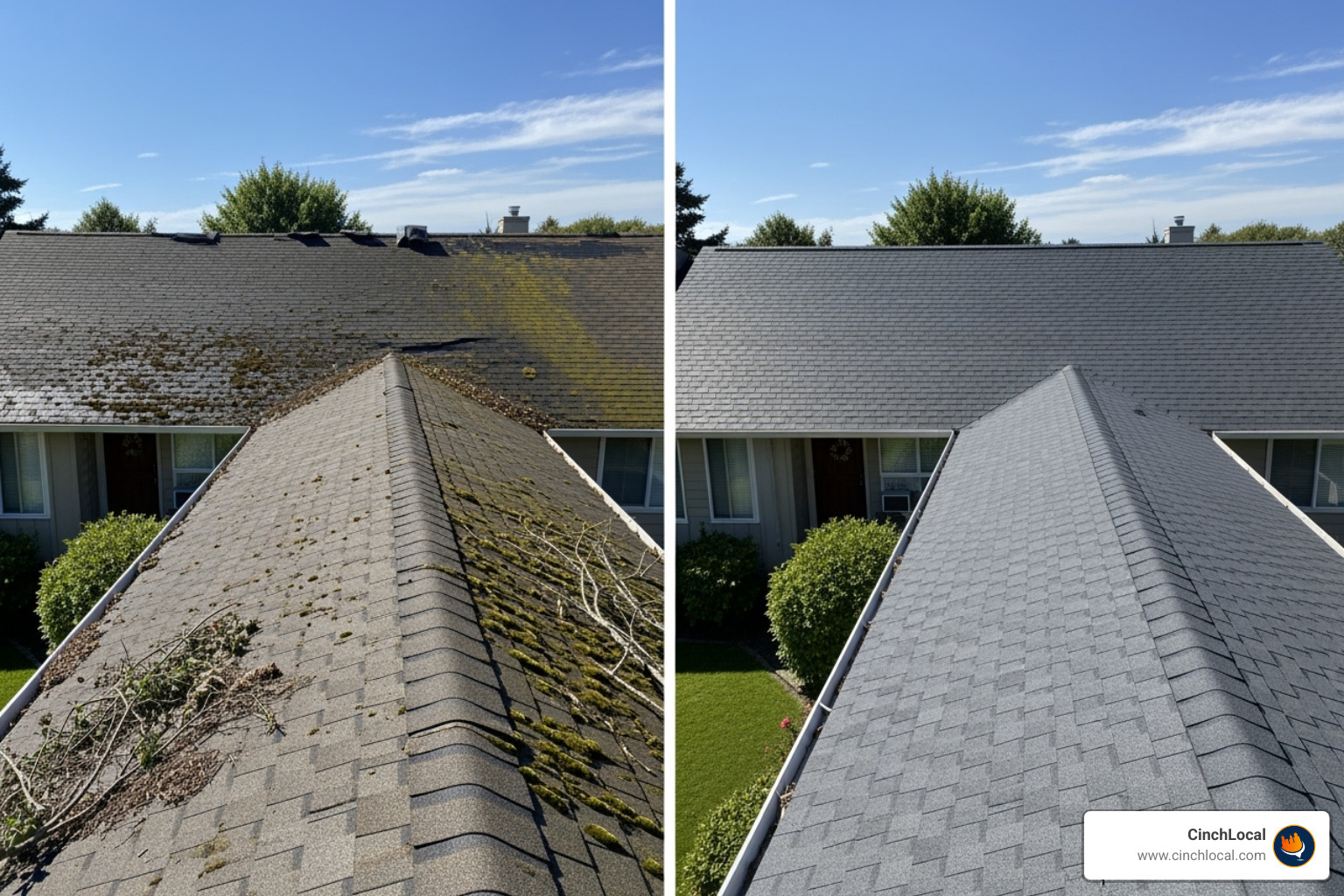
- High-resolution project photos are the star of your website. Invest in professional photography to showcase your craftsmanship and attention to detail.
- Before-and-after galleries are marketing gold. These visual stories demonstrate your technical skills and the dramatic value you bring to every project.
- A consistent logo and color scheme makes your brand memorable when homeowners are comparing multiple contractors. It also signals that you pay attention to detail.
- Team photos add a personal touch. Putting faces to your company name builds immediate trust and rapport with homeowners.
Building Trust with Social Proof and Credentials
The roofing industry has its share of bad actors, making homeowners naturally cautious. Your website must prove you're one of the good ones.
- Customer testimonials are your secret weapon against skepticism. Video testimonials are especially powerful because they're harder to fake and carry serious weight.
- Industry certifications from companies like GAF or Owens Corning prove you've invested in training and have relationships with quality manufacturers.
- Your BBB rating and other third-party reviews provide independent validation of your work. Display these prominently.
- A compelling "About Us" page tells your company story. Share why you got into roofing and what drives your commitment to quality. People hire contractors they can relate to.
For more insights on building trust, check out our guide on Web Designs That Nail It For Construction Companies.
Clearly Defined Service Pages
Don't be vague about what you do. Homeowners aren't roofing experts; they need you to clearly explain your services.
Dedicated pages for residential roofing , commercial roofing , roof repair , storm damage , and gutter installation help both customers and search engines. Each audience has different needs, so tailor the content accordingly. For example, a storm damage page should explain your insurance claim process, while a repair page can help homeowners decide if they need a full replacement.
Each service page should detail the materials and processes you use. Educating visitors builds trust and positions you as the expert they want to hire.
Designing for the User: UX, Mobile, and Performance Best Practices
Your roofing web design might look great, but if it's slow or hard to use, visitors will leave. User experience (UX) is what turns a pretty website into a lead-generating machine. A seamless experience means visitors stay longer and are more likely to call you.
Mastering Mobile-First Design
More than half of your potential customers are browsing on their phones. If your site doesn't work perfectly on mobile, you're losing business.
- Responsive layout for all devices is essential. Your site must look and function beautifully on smartphones, tablets, and desktops.
- Click-to-call phone numbers should be prominent and functional. Don't frustrate a homeowner in an emergency.
- Large, easy-to-tap buttons are crucial for touch screens. Your "Get Free Estimate" button should be big and obvious.
- Simple mobile menus help visitors find what they need without getting lost. Avoid complex dropdowns that are confusing on small screens.
Test your site's mobile-friendliness with Google's tool to see where you can improve.
Ensuring Lightning-Fast Load Times
Studies show 40% of visitors will abandon a site that takes more than three seconds to load. A slow site could cost you a $15,000 roof replacement job.
- Image optimization and compression is critical. Large photo files are the biggest cause of slow sites. You can reduce file sizes dramatically without sacrificing quality.
- Browser caching stores parts of your site on a visitor's device, making return visits much faster.
- A minimalist design is purposeful, not boring. Clean, uncluttered designs look professional and load faster because there's less for browsers to process.
- Fast web hosting is a worthwhile investment. Cheap hosting can cost you thousands in lost leads due to slow speeds or crashes.
Check your website's performance with GTMetrix for detailed insights on what's slowing you down.
Intuitive Navigation and Site Structure
Your website's navigation should be so intuitive that anyone can find what they need without thinking. Good navigation is invisible.
- A logical menu structure with clear paths to Home, Services, About, Blog, and Contact is a must. Use simple language, not industry jargon.
- A sticky header with contact info keeps your phone number visible as visitors scroll, so they don't have to hunt for it when they're ready to call.
- The ultimate goal is a clear path to a quote . Every page should guide visitors toward requesting an estimate with prominent buttons and logical content flow.
For more on creating high-performing sites, read our guide on How to Design a Construction Website That Doesn't Collapse Under Pressure.
Getting Found: SEO and Content in Your Roofing Web Design
A beautiful website is useless if customers can't find it. This is where roofing web design and search engine optimization (SEO) intersect. Your site must be built with SEO in mind from the start.
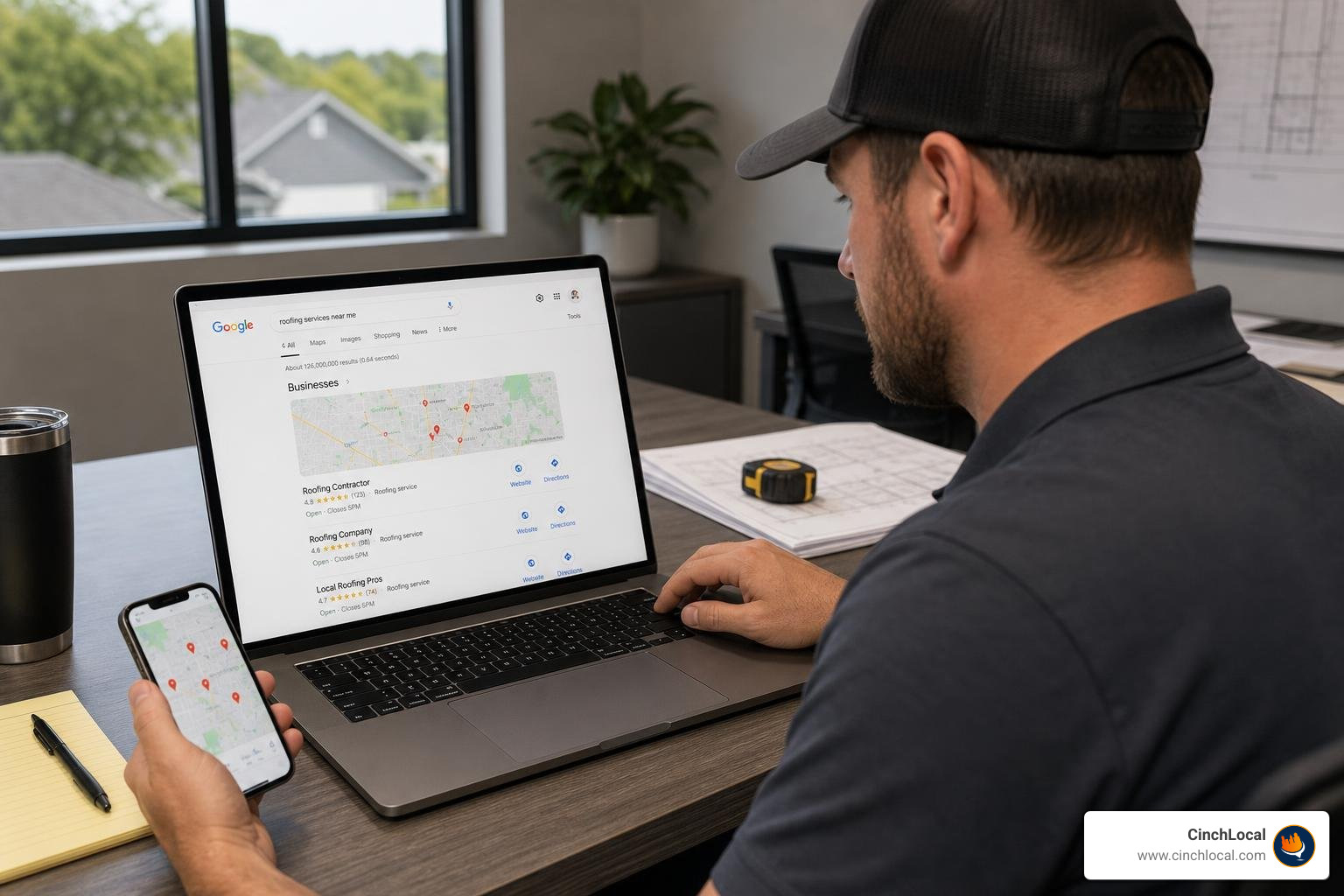
When a homeowner's roof is leaking, they search online for "emergency roof repair near me." Your goal is to appear at the top of those results. This visibility translates directly into calls, quote requests, and new customers.
The Core of Local SEO for Roofers
Local SEO is critical because your customers are in your immediate service area. Your website must be optimized to capture these local searches.
- Google Business Profile optimization is your first priority. This free tool puts you on Google Maps and in local search results. Keep it updated with photos and respond to all reviews.
- NAP consistency means your Name, Address, and Phone number must be identical everywhere online. Inconsistencies confuse search engines and hurt your rankings.
- Location-specific keywords that mention the cities and neighborhoods you serve (for example, "roof repair in Dallas") should be woven naturally into your content to help you compete locally.
- Service area pages are powerful for roofers working in multiple towns. A dedicated page for each location can dramatically increase your visibility across your entire territory.
For detailed guidance, explore our guide on Creating & Optimizing Local Landing Pages for Roofers.
Content that Converts and Builds Authority
Content isn't just for rankings; it's about positioning yourself as the trusted local expert. Helpful, informative content builds trust and generates leads.
- Educational blog posts on topics like "Choosing the Right Shingle Color" or "Signs Your Roof Needs Attention" attract homeowners who are researching options.
- Answering common customer questions on your site saves time and builds trust. Be transparent about warranties, processes, and estimates.
- Project case studies showcase your problem-solving skills. Describe a challenging job and walk readers through your solution to demonstrate your expertise.
The key is creating content that genuinely helps people. Google rewards websites that provide real value, which aligns perfectly with building trust. Learn more from Google's guide on creating helpful, reliable, people-first content.
Building Your Site: Choosing the Right Roofing Web Design Approach
You've decided you need a professional website—great! Now, how do you get it built? Your choice depends on your budget, timeline, and business goals. Let's explore the main options for your roofing company.
Comparing Website Implementation Options
For roofing web design , you have two main paths: template-based solutions or custom development.
Template-based website builders are affordable and quick to launch. The trade-off is limited customization and potential SEO constraints. Your site might look similar to competitors and may be difficult to scale as your business grows.
Custom development requires a higher initial investment ($2,500 - $10,000+) and takes longer, but you get a unique site built for your exact needs. This approach offers complete customization, full SEO control, and the ability to scale with your business.
| Feature | Template-Based Website Builders | Custom Development |
|---|---|---|
| Cost | Lower initial cost (often monthly fees) | Higher initial cost (typically $2,500 - $10,000 for professional build) |
| Customization | Limited to template structure; less unique branding | High degree of customization; unique design and features |
| SEO Control | Can be limited by platform; may require workarounds | Full control; can be optimized for specific, advanced SEO strategies |
| Maintenance | Often simpler, with platform handling core updates | May require more technical expertise or ongoing support from developers |
| Scalability | Can be challenging to scale for complex features or high traffic | Designed to scale with your business needs |
| Launch Speed | Generally faster to get a basic site online | Longer development time, but results in a custom solution |
Most successful roofing contractors eventually outgrow templates as their marketing becomes more sophisticated.
Partnering with a Specialized Roofing Web Design Agency
You're a roofing expert, not a web developer. Partnering with a specialized roofing web design agency brings invaluable industry expertise. They know what homeowners look for, which trust signals work, and how to generate roofing leads.
With the right agency, you get more than a website; you get integrated marketing knowledge that weaves SEO and conversion optimization into your site's design. They build sites that rank on Google and convert visitors into leads.
Most importantly, working with professionals saves you time, allowing you to focus on running your business. Look for an agency with a proven portfolio of results for real roofing contractors.
For a look at what to expect, check out Build It Right: Best Roofer Website Development Agencies Reviewed.
Inspiring Action: Conversion Optimization and Effective CTAs
A stunning, SEO-optimized roofing web design is only effective if it inspires action. The goal is to transform casual browsers into qualified leads. This is where conversion optimization turns your website into a lead-generating powerhouse.
Crafting Irresistible Calls-to-Action (CTAs)
A well-crafted CTA is an invitation that's impossible to ignore. It should speak directly to homeowners, offering solutions and peace of mind.
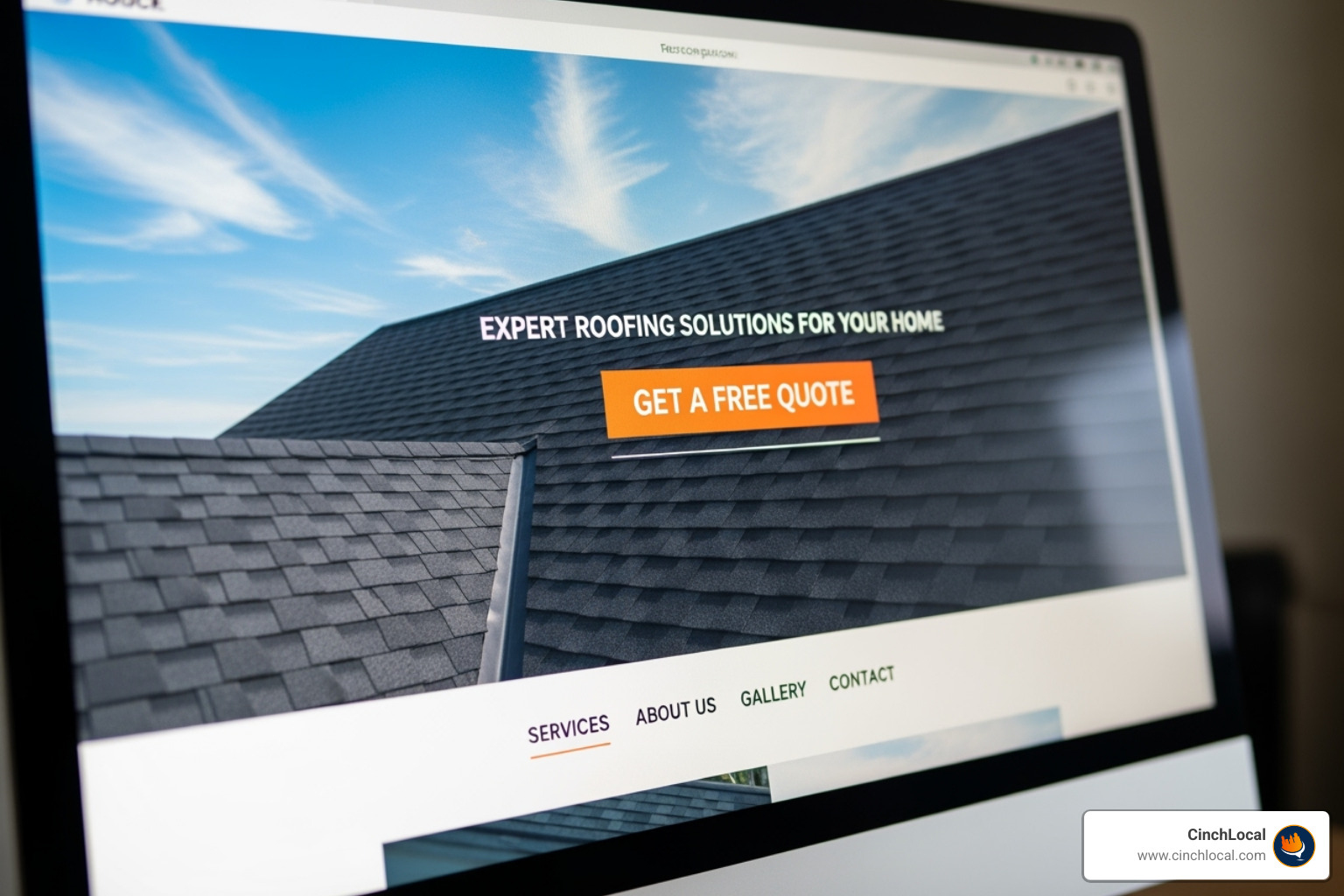
- Use action-oriented text like "Get a Free Estimate" or "Schedule Inspection." This tells visitors exactly what to expect, unlike vague phrases like "Learn More."
- Prominent button placement is key. Your main CTA should be "above the fold" (visible without scrolling), with others placed at natural decision points throughout your content.
- High-contrast colors make your CTA buttons stand out. Choose a color that complements your brand but draws the eye and encourages clicks.
Optimizing Forms and Contact Points
Once someone decides to reach out, the process must be seamless. A complicated form can kill a lead instantly.
- Keep contact forms simple and short . Ask only for essential information: name, phone, email, and a brief project description. Six fields or fewer is ideal.
- Offer multiple contact options . Display your phone number prominently, provide an email address, and consider a chat widget or text message option.
- Ensure forms are mobile-friendly with large input fields and easy-to-tap buttons, as many users will be on their smartphones.
- Use spam protection like CAPTCHA to keep your inbox focused on genuine leads, not junk.
Frequently Asked Questions about Roofing Web Design
Roofing contractors often ask the same questions about building effective websites. Here are the answers to the most common concerns.
How much does a professional roofing website cost?
A professional roofing website typically costs between $2,500 and $10,000 . The final price depends on factors like site size (a 5-page site vs. a 30-page site), custom features (like estimate calculators or CRM integrations), and content creation (copywriting, photography, video).
Think of your website as your hardest-working employee, generating leads 24/7. A quality roofing web design is an investment that pays for itself many times over.
How many pages should my roofing website have?
The ideal number of pages depends on your business goals. A basic informational site needs at least 5-10 pages : Home, About Us, Services, Contact, and a Blog.
However, to dominate your local market, you'll want 15-30+ pages . This includes dedicated service pages for every offering (residential, commercial, storm damage, etc.) and location-specific pages for each city you serve. These are crucial for local SEO success. Project galleries and detailed testimonial pages also add significant value.
Can a new website design help me rank on Google?
Yes, but it's not a magic wand. A professional roofing web design improves key ranking factors like site speed , mobile-friendliness , and user experience , all of which Google values.
However, design must be paired with a consistent SEO strategy to achieve top rankings. This includes ongoing keyword research, quality content, link building, and Google Business Profile optimization. A beautiful website with poor SEO is like a storefront with no road leading to it.
If your current site isn't generating leads, our guide on Diagnosing Your Roofing Website's Ranking Woes can help identify the problem.
Conclusion
Your website is more than an online brochure—it's your 24/7 salesperson , working to attract and convert leads. The pillars of successful roofing web design are clear: building trust, prioritizing user experience (especially on mobile), optimizing for local search, and converting visitors with strong calls-to-action.
A professional, high-performing website is a non-negotiable asset for growth in today's competitive roofing industry. It's the foundation for all your digital marketing efforts. Every day without an optimized online presence is a day your competitors are capturing leads that could have been yours.
Generic web designers don't understand the roofing industry's unique challenges. You need a partner who knows the difference between GAF certification and a basic warranty and can craft content that speaks directly to homeowners' concerns.
At CinchLocal, we create high-performance websites exclusively for roofers. We build digital platforms that don't just look good—they drive real, measurable results for your business.
Ready to turn your online presence into a lead-generating powerhouse? Get your blueprint to online visibility with our expert roofing SEO services and find how the right digital strategy can lift your business.
Want Us to Uncover Hidden 'Footprint Gaps' And Critical Blind Spots That’s Quietly Draining Calls, Jobs, and Profits?
Simply Fill Out The Form Below:
What If You Could Stop Wasting $30K+ a Year on Dead-End Marketing - And Finally Become the Go-To Roofer in Your City?
Other Helpful Articles You Might Enjoy