
How to Master Online Advertising for Roofers and Win More Jobs

Cary Byrd // Founder of CinchLocal
The Core Pillars of Online Advertising for Roofers
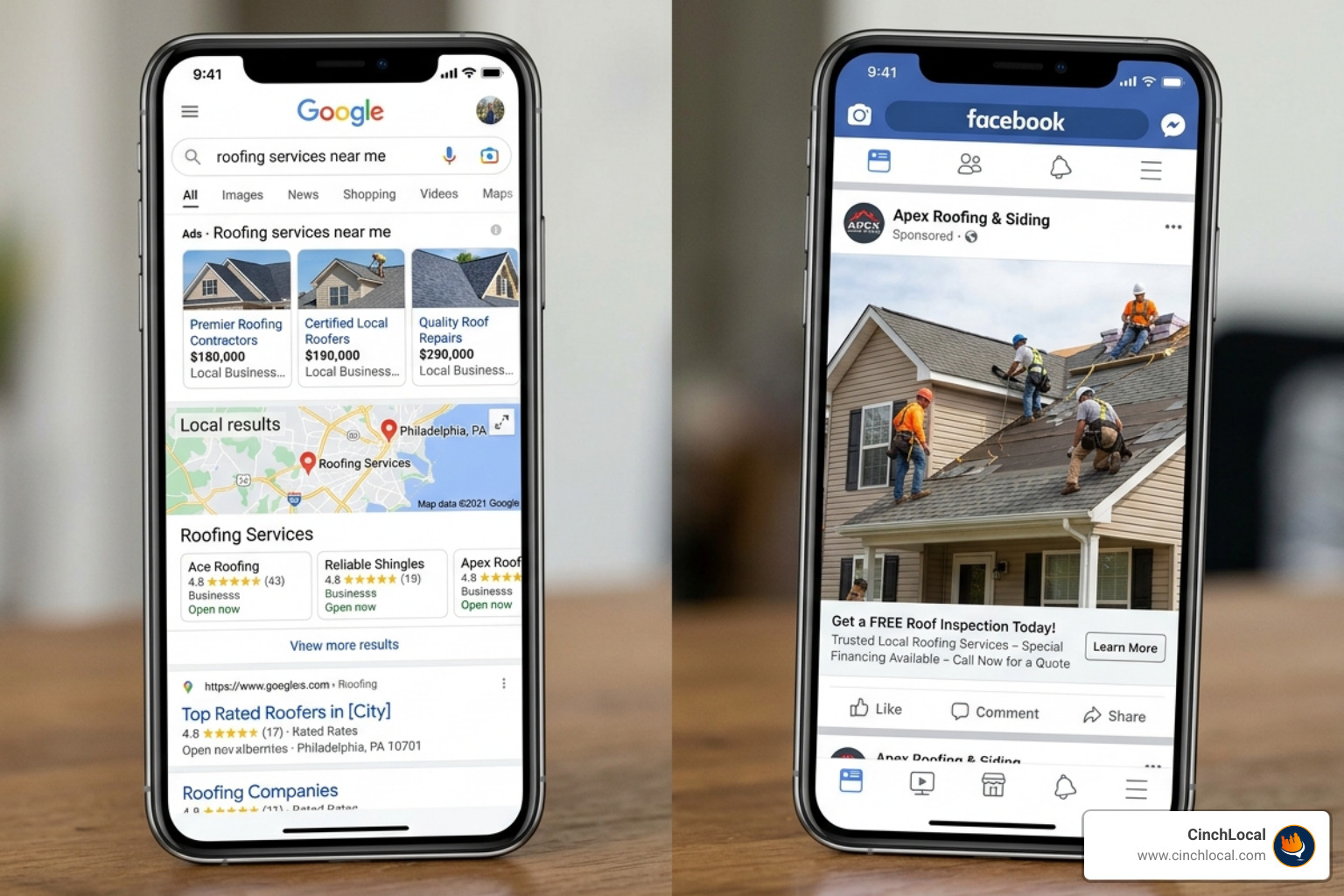
To dominate your local market, you cannot rely on a single source of leads. The most successful contractors use a multi-channel approach that balances search intent (people looking for you) with brand awareness (people getting to know you). When we talk about online advertising for roofers, we are looking at a system where different platforms handle different stages of the customer journey.
According to the BrightLocal 2023 Consumer Review Survey, 87% of consumers used Google to evaluate local businesses in 2022. This makes Google the heavyweight champion of roofing lead generation. However, social media plays a massive role in "neighborhood FOMO"—when a homeowner sees you installing a beautiful new roof down the street via a Facebook ad, they are much more likely to call you when their own shingles start to curl.
If you want to stop chasing every lead and start attracting them, you need to understand how to master roofing lead generation by focusing on high-intent traffic.
High-Intent Keywords for Online Advertising for Roofers
Keywords are the foundation of your Google Ads strategy. Not all clicks are created equal. If someone searches "how to fix a shingle," they are looking for a DIY tutorial. If they search "emergency roof repair near me," they have a credit card in hand and a leak in their living room.
To maximize your ROI, focus your budget on "buying mode" keywords:
- Service-Specific: "Roof replacement cost," "metal roofing contractors," "flat roof repair."
- Urgency-Based: "Emergency roofer," "leaking roof repair," "storm damage inspection."
- Location-Based: "Roofing company in [City]," "best roofer [Zip Code]."
Understanding Costs and Budgeting for Online Advertising for Roofers
One of the most common questions we hear is: "How much does this cost?" In the roofing industry, Google Ads Cost-Per-Click (CPC) typically ranges from $2 to $15 , though in highly competitive markets like Nashville or Los Angeles, it can climb much higher.
The average Cost-Per-Lead (CPL) for roofing generally falls between $50 and $150 . While that might seem high compared to shared lead services, these are exclusive leads—homeowners calling you directly, not five of your competitors. A solid starting budget for a new campaign is often $1,500 to $3,000 per month to gather enough data to optimize for a high ROI.
Maximizing ROI with Google Ads and Local Service Ads (LSAs)
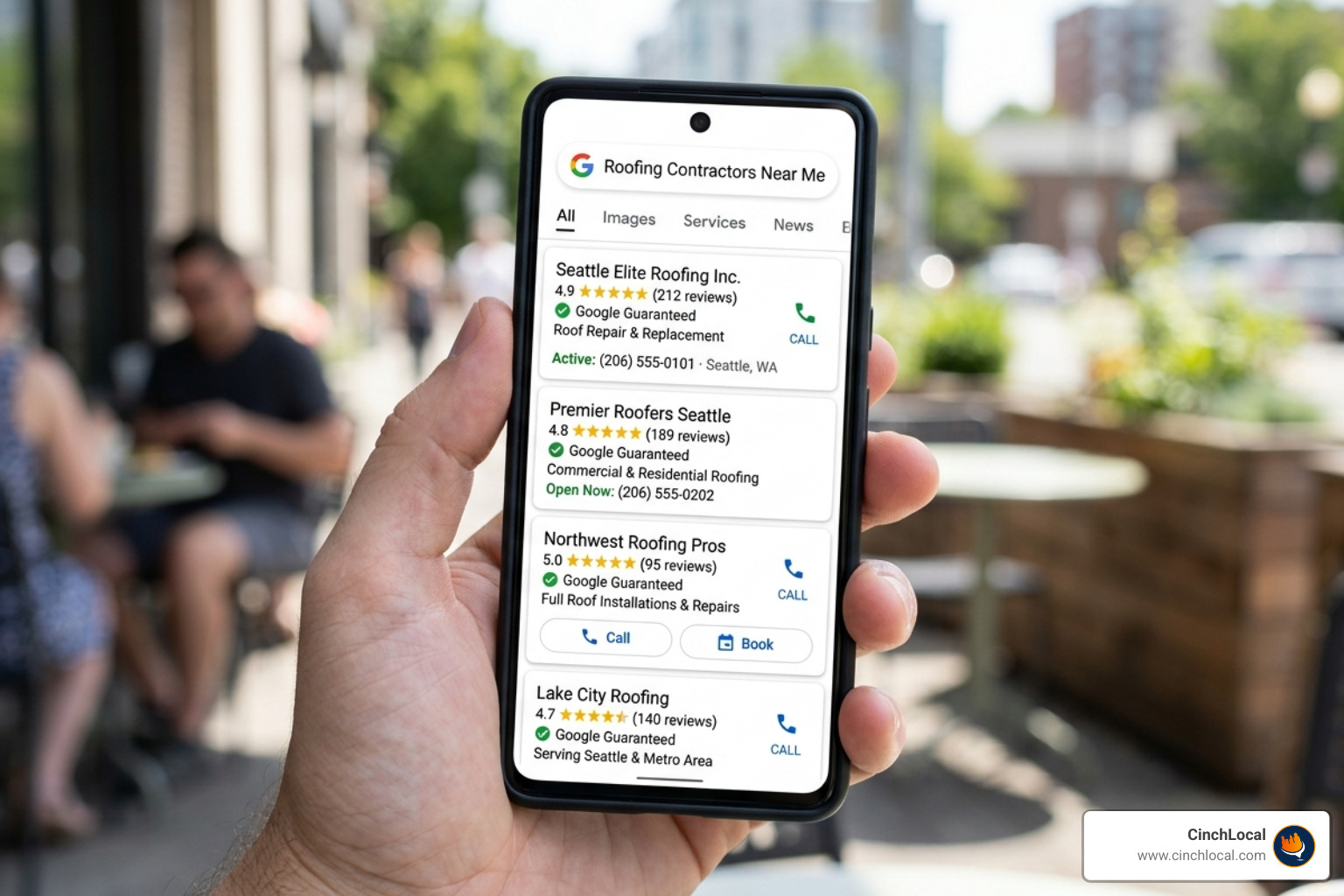
Google offers two primary ways to "pay to play" at the top of the search results: standard Google Ads (PPC) and Local Service Ads (LSAs).
LSAs are the "Google Guaranteed" ads that appear at the very top of the page. These are incredibly powerful because you pay per lead , not per click. If a homeowner calls you through the ad, you pay. If they just look at it, you don't. This helps eliminate the "fat finger" clicks that can waste a standard PPC budget.
| Feature | Google Search Ads (PPC) | Local Service Ads (LSAs) |
|---|---|---|
| Payment Model | Pay per click | Pay per qualified lead |
| Placement | Top/Bottom of search results | Absolute top of page |
| Trust Signal | Ad Extensions | Google Guaranteed Badge |
| Control | High (Keywords, Bidding) | Low (Google manages targeting) |
| Setup | Complex | Simple (Requires background check) |
For more details on these specialized ads, check out Google Ads Help - About Local Services Ads.
Setting Up a Winning Google Ads Campaign
To win at Google Ads, you must move beyond "Express" mode and use "Expert" mode for full control. A winning setup involves:
- Manual CPC Bidding: Don't let Google’s AI spend your money too fast initially. Start with manual bids to see which keywords actually convert.
- Negative Keywords: This is the "secret sauce." By adding terms like "jobs," "salary," "DIY," or "cheap" as negative keywords, you prevent your ads from showing to people who aren't going to hire you.
- Ad Extensions: Use call extensions, location extensions, and sitelinks. These make your ad larger and more clickable, improving your Quality Score and lowering your cost per click.
If you're wondering how to generate leads for a roofing company without wasting thousands on bad clicks, these technical settings are where the battle is won.
Dominating Local Search with Google Maps
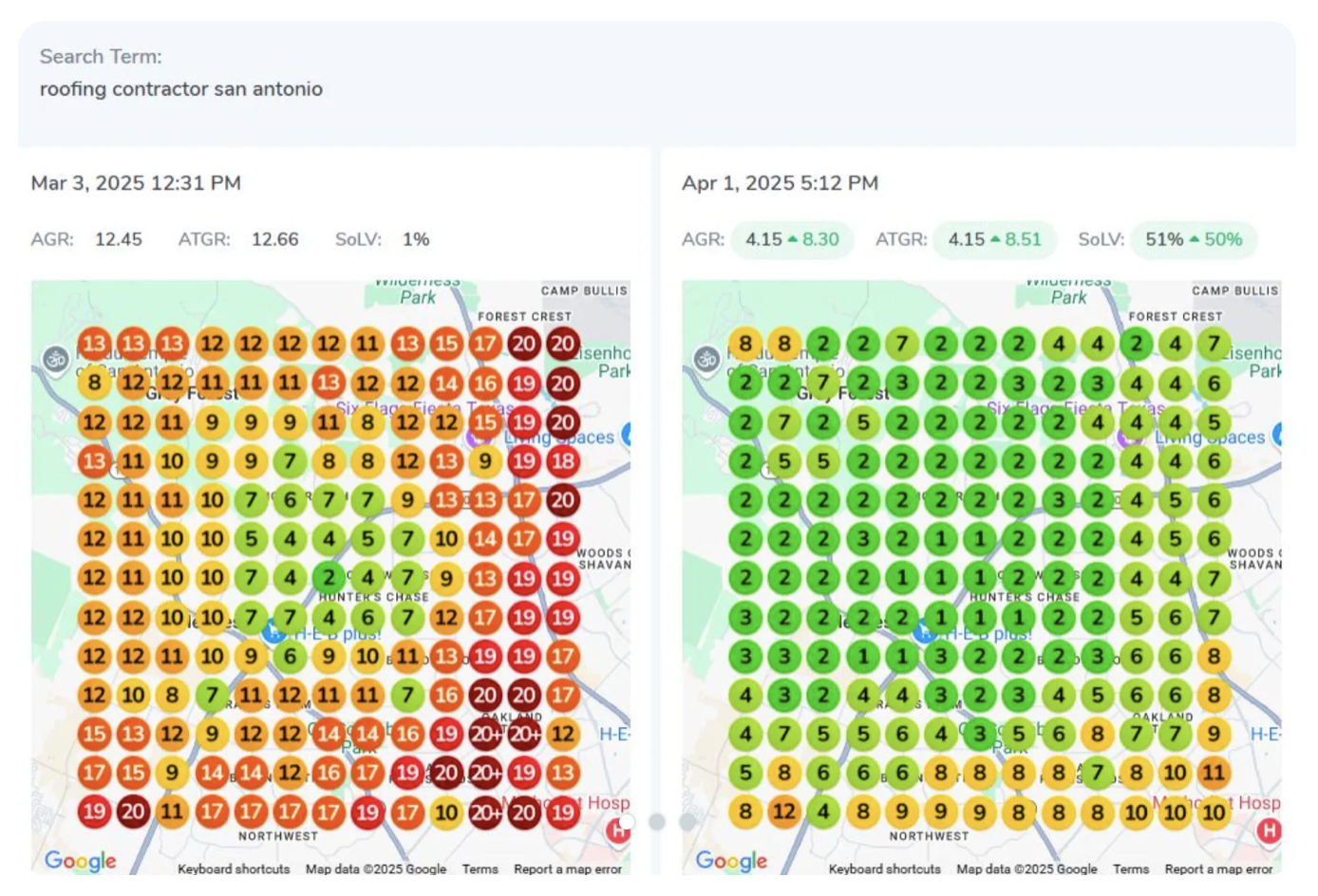
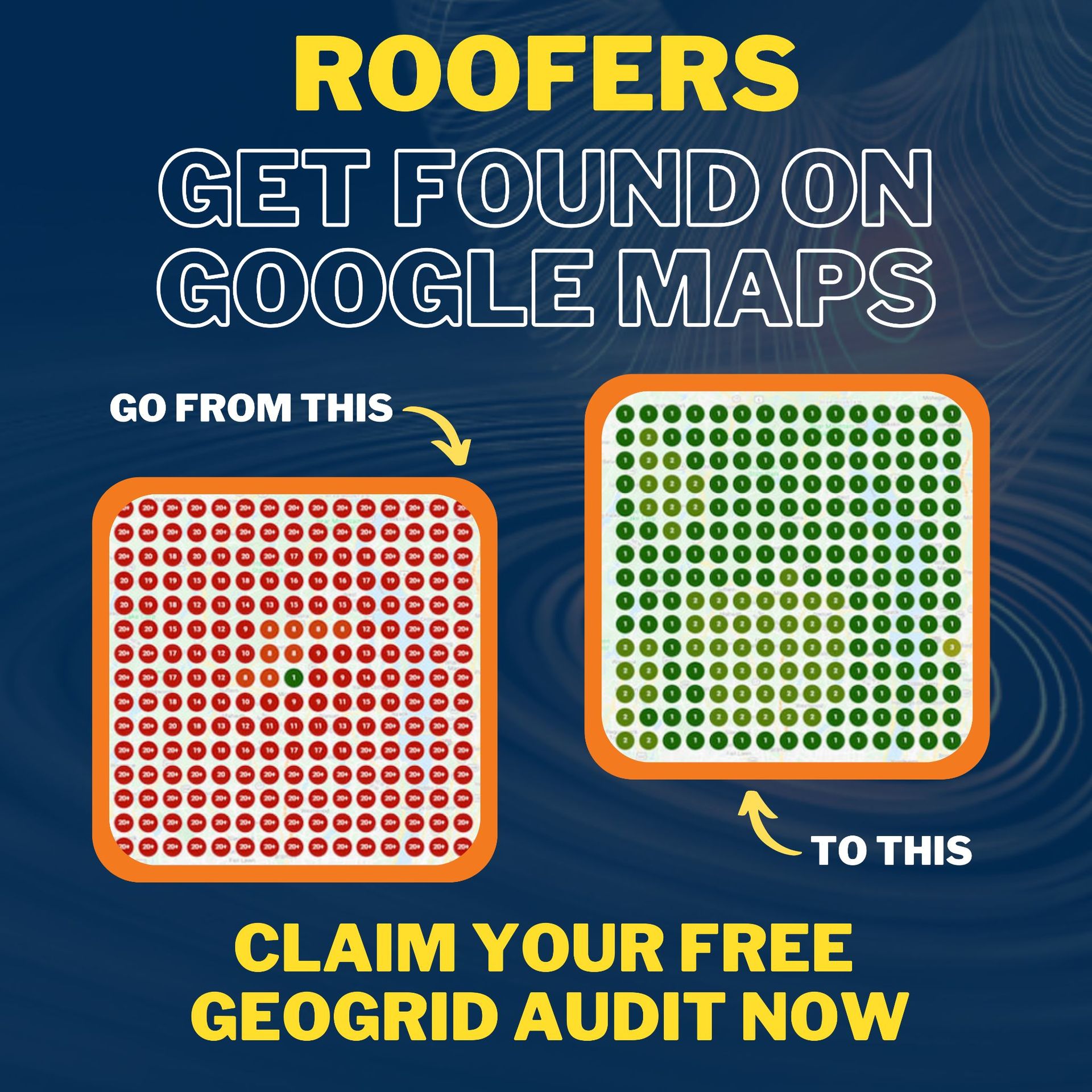
Advertising isn't just about the top of the page; it’s about the Map Pack. Google now allows you to run "Local Search Ads" directly within Google Maps. This puts your business at the top when someone searches for a roofer while driving or looking at their neighborhood map.
Combining paid Map ads with Google Maps Local SEO for Roofers creates a "surround sound" effect. When a customer sees you in the LSAs, the Search Ads, and the Map Pack, your authority is undeniable. You can view our proven results to see how this visibility translates into actual booked jobs.
Advanced Tactics: Geo-fencing and Storm Response Strategies
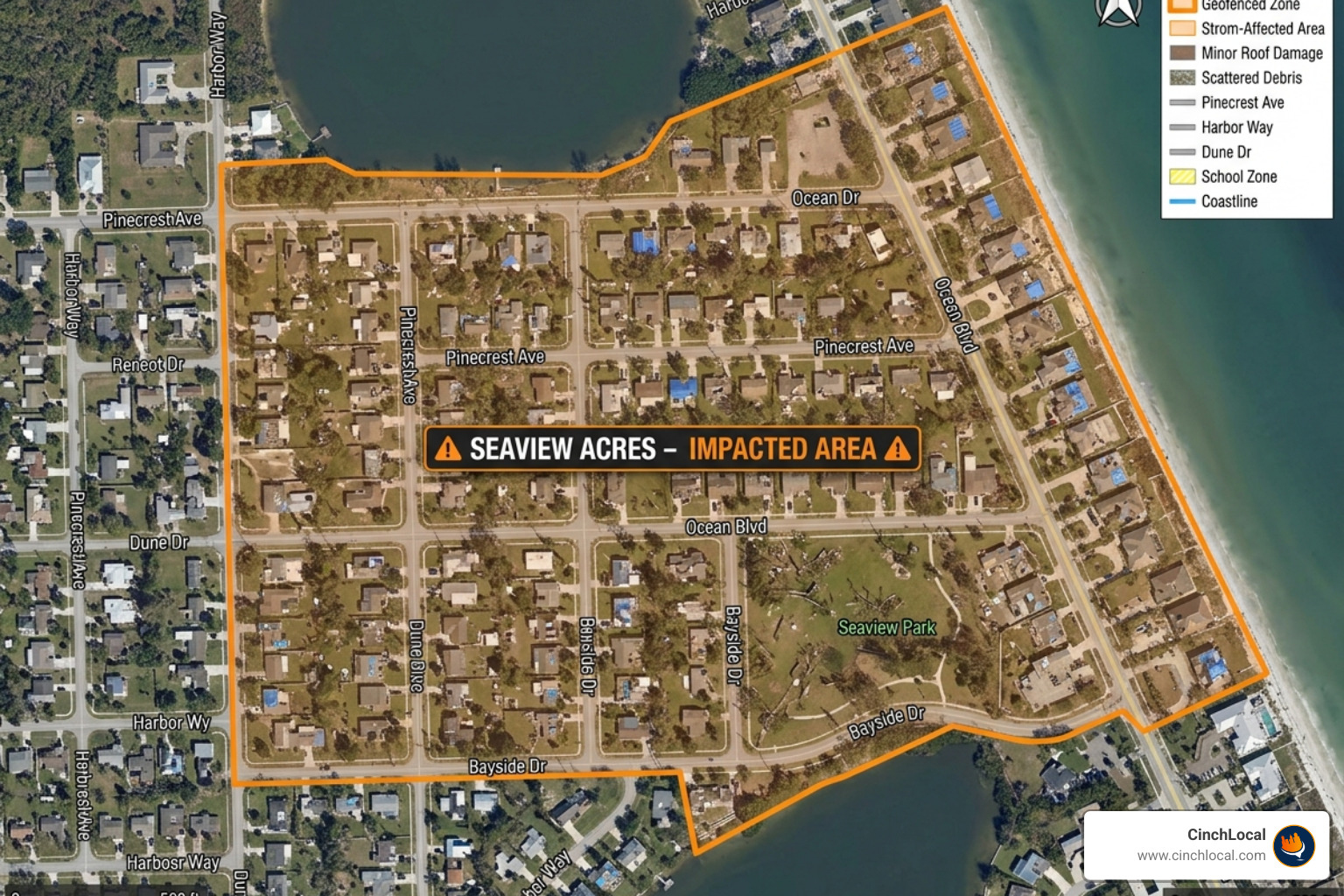
Roofing is a hyperlocal business. Geo-fencing allows you to draw a digital boundary around a specific area—like a neighborhood hit by a hailstorm—and serve ads only to people inside that boundary.
This is a game-changer for storm chasing. Instead of just knocking on doors, you can blanket a storm-damaged zip code with digital ads saying, "We’re in [Neighborhood] today providing free hail damage inspections." This builds trust before you even ring the doorbell. You can even use US Census Data to target high-income areas where homeowners are more likely to opt for premium materials like slate or metal.
Leveraging Facebook Ads for Roofing Awareness
While Google is for people looking for a roofer, Facebook is for people who need a roofer but haven't started looking yet. Facebook is a visual platform, making it the perfect place for:
- Before-and-After Photos: Nothing sells a roof like a side-by-side comparison of a moldy old roof vs. a beautiful new architectural shingle install.
- Video Testimonials: A 30-second clip of a happy homeowner can do more for your brand than a $5,000 billboard.
- Retargeting: Ever visit a website and then see their ads everywhere? That’s retargeting. It keeps your roofing company top-of-mind for homeowners who visited your site but didn't call yet.
Running Roofing Facebook Ads is about building a local reputation so that when the next storm hits, you are the first name they think of.
Seasonal Advertising and Emergency Response
Your online advertising for roofers strategy must change with the weather.
- Spring/Summer: Focus on full replacements and "get ready for storm season" inspections.
- Post-Storm: Pivot 100% of the budget to emergency repair and insurance claim assistance.
- Winter: Shift messaging to ice dam prevention and attic insulation to keep the phone ringing during the slow months.
Using Local Service Area Ads For Roofers during these peak times ensures you are capturing the surge in demand immediately.
The Technical Foundation: Landing Pages and Conversion Tracking
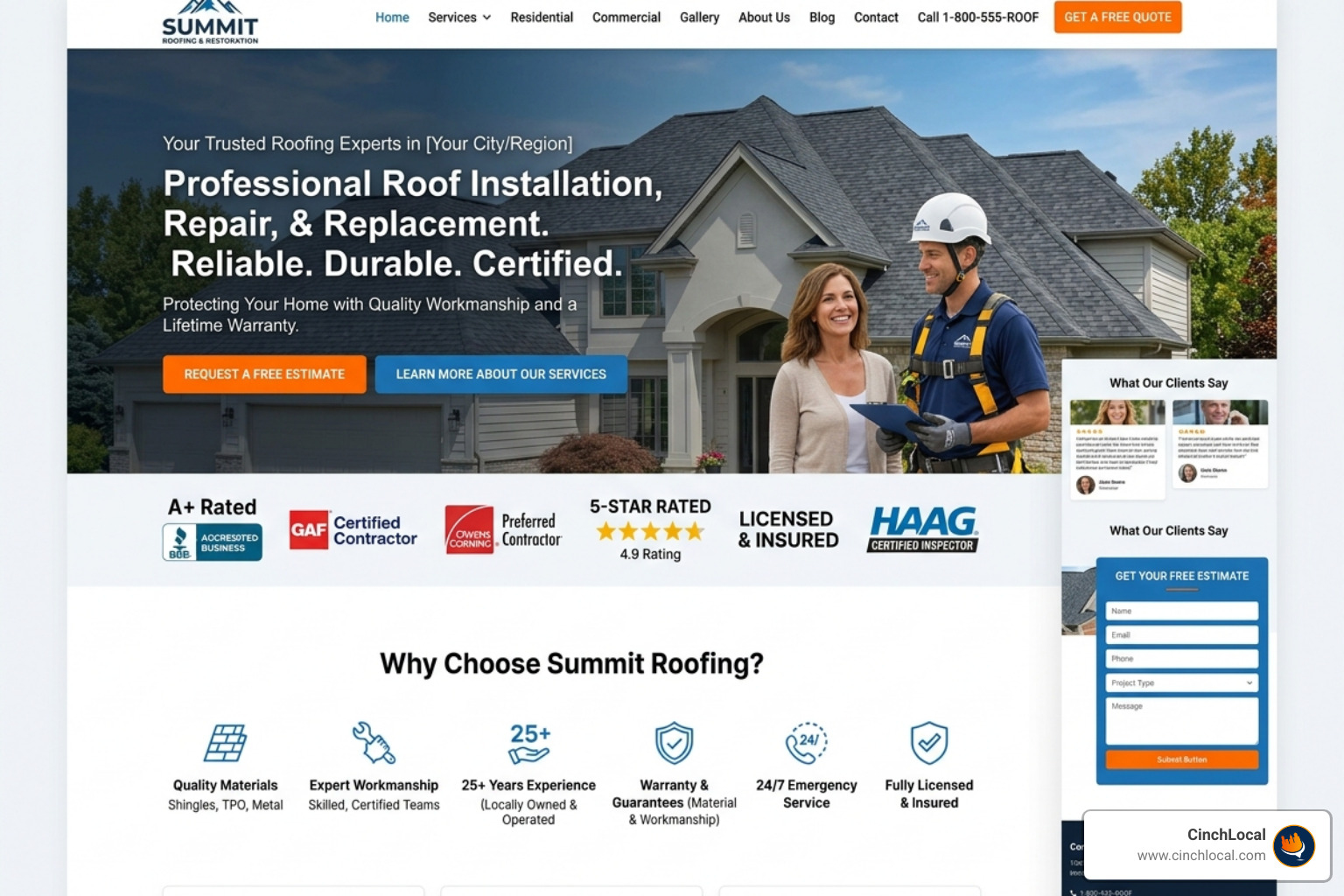
You can have the best ads in the world, but if you send that traffic to a cluttered, slow-loading homepage, you are burning money. 53% of mobile visitors will leave a site if it takes more than 3 seconds to load.
A high-converting roofing landing page needs:
- A Clear Headline: Match the ad they clicked (e.g., "Emergency Roof Repair in Columbus").
- Trust Signals: Badges for BBB, GAF/Owens Corning certifications, and 5-star review counts.
- A Simple Form: Don't ask for their life story. Name, phone, and zip code are usually enough.
- Click-to-Call: Most roofing searches happen on mobile. Make the phone number a giant, clickable button at the top of the page.
Why Conversion Tracking is Non-Negotiable
If you don't track your leads, you're just "spraying and praying." You need to know exactly which keyword resulted in a $20,000 roof replacement. Essential tools include:
- CallRail: To track which ads generated phone calls.
- Google Analytics 4 (GA4): To see how users interact with your landing pages.
- CRM Integration: Connecting your ads to a CRM like Acculynx or JobNimbus to track a lead from the first click to the final invoice.
Avoiding Common Advertising Mistakes
We see roofers make the same three mistakes constantly:
- Using "Broad Match" keywords: This leads to paying for searches like "free roof shingles" or "roofing jobs."
- Ignoring Negative Keywords: You end up paying for clicks from people looking for your competitors.
- Slow Response Times: If you don't call a lead back within 5 minutes, your chances of closing them drop by 80%.
Integrating Multi-Channel Marketing for Long-Term Growth
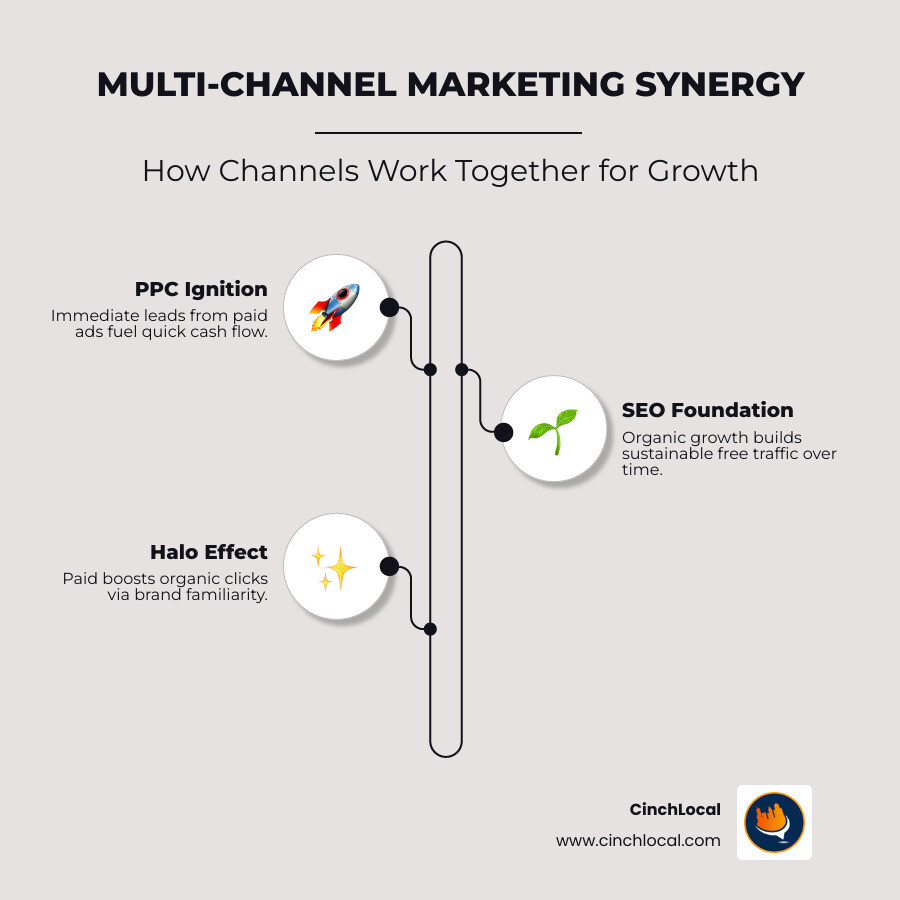
The "Halo Effect" is real. When you run paid ads, your organic search clicks often increase as well because people see your brand name multiple times. This build-up of brand authority is what separates the $1M-a-year roofer from the $10M-a-year roofer.
Combining PPC with Organic SEO
PPC (Pay-Per-Click) is like a faucet—you turn it on, and leads flow instantly. SEO (Search Engine Optimization) is like a fruit tree—it takes time to grow, but eventually, it provides "free" leads for years. The best strategy is to use PPC to generate immediate cash flow while investing in SEO for long-term sustainability. This combination lowers your average Cost-Per-Lead over time.
Scaling Your Roofing Business with Specialized Help
Managing online advertising for roofers is a full-time job. Between monitoring bid adjustments, updating negative keyword lists, and testing new ad copy, most contractors find they simply don't have the time to do it right while also running crews.
Choosing a specialized agency that understands the difference between a TPO repair and an EPDM install is crucial. Generalist agencies don't understand the urgency of a storm or the nuances of insurance supplements.
Ready to stop wasting money on clicks and start winning more jobs? Schedule a consultation with CinchLocal today to see how our Roofer Footprint Expansion System can scale your revenue.
Frequently Asked Questions about Roofing Advertising
How much does Google Ads cost for roofing services?
Most roofers should expect to pay between $15 and $50 per click for high-intent keywords. A typical monthly budget ranges from $2,000 to $5,000, depending on your service area and how many leads you need to hit your sales goals.
What is the difference between Google Ads and Local Service Ads?
Google Ads (PPC) uses a bidding system where you pay every time someone clicks your ad. Local Service Ads (LSAs) are a pay-per-lead model where you only pay when a homeowner actually calls or messages you through the platform.
How long does it take to see results from online advertising?
The beauty of online advertising is speed. While SEO can take 6 months to kick in, Google Ads and LSAs can start generating phone calls within 24 to 48 hours of your campaign going live.
Conclusion
Mastering online advertising for roofers is the single most effective way to take control of your company's growth. By combining the high-intent power of Google Ads, the trust of Local Service Ads, and the neighborhood reach of Facebook, you create a lead-generation machine that works even when you're on a roof.
At CinchLocal, we don't just "run ads." We use our Roofer Footprint Expansion System to dominate your local market, ensuring you get exclusive, high-quality leads that turn into profitable jobs. Don't leave your growth to chance or unreliable referrals. Contact us today to master your online advertising strategy and start winning more jobs in your service area.
Want Us to Uncover Hidden 'Footprint Gaps' And Critical Blind Spots That’s Quietly Draining Calls, Jobs, and Profits?
Simply Fill Out The Form Below:
What If You Could Stop Wasting $30K+ a Year on Dead-End Marketing - And Finally Become the Go-To Roofer in Your City?
Other Helpful Articles You Might Enjoy