

Why Energy Efficient Roofing California is the Hottest Trend for Cool Buildings

Cary Byrd // Founder of CinchLocal
Why Energy Efficient Roofing California is the Hottest Trend for Cool Buildings
Energy efficient roofing California is no longer just a code requirement — it's a major business opportunity for roofing contractors across the state. If you're a roofer looking to win more jobs, here's what California homeowners and building owners need right now:
Quick Answer: What Is Energy Efficient Roofing in California?
| Question | Answer |
|---|---|
| What is it? | Roofing that reflects sunlight and releases heat to reduce cooling costs |
| Who requires it? | California Title 24 mandates it for new builds and re-roofs in most climate zones |
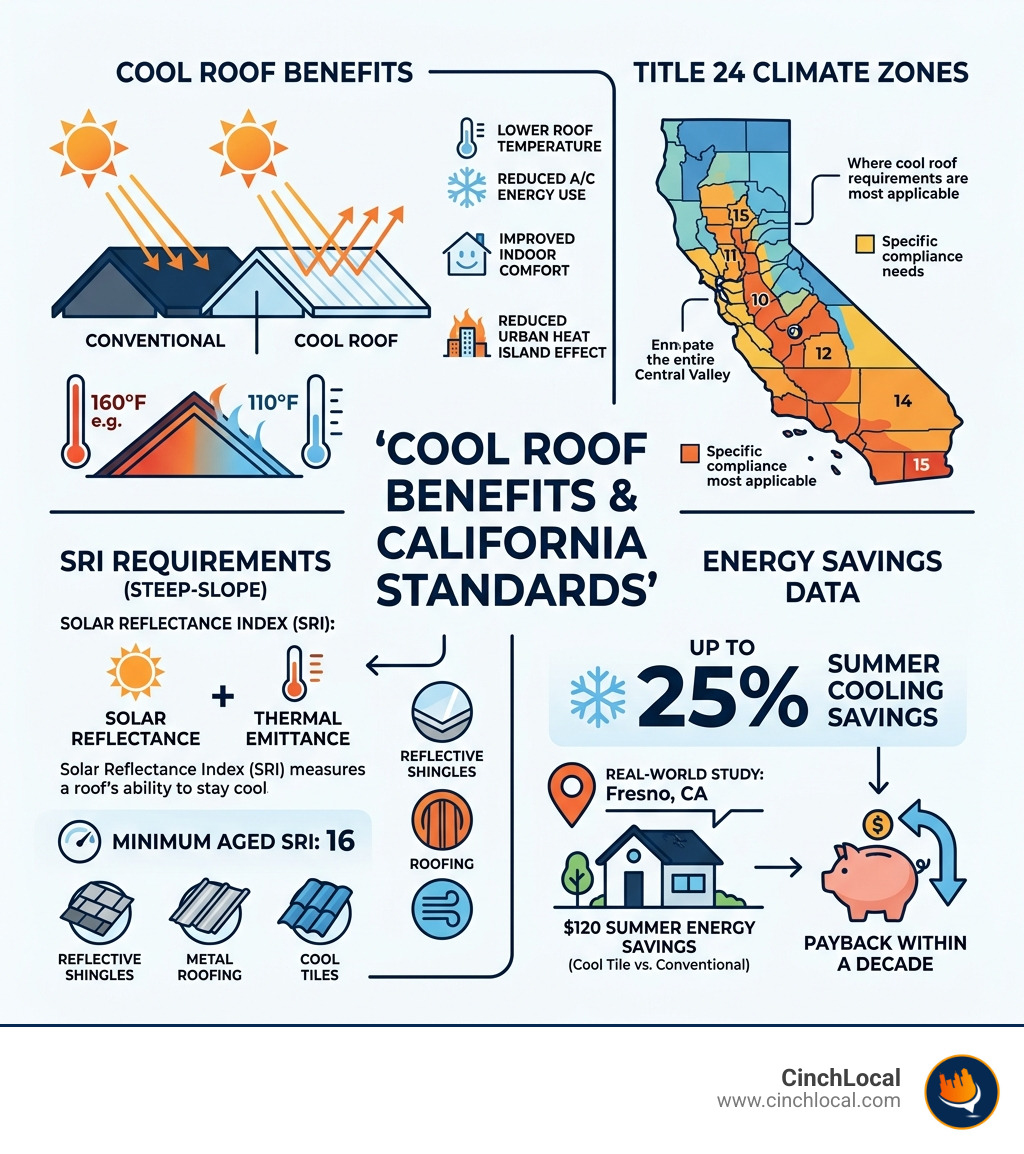
| Which zones apply? | Primarily climate zones 10-15 (including the entire Central Valley) |
| Key metrics | Aged solar reflectance ≥ 0.20, thermal emittance ≥ 0.75, or SRI ≥ 16 (steep-slope) |
| How much can it save? | Up to 25% on summer cooling costs — often paying back within a decade |
| What materials qualify? | Reflective shingles, metal roofing, cool tiles, silicone coatings, TPO membranes |
California summers are brutal. In the Central Valley, dark asphalt roofs routinely hit 150-170°F on peak days, forcing air conditioners to work overtime. A real-world study in Fresno found that a cool tile roof saved a homeowner $120 in energy costs over a single summer compared to an identical home with a conventional dark roof.
That's a tangible, sellable result — and it's exactly the kind of value proposition that wins re-roofing contracts. Contractors who understand how to market these high-value services are the ones capturing that demand. If you're ready to stop chasing low-margin repairs and start winning high-ticket energy upgrades, you need a strategy that positions you as the local authority.
I'm Cary Byrd, CEO of CinchLocal, a roofing marketing agency that has helped contractors across the country — including high-growth markets in California — turn technical expertise like energy efficient roofing California into a steady stream of pre-sold leads. In the sections below, I'll break down exactly what you need to know about cool roof standards, materials, ROI, and how to position your business to win more of this fast-growing work.
Understanding Title 24 and Energy Efficient Roofing California Standards
For roofing contractors operating in the Golden State, Title 24 is the playbook we all have to follow. Specifically, Part 6 of the California Building Standards Code sets the bar for the 2022 Energy Code. These standards aren't just suggestions; they are mandatory requirements designed to reduce the state's energy consumption and greenhouse gas emissions.
The core of energy efficient roofing California compliance lies in two scientific measurements: Solar Reflectance (SR) and Thermal Emittance (TE). Solar reflectance is the roof's ability to bounce solar energy back into the atmosphere, while thermal emittance is its ability to radiate absorbed heat. When a roof does both well, it stays significantly cooler than traditional materials.
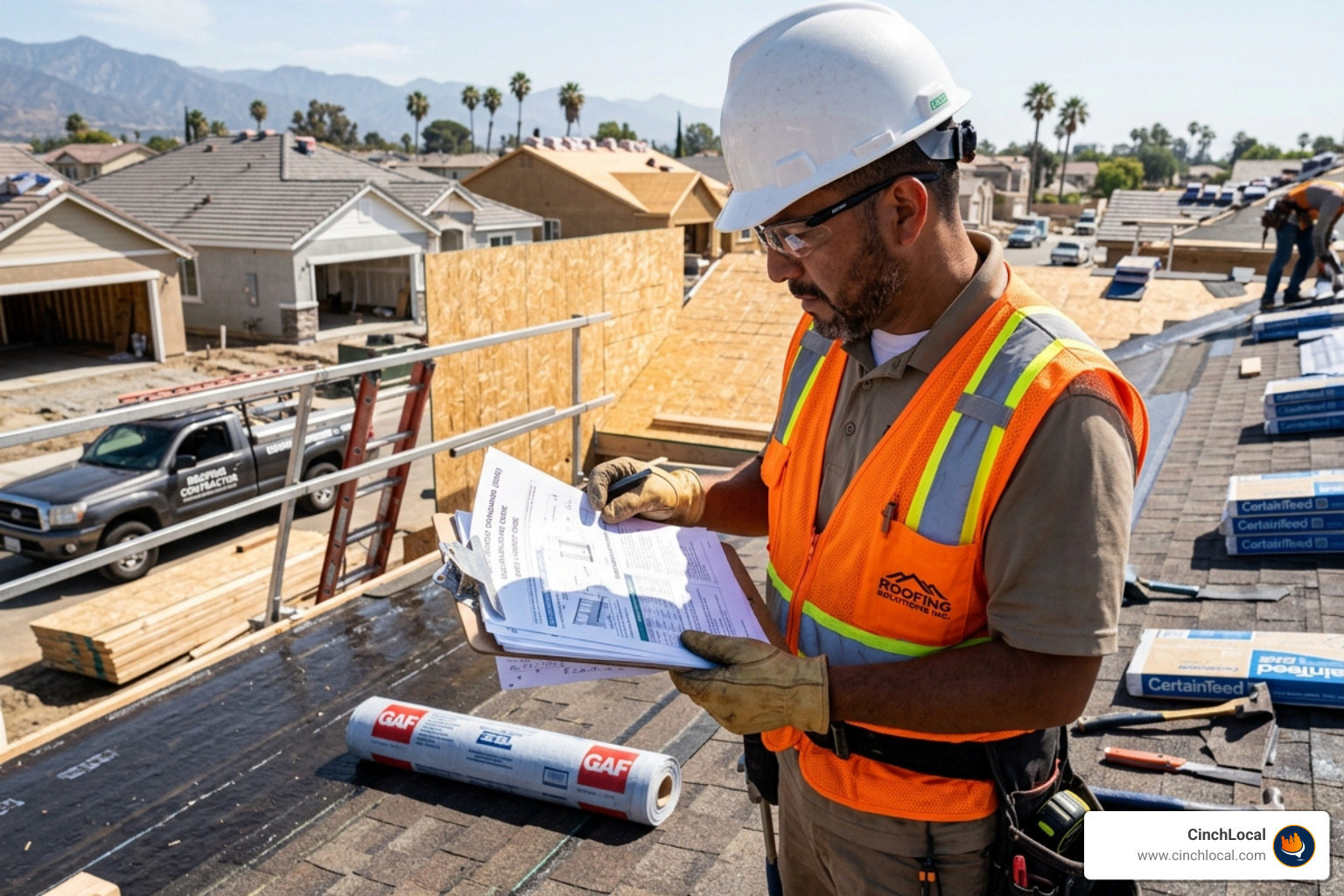
To ensure these products actually perform as advertised, the Cool Roof Rating Council (CRRC) acts as the sole authority for certifying roofing materials, as detailed in the California Energy Commission's compliance documents. As a contractor, you must use CRRC-rated products to meet Title 24 standards. Understanding these ratings is just as critical as knowing the attic ventilation and energy upgrade playbook to ensure the entire building envelope works efficiently.
Solar Reflectance Index (SRI) and Compliance Metrics
The Solar Reflectance Index (SRI) is a value that combines both reflectance and emittance into a single score. Think of it as a "coolness" scale from 0 to 100. A standard black surface has an SRI of 0, while a particularly reflective white surface can exceed 100.
Under the current 2022 standards:
- Steep-Slope Roofs (Pitch ≥ 2:12): Generally require a minimum aged solar reflectance of 0.20 and a thermal emittance of 0.75, or a minimum SRI of 16.
- Low-Slope Roofs (Pitch < 2:12): Face stricter standards because they absorb more direct sunlight. These typically require an aged solar reflectance of 0.63 and thermal emittance of 0.75, or an SRI of 75.
Using "aged" values is important because roofs naturally lose some reflectivity over time due to dirt and weathering. The CRRC provides 3-year aged ratings to give a realistic picture of long-term performance.
Climate Zone Mandates for Residential and Commercial Projects
California is divided into 16 distinct climate zones, and energy efficient roofing California requirements vary wildly depending on where your project is located.
- Zones 10-15: This includes the Central Valley and Southern California inland areas (like Riverside and San Bernardino). These zones have the strictest mandates because they experience the highest cooling loads.
- Local Ordinances: Some cities go even further. For example, the Los Angeles cool roof ordinance requires an SRI value of 20 for all new construction and reroof applications, which is higher than the state baseline for steep-slope homes.
- The 50% Rule: For existing buildings, cool roof requirements are usually triggered when more than 50% of the roof area is being replaced or altered within a 12-month period.
High-Performance Materials for Energy Efficient Roofing California Compliance
Gone are the days when a "cool roof" had to be a flat, white commercial surface. Today, manufacturers offer a massive variety of materials that look traditional but perform like high-tech mirrors.
Selecting Materials for Energy Efficient Roofing California Compliance
When you are consulting with a homeowner, it's important to offer options that balance aesthetics with performance:
- Reflective Shingles: These use specially coated granules to reflect UV rays. They can reduce roof temperatures by 20 to 40 degrees compared to standard dark shingles. Brands like Owens Corning and GAF offer collections that meet SRI 16 or even SRI 20 standards.
- Metal Roofing: Reflective metal is a powerhouse in the Central Valley. It can reduce cooling costs by 20% to 25% and boasts a 40-70 year lifespan.
- Cool Clay and Concrete Tiles: These have high thermal mass, meaning they take a long time to heat up. When treated with reflective glazes, they are incredibly effective.
- Silicone and Acrylic Coatings: For flat or low-slope roofs, applying a high-solids silicone coating is a cost-effective way to achieve an SRI of 75+ without a full tear-off. You can learn more about these options in the complete guide to multi ply rubber roofing.
Alternative Compliance: Battens, Radiant Barriers, and Insulation
Title 24 offers "trade-offs" or exceptions that can be a lifesaver for specific architectural styles.
- Batten Installation: If you install a roof over battens (creating a 1-inch airspace), the roof is often exempt from specific color requirements because the airflow acts as a thermal break.
- Radiant Barriers: Installing a radiant barrier in the attic can sometimes offset the need for a highly reflective roof surface in certain zones.
- Additional Insulation: Boosting attic R-value can also serve as a compliance path.
| Material Type | Typical SRI | Lifespan | Best Use Case |
|---|---|---|---|
| Reflective Asphalt Shingles | 16 - 25 | 15-25 Years | Residential Reroof |
| Stone-Coated Metal | 25 - 40 | 50+ Years | High-End Residential |
| Single-Ply TPO (White) | 80+ | 20-30 Years | Commercial Low-Slope |
| Silicone Coating | 85+ | 10-15 Years | Restoration/Maintenance |
The Business Case: ROI, Energy Savings, and Rebates
Selling energy efficient roofing California is easier when you speak the language of money. For the average homeowner in a hot climate, a cool roof isn't just a "green" choice; it's a financial investment.

Maximizing Profit with Energy Efficient Roofing California Upgrades
As a contractor, you aren't just selling shingles; you're selling a 25% reduction in cooling costs. In the Central Valley, where summer electric bills can hit $500 a month, a 25% saving ($125/month) means the roof can pay for its own "efficiency premium" in just 3 to 5 years and the entire roof in about a decade.
Furthermore, a cool roof can increase a home's value by up to 6%. If a homeowner is planning to sell, that's a massive selling point. For those not ready for a full replacement, you can offer partial roof replacement options for savvy homeowners that still incorporate energy-efficient materials on the most sun-exposed facets. If you want to learn how to attract these high-value clients automatically, explore our roofing lead generation services today and see how we can help you scale.
Local Incentives and Funding Programs
California offers several ways to help homeowners foot the bill:
- Utility Rebates: Programs like Energy Upgrade California and LADWP offer cash back for installing CRRC-rated materials.
- PACE Financing: Programs like HERO or Ygrene allow homeowners to finance energy-efficient upgrades through their property taxes.
- Tax Credits: Federal tax credits for energy-efficient home improvements (like metal or asphalt roofs with pigmented coatings) are often available.
Direct your customers to the CoolCalifornia Funding Wizard to find specific grants and incentives in their zip code. By positioning yourself as a consultant who helps them save money, you move from being a "vendor" to a "partner."
Strategic Implementation: Installation, Solar Integration, and Maintenance
Installing a cool roof requires the same attention to detail as any other high-quality system, but with a few extra considerations for long-term performance.
Contractor Best Practices for Cool Roof Installation
To ensure compliance and performance:
- Verify Ratings: Always double-check the CRRC directory before ordering materials.
- Proper Ventilation: A cool roof works best when paired with excellent attic ventilation. Ensure you are installing adequate ridge and soffit vents to prevent heat from trapping in the attic.
- Solar Integration: California now requires solar panels on most new construction. Cool roofs are the perfect partner for solar because they reduce the ambient temperature around the panels, which can actually improve the PV system's efficiency.
If you are looking to grow your business in this niche, you need to be visible where homeowners are searching. Check out our guide on Google Maps local SEO for roofers to see how we help contractors dominate their local market. You can also view our proven marketing results to see how we’ve helped other roofing companies scale.
Long-Term Maintenance for Sustained Reflectivity
The biggest enemy of a cool roof is dirt. Dust, soot, and microbial growth (like algae) can darken the surface and reduce its solar reflectance.
- Periodic Cleaning: Advise your customers to have their roofs professionally cleaned every 2-3 years to maintain the SRI rating.
- Inspections: Regular inspections help catch minor issues before they lead to major repairs. We recommend following a guide like our roof repair after hail guide to educate customers on the importance of post-storm checkups.
Frequently Asked Questions about California Cool Roofs
What triggers the cool roof requirement in California?
Under Title 24, cool roof requirements are triggered by new construction, additions, or "alterations." An alteration is generally defined as replacing more than 50% of the roof area or more than 2,000 square feet of roofing (whichever is less) within a 12-month period in specific climate zones.
Can I use dark colors for a cool roof?
Absolutely. Modern "cool" pigments allow manufacturers to create dark grey, brown, and even terracotta-colored shingles and tiles that still meet high solar reflectance standards. You no longer have to sacrifice curb appeal for energy efficiency.
How much can a cool roof save on energy bills?
In hot regions like the Central Valley or Inland Empire, homeowners typically see a 10% to 25% reduction in summer cooling costs. According to the U.S. Department of Energy, a cool roof can stay more than 50°F cooler than a conventional roof during a sunny afternoon. A study in Sacramento showed that a cool roof could reduce cooling energy by up to 43% in certain building types.
Conclusion
The trend toward energy efficient roofing California isn't slowing down. As energy costs rise and building codes become stricter, homeowners are looking for contractors who can provide more than just a leak-free roof — they want a high-performance energy asset.
At CinchLocal, we specialize in helping roofing contractors capitalize on these trends. Our "Roofer Footprint Expansion System" is designed to put your business in front of the homeowners who are searching for "energy efficient roofing" and "Title 24 compliant contractors" right now. We don't just generate clicks; we deliver pre-sold leads that understand the value of a premium, energy-efficient system.
Ready to dominate the California roofing market and leave your competition in the dust? Contact CinchLocal for a roofing marketing consultation and let's start growing your footprint with a proven system that delivers pre-sold leads directly to your inbox.
Want Us to Uncover Hidden 'Footprint Gaps' And Critical Blind Spots That’s Quietly Draining Calls, Jobs, and Profits?
Simply Fill Out The Form Below:
What If You Could Stop Wasting $30K+ a Year on Dead-End Marketing - And Finally Become the Go-To Roofer in Your City?
Other Helpful Articles You Might Enjoy