
Ultimate Checklist for Choosing a Roofers Marketing Agency

Cary Byrd // Founder of CinchLocal
What Defines a High-Performing Roofers Marketing Agency?

A high-performing marketing partner delivers exclusive, booked roof inspections directly to your calendar rather than vanity traffic or shared lead lists. Roofing contractors operate in a high-ticket, high-urgency market where timing, trust, and local prominence dictate success. Whether managing sudden storm surges across Ohio and Tennessee or scaling high-margin commercial roof replacements in Georgia and California, your marketing team must navigate the operational realities of the trade.
Essential Qualities of a Dedicated Roofers Marketing Agency
A dedicated partner must possess an intimate understanding of the residential and commercial roofing sales cycles. They understand that a homeowner facing active ceiling leaks requires immediate phone intake, whereas a commercial property manager reviewing flat roof membranes requires technical qualification, asset valuation, and structured nurture sequences. When selecting a roofers marketing agency, contractors must look beyond generic marketing buzzwords and evaluate whether the team understands shingle warranties, insurance depreciation schedules, and commercial maintenance contracts.
According to the the essential guide to hiring a professional roofing agency, generalist agencies often fail because they treat roofing like routine e-commerce or standard retail. Effective marketing aligns directly with proven small business frameworks, such as the Small Business Administration marketing guidelines, which emphasize clear target market definitions, dedicated sales funnels, and disciplined cash-flow tracking.
A high-performing agency brings:
- Deep insurance claim familiarity: Understanding retail replacement versus storm-restoration workflows, deductible nuances, and supplement processes.
- Geographic targeting precision: Driving campaigns strictly within profitable zip codes to eliminate excessive drive-time costs for your estimators.
- Storm agility: The operational capacity to launch targeted emergency landing pages and localized paid ad campaigns within hours of a severe weather event.
- CRM and pipeline alignment: Seamless integration with industry-standard roofing CRMs to track lead status from initial intake to final invoice.
Lead Quality vs Low-Converting Traffic
High traffic numbers look impressive on a monthly report, but unqualified web visits will not cover your crew payroll. Lead quality in the roofing industry means connected phone calls from property owners who hold decision-making power, live within your service territory, and need full replacements or high-value repairs. An agency must qualify prospects upfront by filtering out transient renters, unserviceable areas, and low-margin patching requests that drain your sales team's time.
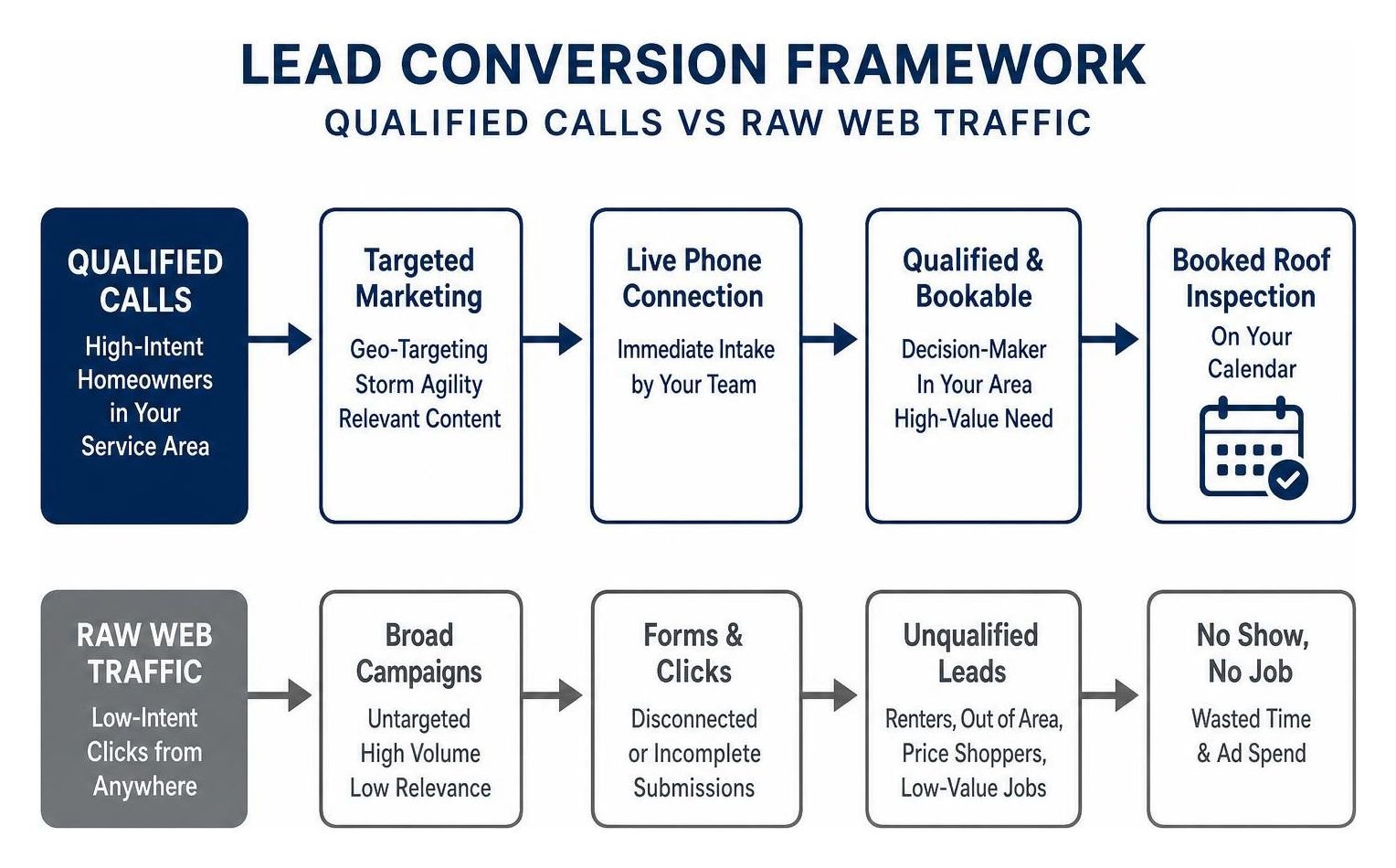
Many agencies hide behind vanity metrics such as impressions, clicks, or raw form submissions. Low-intent lead forms frequently result in disconnected numbers, renters seeking minor fixes, or shoppers looking for cheap handymen. Building sustainable pipelines requires implementing proven frameworks for roofing leads that prioritize caller qualification, call recording, and instant CRM integration.
Aligning your search strategy with authoritative standards, like the Google Search Central guide on creating helpful content, ensures your site attracts homeowners searching for actionable solutions rather than superficial clicks.
Core Marketing Channels for Sustainable Roofing Growth
Sustainable growth requires a multi-channel acquisition strategy that captures both immediate, emergency demand and long-term organic market share. Relying solely on a single source leaves your contracting business vulnerable to algorithm updates, sudden advertising price spikes, or regional seasonal shifts.
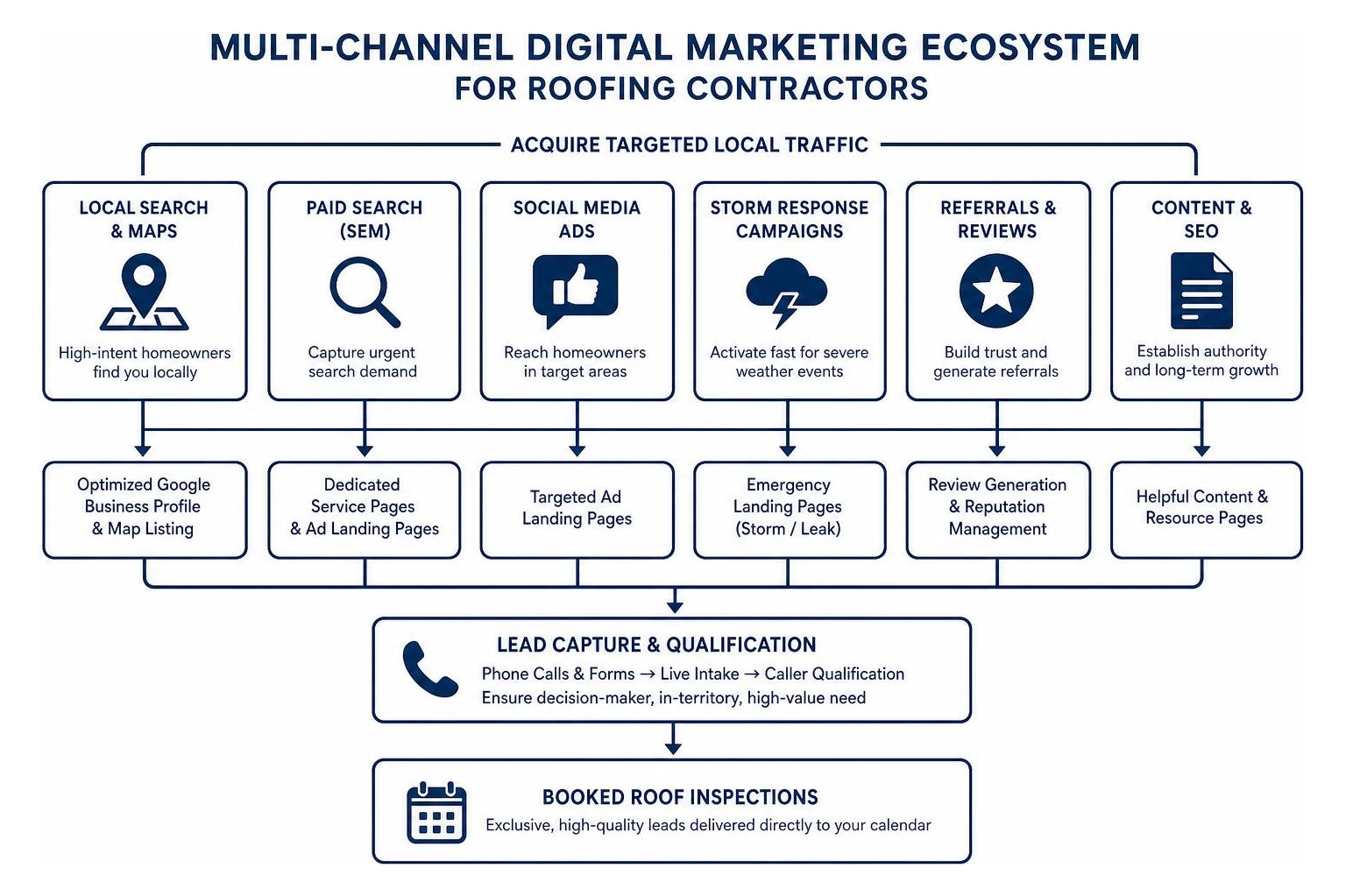
Local Search and Google Maps Domination
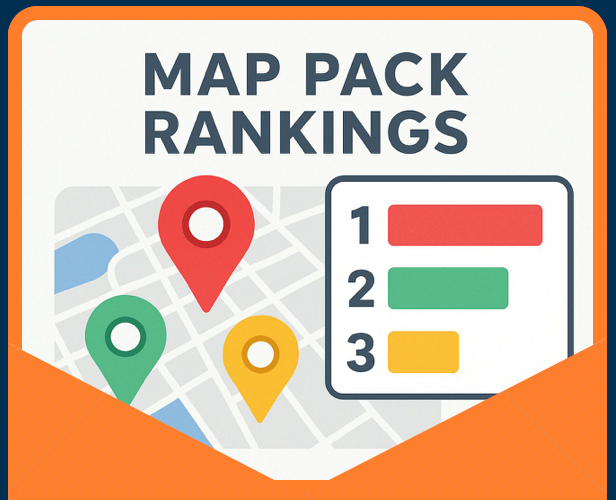
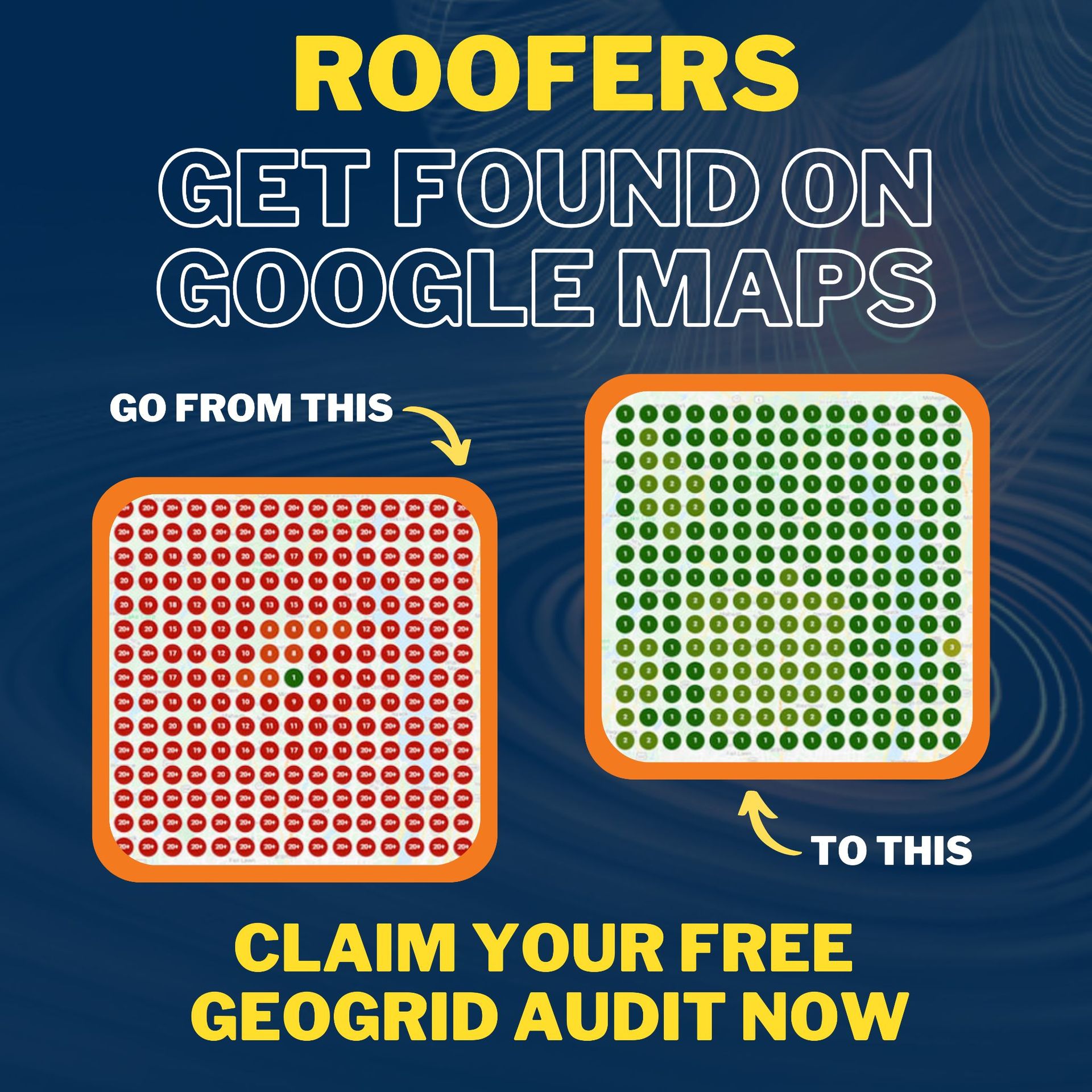
For roofing contractors, the Google Map Pack generates the highest-converting calls in local search. When a homeowner notices missing shingles after a windstorm, they look directly at the top three map listings to check proximity, overall star ratings, and recent review photos. Ranking in this local three-pack requires consistent geographic signals that prove your business actively serves specific neighborhoods.
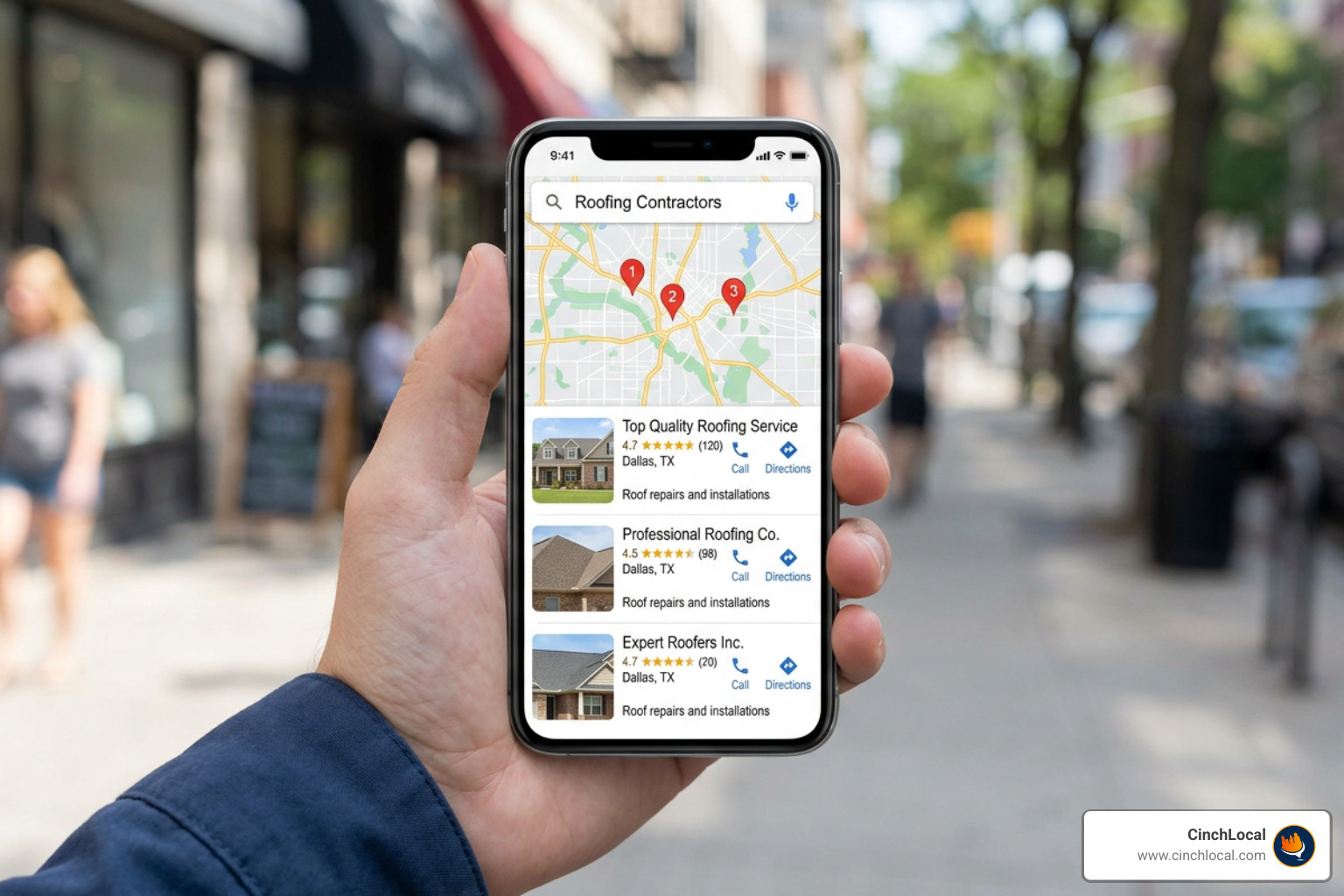
Securing consistent top-three positions demands localized technical optimization, primary category accuracy, citation consistency, and structured geo-tagged project updates. Review velocity—the steady, authentic stream of 5-star customer reviews—signals immediate trust to Google and homeowners alike.
Our specialized strategies for google maps local seo for roofers establish market authority, backed by verifiable case studies and real-world performance metrics visible in our documented results. As demonstrated in the Search Engine Land study on local pack click-through rates, businesses occupying the Map Pack capture more than 30% of all localized search clicks, making local map dominance the cornerstone of local contractor marketing.
High-Intent PPC and Organic Lead Generation
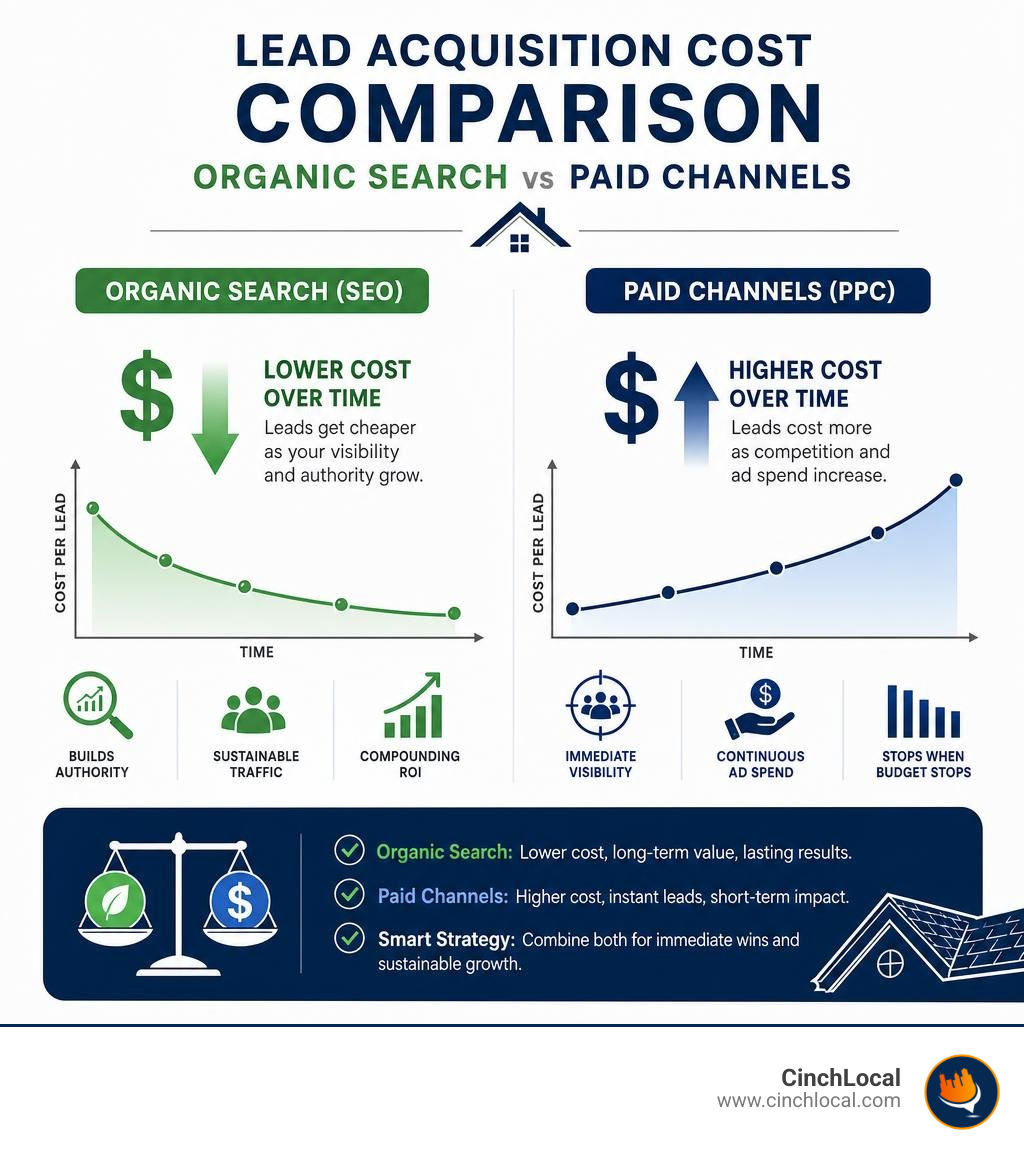
Combining search engine optimization with targeted Pay-Per-Click (PPC) advertising establishes immediate cash flow while building long-term equity. PPC captures immediate, urgent search terms (e.g., "emergency roof repair near me"), while organic SEO captures broad educational and commercial terms without continuous ad spend. Effective PPC management requires strict negative keyword lists to prevent wasted ad spend on terms like DIY repairs, roofing tools, or cheap materials.
Our comprehensive guide on digital marketing for roofing companies your blueprint for success breaks down how balancing these two engines creates stability across seasonal peaks and winter slowdowns.
| Marketing Channel | Initial Setup Time | Cost Per Lead (CPL) | Long-Term ROI | Lead Intent Level |
|---|---|---|---|---|
| Google Maps Local SEO | 30 to 90 Days | Low to Moderate ($45 - $85) | Exceptional (Compounding) | Very High (Immediate Local Need) |
| Organic Search (SEO) | 60 to 180 Days | Low ($35 - $75) | Maximum Long-Term Equity | High (Research & High-Ticket) |
| Google Search Ads (PPC) | 24 to 48 Hours | High ($120 - $250+) | Linear (Stops when ad spend ends) | Very High (Active Urgent Buyers) |
| Social Media Ads | 3 to 7 Days | Moderate ($60 - $110) | Moderate | Medium (Disruption / Brand Awareness) |
Claim Your Service Area Before Competitors Do
Stop losing premium roof replacements and storm restoration jobs to nearby competitors who outrank you online. If you are ready to dominate the Map Pack in your target service areas and fill your production schedule with high-margin jobs, reach out to CinchLocal today for a free market territory analysis and pipeline audit.
Agency Vetting Blueprint: Red Flags, Mistakes, and ROI
Selecting an agency requires thorough vetting to protect your budget, your brand reputation, and your digital assets. Contractors frequently lose thousands of dollars partnering with generalist agencies that do not understand project gross margins, seasonal estimating demands, or roofing sales cycles.

Red Flags When Vetting a Roofers Marketing Agency
When screening prospective partners, identify deal-breaking operational practices immediately. Review our breakdown in from hammers to headlines finding your perfect contractor marketing partner to navigate initial agency discovery calls safely.
- Shared Lead Reselling: Agencies that generate shared leads pit multiple contractors against one another, creating an immediate race to the bottom on price.
- Holding Digital Assets Hostage: Never sign with an agency that registers your domain, Google Business Profile, or ad accounts under their business name. If you part ways, you must retain ownership of your web properties and historical campaign data.
- Long-Term Rigid Contracts: Demanding 12-month lock-in commitments without performance benchmarks indicates a lack of confidence in sustaining long-term client retention through delivered results.
- Vanity Metric Reporting: Dashboards highlighting impressions, raw clicks, or keyword rankings without tracking recorded phone calls, qualified form leads, and closed revenue figures.
- Lack of Territory Exclusivity: Agencies that work with multiple direct competitors within the same immediate service radius create clear conflicts of interest that hurt your campaign performance.
Measuring True ROI and Customer Acquisition Costs
Evaluate your agency through financial metrics tied to actual business growth rather than website traffic graphs. A reliable agency tracks cost per lead (CPL), customer acquisition cost (CAC), and sales conversion rates directly from first contact to job completion. Implementing strategic roofing marketing strategies get more leads clients ensures every dollar deployed ties directly to signed contracts and cash collected.
Standard benchmark datasets compiled from HubSpot research on lead generation conversion metrics show that high-performing home service companies maintain marketing expenses between 6% and 10% of gross top-line revenue, achieving an acquisition-to-revenue ratio exceeding 5:1 on dedicated search campaigns. Calculating your numbers transparently guarantees that your marketing spend acts as a scalable investment rather than an uncontrolled operational overhead.
Frequently Asked Questions About Roofing Marketing
How long does it take to see results from a marketing agency?
Paid search campaigns generate qualified leads within 24 to 72 hours of launch. Local SEO and Google Maps optimization typically yield substantial ranking increases and organic inbound call volume within 30 to 90 days.
As outlined in our guide on roofing seo how to dominate local search, organic asset development compounds over time, steadily driving down your average cost per lead as domain authority solidifies.
What is the average cost to hire a specialized marketing agency?
Professional roofing marketing management retainers generally range from $1,500 to $5,000 per month, depending on market competitiveness, population density, and service scope. Direct ad spend on platforms like Google Ads is managed separately and paid directly to the ad network to preserve complete billing transparency.
Why are exclusive leads better than shared third-party lead services?
Shared lead platforms sell the exact same homeowner inquiry to 4–6 competing roofers simultaneously. This model forces an immediate race to the bottom on price, slashes gross profit margins, and frustrates homeowners with high call volumes.
Exclusive inbound leads contact your business directly because of your verified local reputation, allowing your estimators to focus on project scope and quality rather than aggressive price competition.
Conclusion
Hiring the right marketing partner is an operational investment that should create predictability in your production schedule, protect your margins, and build lasting enterprise value through owned digital assets.
At CinchLocal, we work exclusively with roofing contractors across Ohio, Tennessee, Georgia, California, and throughout the USA. Our proprietary Roofer Footprint Expansion System delivers guaranteed Google Maps visibility and pre-sold, exclusive inbound leads to build a dependable project pipeline.
Are you ready to establish local search dominance and eliminate low-converting lead sources? Visit the CinchLocal homepage to schedule your free market strategy consultation and review live contractor case studies today.
Want Us to Uncover Hidden 'Footprint Gaps' And Critical Blind Spots That’s Quietly Draining Calls, Jobs, and Profits?
Simply Fill Out The Form Below:
What If You Could Stop Wasting $30K+ a Year on Dead-End Marketing - And Finally Become the Go-To Roofer in Your City?
Other Helpful Articles You Might Enjoy