
The Ultimate Guide to Roofers Digital Advertising Options

Cary Byrd // Founder of CinchLocal
Build a Profitable Roofers Digital Advertising System
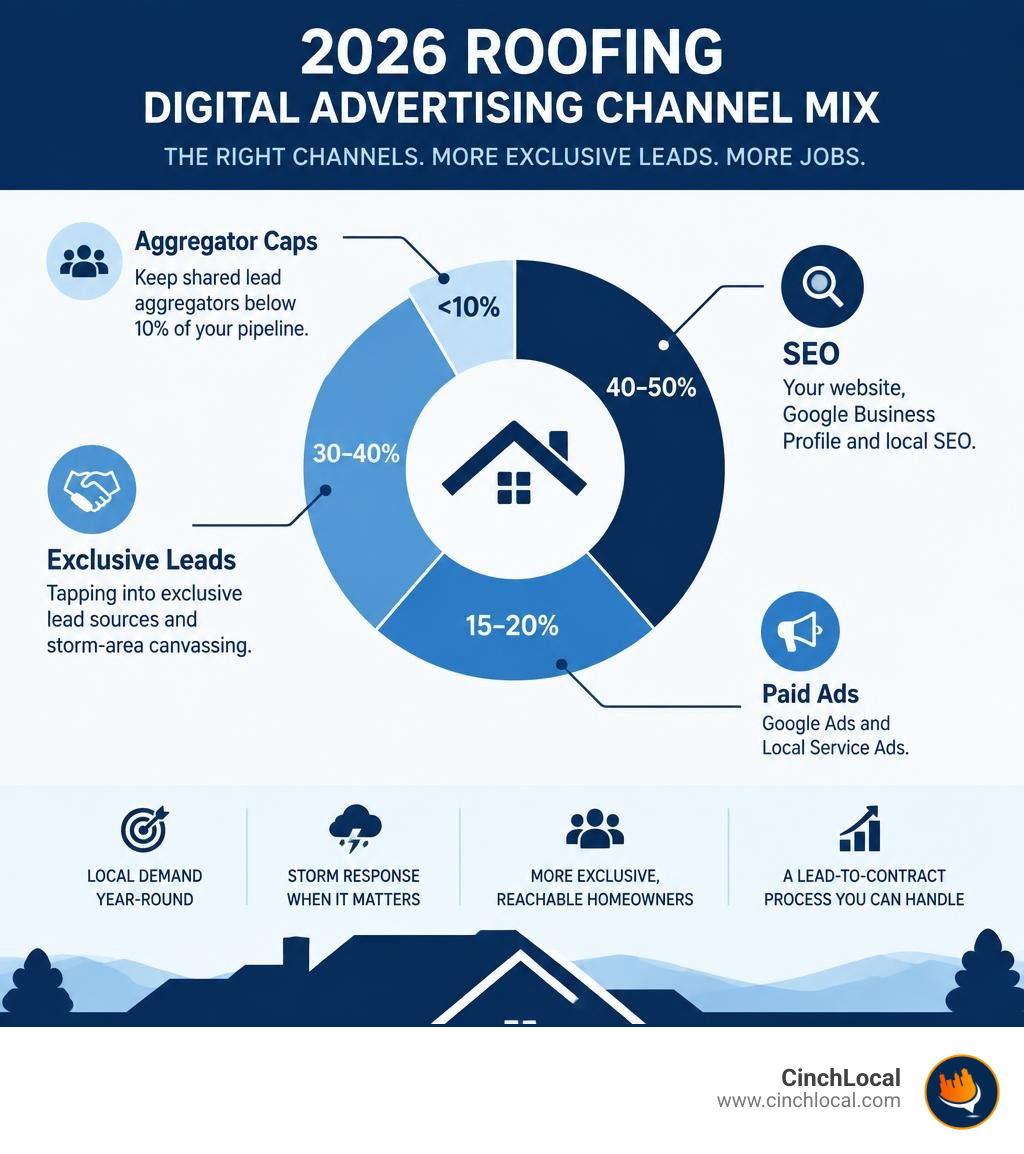
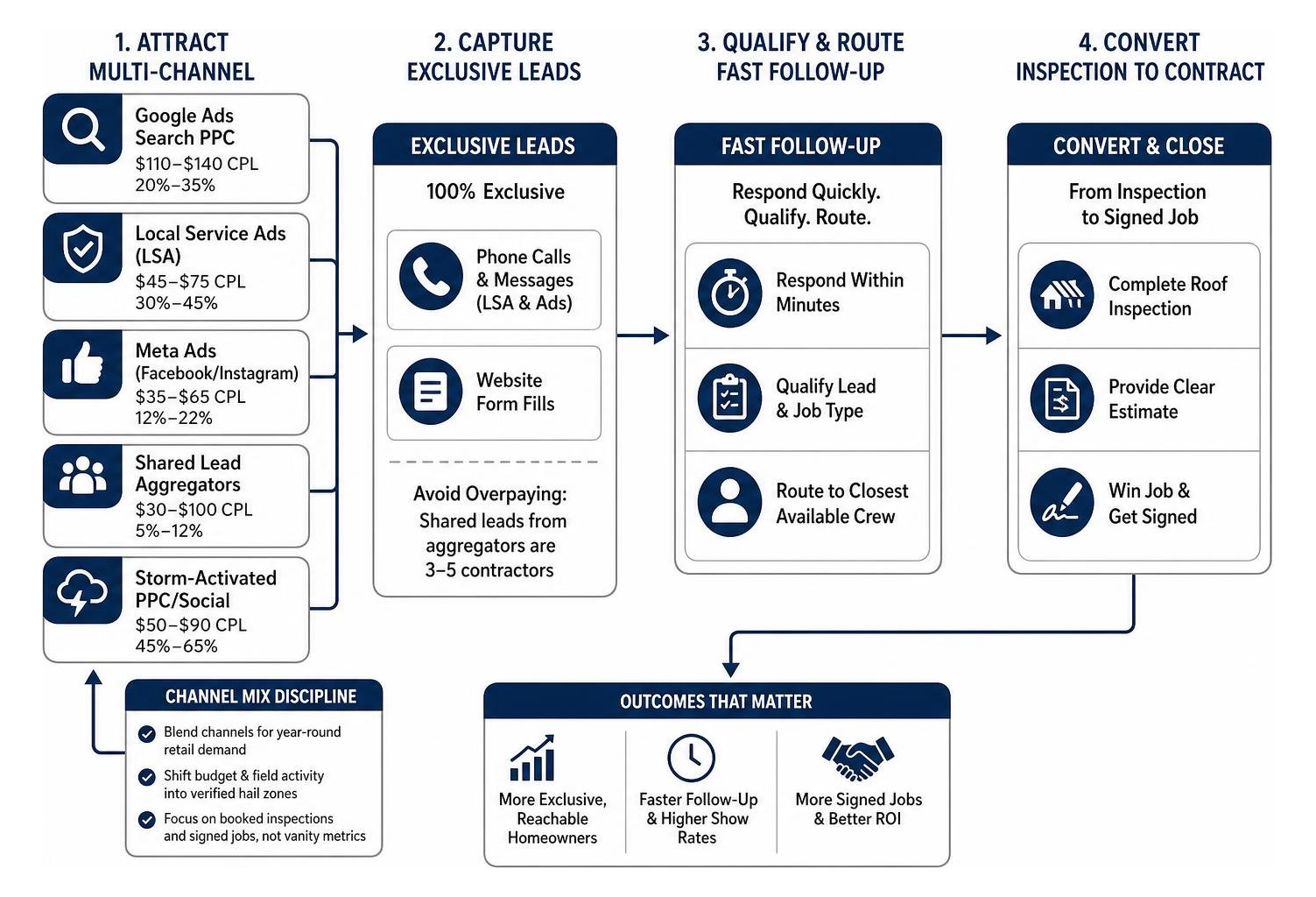
The most profitable roofers digital advertising strategy combines always-on local demand generation with fast storm-response campaigns. Put 40-50% of your marketing budget into Google Ads and Local Service Ads, 15-20% into SEO and your Google Business Profile, and 30-40% into exclusive lead sources and storm-area canvassing. Keep shared lead aggregators below 10% of your pipeline.
For a roofing contractor, the goal is not simply more form fills. It is more exclusive , reachable homeowners, faster follow-up, and a lead-to-contract process your team can handle. Start with roofing marketing resources from CinchLocal to build the local visibility, paid-ad structure, and tracking needed to measure booked inspections and signed jobs - not vanity metrics.
Roofing leads are expensive. Non-branded Google Ads leads average about $124 in 2026, while an always-on Local Service Ads presence typically produces leads in the $45-$75 range. That makes channel discipline essential. A well-built system keeps retail demand flowing year-round, then shifts budget and field activity into verified hail zones when storms create urgent insurance-claim demand.
I am Cary Byrd, founder of CinchLocal, where I lead strategy for Google Maps marketing, SEO, web design, lead generation, and roofers digital advertising. My work focuses on helping roofing contractors turn local search visibility and paid media into a consistent, measurable source of opportunities. Contractors looking to scale can master map pack visibility through roofers Google Maps optimization, evaluate organic growth partners with our guide to choosing a roofers local SEO company, or audit media providers using our checklist for selecting a qualified roofers marketing agency.
Building a Profitable Roofers Digital Advertising Channel Mix
A sustainable roofing marketing strategy operates as a balanced financial portfolio rather than an all-or-nothing bet on a single platform. In 2026, established roofing companies spend an average of 8% to 12% of gross revenue on overall marketing. For an enterprise generating $3,000,000 annually, this represents a marketing budget of $20,000 to $30,000 per month blended across inbound paid media, local search assets, and direct sales enablement.
Diversifying capital across high-intent search, social retargeting, and organic assets protects cash flow from platform algorithm shifts and rising ad costs. Relying exclusively on paid search leaves a company vulnerable to sudden auction spikes, whereas depending entirely on storm activity results in severe off-season revenue slumps.
| Advertising Channel | Average Cost Per Lead (CPL) | Average Conversion to Signed Job | Exclusive vs. Shared | Scalability Speed |
|---|---|---|---|---|
| Google Local Service Ads (LSA) | $45 – $75 | 30% – 45% | 100% Exclusive | Fast (Once Verified) |
| Google Ads (Search PPC) | $110 – $140 ($124 avg) | 20% – 35% | 100% Exclusive | Immediate |
| Meta Ads (Facebook/Instagram) | $35 – $65 | 12% – 22% | 100% Exclusive | Immediate |
| Shared Lead Aggregators | $30 – $100 | 5% – 12% | Shared (3–5 Contractors) | Immediate |
| Storm-Activated PPC/Social | $50 – $90 | 45% – 65% | 100% Exclusive | Rapid (Within 2–4 Hours) |
Paid Search and Local Service Area Ads Setup for Roofers Digital Advertising
Google Ads search campaigns capture homeowners experiencing active roof leaks, missing shingles, or structural deterioration. These prospects represent immediate intent. Non-branded search leads across home services require precise negative keyword curation and tightly focused ad groups to maintain our tracked $124 non-branded CPL benchmark. Managing conversion bidding via official Google Ads resources ensures your daily budget prioritizes actual telephone calls rather than low-value impressions.
Deploying Local Service Area Ads for roofers positions your business directly at the top of search engine results pages under the Google Guaranteed badge. Unlike standard pay-per-click models where you pay for clicks regardless of outcome, LSA charges exclusively on a per-lead phone call or message basis.
Maintaining an always-on LSA profile keeps cost per lead between $45 and $75. In contrast, contractors who deactivate their accounts during winter and attempt to reactivate them during summer storms routinely pay $110 or more per lead because Google's algorithm favors established accounts with continuous review velocity, high responsiveness, and uninterrupted history.
Social Media and Meta Campaign Strategies in Roofers Digital Advertising
Paid social campaigns on Meta platforms require an interruption-based approach. Homeowners browsing Instagram or Facebook are not actively searching for a roofing contractor; advertising must educate them on subtle roof vulnerabilities, highlight completed neighborhood transformations, or alert them to verified storm activity in their specific zip code.
Achieving strong returns requires mastering online advertising for roofers through laser-targeted demographic filters. Target homeowners aged 35 to 65 residing in properties built 15 to 25 years ago, as these homes are entering their primary roof replacement window.
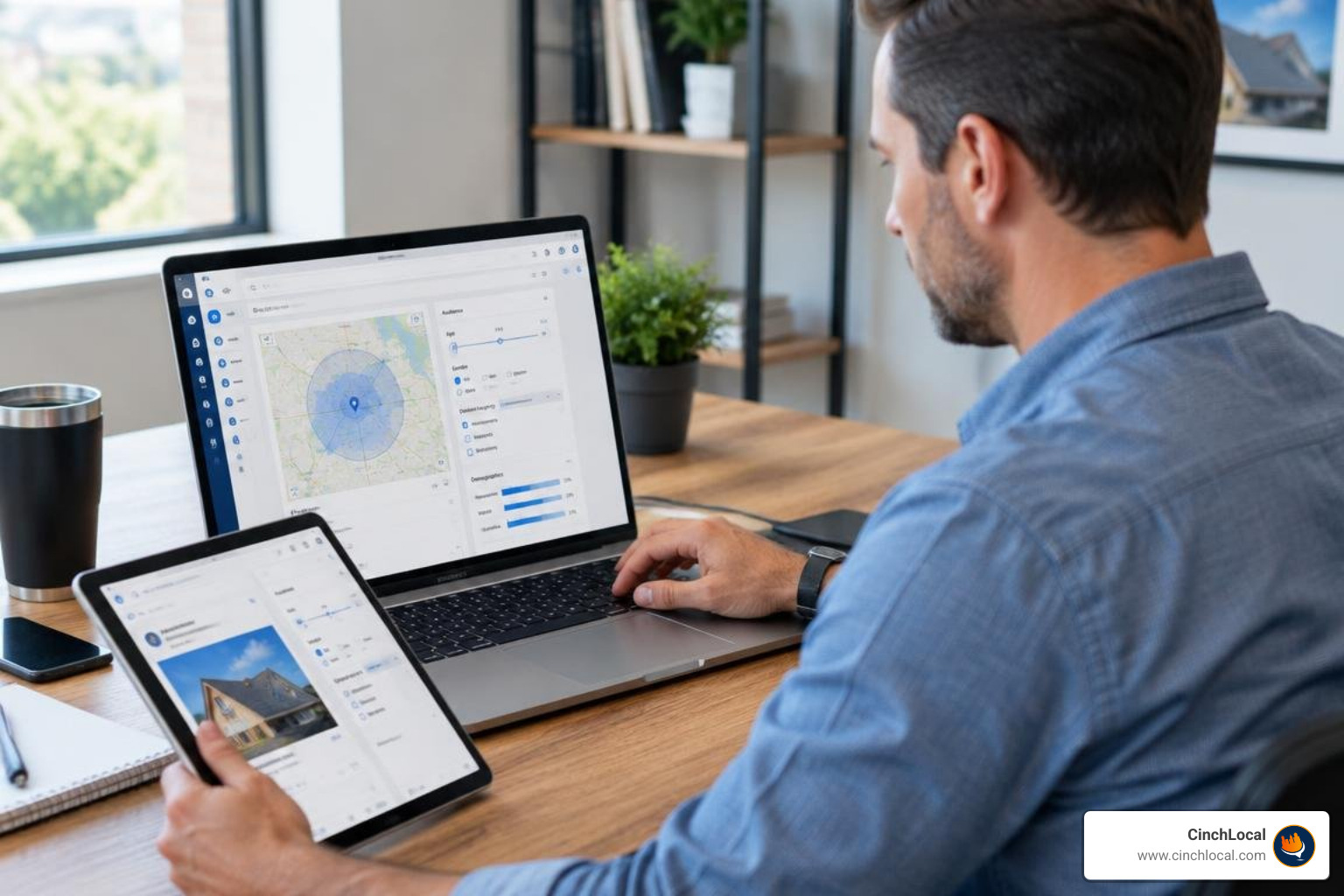
To avoid eliminating wasted budget on Meta ads, refrain from sending traffic to generic homepages. Direct prospects to dedicated landing pages featuring real neighborhood job photos and streamlined quote forms. Aligning creative assets with best practices outlined in Meta advertising resources keeps cost per lead under $65 while preserving message clarity.
Storm-Response Infrastructure vs. Steady-State Retail Marketing
Operating a profitable roofing company requires balancing reliable retail demand generation with rapid storm-response deployment. Retail campaigns maintain predictable cash flow, steady production schedules, and healthy margins year-round. Storm damage leads, however, deliver substantially higher closing rates of 45% to 65% compared to standard retail conversion rates of 15% to 25%, with typical insurance roof replacements generating between $8,500 and $25,000 per project.
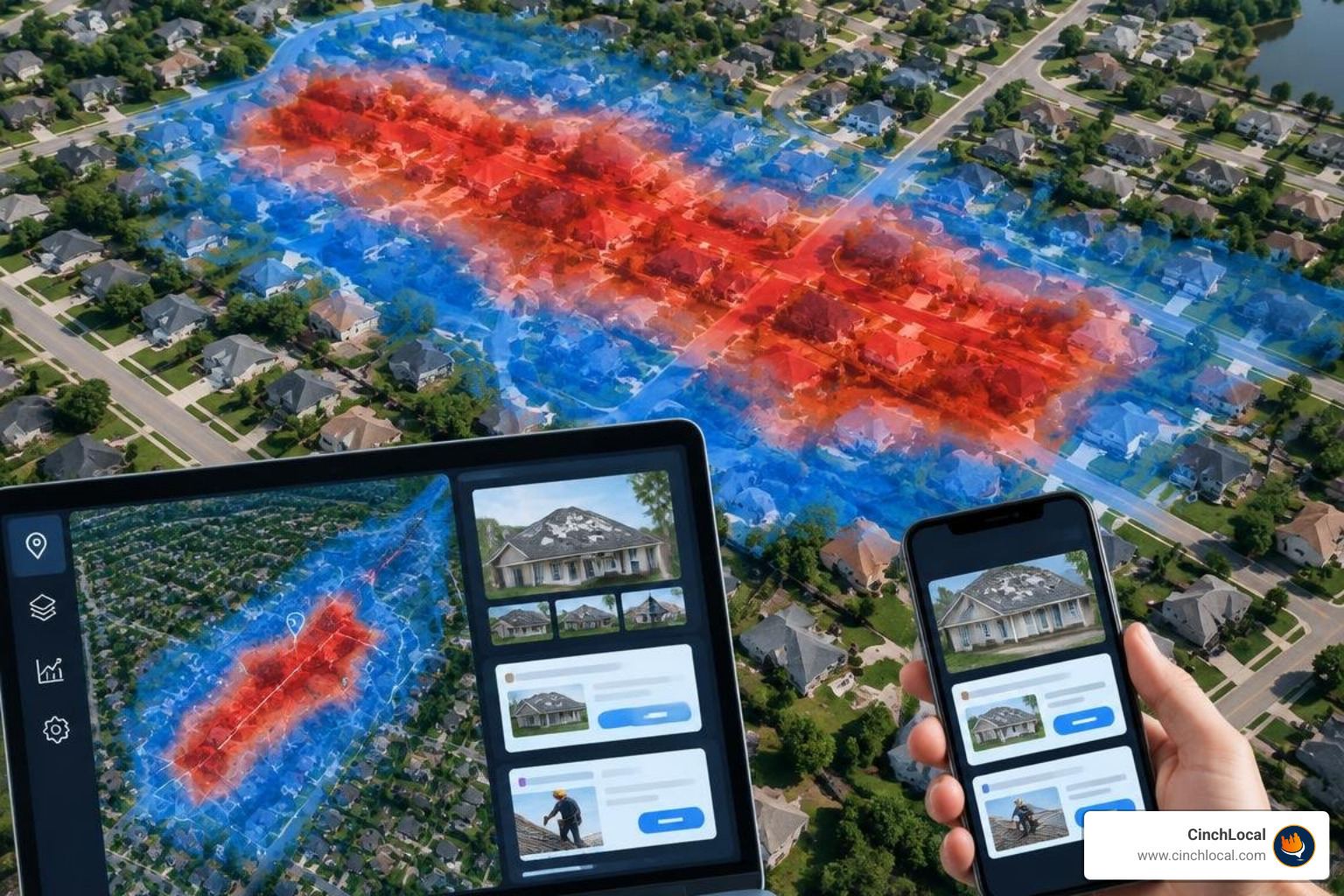
Steady-state marketing creates an ongoing brand baseline through search engine optimization, Google Maps visibility, and ongoing community presence. When severe weather hits, an automated storm infrastructure allows you to switch focus to insurance-claim acquisition without dismantling your long-term organic foundation.
High-Speed Lead Capture in Roofers Digital Advertising
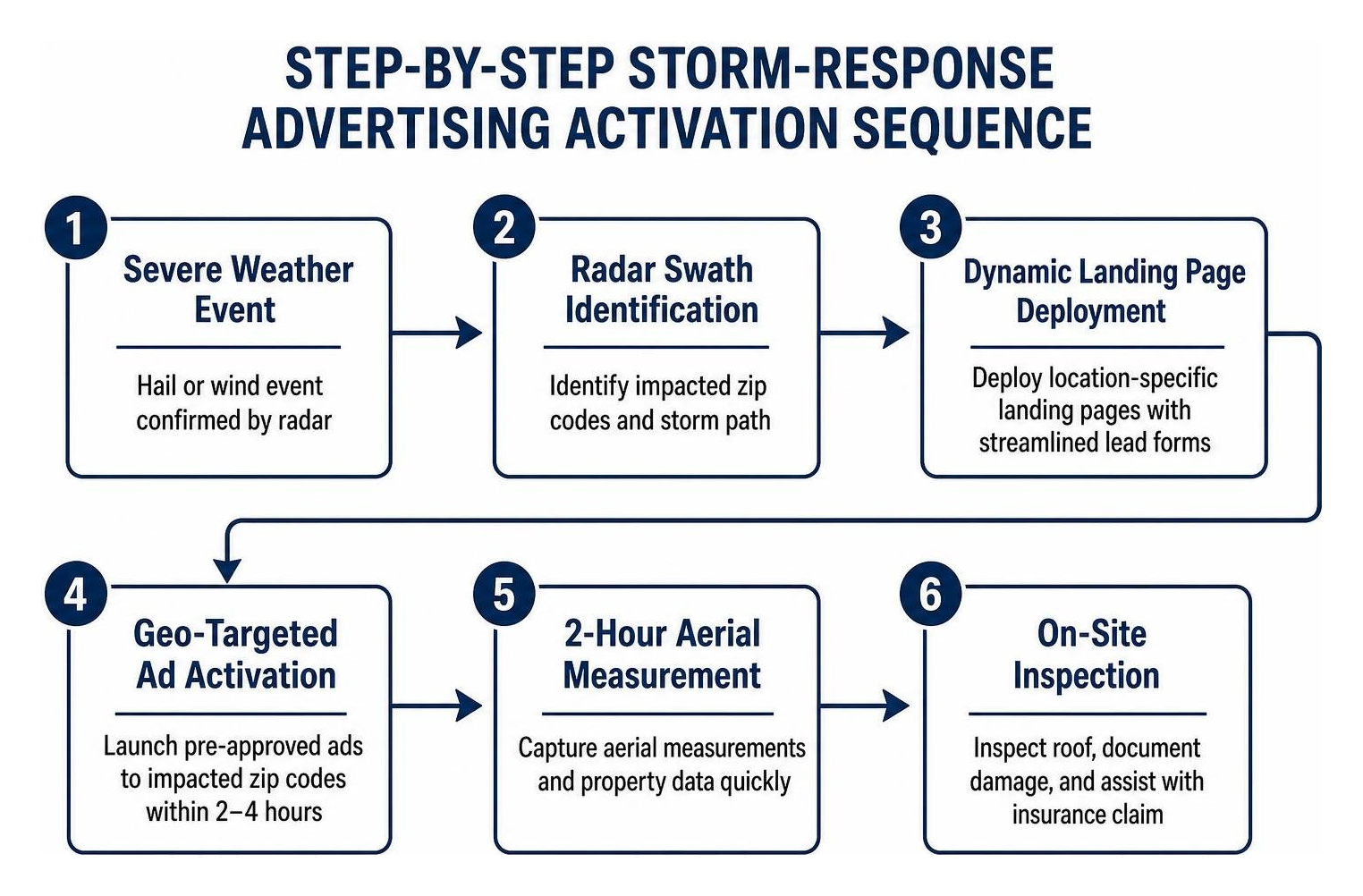
During a major hail or wind event, the first contractor to inspect a damaged roof and assist with the initial claims process secures the job the majority of the time. Implementing advanced Meta advertising strategies for roofing contractors enables you to launch pre-approved storm creative targeting specific zip codes within 2 to 4 hours of hail impact confirmed by meteorological radar.
Converting high-intent storm traffic requires streamlined capture tools on your landing pages:
- Instant Estimator Widgets: Embedding interactive estimation tools lets homeowners input their address and receive instant preliminary square-footage estimates, capturing verified homeowner phone numbers and emails immediately.
- Rapid Aerial Measurement: Ordering aerial measurement reports delivering detailed roof geometry within 2 hours equips sales teams to build exact material lists before arriving at the homeowner's driveway.
- Customer Service Representative (CSR) Response Speed: Inbound leads contacted within 5 minutes convert at significantly higher rates than leads contacted after 30 minutes.
- Insurance Fluency: Equip field estimators and project managers with Xactimate software proficiency to communicate effectively with insurance adjusters on line-item scopes, building code requirements, and fair market depreciation.
Maximize Your Inbound Lead Flow Today
If your digital campaigns are failing to generate exclusive storm or retail replacements, take advantage of our specialized roofing acquisition frameworks. Book a complimentary growth strategy consultation with CinchLocal to audit your current ad spend, eliminate cost waste, and capture dominant local market share.
Trust Signals as Advertising Multipliers
Digital ad conversion rates increase when backed by recognized industry certifications and strong manufacturer affiliations. Holding credentials such as GAF Master Elite, CertainTeed Select ShingleMaster, or James Hardie Contractor Alliance badges signals verified craftsmanship and financial stability to discerning homeowners.
Manufacturer programs provide valuable co-op advertising funds, reimbursing up to 50% of qualifying digital ad spend while listing your business on high-authority manufacturer locators. A manufacturer certification directory listing generating 20 to 30 referred calls annually at a 35% to 45% closing rate can yield $80,000 to $200,000 in top-line revenue with zero third-party per-lead fees.
Pairing these credentials with comprehensive verification via Google Business Profile resources gives your business the authority needed to turn ad clicks into signed contracts.
Conversion Rate Optimization and Automated Lead Nurturing
Generating traffic addresses only the first half of customer acquisition; converting estimates into signed contracts determines overall return on ad spend. An unoptimized sales process loses qualified leads between initial inspection delivery and final contract execution. Implementing automated follow-up sequences resolves this bottleneck.

A structured 5-touch automated follow-up sequence combining SMS and email can lift estimate-to-contract rates from 22% to 38% over six months without purchasing additional ad volume. This multi-touch workflow delivers immediate notifications, property-specific measurement breakdowns, shingle color visualization tools, manufacturer warranty details, and financing pre-approval links directly to the homeowner's mobile device.
To scale reliably, build a dedicated, exclusive qualified roofing leads pipeline that routes direct phone calls directly to your sales team instead of buying low-intent, shared contact lists.
Project Showcases and Localized Geotagging
Homeowners want proof that you have completed quality work in their immediate neighborhood. Publishing localized project galleries with high-resolution imagery, street-level descriptions, and geotagged project data significantly boosts local conversion rates and organic search authority. Industry data confirms that local business listings displaying 100 or more photos generate 520% more incoming phone calls than profiles with fewer than 10 images.
Documenting local projects on dedicated neighborhood landing pages helps your business dominate hyper-local search queries. For instance, building out 80 localized case study pages featuring project details, shingle types, and neighborhood landmarks has been demonstrated to grow organic website traffic from 200 to 4,100 monthly visitors, increasing booked jobs from organic search from one per month to nine.
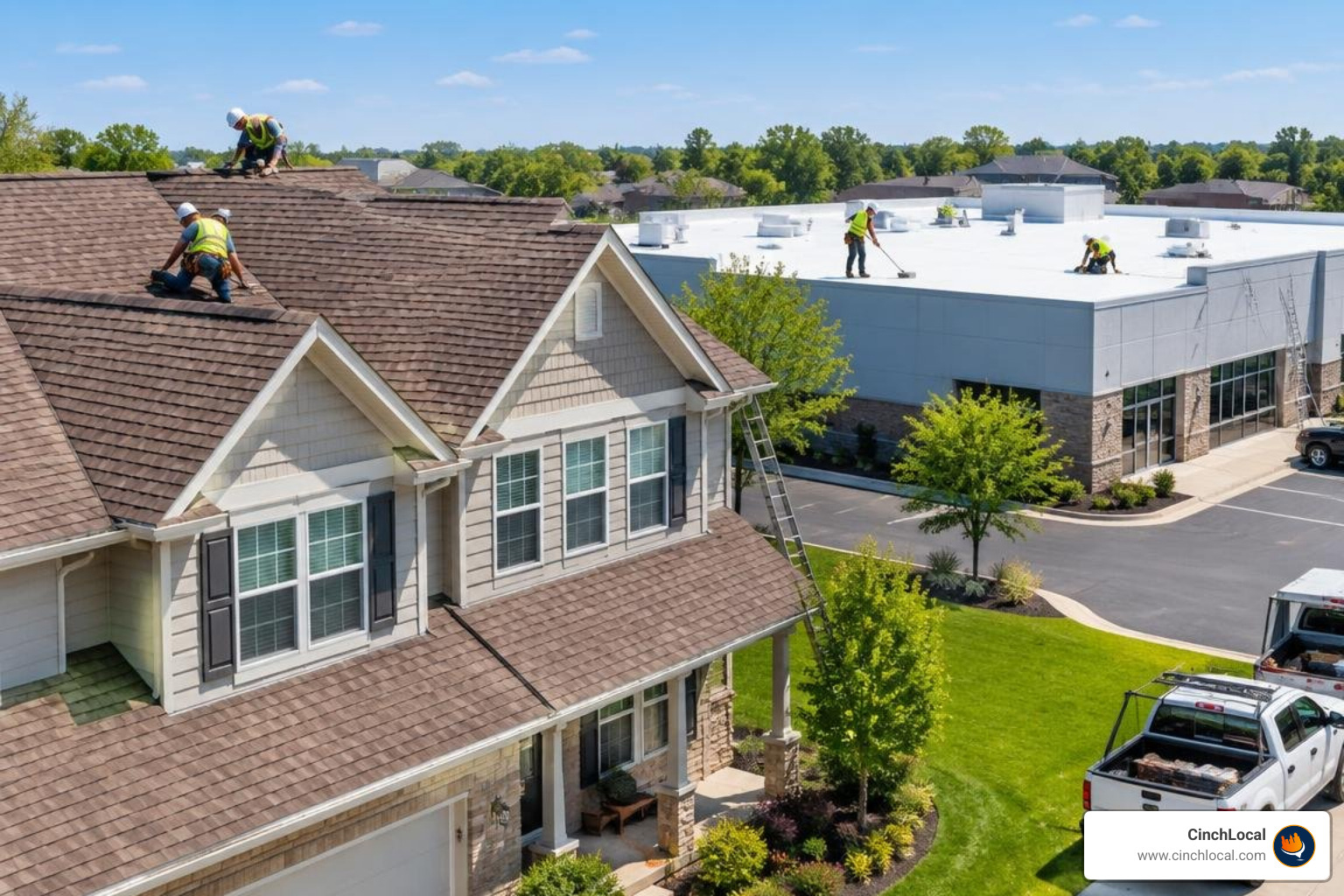
Expanding hyper-local visibility requires a systematic approach to Google Maps local SEO for roofers, reinforcing geographic relevance across your primary operating areas. To examine real-world campaign metrics and ranking improvements across competitive markets, explore our proven roofing marketing results.
Underperforming Channels to Eliminate
Eliminating low-performing channels protects your marketing budget and ensures capital flows toward high-yield campaigns.
- Shared Lead Aggregators: Third-party aggregator platforms sell the same homeowner contact information to 3 to 5 competing contractors simultaneously. While front-end cost per lead appears low ($30 to $100), low win rates of 5% to 10% push your true cost per booked job to $500–$800, leading to wasted sales labor and price-cutting battles.
- Untracked Billboards and Print Media: Traditional billboards, radio spots, and non-targeted print circulars offer broad exposure but lack granular conversion tracking, custom phone routing, and precise audience targeting.
- Cold Canvassing Without Weather Triggers: Sending sales teams to knock on doors in neighborhoods without verifiable storm damage or recent roof replacements yields low inspection conversion rates of 3% to 8%, creating field burnout and inefficient payroll spend. By comparison, targeted canvassing in radar-verified hail swaths achieves 8% to 15% inspection booking rates.
- Storm-Only Marketing Agencies: Retaining predatory consultants who charge large upfront retainers to run short-term storm campaigns often leaves you with burned ad accounts, duplicate content penalties, and zero lasting search equity once storm demand subsides.
Frequently Asked Questions About Roofing Advertising
What is the average cost per lead for roofing digital ads in 2026?
Non-branded Google Search PPC leads average $124 per lead across national home service benchmarks. Google Local Service Ads (LSA) produce qualified, exclusive phone calls for $45 to $75 per lead on verified, always-on profiles. Targeted Meta campaigns generate leads for $35 to $65.
While shared aggregator leads sell for $30 to $100 upfront, distributing each lead across 3 to 5 competing contractors drives the effective acquisition cost per signed project to $500–$800.
How much should a roofing company invest in digital advertising?
Established roofing companies allocate 8% to 12% of annual gross revenue to marketing and digital customer acquisition. A contractor generating $3,000,000 in annual revenue should maintain a monthly marketing budget between $20,000 and $30,000.
A high-performing budget allocation directs 40% to 50% toward paid search and Google Local Service Ads, 15% to 20% toward organic SEO and Google Business Profile optimization, and 30% to 40% toward proprietary lead generation and targeted field canvassing, capping shared lead aggregators under 10%.
How quickly should storm-response campaigns launch after severe weather?
Storm-response campaigns should go live within 2 to 4 hours of a confirmed severe weather event. Achieving this rapid turnaround requires pre-built digital infrastructure, including pre-approved ad creative, radar-verified hail tracking, dynamic landing pages targeted by zip code, and immediate aerial measurement tools.
Launching quickly ensures your company captures inbound homeowner interest and schedules inspections before out-of-market contractors saturate the area.
Conclusion
Building a profitable digital advertising system requires moving away from fragmented, ad-hoc ad campaigns and establishing a scalable customer acquisition engine. Unifying high-intent paid search, always-on Local Service Ads, hyper-targeted social awareness, and automated estimate follow-up creates predictable job volume across every season.
At CinchLocal, we work exclusively with roofing contractors through our proprietary Roofer Footprint Expansion System . This structured methodology strengthens local search dominance, expands Google Maps prominence, and generates exclusive, high-margin roofing leads within 30 days.
Take control of your market and eliminate dependence on shared aggregator leads. Contact CinchLocal today to schedule your digital advertising strategy consultation.
Want Us to Uncover Hidden 'Footprint Gaps' And Critical Blind Spots That’s Quietly Draining Calls, Jobs, and Profits?
Simply Fill Out The Form Below:
What If You Could Stop Wasting $30K+ a Year on Dead-End Marketing - And Finally Become the Go-To Roofer in Your City?
Other Helpful Articles You Might Enjoy