

Cary Byrd // Founder of CinchLocal
Why a Professional Roofing System Audit Is the Smartest Move You're Not Making
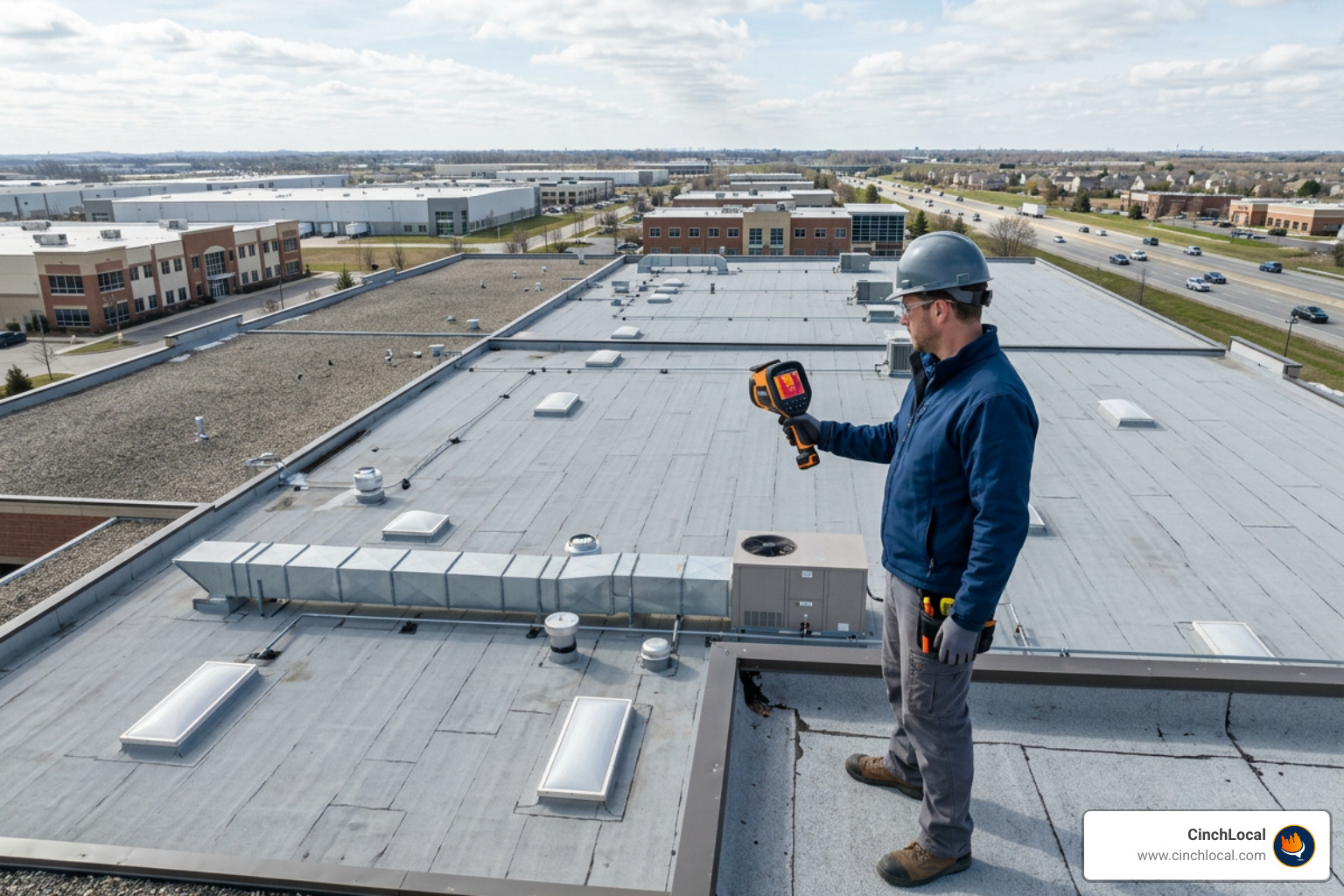
A professional roofing system audit is a comprehensive, multi-step evaluation of your roof's structural integrity, energy performance, moisture levels, and remaining useful life — and it goes far beyond what a standard inspection covers.
Quick answer for property owners and contractors:
| What You Want to Know | The Short Answer |
|---|---|
| What is it? | A full diagnostic of your roof's condition, energy efficiency, and long-term performance |
| How is it different from an inspection? | Inspections spot visible damage; audits quantify deficiencies, analyze energy loss, and produce strategic recommendations |
| Who needs one? | Commercial building owners, property managers, and roofing contractors who want to offer more value |
| What does it cost to not do one? | A compromised roof can increase utility bills by 20-30% annually and shorten roof life by years |
| What's the ROI? | Audit recommendations typically pay for themselves within 2-3 years through energy savings alone |
Most roofs fail quietly. A leak doesn't announce itself the day a shingle cracks — it shows up months later, after water has already saturated insulation and driven up your heating and cooling costs. By the time a standard inspection catches it, the damage is done.
That's the gap a professional roofing system audit is designed to close.
For roofing contractors, this matters beyond the buildings you service. Offering a credible audit process is one of the clearest ways to differentiate your business from competitors who only show up with an estimate. Commercial clients and property managers — the accounts that generate consistent, high-value work — expect it. Visit CinchLocal to learn how contractors are turning services like this into a repeatable growth engine.
I'm Cary Byrd, CEO of CinchLocal, and I've spent years helping roofing contractors market high-value services — including the professional roofing system audit — to the commercial clients and property managers most likely to book them. In the sections below, I'll break down exactly what a full audit involves, which type fits your client's situation, and how to use audit findings to close bigger jobs.
Relevant articles related to professional roofing system audit :
What is a Professional Roofing System Audit vs. a Standard Inspection?
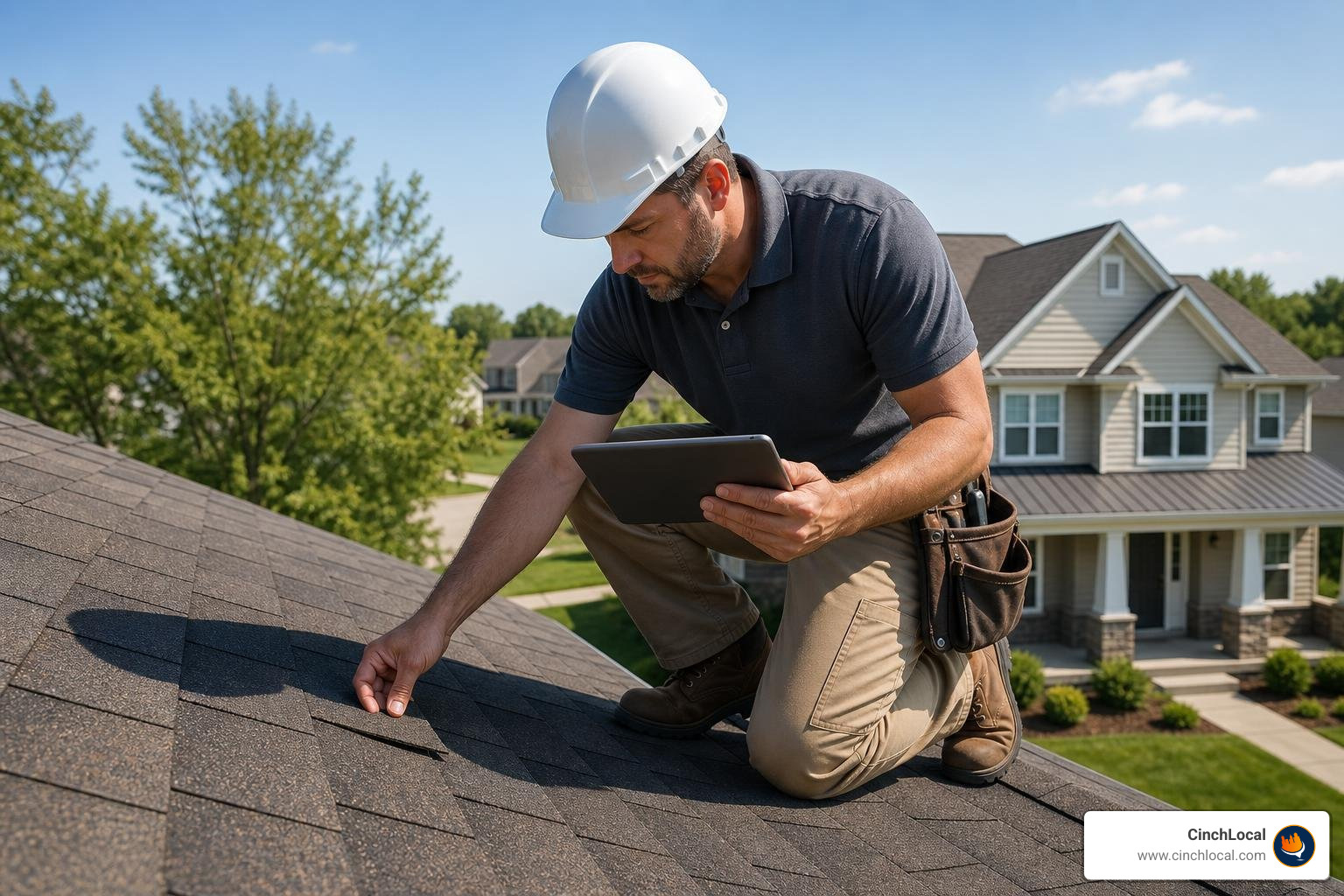
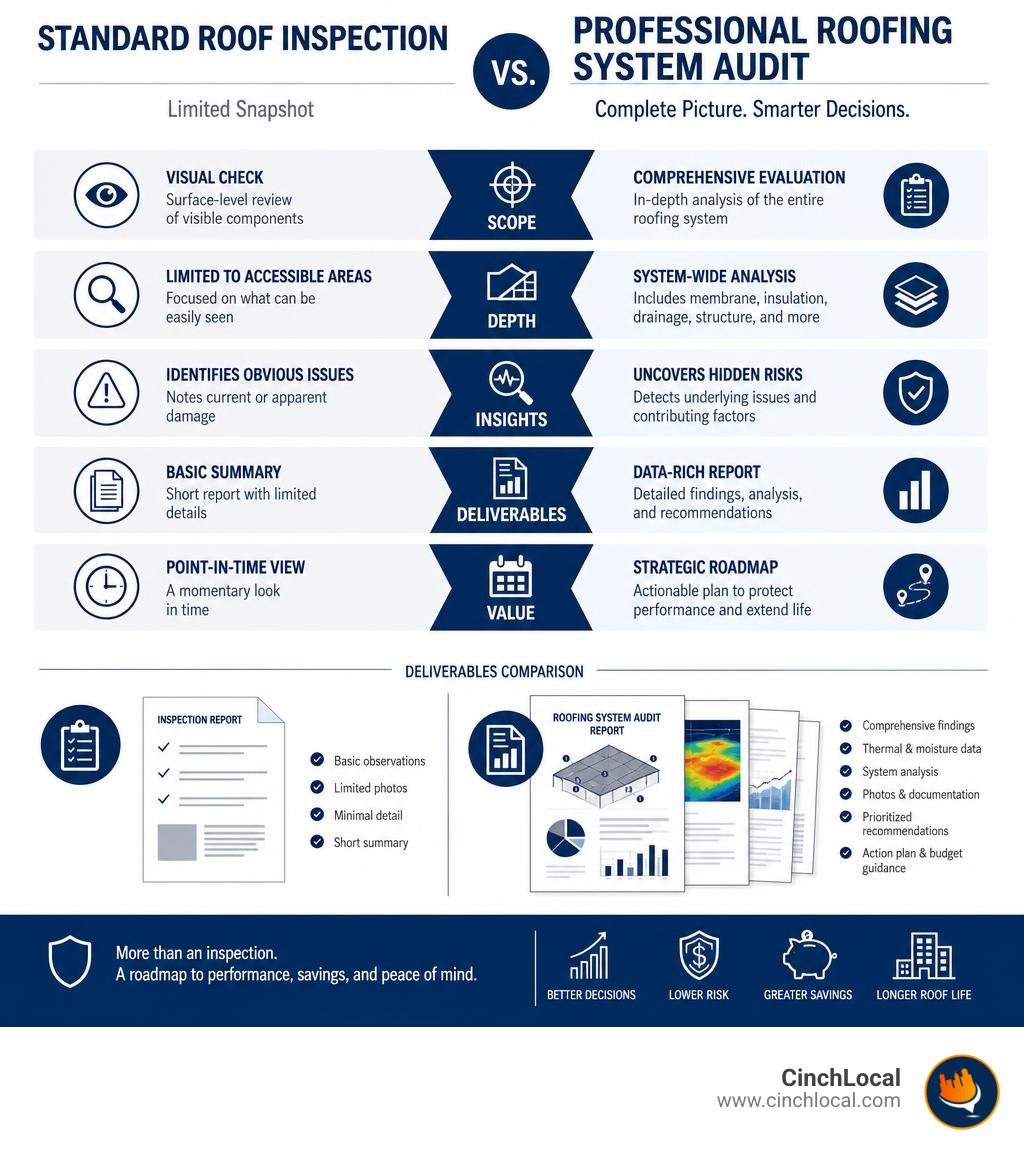
To build a highly profitable commercial or high-end residential roofing business, you must stop selling generic inspections and start positioning your expertise as a diagnostic science. A standard roof inspection is a reactive, visual assessment. It is designed to spot immediate, visible damage—such as cracked shingles, open seams, or rusted flashing—usually after a severe weather event.
By contrast, a professional roofing system audit is a proactive, forensic evaluation. It treats the roof not as a static cover, but as a dynamic component of the building envelope. An audit does not merely look for existing leaks; it evaluates thermal performance, moisture migration, structural load capacity, and material degradation. While an inspection tells you what is broken today, an audit projects when and why components will fail tomorrow, providing a roadmap for asset management.
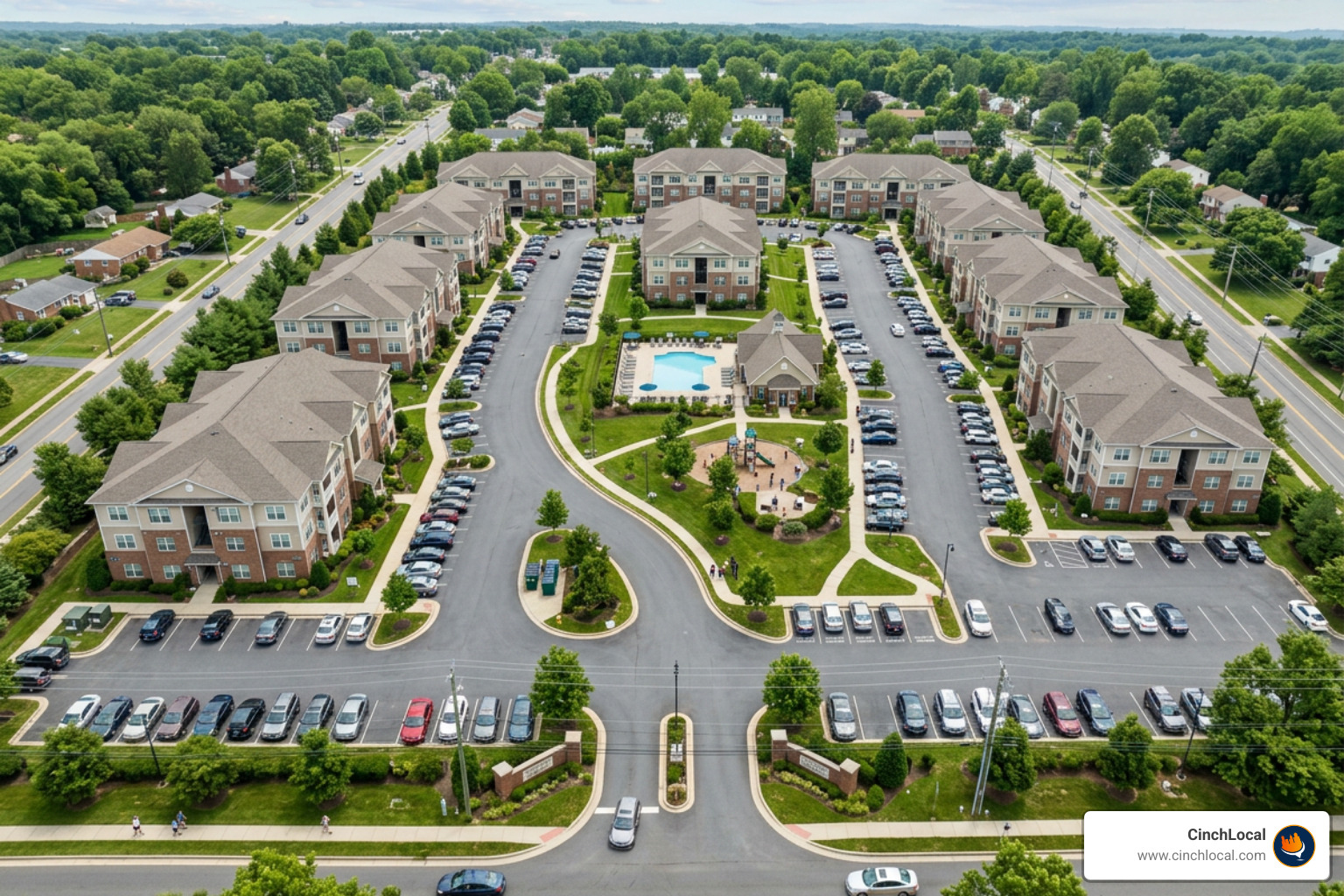
For roofing contractors, shifting your service offering from a basic "free estimate" to a professional audit transforms your business model. When you deliver an audit, you provide property managers and commercial building owners with actionable data, not a sales pitch. This forensic approach builds undeniable trust, helping you convert cold leads into lifetime commercial clients.
To scale this service, contractors use specialized marketing programs. By leveraging our Roofer Footprint Expansion System, we help contractors in highly competitive markets target commercial property managers who actively search for long-term facility solutions. This specialized local SEO strategy delivers proven marketing results that turn search visibility into high-value commercial contracts.
Key Differences in Scope and Deliverables
The differences between an inspection and an audit lie in the depth of testing and the nature of the final deliverables.
- Standard Inspection: Focuses on a visual walkover. The deliverable is typically a short checklist with a few photos and a basic price quote. If you are looking to understand how standard pricing is structured, our Beginner’s Guide to Roofing Quotations provides a solid baseline.
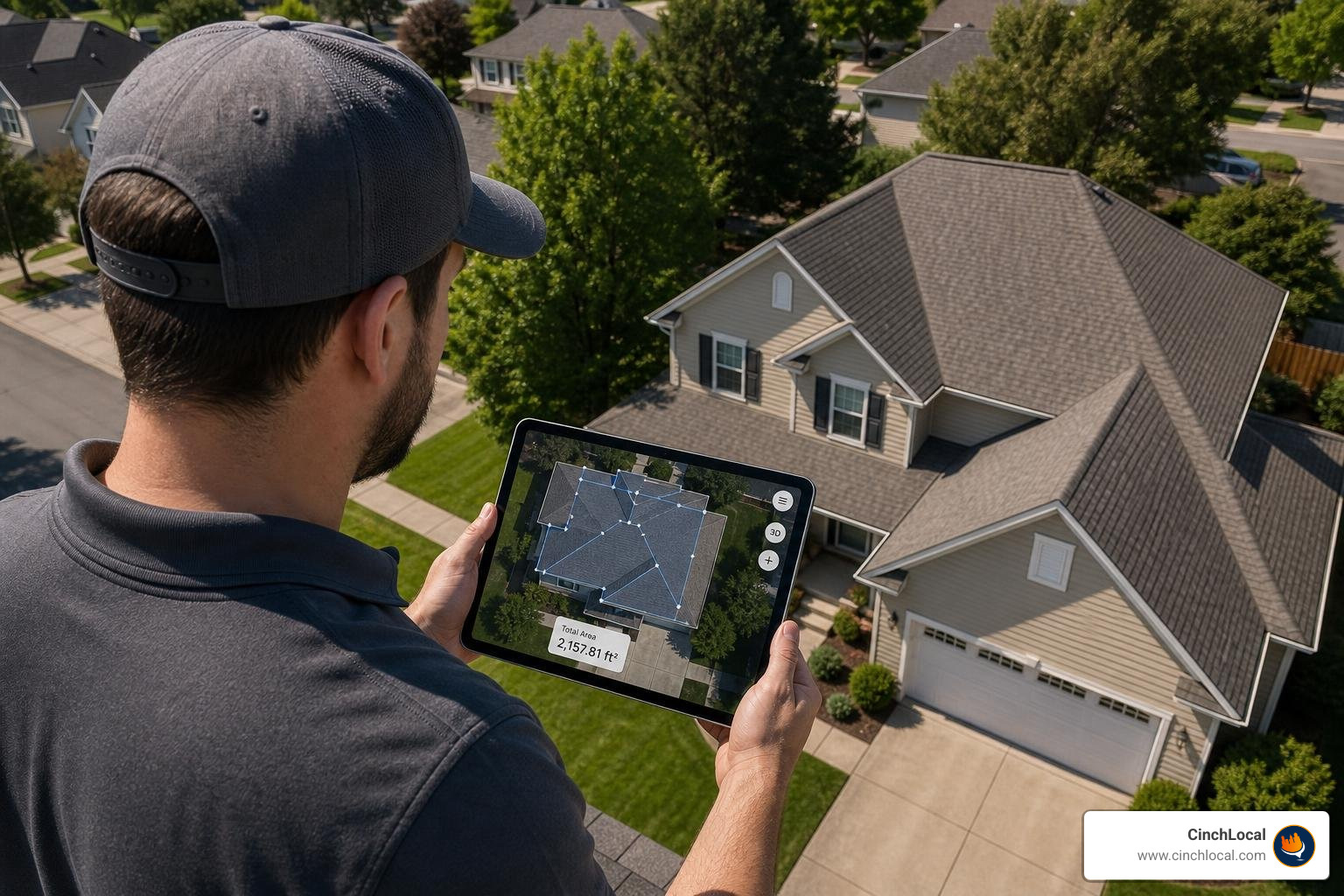
- Professional Roofing System Audit: Combines visual assessments with non-destructive testing, laboratory analysis of core samples, and thermal imaging. For a deeper look at these advanced methods, you can read about this comprehensive forensic inspection analysis. The deliverable of an audit is an extensive technical report containing AutoCAD roof plans, weighted defect severity scales, moisture maps, and a 5-year capital expenditure budget.
Why Contractors Must Offer a Professional Roofing System Audit
For modern roofing contractors operating in states like California, Ohio, Georgia, and Tennessee, offering professional audits is a major competitive advantage. Commercial clients and institutional decision-makers do not make capital purchasing decisions based on a contractor's gut feeling. They require empirical proof to justify capital allocations to stakeholders and board members.
By offering a structured audit—such as those detailed by professional commercial roof audit standards—you position your company as a consultant rather than a transactional contractor. This consultative approach elevates your brand, protects your margins, and leads to significantly higher sales conversion rates for large-scale commercial projects.
Qualitative vs. Quantitative Roof Audits: Choosing the Right Approach
Not all building portfolios require the same level of diagnostic detail. When presenting audit options to commercial clients, you must understand the distinction between qualitative and quantitative roof audits. Offering the wrong type can either overwhelm a client with unnecessary data or leave them without the actionable specifications they need to execute a project.
| Audit Feature | Qualitative Roof Audit | Quantitative Roof Audit |
|---|---|---|
| Primary Focus | Portfolio-wide condition and risk prioritization | Precise defect measurement and bid specification |
| Key Methodologies | Visual risk scoring, aerial scans, historical review | Core sampling, infrared scanning, AutoCAD mapping |
| Best Used For | 5-year capital planning, pre-acquisition due diligence | Generating standard construction bid documents |
| Deliverables | High-level risk matrices and estimated budget ranges | Itemized bills of quantities and exact repair locations |
When to Deploy a Qualitative Audit
A qualitative audit is a high-level, portfolio-wide assessment. It is designed to establish a baseline condition for multiple properties or a massive single facility. Instead of counting every single backed-out fastener, a qualitative audit assigns a standardized risk or condition score to various roofing sections.
This approach is ideal for pre-acquisition due diligence, where a buyer needs to quickly understand the overall health and remaining useful life of a building's envelope. It is also highly valuable for asset management firms developing long-term, 5-year capital plans across dozens of regional facilities. For comprehensive building envelope assessments that utilize this high-level visual and structural risk scoring, consult professional building envelope consulting services.
When to Execute a Quantitative Audit
A quantitative audit is an exhaustive, highly detailed forensic field investigation. In this scenario, every single deficiency is physically located, measured, and documented.
During a quantitative audit, technicians collect physical core samples to analyze sub-roof moisture levels and verify the exact assembly layers. They perform night-time infrared scans to map out the precise square footage of wet insulation. The final deliverable includes a detailed AutoCAD drawing showing the exact location of every defect.
This level of detail is required when a property owner is preparing to go to market for major repairs or a full roof replacement. The quantitative audit report can be converted directly into standardized bid documents, ensuring that all bidding contractors quote on the exact same scope of work. For detailed technical evaluations of structural damage and precise defect quantification, see the resources provided by technical roof evaluation guidelines.
The Anatomy of a Comprehensive Roofing Energy Audit
A compromised roof is one of the primary drivers of building energy waste. In fact, a compromised roof can lead to energy losses that increase utility bills by 20-30% annually. A specialized roofing energy audit is designed to isolate and quantify these thermal inefficiencies.
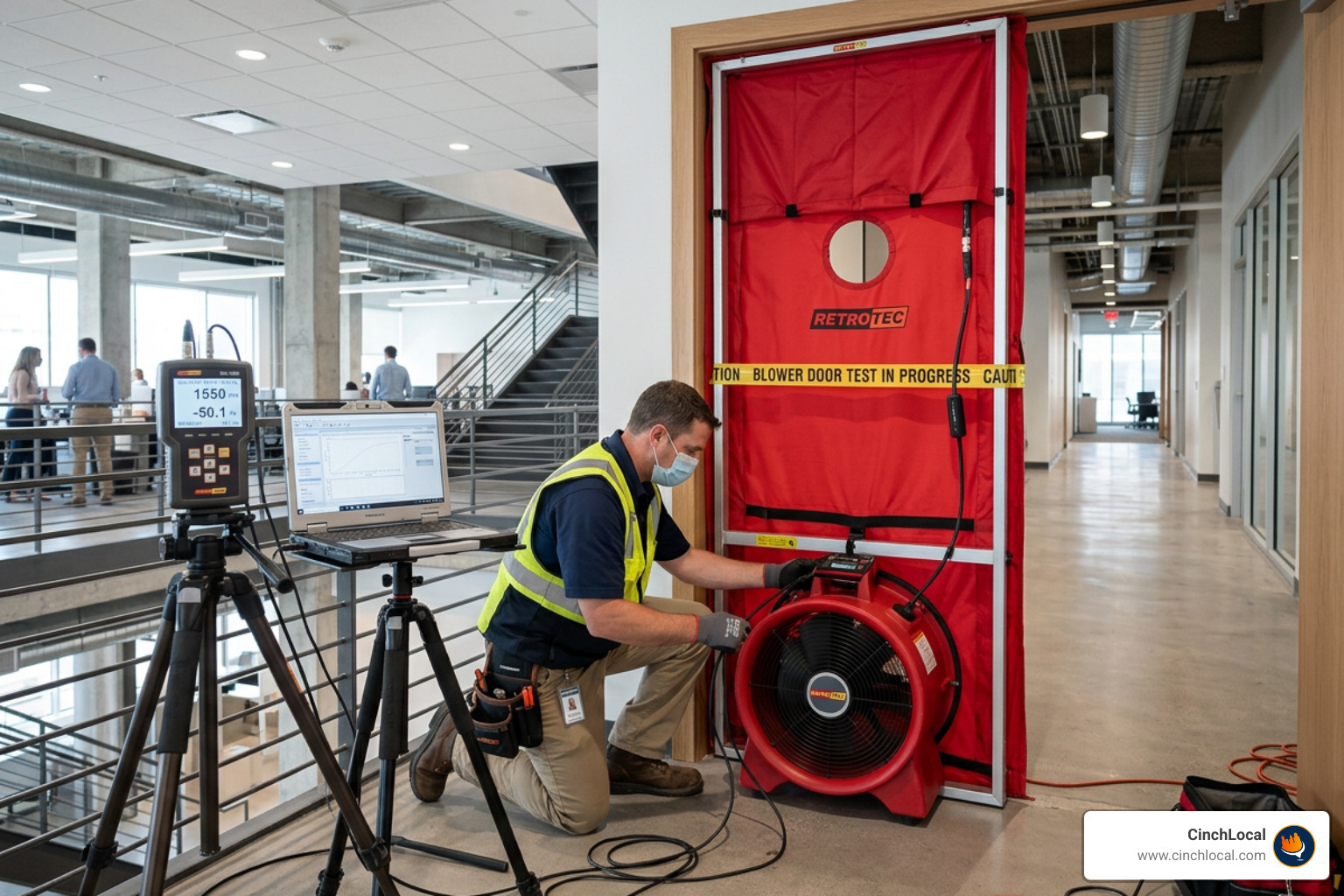
When conducting a roofing energy audit, a certified professional evaluates the entire roof assembly as a thermal barrier. This involves analyzing several critical performance areas:
- Insulation R-Value: Verifying that the existing insulation thickness and material type meet current local building codes.
- Air Barrier Integrity: Identifying areas where conditioned air is escaping through penetrations, parapet transitions, and structural joints.
- Thermal Bridging: Locating structural elements—such as metal fasteners or uninsulated curbs—that conduct heat directly through the roof assembly.
- Solar Reflectance: Assessing the degradation of the roof membrane's reflective coatings, which can dramatically increase summer cooling loads.
For residential roofing contractors looking to integrate energy efficiency into their service offerings, mastering these concepts is essential. You can find practical strategies for improving residential thermal boundaries in The Attic Ventilation and Energy Upgrade Playbook. Additionally, guiding clients toward green upgrades is highly profitable; learn more about these specialized materials in our guide to Going Green with Energy Star Roofing Options.
Advanced Tools and Technologies Used in a Professional Roofing System Audit
To conduct an authoritative audit, technicians rely on highly specialized diagnostic equipment. These tools eliminate guesswork and provide empirical proof of roof performance:
- Infrared Thermography: Handheld thermal cameras or drone-mounted sensors detect temperature differentials on the roof surface. Because wet insulation retains heat longer than dry insulation, evening infrared scans can detect up to 90% of sub-membrane moisture and air leakage points.
- Blower Door Testing: By depressurizing or pressurizing a building, technicians can quantify overall air leakage and locate specific draft pathways at the roof-to-wall connections.
- Capacitance Testing: This non-destructive moisture meter uses electronic signals to measure the electrical impedance of the roofing materials, identifying hidden water pathways.
- Gravimetric Analysis: When non-destructive tests indicate moisture, physical core samples are taken, weighed, oven-dried, and re-weighed in a laboratory to calculate the exact moisture percentage. For specialized forensic investigations of complex water intrusion, consult the experts at specialized forensic investigations.
How Audits Support Long-Term Maintenance and Capital Budgeting
For commercial property managers, a roof is often the single most expensive asset to maintain. A professional roofing system audit is the foundation of a proactive maintenance program, allowing managers to transition from emergency repairs to planned capital expenditures.

Professional roof audits identify minor deficiencies that, when addressed, extend a roof's service life by an average of 5 to 10 years. By identifying and repairing isolated wet insulation sections early, building owners avoid the massive cost of a premature, building-wide roof tear-off.
Furthermore, energy audits for commercial roofs can result in savings of up to 25% on heating and cooling costs. When you present a property owner with a clear return on investment (ROI) projection—showing that the audit and subsequent repairs typically pay for themselves within 2 to 3 years—the decision to move forward becomes simple.
Navigating the Repair vs. Replacement Decision
One of the most valuable outcomes of an audit is a definitive, data-backed recommendation on whether to repair, restore, or completely replace a roof. This decision is based on several objective metrics:
- Percent of Moisture Saturation: As a general industry standard, if more than 20-25% of the sub-roof insulation is saturated, a full replacement is usually required. If moisture is isolated to smaller areas, targeted core replacement and membrane restoration are highly viable.
- Remaining Useful Life (RUL): Analyzing membrane degradation, seam strength, and core samples determines if the existing system can reliably protect the structure for another 5-10 years.
- Structural Integrity: Verifying that the decking and support structures have not been compromised by long-term, hidden leaks. For professional third-party oversight during roof installations and major structural restorations, refer to Installation Oversight Inspection Services.
Certifications and Standards for a Credible Professional Roofing System Audit
To ensure your audit reports carry weight with insurance companies, structural engineers, and corporate boards, they must be conducted by certified professionals adhering to recognized industry standards.
Key certifications include the Building Performance Institute (BPI) and the Residential Energy Services Network (RESNET) HERS standards. These programs train professionals in building science, combustion safety, and advanced thermal diagnostics. In states like California and Georgia, specific energy audits and blower door tests are increasingly mandated by building codes (such as Title 24) during major renovations or HVAC replacements.
To see how advanced, regional forensic frameworks are structured to analyze specific environmental failure mechanics, explore these advanced regional forensic frameworks.
Frequently Asked Questions about Roofing Audits
Who benefits most from a professional roofing system audit?
While high-end residential homeowners planning major energy retrofits benefit from audits, the primary beneficiaries are commercial building owners, institutional facility managers, and multi-family property managers. These stakeholders oversee complex, high-value roofing assets where unexpected failures can result in massive business interruption costs and liability.
How does a roofing energy audit reduce long-term operating costs?
A roofing energy audit identifies thermal bridging, missing insulation, and air barrier failures. By correcting these issues, building owners reduce the run-time of their HVAC equipment, lowering annual heating and cooling expenses by up to 25% and significantly extending the service life of expensive mechanical systems.
How should property owners prepare for a comprehensive roof audit?
Property owners should gather all historical maintenance records, past repair invoices, original architectural drawings, and roof warranties. Additionally, they should identify and document any known interior leak locations and ensure that technicians have clear, safe access to both the building's interior ceiling spaces and the roof deck.
Conclusion
A professional roofing system audit is not an administrative hurdle; it is a critical diagnostic tool that protects property investments, slashes operating costs, and extends the life of valuable building assets. For property owners, auditing removes the guesswork from facility management. For roofing contractors, offering certified, high-tech audits is the ultimate way to win high-value commercial contracts.
At CinchLocal, we specialize in helping professional roofing contractors get their advanced diagnostic services in front of the right commercial audiences. Our tailored roofing SEO services and proprietary Roofer Footprint Expansion System are designed to dominate local search results, driving pre-sold commercial leads directly to your business.
Stop competing on price alone. Position your business as the leading scientific authority in your market. See our proven results and schedule your strategy session with us today to scale your commercial roofing operations.
Want Us to Uncover Hidden 'Footprint Gaps' And Critical Blind Spots That’s Quietly Draining Calls, Jobs, and Profits?
Simply Fill Out The Form Below:
What If You Could Stop Wasting $30K+ a Year on Dead-End Marketing - And Finally Become the Go-To Roofer in Your City?
Other Helpful Articles You Might Enjoy