


Cary Byrd // Founder of CinchLocal
Why Energy Star Roofing Options Matter for Contractors and Homeowners in 2026
If you're evaluating energy star roofing options for your clients, here's what you need to know right now:
Best energy-efficient roofing options available in 2026:
| Roofing Type | Solar Reflectance | Best For |
|---|---|---|
| White/light membrane (low-slope) | 0.65–0.87 initial | Commercial, flat roofs |
| Solar reflective asphalt shingles | 0.25–0.27 initial | Residential steep-slope |
| Metal roofing with reflective coating | High | Residential/commercial |
| Concrete or clay tile | Moderate–high | Residential steep-slope |
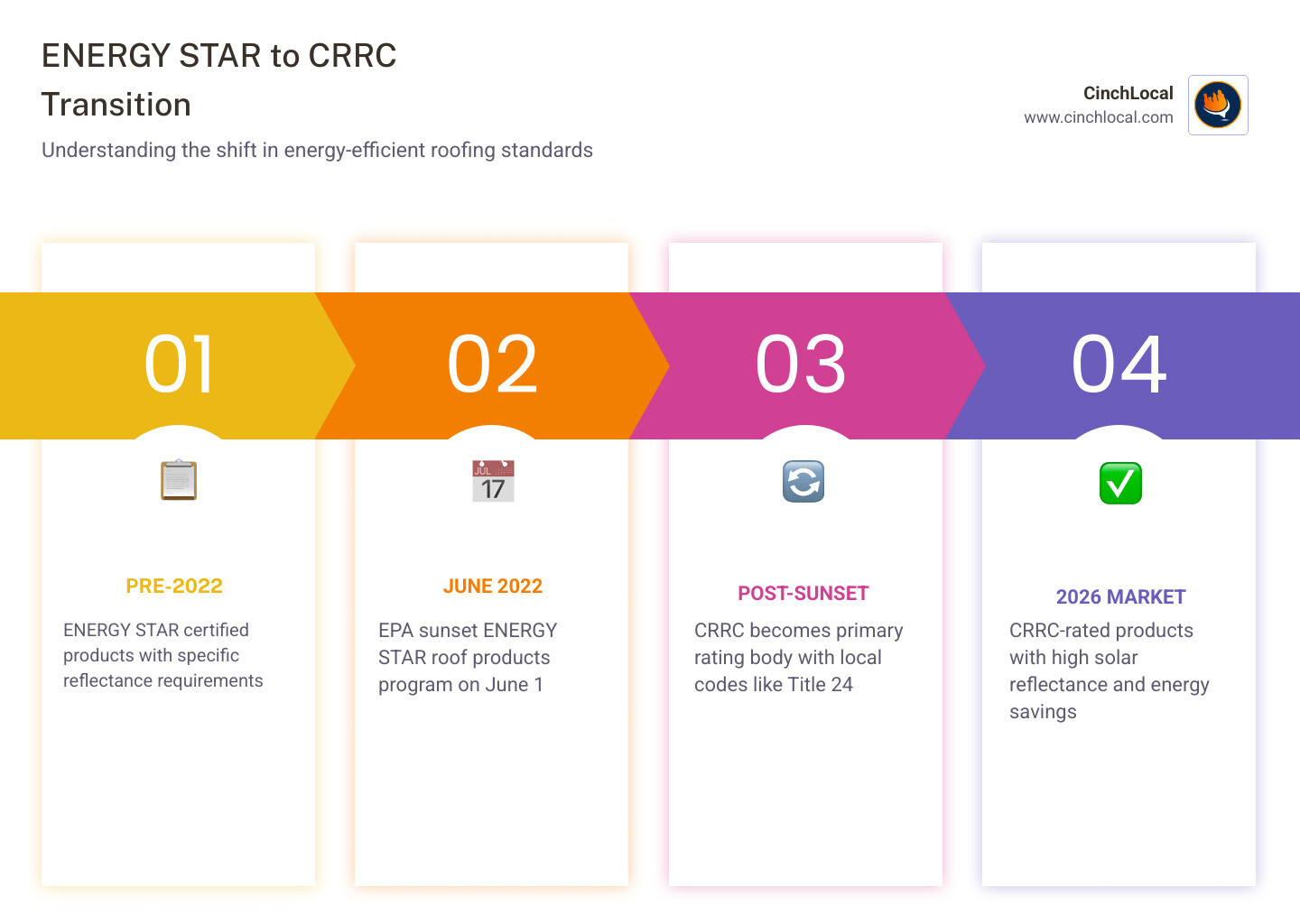
Key fact: The EPA's ENERGY STAR certification for roof products officially ended on June 1, 2022. The Cool Roof Rating Council (CRRC) is now the primary independent body for rating and comparing energy-efficient roofing products.
The roofing industry has quietly shifted — and contractors who understand this shift have a real competitive edge. Cool roofs can stay up to 60°F cooler than traditional dark roofs in summer. That's a powerful selling point. For homeowners paying around $125 a month in utilities, a high-performance roof can translate to over $500 in annual savings .
But here's the problem most roofing contractors face: the rules changed in 2022, and many homeowners — and even some contractors — are still searching for products under the old ENERGY STAR label. Knowing where the market actually stands today, and which products now carry meaningful ratings, is what separates contractors who close deals from those who lose them to better-informed competitors. As roofing marketing experts who work with contractors daily, we've seen how understanding energy-efficient roofing drives more qualified leads and stronger client trust.
I'm Cary Byrd, CEO of CinchLocal, and I've spent years helping roofing contractors market smarter by staying ahead of industry shifts — including the move away from ENERGY STAR toward CRRC-rated energy star roofing options and cool roof standards. In the sections below, I'll break down exactly what's changed, which products perform best, and how to turn this knowledge into a business advantage.
Energy star roofing options vocab to learn:
Navigating Modern Energy Star Roofing Options and Cool Roof Standards
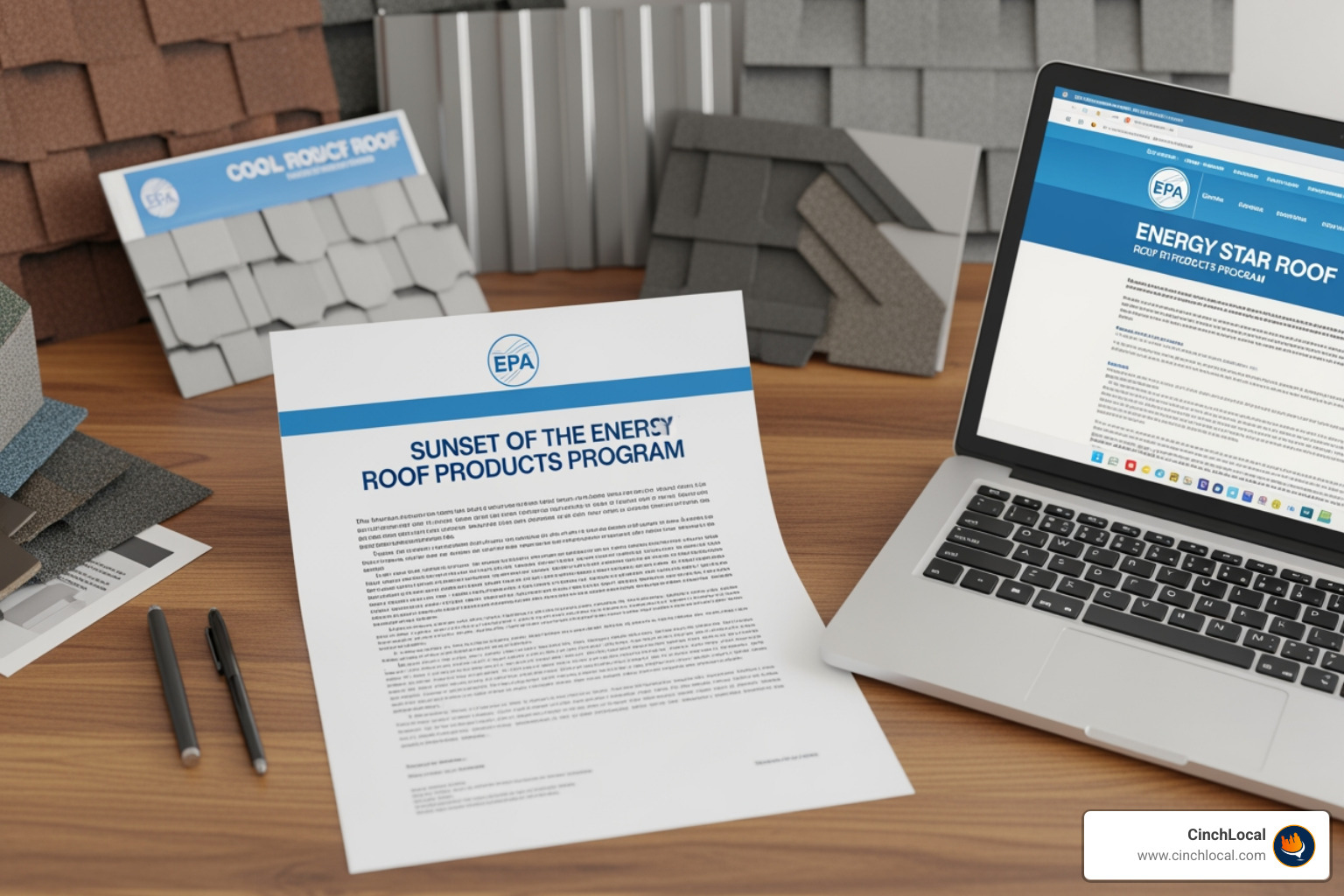
As we move through 2026, it is vital for roofing business owners to understand that while the "ENERGY STAR" label was once the gold standard for marketing energy efficiency, the landscape has evolved. The ENERGY STAR Roof Products program was sunset on June 1, 2022. This wasn't a failure of the technology, but rather a strategic decision by the EPA to allow the market to be driven by more rigorous building codes and specialized rating bodies.
For contractors in our service areas—including California, Ohio, Tennessee, and Georgia—the primary resource for verifying energy star roofing options is now the Cool Roof Rating Council (CRRC) Rated Roof Products Directory. This database provides the verified data on solar reflectance and thermal emittance that you need to prove the value of a high-performance roof to your customers.
The Legacy of the Energy Star Roofing Options Program
To understand where we are, we have to look at the standards that built the industry. The Version 3.0 Program Requirements for Roof Products established the benchmarks we still use to judge performance today.
Under these requirements, products were categorized by slope:
- Low-Slope Roofs (≤ 2:12): Required an initial solar reflectance of ≥ 0.65 and a three-year aged reflectance of ≥ 0.50.
- Steep-Slope Roofs (> 2:12): Required an initial solar reflectance of ≥ 0.25 and a three-year aged reflectance of ≥ 0.15.
These standards forced manufacturers to innovate, leading to the development of the highly reflective granules and coatings we install today. Even though the official ENERGY STAR label for roofing has sunset, these technical benchmarks remain the baseline for what constitutes a "cool roof."
Selecting High-Performance Energy Star Roofing Options for 2026
In 2026, the conversation has shifted from simple labels to the Solar Reflectance Index (SRI) . SRI is a value that combines both reflectance and emittance into a single number. For many of our clients, particularly those looking for energy efficient roofing in California, meeting specific SRI thresholds is no longer optional—it’s a legal requirement.
California Title 24, Part 6, and Los Angeles County Title 31 often require an SRI of at least 20 for steep-slope residential roofs. By presenting products that exceed these standards, you aren't just selling a roof; you're providing a compliance solution and a long-term financial asset.
CTA: Want to dominate your local market by being the go-to expert for high-efficiency roofing? Our Google Maps local SEO for roofers can put your business at the top of the map for "cool roof" and "energy efficient" searches.
The Science of Cool Roofs: Solar Reflectance and Thermal Emittance
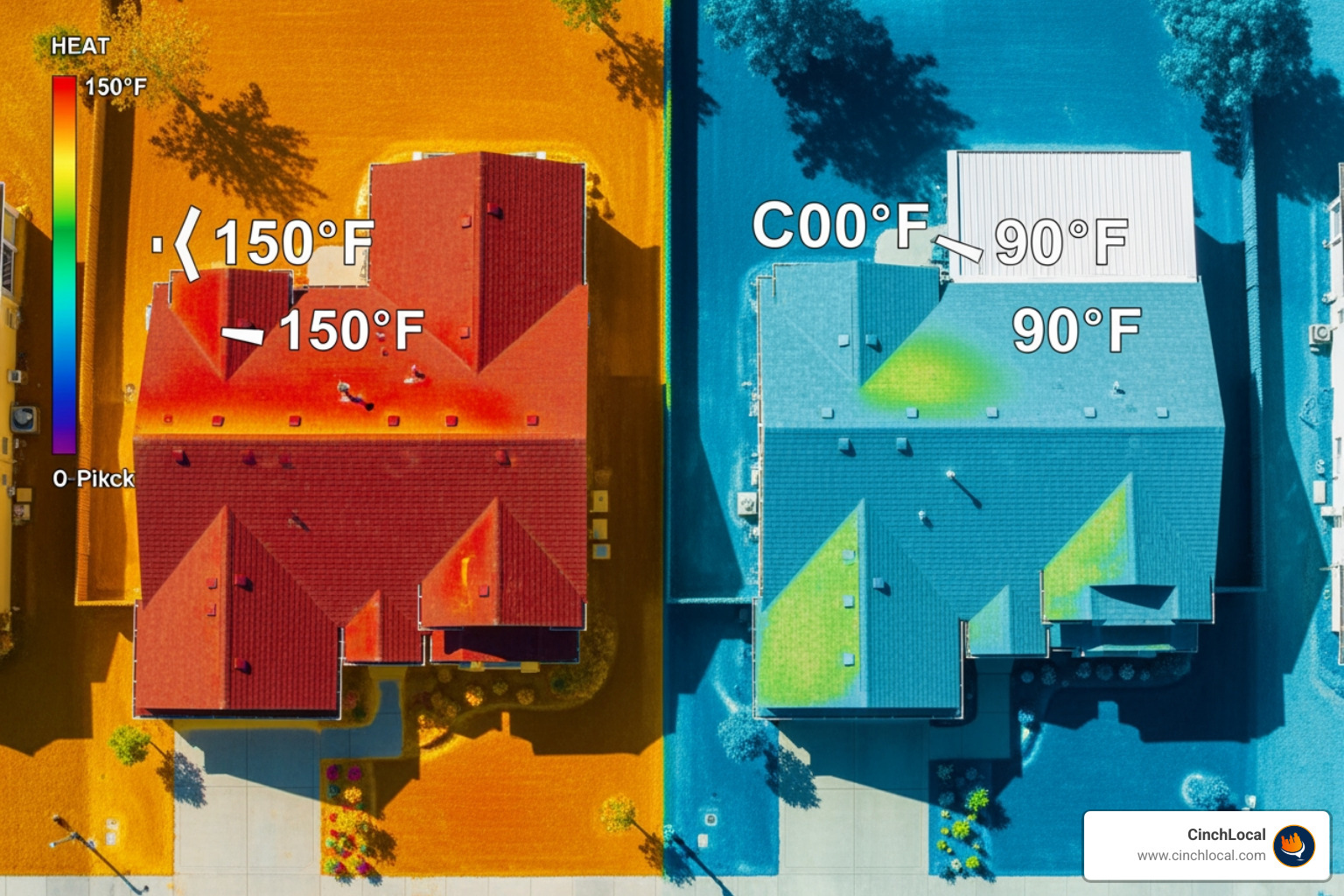
To sell energy star roofing options effectively, you must be able to explain the "why" to your clients. A cool roof works through two primary physical properties: solar reflectance and thermal emittance.
- Solar Reflectance: This is the fraction of solar energy that is reflected by the roof. Think of it like wearing a white t-shirt on a sunny day versus a black one.
- Thermal Emittance: This is the ability of the roof surface to radiate absorbed heat. Even the best roofs absorb some energy; emittance is how quickly the material can "shed" that heat back into the atmosphere rather than letting it seep into the attic.
When these two work together, they combat the Urban Heat Island effect , where cities become significantly warmer than surrounding rural areas due to dark, heat-absorbing surfaces.
Radiative Properties and Surface Temperature
The impact on surface temperature is staggering. A clean white roof that reflects 80% of sunlight can stay up to 50°F cooler than a grey roof reflecting only 20% on a typical summer afternoon. In extreme conditions, cool roofs can stay up to 60°F cooler than traditional black asphalt.
Modern technology has made it possible to achieve these results without sacrificing aesthetics. Through the use of infrared-reflective pigments, manufacturers can now offer dark-colored shingles and metal panels that stay cool by reflecting the non-visible part of the solar spectrum. This is a game-changer for homeowners who want the look of a charcoal roof but the performance of a white one. For more on how this impacts the whole home, check out The Attic Ventilation and Energy Upgrade Playbook.
Long-Term Performance and Maintenance
A roof's energy efficiency isn't just about day one; it's about year ten. This is why the industry emphasizes aged reflectance . Over three years, dust, soot, and microbial growth (like algae) can degrade a roof's ability to reflect light.
As a contractor, you should emphasize:
- Algae Resistance: Products like Landmark Solaris use advanced granules to prevent the dark streaks that absorb heat.
- Maintenance: Regular cleaning can restore much of a roof's initial reflectance.
- Durability: Cool roofs often last longer because they experience less thermal expansion and contraction. If a client is worried about storm damage affecting their investment, refer them to our Roof Repair After Hail Guide.
Top Energy-Efficient Roofing Materials for 2026
When helping a client evaluate energy star roofing options , the choice of material is the biggest factor in both cost and performance.
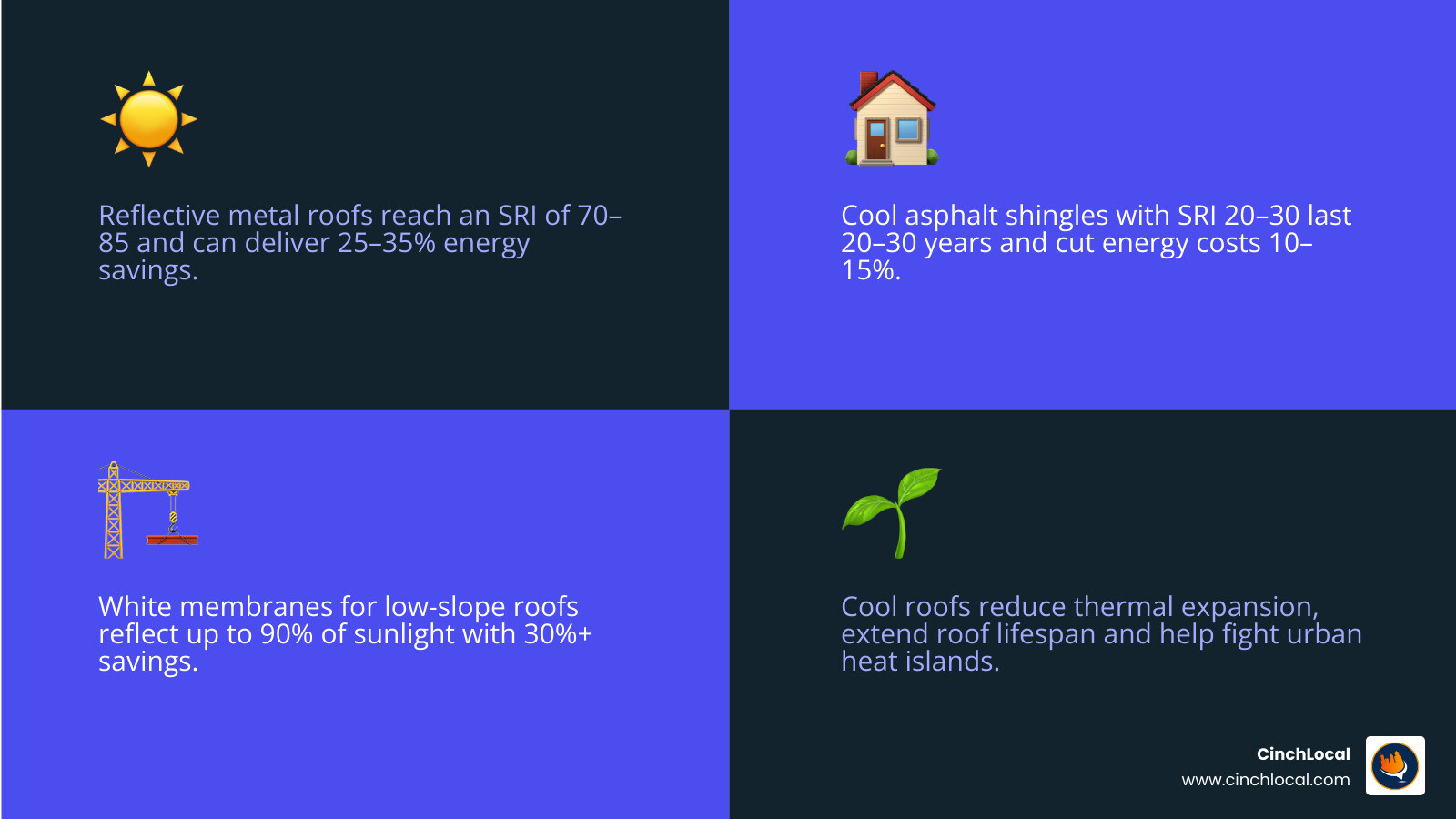
| Material | Typical SRI | Expected Lifespan | Energy Savings Potential |
|---|---|---|---|
| Reflective Metal | 70–85 | 40–70 Years | 25%–35% |
| Cool Asphalt Shingles | 20–30 | 20–30 Years | 10%–15% |
| Clay/Concrete Tile | 30–50 | 50–100 Years | 15%–20% |
| White Membrane (TPO/PVC) | 80+ | 20–30 Years | 30%+ (Low Slope) |
Solar Reflective Asphalt Shingles
For the average residential project, reflective asphalt shingles are the most common choice. Several manufacturers offer "Cool" lines that meet the SRI 20+ requirement:
- CertainTeed Landmark Solaris: These shingles can reduce roof temperatures by up to 20% in the summer.
- Malarkey Highlander Cool & Vista Cool: These products use 3M Cool Roofing Granules to reflect 20-25% of the sun's energy, compared to just 3-12% for standard black shingles.
- IKO Dynasty Cool Colors Plus: These shingles feature an SRI of 20 or greater, increasing reflectivity by 25% over standard requirements.
Metal and Tile Roofing Solutions
Metal roofing is arguably the king of energy star roofing options for steep-slope buildings. Homeowners frequently report energy savings of 25% to 35% with metal roofs. Because metal has low thermal mass, it doesn't store heat the way asphalt or tile does. When combined with a reflective coating, it becomes a powerhouse of efficiency. You can find a deeper dive in our Ultimate Guide to Metal Roofing Pros and Cons.
Tile roofing, while heavier and more expensive, offers excellent natural ventilation and thermal mass properties, making it ideal for the hot, sunny climates found in our California and Georgia service areas.
Low-Slope and Commercial Options
For flat or low-slope roofs, white membranes (TPO or PVC) are the standard. These products often reach the highest reflectance levels, with some "best available" models reflecting nearly 90% of sunlight. For commercial clients looking for durability and efficiency, multi-ply rubber roofing with a reflective cap sheet or coating is another excellent alternative.
Business Benefits: ROI and Energy Savings for Your Clients
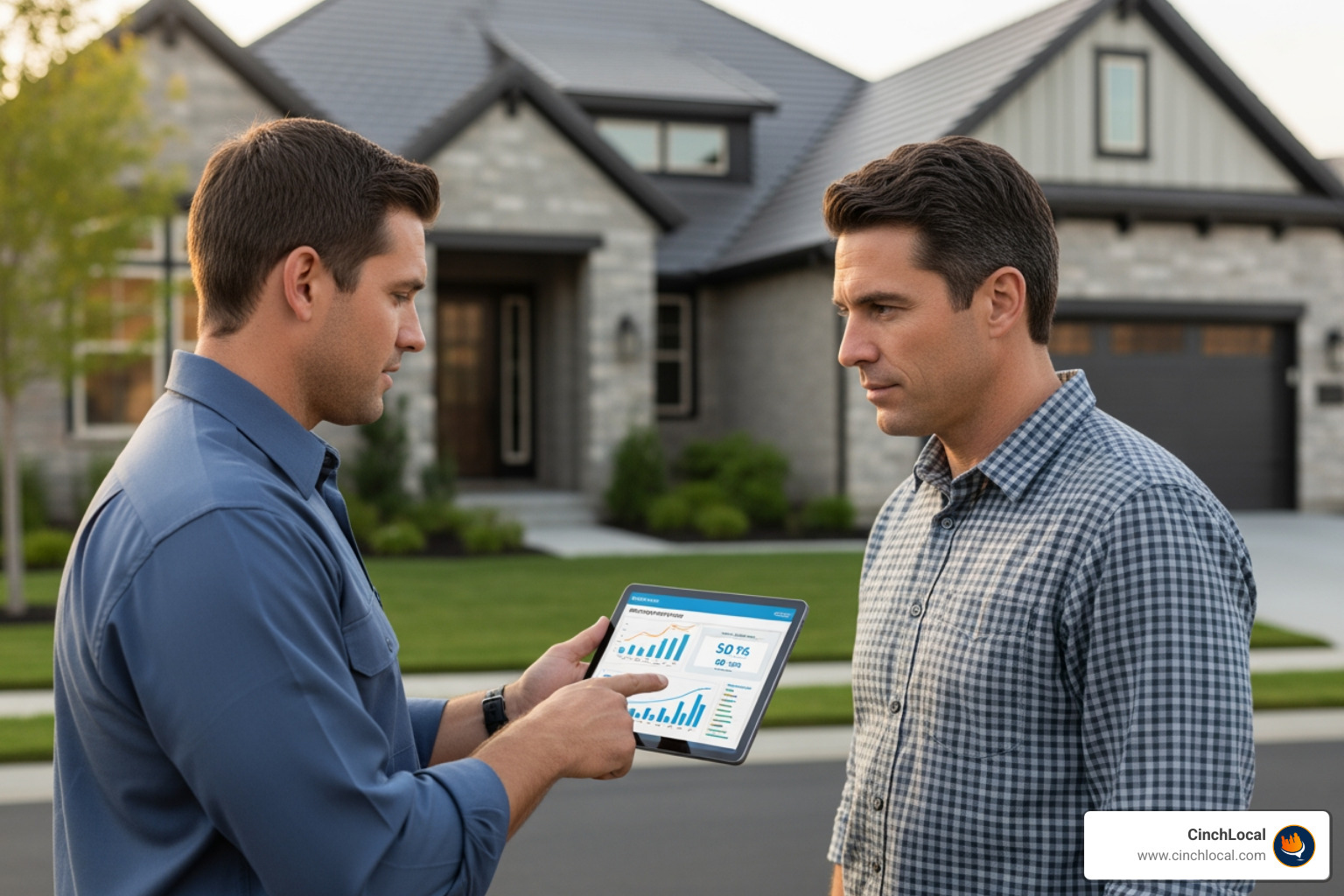
Selling energy star roofing options is about the "Return on Investment." According to FEMP calculations, an ENERGY STAR-qualified cool roof product is cost-effective if priced no more than $0.64/ft² above a standard model. In many cases, the "best available" models can save up to $1.11/ft² over the life of the roof.
For a 2,000-square-foot roof, that’s a lifetime saving of over $2,200 just in material efficiency, not including the reduced strain on the HVAC system. By positioning yourself as the expert who calculates these savings, you generate pre-sold leads who view you as a consultant rather than just a laborer.
Calculating the Value Proposition
If a homeowner pays $125 per month in utilities, a 25% reduction in cooling costs can add up to over $500 in annual savings . Over a 20-year shingle life, that's $10,000—more than enough to cover the price premium of a "cool" shingle.
For federal agencies or commercial clients, these requirements are often mandatory. Federal purchasing guidelines require the selection of products that meet these efficiency standards because they are proven to be life-cycle cost-effective.
Environmental Impact and Sustainability
Modern homeowners, especially in 2026, care about more than just their wallets. They care about the planet. Brands like Malarkey have pioneered smog-reducing technology in their shingles.
- Pollution Reduction: One average-sized roof can fight emission air pollution equivalent to planting two trees.
- Landfill Diversion: By using upcycled rubber and plastics, a single roof can divert roughly 5 rubber tires and 3,200 plastic bags from landfills.
When you market these benefits, you aren't just selling a roof; you're selling a cleaner neighborhood.
CTA: Ready to turn your expertise into more contracts? CinchLocal specializes in helping roofers highlight their unique selling points to attract high-value clients. Contact us today to see how our Roofer Footprint Expansion System can grow your business.
Frequently Asked Questions about Energy Efficient Roofing
Why was the ENERGY STAR Roof Products program sunset?
The EPA sunset the program on June 1, 2022, because the market had matured. Energy-efficient roofing is now largely driven by state building codes (like California's Title 24) and the Cool Roof Rating Council (CRRC), which provides more detailed, independent testing than the original ENERGY STAR program.
How much can a cool roof save a homeowner on energy bills?
While results vary by climate and insulation, homeowners frequently report energy savings of 25% to 35% . This is most pronounced with metal roofing or high-reflectance white membranes. For an average home, this can result in savings of $500 or more annually.
What is the difference between solar reflectance and thermal emittance?
Solar reflectance is the roof's ability to bounce sunlight (and its heat) away from the building. Thermal emittance is the roof's ability to release the heat it does absorb. A truly "cool" roof needs high values in both categories to be effective.
Are "cool" shingles only available in white?
No! Thanks to infrared-reflective pigments, manufacturers now offer energy star roofing options in dark greys, browns, and even blacks that still meet cool roof requirements by reflecting the invisible heat-carrying portion of the sun's rays.
Conclusion
The era of the ENERGY STAR logo on roofing may have ended in 2022, but the demand for energy star roofing options has never been higher. In 2026, being a successful roofing contractor means understanding the nuances of SRI, CRRC ratings, and the long-term ROI of materials like Vista Cool shingles or reflective metal systems.
By educating your clients on the science of solar reflectance and the environmental benefits of smog-reducing or upcycled materials, you build a brand based on authority and trust. This specialized knowledge is exactly what helps you stand out in competitive markets like Ohio, Tennessee, Georgia, and California.
At CinchLocal, we believe that your technical expertise deserves a platform. We help roofing contractors translate their knowledge of high-performance systems into digital visibility that generates consistent, high-quality leads. Don't let your competition be the one to tell your customers about the benefits of cool roofing.
Take the next step in growing your roofing business. Schedule a consultation with CinchLocal today and let's put your business on the map.
Want Us to Uncover Hidden 'Footprint Gaps' And Critical Blind Spots That’s Quietly Draining Calls, Jobs, and Profits?
Simply Fill Out The Form Below:
What If You Could Stop Wasting $30K+ a Year on Dead-End Marketing - And Finally Become the Go-To Roofer in Your City?
Other Helpful Articles You Might Enjoy