
Step-by-Step Guide to Roofing Marketing

Cary Byrd // Founder of CinchLocal
What is Roofing Marketing and Why is it Essential?

Roofing marketing is the process of making your contracting business visible to local homeowners, earning their trust, and converting that interest into booked jobs — consistently, not just after the next hailstorm. If you're tired of feast-or-famine revenue cycles and want a steady pipeline of pre-sold leads, this guide is for you.
What is roofing marketing, in plain terms?
| Question | Quick Answer |
|---|---|
| What is it? | Strategies that attract, nurture, and convert local homeowners who need roofing work |
| Why does it matter? | 97% of consumers search online before hiring a local contractor |
| Best channels in 2026? | Google Maps, Local SEO, Google Ads, LSAs, social media, and referral systems |
| Biggest mistake? | Relying on storms or word-of-mouth alone instead of building a predictable system |
| How long to see results? | Paid ads: days. SEO: 3–6 months. Referrals: ongoing |
| Typical budget? | 5%–15% of gross annual revenue, depending on growth goals |
The roofing industry generates over $62 billion in annual revenue in the U.S. — and it's growing. But that also means competition is fierce. Most homeowners contact only one or two roofers after a storm, and 68% check Google reviews before they ever pick up the phone. If your business isn't showing up and building trust before that moment, you're invisible.
That's exactly the problem professional roofing marketing services are built to solve.
I'm Cary Byrd , CEO and founder of CinchLocal, a roofing marketing agency based in Boerne, TX — and I've spent years building digital systems specifically for roofing contractors who want predictable, exclusive leads rather than shared scraps from third-party platforms. This guide distills everything I've learned about roofing marketing into a clear, actionable playbook you can start using today.
Roofing marketing is the strategic process of positioning a contracting business to attract, nurture, and convert local property owners who need roof repairs, replacements, or commercial services. It is not a single flyer, a lone yard sign, or a random Facebook post; it is a cohesive, multi-channel system designed to build authority and capture demand exactly when a homeowner realizes their roof is compromised.
To build a sustainable business in 2026, you must stop relying entirely on "storm chasing" or unpredictable word-of-mouth referrals. While severe weather events generate sudden, massive spikes in local demand, relying on Mother Nature to run your business is a high-risk gamble.
Specialized marketing is essential for roofing contractors due to several unique industry dynamics:
- High Stakes and High Transaction Values: A standard residential roof replacement typically costs between $10,000 and $30,000. Because this is one of the most expensive home improvement projects a homeowner will ever face, their path to purchase is defined by deep research and intense skepticism.
- Widespread Consumer Skepticism: The industry is plagued by "storm chasers"—unlicensed, out-of-state contractors who descend on storm-impacted neighborhoods, collect insurance checks, perform sub-par work, and vanish. Your marketing must immediately prove that you are a trusted, permanent local pillar.
- The Power of Proximity and Neighbor Influence: Roofing is a highly visual trade. When you install a roof on a home, the surrounding neighbors watch the entire process. Effective marketing leverages this physical presence to build digital dominance in that specific ZIP code.
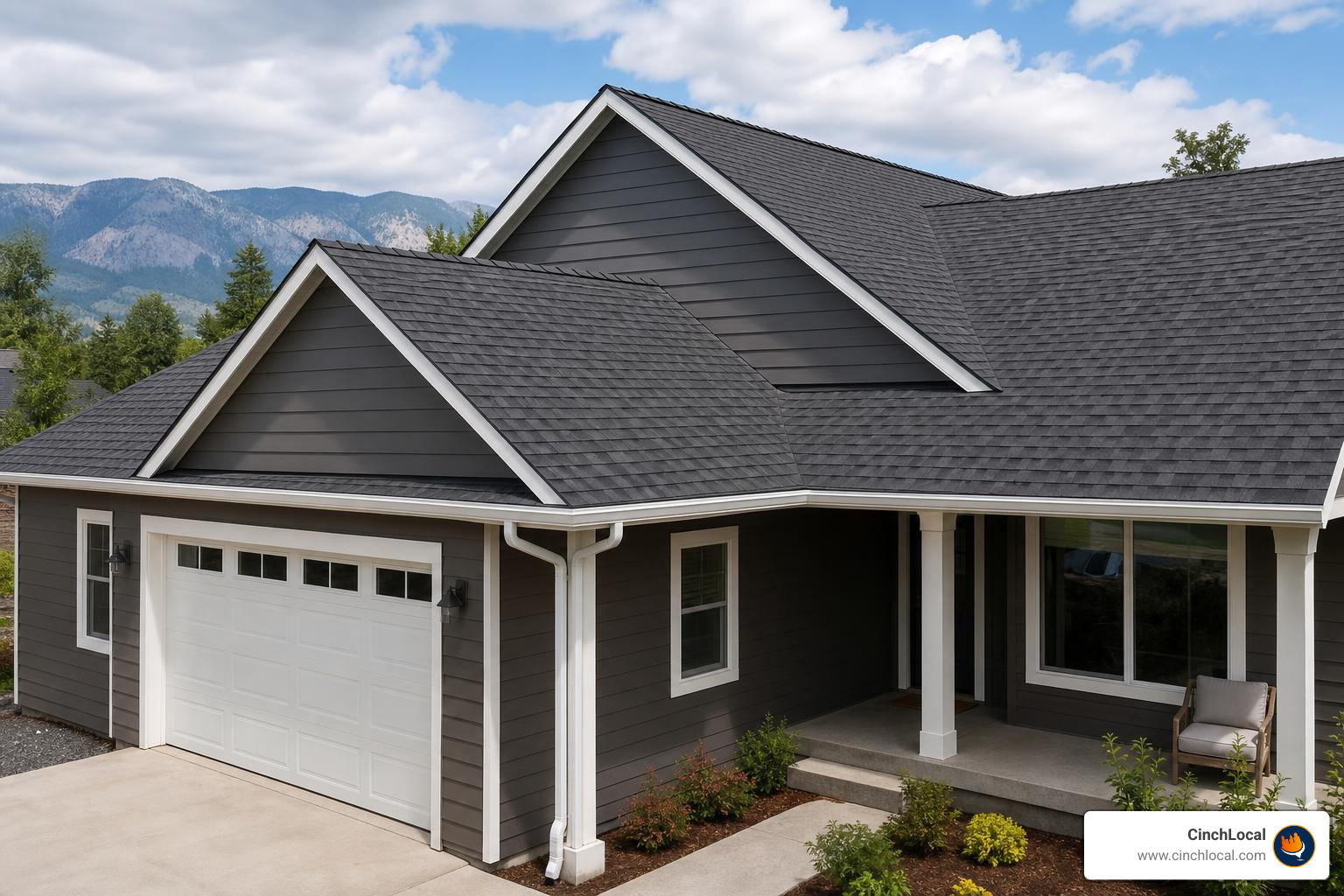
Modern homeowners are incredibly tech-savvy. Over 85% of Americans use the internet to research local services, and an overwhelming 97% of consumers search online specifically to find local roofing services. If your business lacks a prominent online footprint, you are actively giving away high-ticket projects to your competitors.
To master this transition from simple manual outreach to highly automated, predictable customer acquisition, read our comprehensive roofing lead generation guide.
Traditional vs. Digital Roofing Marketing Strategies in 2026
While traditional tactics like yard signs and truck wraps are excellent for building local familiarity, digital marketing channels deliver a 4x higher average return on investment (ROI) by targeting homeowners at the exact moment of high-intent search.
Traditional marketing is fundamentally "disruptive"—it attempts to grab attention through direct mail, door knocking, or billboard ads when the homeowner may not actually need a roofer. Digital marketing, on the other hand, is "intent-driven." When a homeowner types "emergency roof repair near me" into Google at 2:00 AM during a rainstorm, they are ready to buy immediately.
To understand where to allocate your hard-earned budget, look at how traditional and digital channels compare across key performance metrics:
| Marketing Channel | Cost Per Lead (CPL) | Scalability | Tracking Accuracy | Setup Speed |
|---|---|---|---|---|
| Google Maps / Local SEO | $15 – $35 | Extremely High | High (Via Call Tracking & CRM) | Slow (3–6 Months) |
| Google Pay-Per-Click (PPC) | $50 – $120 | High | Perfect (Direct Attribution) | Instant (1–2 Days) |
| Direct Mail & Door Hangers | $75 – $150 | Moderate | Low (Requires Promo Codes) | Moderate (1–2 Weeks) |
| Door Knocking / Canvassing | $100 – $200 (Labor) | Low | Moderate (Manual Input) | Instant |
| Yard Signs & Truck Wraps | Low (One-Time Cost) | Low | Very Low | Slow |
If you want to free your sales reps from cold doors and manual tracking, learn how to generate high-quality leads without door knocking using modern inbound systems.
The most successful roofing companies do not completely abandon traditional marketing; instead, they use digital tools to supercharge it. For example, when you perform a "3-block knock" (knocking on the three houses to the left, right, and across the street of an active job site), your conversion rate skyrockets if those homeowners have already seen your branded trucks, your local yard signs, and your targeted local Facebook ads.
To build a balanced system that drives consistent commercial and residential contracts, explore the top roofing marketing strategies used by industry leaders. By aligning your marketing claims with professional installation standards verified by the National Roofing Contractors Association (NRCA), you instantly elevate your brand above the fly-by-night competition.
Step-by-Step Digital Roofing Marketing Playbook
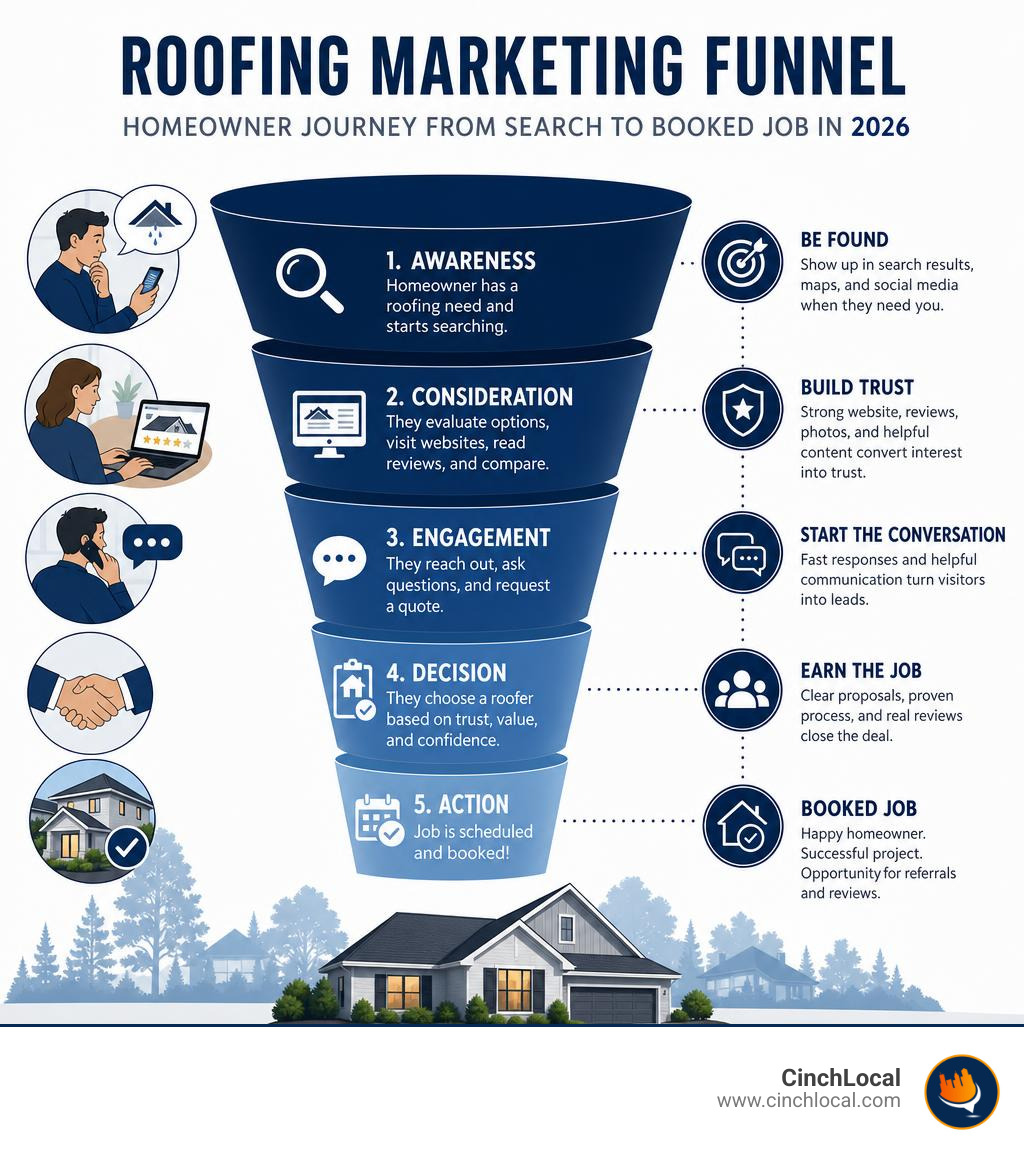
A successful digital playbook requires an omnichannel approach that unifies local search visibility, paid acquisition, and automated lead nurturing into a single, cohesive system. When these channels work in harmony, they create a "billboard effect" across the internet. A homeowner sees your Local Services Ad at the top of Google, finds your 5-star Google Business Profile in the Map Pack, reads a helpful blog post on your website, and is retargeted with drone footage of your local projects on Facebook.
This level of brand consistency builds massive trust before the prospect ever speaks to your sales team.
Ready to build a predictable pipeline of roofing jobs? Contact CinchLocal today for a tailored digital marketing blueprint designed for your service area.
Local SEO and Google Maps for Roofing Marketing
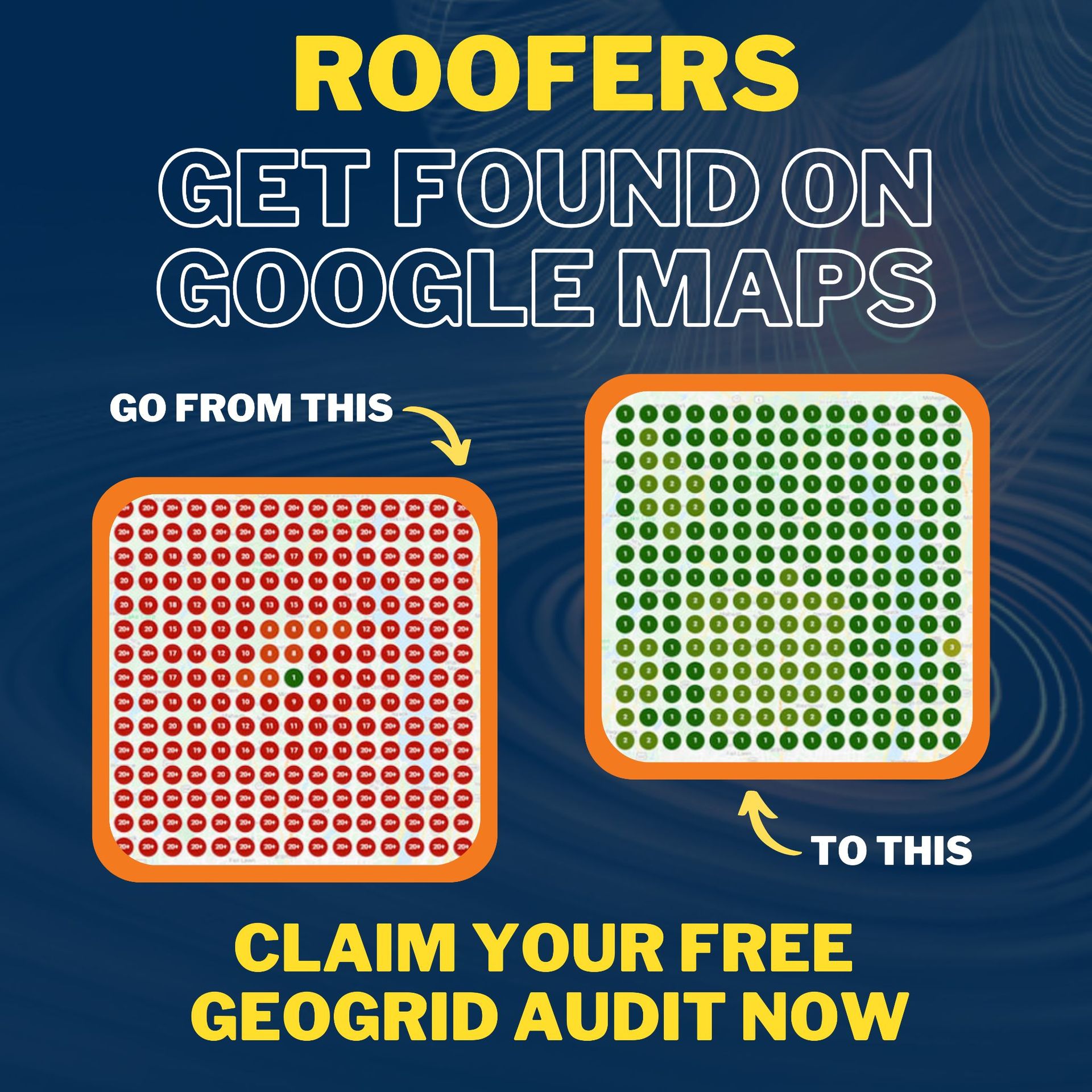
Google Maps optimization is the single most cost-effective digital marketing channel for roofers, capturing up to 44% of all local search clicks through the Google Map Pack.
If your business does not rank in the top three positions of the Map Pack for search terms like "roof replacement Dallas" or "best roofer near me," you are missing out on the highest-intent leads in your market. Google's local search algorithm relies heavily on three core pillars: distance, relevance, and prominence .
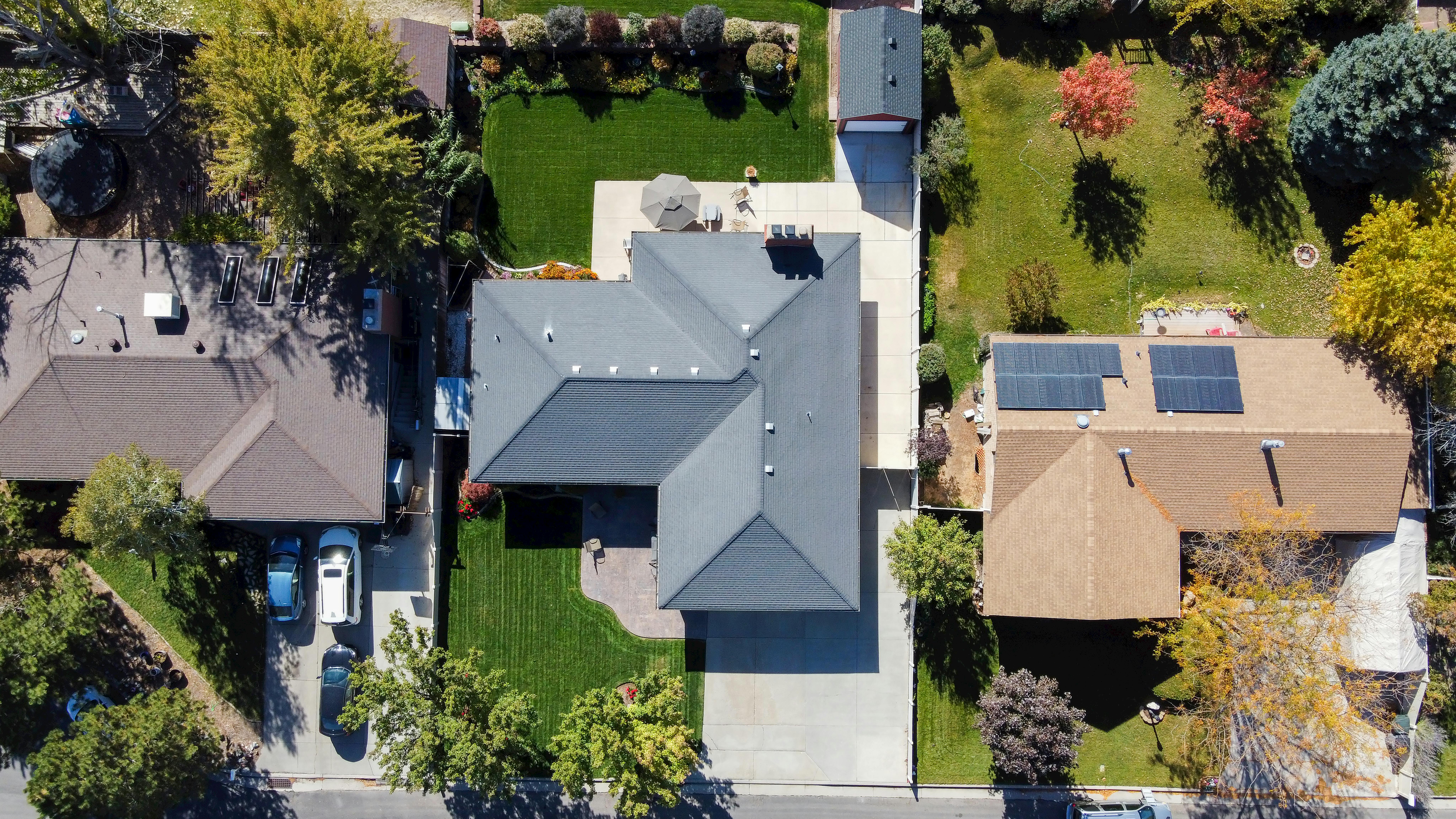
To dominate the Map Pack in 2026, follow these highly actionable optimization steps:
- Claim and Verify Your Google Business Profile (GBP): Ensure your business name, address, and phone number (NAP) are 100% consistent across your website and all online directories.
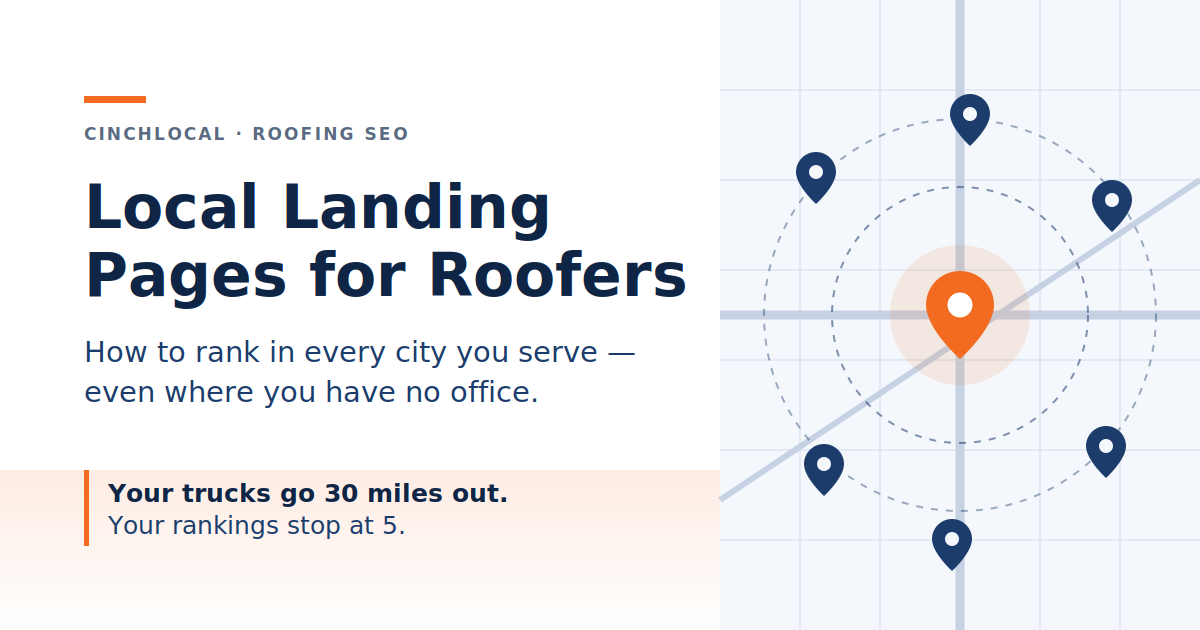
- Publish Service-Specific City Pages: Do not list all your services on a single homepage. Build dedicated, high-performance landing pages for every major city in your service area (e.g., "Roof Replacement in Atlanta, GA" or "Memphis, TN Commercial Roofing").
- Optimize for Local Justifications: Google frequently pulls snippets of text from your website reviews or GBP posts to justify why your business is showing up in search results. Ensure your website content explicitly mentions your core services and target cities.
- Build Geographically Relevant Backlinks: Earn high-quality links from local organizations, chamber of commerce directories, youth sports sponsorships, and local suppliers to prove to Google that you are a highly prominent, trusted local business.
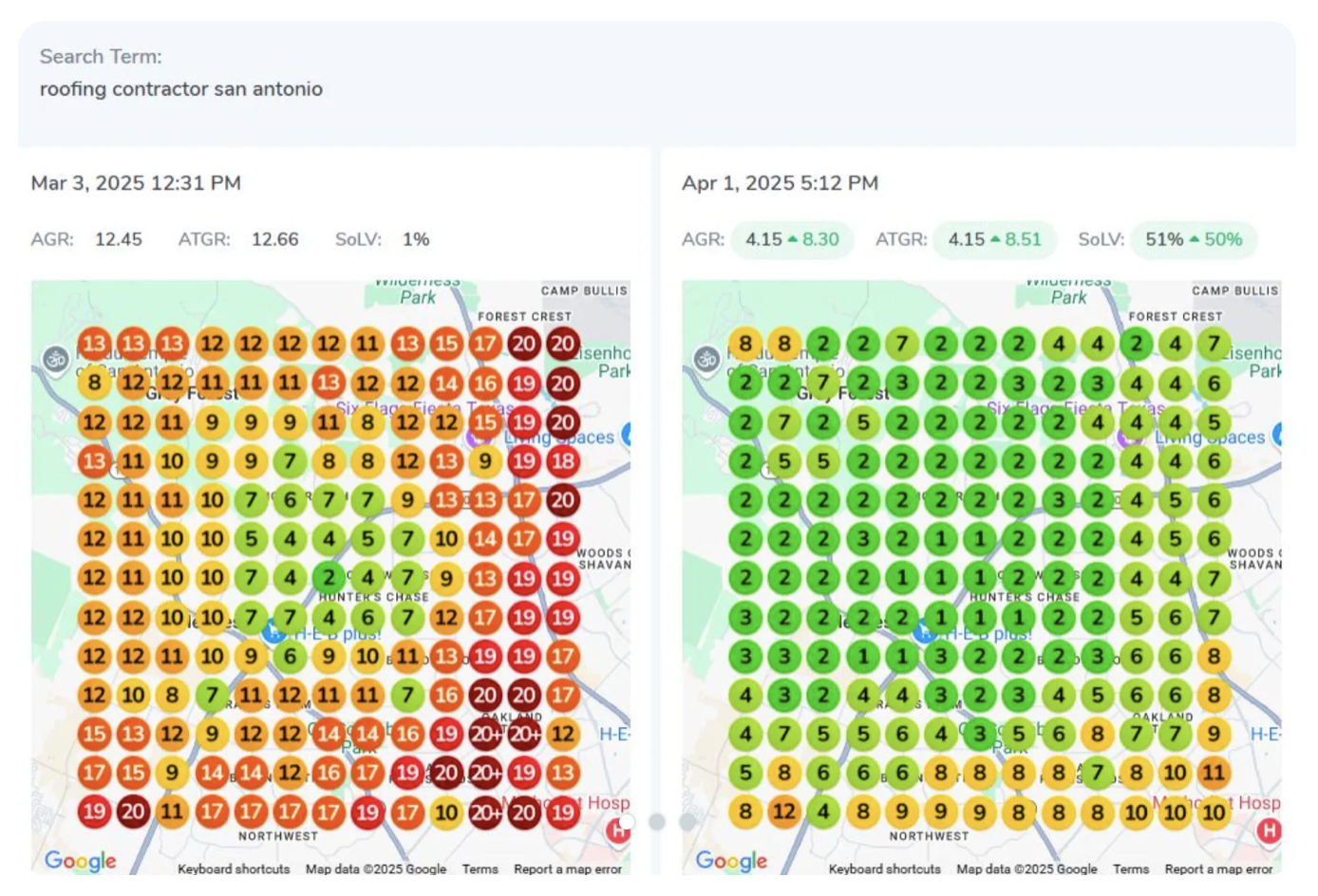
At CinchLocal, we have perfected this process. You can dominate local search results by optimizing your Google Business Profile with our specialized Google Maps local SEO for roofers system. To see the proof of how this system transforms local businesses, view real-world campaign performance and ranking wins on our CinchLocal results page.
Paid Advertising and PPC in Roofing Marketing
Pay-Per-Click (PPC) advertising provides immediate search visibility, allowing roofing contractors to target high-intent keywords and storm-damaged areas instantly.
While organic SEO builds long-term equity, paid ads allow you to turn on the lead faucet at a moment's notice. To maximize your ad spend and avoid wasting thousands of dollars on low-quality clicks, we recommend a three-layer paid search strategy :
- Layer 1: Google Local Services Ads (LSAs): These ads appear at the absolute top of Google search results, featuring the prestigious "Google Guaranteed" badge. You pay strictly per qualified lead rather than per click, making LSAs an incredibly low-risk entry point for paid acquisition.
- Layer 2: Google Search Ads (PPC): Target highly specific, high-intent keywords like "emergency hail damage repair" or "slate roof replacement cost." To protect your budget, you must aggressively build a list of negative keywords (such as "DIY roof repair," "cheap shingles," or "roofing jobs") to prevent your ads from showing on irrelevant searches.
- Layer 3: Social Media Retargeting (Facebook & Instagram): Use Facebook Ads to stay top-of-mind. When a homeowner visits your website but doesn't fill out a form, retarget them on social media with high-quality drone footage of your active job sites, before-and-after project transformations, and local client video testimonials.
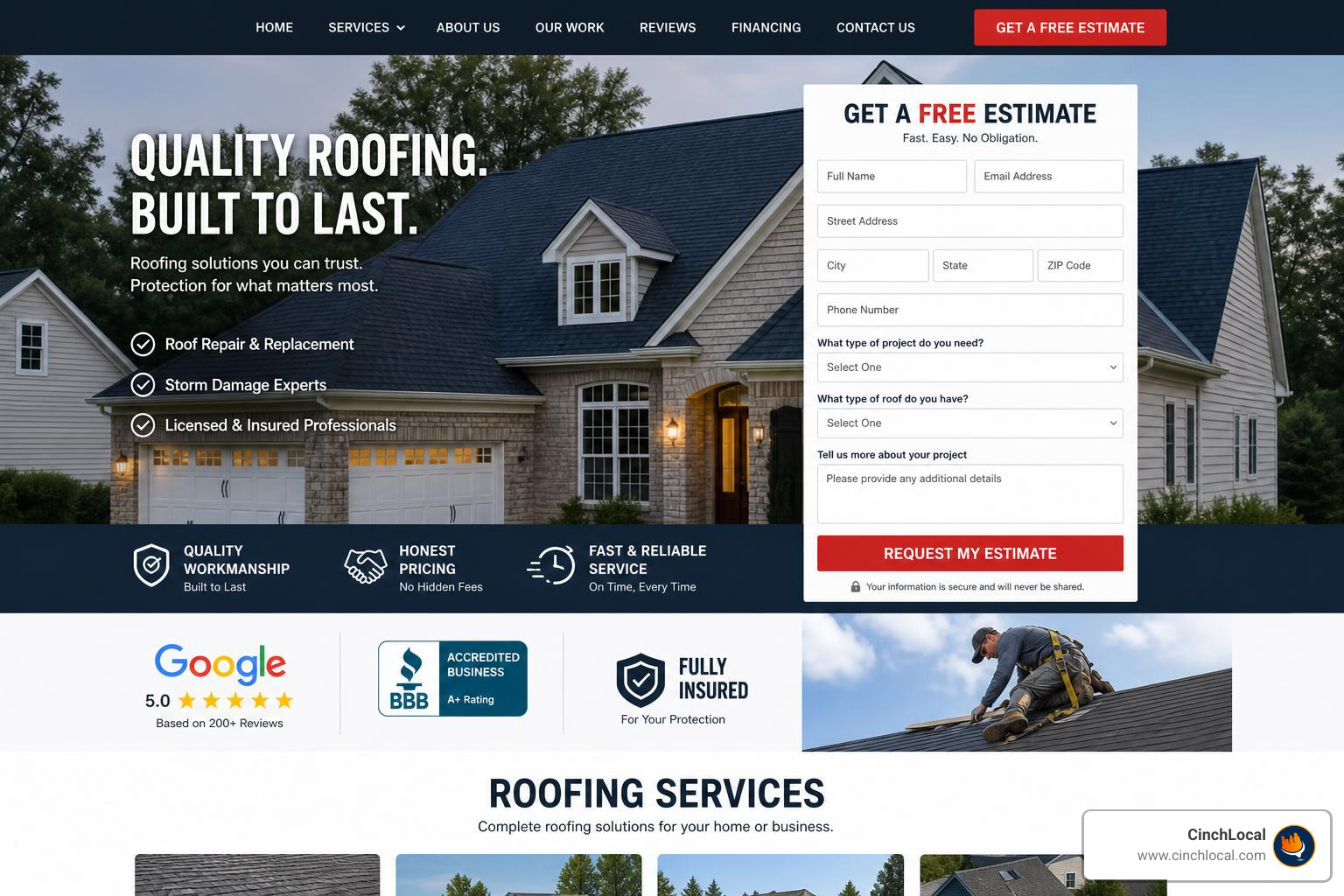
To master search engine advertising, read our guide on online advertising for roofers. If you want to learn how to build profitable social media campaigns, read our blueprint on roofing Facebook ads.
To ensure your campaigns are performing optimally, refer to the WordStream Home Services Advertising Benchmarks to compare your cost-per-click (CPC) and conversion rates against industry averages.
Building a Referral Flywheel and Reputation Management
A systematic referral and review collection process turns completed roof installations into a self-sustaining lead generation engine.
In the roofing industry, trust is the ultimate currency. Because homeowners are highly skeptical of contractors, they rely heavily on social proof. Referral marketing generates 3x to 5x higher conversion rates compared to cold digital channels, and referral leads typically yield a 25% higher profit margin because they are less sensitive to price.
To build a high-velocity reputation and referral machine, you must implement automated systems:
- Automate the Ask: Do not rely on your project consultants or crew to remember to ask for a review. Set up your CRM to automatically send a personalized SMS and email review link within 30 minutes of final job completion.
- Focus on Review Velocity and Detail: Google's algorithm prioritizes businesses that receive steady, consistent reviews over those with a massive block of old reviews. Encourage customers to mention specific details in their reviews, such as the type of roof installed (e.g., "architectural shingles" or "standing seam metal") and their city.
- Incentivize Your Team: Gamify review collection internally. Offer financial bonuses to your project managers or sales reps who are mentioned by name in 5-star Google reviews.
- Nurture Referral Partners: Build structured referral flywheels with local realtors, home inspectors, insurance adjusters, and gutter cleaning companies. Offer clear, attractive incentives for every signed contract they send your way.
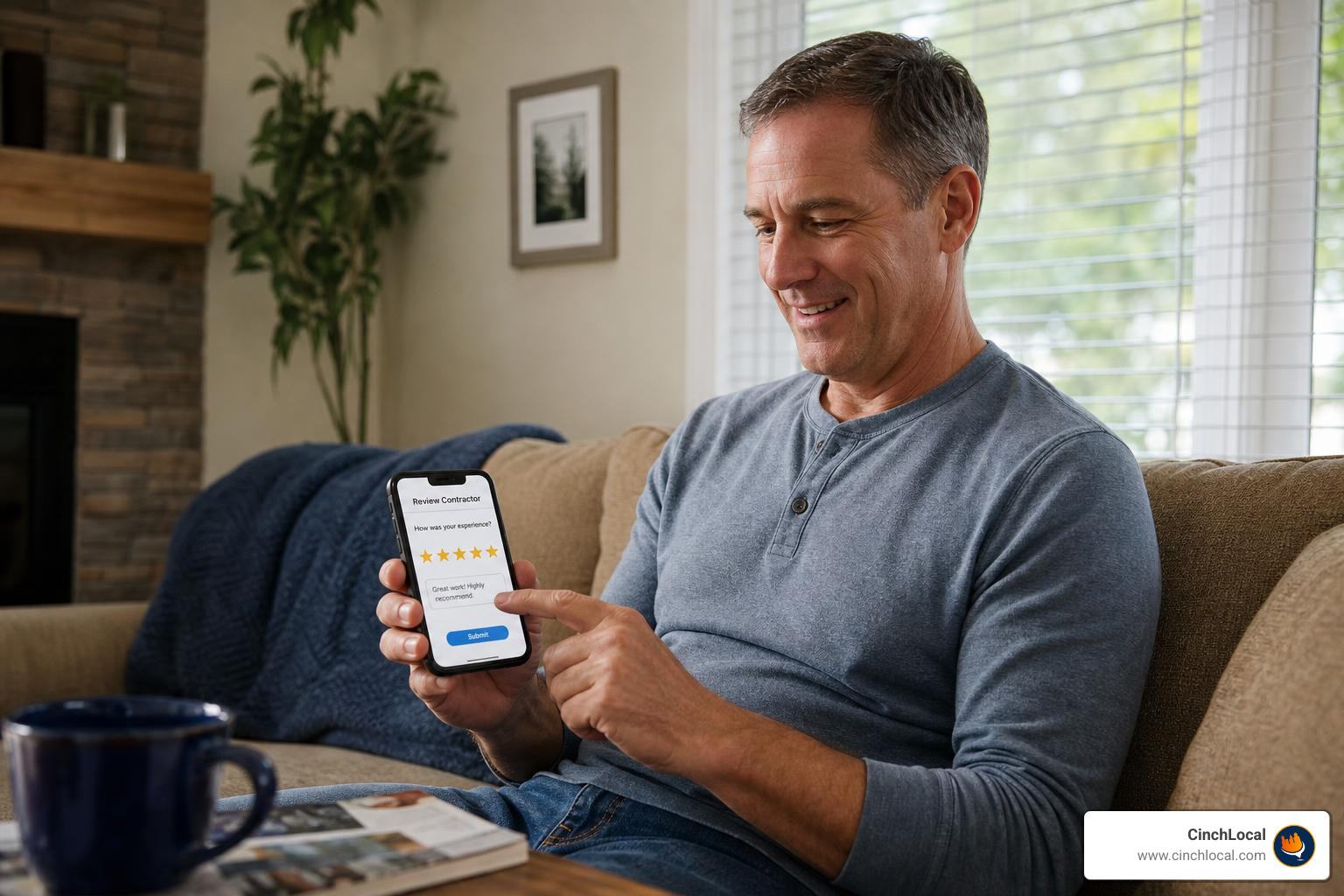
You can build a highly profitable, structured incentive system using our roofing contractor referral program guide.
Never underestimate the power of online reputation. According to the BrightLocal Local Consumer Review Survey, over 90% of consumers read online reviews for local businesses before making a hiring decision. Accumulating consistent, detailed reviews is the ultimate shield against out-of-state storm chasers.
Budgeting, Measuring, and Optimizing Your Marketing ROI
Roofing companies should allocate 5% to 10% of their gross annual revenue to marketing, adjusting the mix dynamically based on seasonal demand and storm activity.
If you are an aggressive, growth-oriented company looking to break into new territories, you should consider scaling that budget to 10% to 15% of your target revenue.
To ensure your marketing spend is actually driving profitable growth, you must move away from "vanity metrics" (like website traffic, social media likes, or ad impressions) and focus strictly on closed-loop revenue tracking . Every single lead that enters your system must be tracked back to its original source.
[Marketing Spend] ➔ [Leads Generated] ➔ [Inspections Booked] ➔ [Contracts Signed] ➔ [Revenue Gained (ROI)]
We recommend dividing your marketing budget into a 60/40 split :
- 60% Sustainable Year-Round Marketing: This budget funds your long-term organic foundation—SEO, Google Maps optimization, website maintenance, content marketing, and automated review collection. This ensures a steady flow of retail replacements and repair jobs during slow seasons.
- 40% Flexible Storm-Ready Marketing: Keep this budget highly liquid. When a severe weather event hits your market, you must instantly activate localized Google PPC campaigns, launch targeted storm-response Facebook ads, and deploy direct mailers to affected neighborhoods within 48 hours.
To handle the sudden 300% to 500% spikes in inbound call volume that occur immediately following a major storm, modern roofing companies are deploying AI-driven call-handling and automation systems. If a storm hits and your office phone goes to voicemail, that homeowner will immediately hang up and call the next roofer on Google.
For foundational guidance on structuring your business finances and ensuring regulatory compliance as you scale, consult the U.S. Small Business Administration (SBA) Guide on Marketing and Advertising.
Frequently Asked Questions About Roofing Marketing
What is the most effective channel for roofing marketing?
An omnichannel strategy combining Local SEO (Google Maps) for long-term, low-cost leads and Google PPC / LSAs for immediate, high-intent storm and replacement leads yields the highest overall ROI. Local SEO builds a permanent, compounding asset that drives free organic leads year-round, while paid search allows you to instantly capture immediate demand and target high-value storm neighborhoods.
How much should a roofing company spend on marketing?
Established roofing companies looking to maintain market share should spend 5% to 7% of gross revenue , while aggressive, growth-oriented companies looking to scale past $5M or $10M should allocate 10% to 15% . Regardless of your budget size, you must track your Customer Acquisition Cost (CAC) and Return on Ad Spend (ROAS) through a CRM to ensure your campaigns are highly profitable.
How long does it take to see results from roofing SEO?
While paid ads generate leads instantly, organic roofing SEO typically takes 3 to 6 months to establish search authority, build high-quality local backlinks, and drive consistent, non-paid inbound leads. However, unlike paid ads which stop generating leads the second you stop paying, SEO is a compounding investment that continues to drive high-value, pre-sold leads for years.
Conclusion
Sustainable, long-term growth in the roofing industry requires moving away from outdated, manual outbound tactics and adopting a highly automated, digital-first marketing system. Relying solely on door knocking and unpredictable storm events is a recipe for stressful revenue cycles. By building a dominant presence on Google Maps, launching highly targeted paid ad campaigns, and nurturing a compounding referral flywheel, you secure a predictable pipeline of high-ticket roofing projects.
To start filling your production schedule immediately, discover actionable tactics on how to increase roofing sales quickly.
At CinchLocal, we specialize exclusively in helping roofing contractors scale their businesses across Ohio, Tennessee, Georgia, California, and throughout the USA. Our proprietary Roofer Footprint Expansion System is designed to patch the gaps in your marketing, dominate local search results, and deliver exclusive, pre-sold leads directly to your team within 30 days.
Stop chasing leads and start scaling your business. Contact CinchLocal today to schedule your free roofing marketing audit and discover how our Roofer Footprint Expansion System can secure exclusive, pre-sold jobs in your market.
Want Us to Uncover Hidden 'Footprint Gaps' And Critical Blind Spots That’s Quietly Draining Calls, Jobs, and Profits?
Simply Fill Out The Form Below:
What If You Could Stop Wasting $30K+ a Year on Dead-End Marketing - And Finally Become the Go-To Roofer in Your City?
Other Helpful Articles You Might Enjoy